Choosing the 2026 best Polymer Filters requires more than comparing prices or catalog photographs. Global buyers face different feed materials, production speeds, temperatures, and contamination risks. A filter that performs well in a European compounding line may struggle in a high-throughput facility elsewhere.
Professor Nidal Hilal, a recognized membrane-filtration specialist, has stated, “Membrane performance depends on the whole system, not the membrane alone.” This principle also applies to Polymer Filters. Buyers should examine polymer type, melt viscosity, filtration rating, pressure stability, screen construction, and cleaning requirements together. Small details matter. A few minutes of unplanned downtime can affect an entire production shift.
The strongest options for 2026 will balance fine particle removal with stable flow and practical replacement intervals. Stainless-steel screen packs, candle filters, sintered elements, and automatic backflush designs each serve different operating conditions. No universal winner exists.
That is the difficult part.
Supplier transparency also deserves attention. Reliable manufacturers should provide test data, material specifications, dimensional drawings, and traceable quality records. Certifications can support confidence, but they should not replace technical verification. Buyers may still need pilot trials, especially when processing recycled polymers, filled compounds, or heat-sensitive materials.
This guide compares leading Polymer Filters through performance, durability, compatibility, maintenance, and total operating cost. Some recommendations remain conditional. Real production results can differ from laboratory claims, and that limitation should be acknowledged before any global purchase decision.
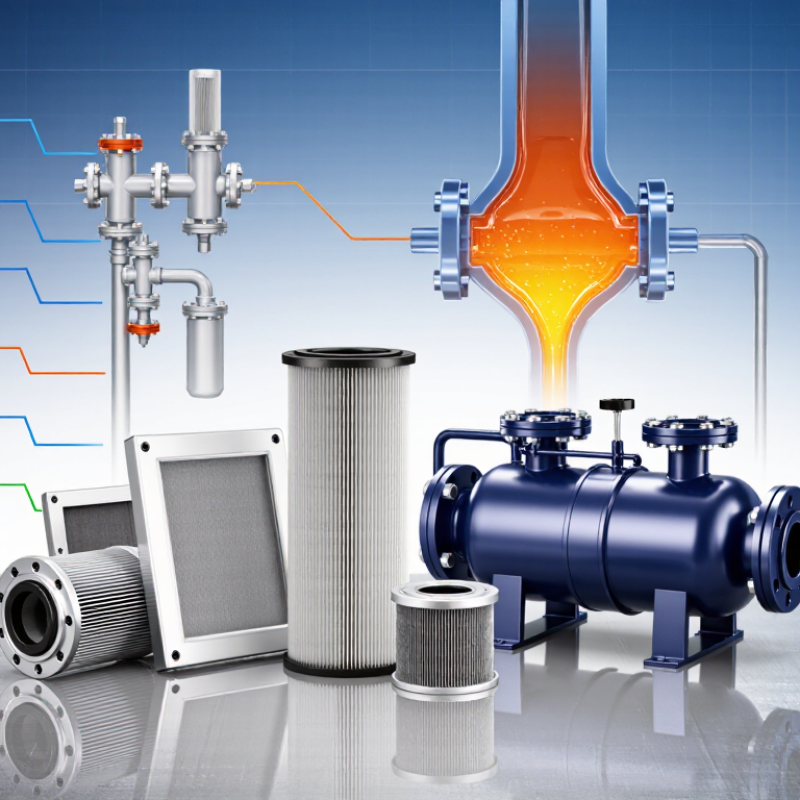
Polymer filters are engineered barriers made from materials such as polyethylene, polypropylene, polyester, or fluoropolymers. Their structure may contain uniform pores, irregular channels, or layered media. During filtration, liquid or gas passes through these pathways, while particles are retained by size exclusion, depth capture, or surface attraction. Some advanced polymer membranes also separate substances through chemical compatibility and molecular diffusion.
In practical use, a filter’s performance depends on more than its advertised pore size. A 0.2-micrometer rating may describe a tested condition, not every operating environment. Flow speed, pressure, temperature, and fluid viscosity can change the result. A transparent housing can reveal trapped dust, while a rising pressure difference often signals blockage. Small details matter. I have seen poorly matched seals cause leakage even when the membrane itself performed correctly.
Global buyers should check material compatibility, operating pressure, temperature limits, cleanliness requirements, and test methods. Ask whether the rating is nominal or absolute. Request batch records when consistency matters. Chemical resistance charts are useful, but they cannot replace application testing with the actual fluid. That part is sometimes skipped. It should not be. Polymer filters can support water treatment, laboratory preparation, food processing, air purification, and industrial fluid control, but no single design fits every process. A filter that works well in cold water may deform, swell, or lose strength in hot solvents.♀♀♀♀
Polymer filters support extrusion, recycling, film production, fiber spinning, and adhesive processing. The right type depends on melt viscosity, temperature, contamination, and required output quality. Screen packs are common in extrusion lines because they remove gels, metal fragments, and unmelted particles. They suit polyethylene, polypropylene, and other thermoplastics with predictable contamination levels.
For heavier contamination, continuous screen changers can maintain production while operators replace blocked screens. Candle and leaf filters provide larger filtration areas for high-throughput polymer melts. Their deeper structures often capture fine particles more effectively than simple mesh layers.
Sintered porous elements can offer consistent pore sizes, especially in demanding fiber and film applications. However, cleaning requirements vary. Some elements tolerate repeated thermal cleaning, while others may lose performance after rough handling.
Choose filtration ratings carefully. A finer filter is not automatically better. It may increase pressure, energy use, and melt residence time. Watch the pressure gauge.
Material compatibility also matters. Filter media, seals, and support layers must withstand processing temperatures and chemical exposure. In recycled polymer production, contamination can change from one batch to another, so a fixed specification may be misleading. A practical trial should measure pressure rise, throughput, melt temperature, and product defects. I have seen technically suitable filters fail because operators ignored installation depth or cleaning intervals. Global buyers should request test data, dimensional drawings, traceability records, and clear maintenance guidance before approving a filter.
Global buyers should compare polymer filters by real operating performance, not price alone. Start with pore size, flow rate, pressure drop, and retention efficiency. A filter rated at 0.2 microns may perform differently under higher viscosity or pulsating pressure. Ask for test conditions, not only headline specifications.
Material compatibility also matters when fluids contain solvents, acids, salts, or changing temperatures. A suitable polymer should resist swelling, cracking, and unwanted extractables during extended use.
In practical evaluations, I check throughput after several hours, not just the first reading. A clean filter may show excellent flow, while a loaded filter reveals the actual cost. Housing design, seal quality, and connection standards affect installation reliability across regions.
Buyers should review batch traceability, inspection records, and documented quality controls. Independent testing can strengthen confidence, although testing every possible fluid is rarely realistic. I have seen procurement teams overvalue micron ratings and overlook pressure recovery after cleaning.
Tips:
Request samples for pilot testing. Measure flow, pressure, and particle retention together. Compare results at cold-start and normal operating temperatures. Confirm packaging protects the filters from dust and moisture during long-distance transport. Check whether technical documents use consistent units, because conversion mistakes can cause costly misunderstandings. A supplier’s response to difficult questions is also useful evidence. Fast answers are not always accurate answers.
2026 Best Polymer Filters for Global Buyers?
Polymer filter selection begins with material chemistry, not price. Polypropylene suits many aqueous processes because it offers low extractables and useful chemical resistance. Polyethersulfone supports demanding sterile and pharmaceutical applications, but its performance depends on sterilization conditions. Polytetrafluoroethylene handles aggressive gases and solvents, while polyethylene can provide economical depth filtration. These materials are not interchangeable.
PlasticsEurope’s Plastics—The Fast Facts 2024 reports global plastics production at 413.8 million tonnes in 2023. That scale increases pressure for traceable resin sources and controlled manufacturing. Buyers should request resin identification, lot records, pore-size distribution, and extractables data. ISO 29463 helps classify high-efficiency filtration performance. For food-contact use, suppliers should also document compliance with EU Regulation 10/2011 or applicable FDA requirements. Certificates alone can be thin evidence.
A practical inspection includes bubble-point testing, pressure-decay testing, and visual checks under controlled lighting. The filter should survive its stated temperature, differential pressure, and cleaning cycle. Independent laboratory verification adds credibility, especially across unfamiliar supply chains. Reports from MarketsandMarkets continue to identify water treatment and life-science processing as major membrane-filtration growth areas, but market forecasts are not product validation. I would challenge any supplier offering one universal polymer grade. Real process fluids vary. Some specifications remain poorly defined. That is where an inexpensive filter can become an expensive failure.
Global buyers need more than a low polymer filter price. They need a supplier that understands pressure, temperature, chemical compatibility, and production consistency. A reliable supplier should provide clear data on micron ratings, flow capacity, housing materials, and expected service life. Ask for recent test reports, batch traceability, and documented quality procedures.
Field evaluations often reveal important details. Check whether the supplier can produce stable samples, not only attractive brochures. Request a sample from a normal production batch. Compare its dimensions, weld quality, sealing surface, and pressure performance. Small details matter. Confirm how defects are recorded and corrected. Suppliers with practical inspection methods usually communicate problems earlier.
Worldwide purchasing also requires dependable logistics and technical support. Review lead times, packaging methods, export documents, and response speed across time zones. Verify compliance with the destination market’s applicable safety and environmental requirements. A supplier may look excellent on paper yet struggle with custom specifications. That weakness should not be ignored. I have seen projects delayed because buyers approved a filter before testing real process conditions. A short trial under operating pressure can expose unexpected swelling, clogging, or leakage. Do not skip it. Supplier selection is not perfect; specifications may change after installation. Choose partners willing to review data, admit limitations, and improve their process.
Typical continuous-use temperature ceilings help buyers compare polymer filter media when screening suppliers worldwide. PTFE generally provides the highest temperature resistance, while PP is commonly selected for lower-temperature and cost-sensitive applications. Actual performance depends on polymer grade, pore structure, pressure, chemical exposure, and supplier test documentation.
Representative engineering values; specifications vary by grade and application. Buyers should request certificates, compatibility data, validated test methods, and lot-level quality records from suppliers.
Polymer filters are engineered barriers made from plastics such as polypropylene, polyethylene, polyester, or fluoropolymers. Their pores retain particles while liquid or gas passes through. Some membranes also separate substances through chemical compatibility and molecular diffusion.
They use size exclusion, depth capture, or surface attraction. Larger particles may stop at the surface. Smaller particles can become trapped deeper inside. The mechanism varies by structure.
No. A pore rating often reflects specific test conditions. Flow speed, pressure, temperature, and fluid thickness can change results. A 0.2-micrometer rating is not universal proof.
Polypropylene suits many water-based processes and usually has low extractables. Polyethylene supports economical depth filtration. Polyethersulfone handles demanding applications. Fluoropolymers resist aggressive gases and solvents. These materials are not interchangeable.
Check the fluid, temperature, pressure, cleaning method, and seal material. Hot solvents may swell or weaken a filter. A membrane can perform correctly while its seal leaks. Small details matter.
Rising differential pressure often signals blockage. A transparent housing may show trapped dust or discoloration. Flow can also decline. Do not rely on appearance alone.
Request resin identification, lot records, pore-size distribution, extractables data, and test methods. Ask whether the rating is nominal or absolute. Certificates help. They are not complete evidence.
Use bubble-point testing, pressure-decay testing, and controlled visual inspection. Confirm performance at the actual temperature and pressure. Test the real process fluid when possible. This step is sometimes skipped. That is a weakness.
Polymer Filters are engineered materials used to separate particles, gels, contaminants, or unwanted compounds from liquids and gases in industrial processing. Their operation depends on pore size, filtration structure, pressure, temperature, and the properties of the material being filtered. Common types include screen, mesh, membrane, sintered, pleated, and cartridge filters, each suited to different applications such as plastics processing, chemical production, water treatment, food manufacturing, and pharmaceutical operations.
For global buyers in 2026, key comparison factors include filtration accuracy, flow rate, dirt-holding capacity, pressure resistance, thermal stability, chemical compatibility, service life, and ease of maintenance. Buyers should also review polymer materials, manufacturing consistency, traceability, testing procedures, and applicable international quality and safety standards. Selecting a reliable supplier requires evaluating technical expertise, customization capability, documentation, production capacity, inspection systems, delivery performance, and after-sales support. A well-matched filter and transparent supplier can improve process stability, reduce operating costs, and support dependable long-term performance.