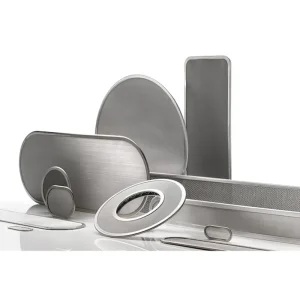
Evaluating the systemic impact of high-precision stainless steel wire mesh filtration elements on rheological melt uniformity, pressure stabilization, and continuous contaminant extraction in global manufacturing lines.
In contemporary industrial polymer processing, melt filtration is no longer merely a defensive mechanism to protect downstream machinery from physical damage; it serves as a critical variable dictating fluid dynamics, molecular weight distribution, and product homogeneity. As qualified Screen Mesh Filter Exporters & Exporters, industry leaders such as Pujiang HG Plastic Machinery Co., Ltd. provide specialized wire mesh systems designed to satisfy the ultra-rigorous operational conditions of thermoplastic extrusion, synthetic fiber spinning, and continuous recycled pelletizing systems.
High-viscosity polymer melt systems operate under high hydraulic pressures (frequently exceeding 250 to 350 bar) and elevated temperatures (ranging from 200°C to 340°C). Under these aggressive conditions, foreign particulates, unmelted gels, carbonized degradation products, and metallic micro-contaminants can induce catastrophic operational failures. These failures manifest as filament breakage in spinning nozzles, pinholes in thin blown films, or mechanical wear on extrusion dies. Deploying engineered continuous screen mesh filters guarantees that melt streams retain the exact rheological and mechanical purity demanded by end-use specifications.
Precision-woven stainless steel screen mesh filters regulate the hydraulic gradient across breaker plates. By establishing a steady, predictable differential pressure ($\Delta P$), the screen pack enhances shear heat uniformity, mitigates melt pump pressure fluctuations, and eliminates laminar flow channeling during high-speed extrusion.
Fabricated using premium AISI 304, 316, and 316L austenitic stainless steel wires, our screen mesh filters exhibit exceptional yield strength under extreme mechanical loads. Spot-welded multi-layer packs prevent edge fraying and wire displacement during peak hydraulic surges.
Featuring specialized weave geometries including Plain Dutch Weave (PDW), Reverse Dutch Weave (RDW), and Twilled Dutch Weave (TDW), these filters deliver maximal open area ratios alongside precise nominal and absolute pore size cut-offs down to 5 microns.
Engineered to resist oxidative degradation, acidic additives, and corrosive masterbatch compounds. Materials retain structural elasticity and creep resistance up to 400°C without risk of alloy leaching or contamination.
Examining macro-economic supply chain forces, environmental directives (PCR mandates), and regional manufacturing requirements driving screen mesh technology adoption.
The global industrial footprint for polymer screen filtration has expanded substantially, propelled by strict environmental regulations regarding Post-Consumer Recycled (PCR) content, rapid expansion of nonwoven fabric applications, and rising demand for ultra-thin optical-grade packaging films. As global Screen Mesh Filter Exporters & Exporters, keeping pace with international quality benchmarks while optimizing unit cost efficiency is vital for maintaining competitive advantage.
In markets across North America and the European Union, legislative frameworks such as the EU Plastics Strategy and mandatory recycled content quotas have compelled extruders to process lower-grade, highly contaminated post-consumer plastic scrap. Processing PCR resins introduces variable contaminant profiles, including glass fibers, aluminum foils, paper dust, and cross-linked gels. Consequently, the reliance on high-capacity, multi-layer screen mesh packs and auto-continuous belt screen changers has increased by over 35% across European reprocessing hubs.
Focus: Circular Economy & PCR Integration
Strict adherence to REACH, RoHS, and food-contact compliance (FDA/EFSA). Demand focuses on fine-micron sintered wire mesh discs and continuous belt filter screens capable of handling high dirt loads without interrupting continuous production cycles.
Focus: High-Speed Packaging & Automotive Polymers
Emphasis on high-throughput extrusion rates, thermal stability, and low maintenance downtime. Woven wire mesh packs for BOPP, BOPET, and high-density polyethylene (HDPE) blow molding applications predominate.
Focus: Synthetic Fibers & Resin Synthesis
Rapid growth in petrochemical resin production, melt-blown nonwoven lines, and synthetic yarn (polyester/nylon) spinning plants. Demands massive OEM volumes of candle filter elements and rimmed mesh screen packs.
Furthermore, cost analysis demonstrates that deploying premium screen mesh filter elements directly translates into quantifiable economic ROI. By maintaining ultra-clean melt, plant operators achieve up to a 14% reduction in extruder motor energy consumption, eliminate costly die scrapings, and reduce product reject rates by up to 22% in high-speed cast film manufacturing.
Comprehensive quantitative comparison of stainless steel alloys, weave types, and structural filtration characteristics engineered for polymer melt processing.
Selecting the optimal screen mesh configuration requires matching polymer melt rheology, processing temperatures, corrosion potential, and filtration accuracy. Below is an authoritative technical matrix engineered by Pujiang HG Plastic Machinery Co., Ltd. for global engineering evaluation:
| Alloy Grade | Chemical Composition | Max Temp (°C) | Corrosion Resistance | Primary Application |
|---|---|---|---|---|
| AISI 304 (1.4301) | 18% Cr / 8% Ni | 300°C | Standard Industrial | Standard Polyolefin (PE, PP) Extrusion & Masterbatch |
| AISI 316 (1.4401) | 16% Cr / 10% Ni / 2% Mo | 380°C | High (Acid / Organic Solvents) | Engineering Plastics (PET, PA6, PA66), Recycled Scraps |
| AISI 316L (1.4404) | 16% Cr / 12% Ni / 2.5% Mo (Low C) | 400°C | Superior Intergranular Corrosion | Medical Grade Polymers, Fluoropolymers (PVDF, PTFE) |
| Hastelloy C-276 | Ni-Mo-Cr + Tungsten | 500°C+ | Extreme (Halogenated Compounds) | Corrosive Fluoropolymer Melt, Highly Acidic Resins |
The geometric weave layout determines pore size distribution, mechanical permeability, and dirt holding capacity (DHC). Pujiang HG Plastic Machinery manufactures four primary structural weaves:
The pressure drop ($\Delta P$) across a multi-layer screen pack is governed by modified Darcy's Law for non-Newtonian polymer melt flows:
Where µ is dynamic viscosity, v is melt velocity, L is pack thickness, K is structural permeability, and β is the non-linear inertial resistance coefficient of the chosen mesh weave.
Exploring custom screen mesh configurations designed for specific industrial processing challenges, from post-consumer recycling to medical nonwovens.
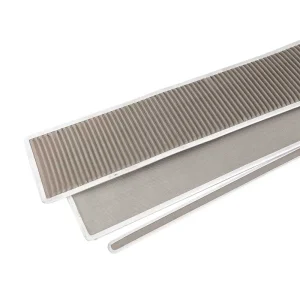
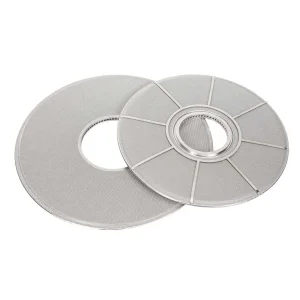
Recycling rigid PP/PE containers and post-agricultural films presents extreme dirt loads. Continuous auto-belt reverse Dutch weave screens (RDW 72/15 to 132/16) allow continuous filter advancing without stopping production, effectively filtering out paper, wood chips, and residual adhesives while preserving throughput.
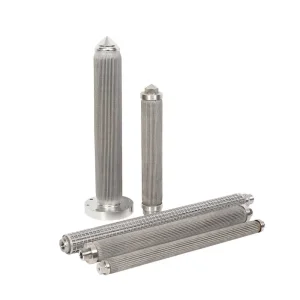
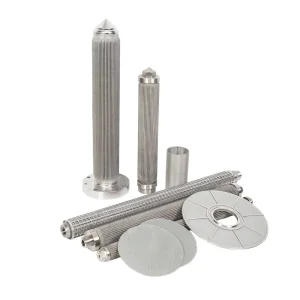
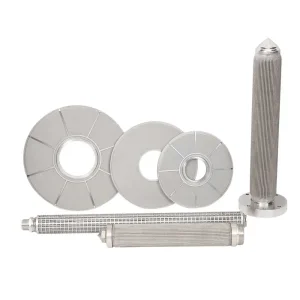
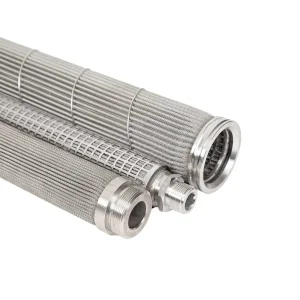
Nonwoven fabric production relies on micro-denier spinneret nozzles with orifices smaller than 0.15mm. Multi-layer pleated candle filter elements and rimmed cylindrical screen mesh packs (filtering down to 10-25μm absolute) prevent nozzle clogging, maintaining uniform filament distribution and high tensile strength.
Biaxially Oriented Film (BOPP/BOPET) production demands zero micro-gel passage to prevent film tearing during high-speed transverse stretching. Vacuum-sintered leaf disc filters and ultra-smooth stainless steel screen packs filter out particles down to 5μm without creating shear degradation or stagnant melt zones.
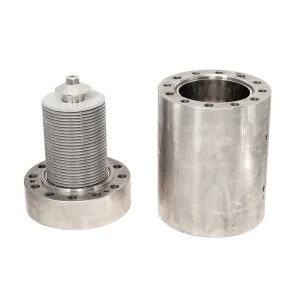
Large-scale polymerization reactors require high-capacity melt filter housings containing dozens of stainless steel candle cartridges. Operating continuously under high temperatures, these filters clear catalyst residues and oligomers from fresh virgin resin before pelletization.
Ensuring global enterprise compliance with international quality benchmarks, traceably documented raw materials, and robust technical support services.
As dependable Screen Mesh Filter Exporters & Exporters, Pujiang HG Plastic Machinery Co., Ltd. integrates stringent quality assurance frameworks into every stage of manufacturing. Overseas buyers demand absolute consistency, zero alloy cross-contamination, and precise mechanical tolerances to ensure drop-in compatibility with OEM screen changers from major equipment producers worldwide.
Every batch of stainless steel wire undergoes positive material identification (PMI) using X-ray fluorescence (XRF) spectroscopy to verify chemical composition (Ni, Cr, Mo content). Material Test Reports (MTR) according to EN 10204 3.1 are supplied with all export shipments.
Residual drawing lubricants or organic oils can carbonize inside hot extruders, leading to product black spots. All screen mesh products undergo multi-stage ultrasonic solvent washing and high-pressure hot-water rinsing, ensuring dry, contaminant-free surfaces prior to packaging.
Our products comply fully with EU Regulation (EC) No 1935/2004 and FDA 21 CFR 177.2600 for food-contact polymer materials. We guarantee complete absence of heavy metal leaching, phthalates, or hazardous substances across all filter media.
To maximize operational longevity and minimize total cost of ownership (TCO), heavy-duty candle and leaf disc filters can undergo thermal regeneration. Recommended cleaning procedures include Triethylene Glycol (TEG) vapor bath cleaning at 280°C to dissolve polyester/polyamide residues, followed by vacuum calcination at 450°C and final ultrasonic bath agitation.
Anticipating industry transformations driven by AI-integrated filtration monitors, advanced alloy surface treatments, and circular economy requirements.
As the global plastics processing sector transitions toward higher circularity, polymer filtration infrastructure must evolve rapidly. Key developments defining the technical roadmap over the coming decade include:
Integrating IIoT pressure sensors with real-time machine learning algorithms enables extruders to accurately project screen pack blinding rates. Smart controllers automatically advance continuous belt screens before pressure spikes occur, preventing melt surges and optimizing wire mesh consumption.
Applying micro-thin Titanium Nitride (TiN) or Diamond-Like Carbon (DLC) vapor deposition coatings to wire mesh screens reduces surface friction coefficients by up to 40%. This prevents thermal polymer degradation, lowers pressure drop, and impedes gel adhesion.
Next-generation multi-stage gradient mesh packs feature progressive pore structures (combining 200μm coarse pre-filtration with 25μm precision capture in a single unified pack). This configuration increases dirt holding capacity (DHC) by over 300% when processing 100% PCR resin streams.
Expert responses to critical procurement, technical selection, and operational questions from international engineering teams.