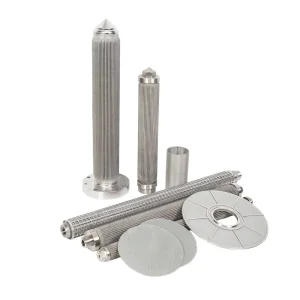
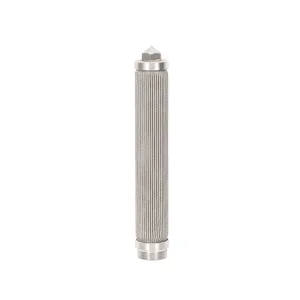
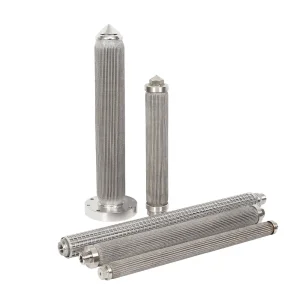
Precision-engineered continuous melt filtration elements designed for high temperature, pressure resistance, and extreme operational durability.
How leading polymer candle filter companies & manufacturers optimize melt rheology, gel capture mechanisms, and operational lifespan under extreme processing conditions.
In modern petrochemical synthesis, plastic extrusion, and synthetic fiber spinning, raw polymer melts operate under extreme hydrostatic pressure (up to 350 bar) and elevated thermal environments (ranging from 260°C to 340°C). In this state, fluid dynamics are dictated by non-Newtonian shear-thinning behavior.
Selecting an authoritative Polymer Candle Filter Company is vital to mitigate shear degradation. Poorly designed filter candles create localized stagnation zones, inducing polymer thermal degradation, black spot creation, and premature clogging of downstream spinnerets or extrusion dies.
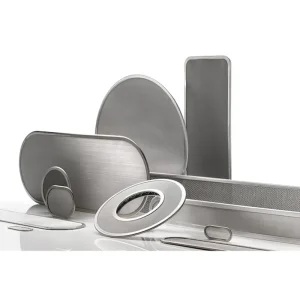
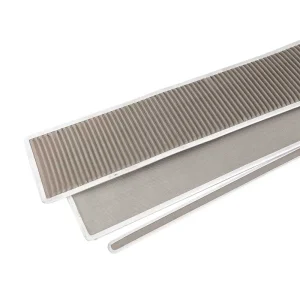
With over two decades of dedicated R&D and specialized manufacturing, Pujiang HG Plastic Machinery Co., Ltd. stands at the forefront of precision filtration technology. Operating from Zhejiang, China, our ISO-certified facilities produce world-class polymer candle filters, leaf disc filters, and extruder screen mesh systems.
Our engineering methodology adheres strictly to Google E-E-A-T standards—demonstrating hands-on manufacturing experience, deep metallurgical expertise, recognized industry authority, and rigorous quality control for clients across 80+ countries.
A comparative evaluation matrix of tier-one filter media manufacturers, OEM custom fabricators, and specialized filtration solutions providers.
| Evaluation Parameter | Tier 1 Western OEMs | Pujiang HG Plastic Machinery (Our Solution) | Standard Regional Fabricators |
|---|---|---|---|
| Metallurgical Base | AISI 316L / Hastelloy C-276 | Premium AISI 316L / SUS 304 High Purity Wire & Felt | Standard SUS 304 / Commercial Grade |
| Media Construction | Multi-layer Sintered Fiber Felt / Wire Mesh | Custom Vacuum-Sintered Fiber Felt & Pleated Mesh | Single/Dual Woven Wire Mesh (Non-Sintered) |
| Void Volume (Porosity) | up to 80% | High Porosity (75% - 85% Optimized for ΔP) | 45% - 60% (Limited dirt capacity) |
| Collapse ΔP Rating | 210 - 250 bar | 210 bar Structural Integrity Standard | 100 - 150 bar (Risk of deformation) |
| On-Stream Service Life | Extended (12-18 months) | Extended (12-24 months with Vacuum Pyrolysis) | Short (3-6 months) |
| Total Cost of Ownership (TCO) | High Capital Investment | Highly Competitive / Direct Factory Value | Low Initial / High Lifetime Operating Cost |
Using low-grade stainless steel leads to chromium depletion during high-temperature polymer extrusion. HG Plastic Machinery utilizes certified AISI 316L with low carbon content, guaranteeing maximum corrosion resistance against organic acid residues in PET and PA resins.
Our state-of-the-art vacuum sintering furnaces fuse metallic micro-fibers at molecular junction points without melting wire geometry. This maintains exact pore size distribution and prevents fiber migration into the clean polymer melt stream.
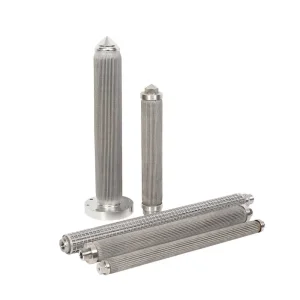
By optimizing the pleat count and height per candle element, our engineered filter cartridges provide up to 300% more active surface area compared to smooth cylindrical elements, significantly reducing system pressure drop.
Analyzing strategic purchasing drivers, total cost of ownership (TCO) models, and inventory risk mitigation for industrial filtration systems.
Procurement officers across North America, Europe, the Middle East, and Asia-Pacific are increasingly standardizing on high-durability polymer candle filter elements. The demand is driven by three macroeconomic trends:
When sourcing from a Polymer Candle Filter Company, initial purchase price represents less than 20% of the lifetime cost of a filter element. TCO is governed by:
HG Plastic Machinery engineers candle filters with optimized flow channels and robust structural cores, enabling 15 to 20 successful pyrolysis cleaning cycles and drastically lowering overall TCO for plant operators.
Inside the design geometry, micro-porous sintered media, and high-pressure core architecture of modern candle filter cartridges.
Heavy-wall stainless steel core providing mechanical strength against differential pressures up to 210 bar.
Coarse coarse mesh layer facilitating uniform melt flow distribution and preventing media collapse onto core holes.
Sintered metal fiber web (316L) providing absolute micron rating (3μm to 100μm) with deep gel retention capacity.
Precision square mesh shield guarding fine filter media during installation, handling, and backwashing cycles.
Hexagonal adapter, NPT/BSP threads, or custom push-in connectors welded with TIG/plasma seam precision.
A common technical dilemma when specifying polymer melt filters is choosing between metallic sintered fiber felt and traditional woven wire mesh.
Sintered Fiber Felt: Composed of non-woven 316L stainless steel micro-fibers, sintered into a three-dimensional porous structure. It features high void volume (up to 85%), offering 2 to 3 times the dirt-holding capacity of wire mesh, making it ideal for gel removal in optical-grade film production.
Woven Wire Mesh: Provides precise two-dimensional pore geometry with narrow pore size distribution. It excels in applications requiring sharp cut-off filtration and ease of surface backwashing.
To ensure zero field failures, every polymer candle filter element produced by Pujiang HG Plastic Machinery undergoes rigorous ISO-compliant quality verification:
Engineered filtration applications spanning plastic extrusion, biaxially oriented film lines, synthetic fiber spinning, and recycling granulation.
Ultra-thin packaging films require high-capacity continuous polymer filter (CPF) systems. HG candle filters capture sub-micron carbon specks and cross-linked gels, maintaining uninterrupted film stretching and eliminating web breaks.
In PET, PA6, and PP filament extrusion (POY, FDY, Non-wovens), candle filter elements protect delicate spinnerets against micro-particulates, ensuring uniform filament denier and preventing fiber breakage.
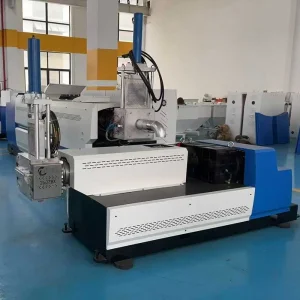
Reprocessing heavily contaminated post-consumer plastic scrap requires robust screen mesh and candle filter elements capable of trapping paper, aluminum traces, and degraded polymers without bursting.
Ensuring international engineering compliance, seamless OEM component interchangeability, and expert global field support.
Pujiang HG Plastic Machinery Co., Ltd. operates under an audited ISO 9001:2015 Quality Management System. Our polymer candle filter elements comply fully with international pressure vessel and material safety directives:
We provide direct replacement elements fully compatible with major European, American, and Asian polymer filtration systems (such as Maag, Nordson, Kreyenborg, BKG, and Fuji Filter).
Our engineering service package includes 2D CAD drafting, 3D STEP modeling, custom flange adaptors, and rapid sample prototyping within 7 to 14 working days, ensuring zero retrofitting friction for global operational managers.
Detailed technical and operational answers to common questions regarding Polymer Candle Filters and supplier evaluation.
Polymer candle filters are specifically engineered for high-viscosity non-Newtonian polymer melt streams operating under extreme pressures (up to 350 bar) and temperatures reaching 340°C. Unlike standard liquid filter cartridges constructed with polymeric or paper media, polymer candle filters utilize all-welded, vacuum-sintered 316L stainless steel fiber felt or multi-layer wire mesh surrounding a heavy-duty perforated core. They provide structural collapse resistance, low initial differential pressure (ΔP), deep gel retention capability, and can be cleaned and reused multiple times via thermal pyrolysis.
Evaluating polymer candle filter suppliers requires assessing four key criteria: 1) Metallurgical Quality (use of certified prime AISI 316L/304 steel with material test reports); 2) Sintering Expertise (vacuum sintering integrity that prevents wire migration); 3) Structural Rating (guaranteed collapse resistance under differential pressure, typically 210 bar); and 4) Quality Verification (ISO 2942 bubble point testing on 100% of production batch units). Pujiang HG Plastic Machinery excels across all four vectors with 20+ years of documented industrial supply history.
To maximize element service life (up to 15-20 cleaning cycles), plant operators should follow a standardized four-step cleaning protocol: 1) Vacuum Pyrolysis (TEG furnace or vacuum burn-off furnace at 450°C to thermally decompose organic polymer residues without degrading metallurgical temper); 2) Ultrasonic Solvent Cleaning (high-frequency ultrasonic bath with specialized detergent to dislodge residual inorganic ash); 3) High-Pressure Hydro-Jetting (flushing from inside-out); and 4) Bubble Point Integrity Testing to verify filter rating prior to re-installation.
The choice depends on your fluid viscosity and gel retention targets. Pleated candle filter elements offer up to 300% more active surface area within the same housing envelope, drastically reducing initial ΔP and extending on-stream operational cycles—making them ideal for clean polymers, thin film lines (BOPP/BOPET), and fine synthetic fibers. Cylindrical candle elements, while offering less surface area, feature smoother flow channels that are easier to clean when handling extremely high-viscosity resins or heavily contaminated recycled plastics.
Yes. Pujiang HG Plastic Machinery Co., Ltd. specializes in comprehensive OEM and ODM customization. Our engineering team can manufacture replacement candle filters matching any dimensional drawing, flange fitting style, thread connection (NPT, BSP, metric), or media configuration. We supply direct retrofitting elements compatible with housing hardware from major worldwide OEM vessel manufacturers.
Browse our complete selection of stainless steel filter elements, extruder screen meshes, and plastic recycling equipment.