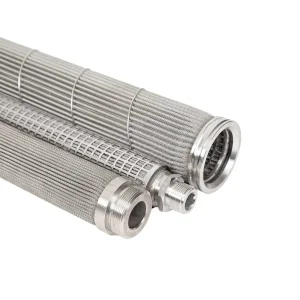
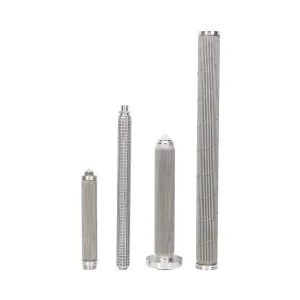
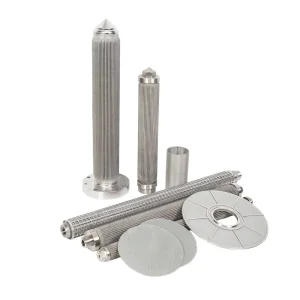
Precision-engineered filter components designed for continuous polymer extrusion, high-temperature resin purification, and chemical fiber production.
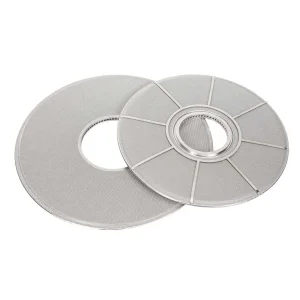
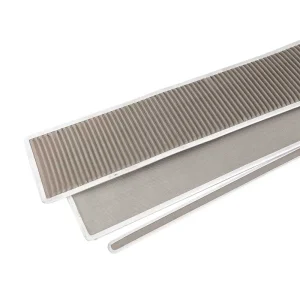
Understanding the Critical Role of Continuous Melt Filtration in High-Viscosity Polymer Synthesis and Extrusion Lines.
In modern continuous polymer processing—spanning biaxially oriented polypropylene (BOPP), polyethylene terephthalate (BOPET) film production, synthetic fiber melt spinning, and high-purity resin synthesis—filtration efficiency serves as the definitive bottleneck governing final product quality, operational uptime, and total yield. As global demand accelerates for thinner optical films, sub-denier textile yarns, and circular post-consumer recycled (PCR) polyolefins, industrial filtration systems must handle extreme operational parameters: melt temperatures exceeding 350°C, system pressures reaching 300 bar (4,350 psi), and dynamic viscosities spanning 100 to 10,000 Pa·s.
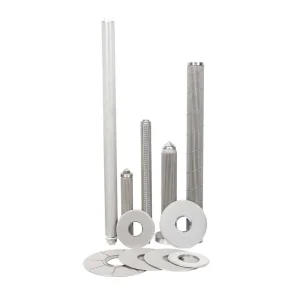
Among all industrial filtration geometries, the Leaf Disc Filter (frequently referred to as the segment disc or circular disc filter element) represents the gold standard for high-area, low-pressure-drop continuous melt filtration. As specialized Leaf Disc Filter Factories & Exporters, precision manufacturers leverage advanced powder metallurgy, metal fiber sintered felt, and computer-modeled drainage hub geometries to provide maximum effective filtration area within compact pressure vessels.
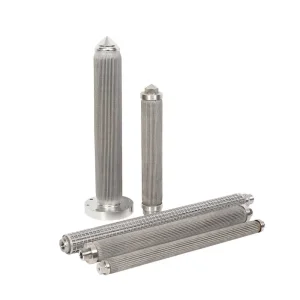
Selecting the appropriate filtration geometry requires a rigorous evaluation of rheological behavior, allowable shear stress, dwell time distribution, and physical vessel footprint. Below is a structural engineering comparison detailing how leaf disc filter systems compare against competing filtration elements:
| Performance Criterion | Leaf Disc Filter Systems | Candle Filter Cartridges | Extruder Screen Mesh Discs |
|---|---|---|---|
| Effective Area per Vessel Volume | Highest (Compact stacking on central shaft) | Moderate (Radial spacing requirement) | Lowest (Single planar layer) |
| Melt Residence Time & Dead Zones | Optimized fluid channels prevent degradation | Moderate risk at top end-cap interfaces | Very low, but rapid clogging occurs |
| Shear Stress Distribution | Uniform radial inflow across disc face | Axial flow gradients along candle length | Uniform planar velocity profile |
| Off-Line Reusability & Ultrasonic Cleaning | Excellent (Disassembles into flat units) | Good (Requires deep core flushing) | Poor (Usually single-use/disposable) |
| Differential Pressure (ΔP) Tolerance | Up to 210–250 bar collapse pressure | Up to 150–200 bar collapse pressure | Low (Subject to wire mesh displacement) |
| Primary Industrial Use Case | OPP, BOPET, BOPA, Optical PC, PET Resin | Spunbond Nonwovens, Staple Fiber, Synthetic Yarns | Pelletizing, Masterbatch, Pipe Extrusion |
Deep Dive into Sintered Metal Media, Flow Channel Optimization, and Hub Assembly Engineering.
Manufactured from non-woven micro-denier 316L stainless steel metallic fibers sintered at high temperatures. Delivers 75%–85% high porosity, exceptional dirt holding capacity, and minimal initial pressure drop.
Hard Hub designs utilize precision CNC-machined outer/inner drainage rings for leak-free high-pressure metal-to-metal seals. Soft Hub designs incorporate annealed sealing gaskets for rapid stack assembly.
Featuring a 5 to 7-layer symmetrical configuration: outer protection mesh, fine filtration web, intermediate distribution mesh, and heavy central drainage mesh to eliminate polymer stagnation.
When high-molecular-weight molten polymers (such as PET, PP, or PA66) flow through a leaf disc stack, filtration occurs via three distinct mechanisms: Direct Interception, Inertial Impaction, and Gel Deposition. Unlike rigid particulate filtration in aqueous fluids, polymer melt filtration must deal with flexible, deformable gels (un-melted polymer fragments, cross-linked degradants, or degraded additive complexes).
Leading Leaf Disc Filter Exporters utilize progressive density gradient sintered metal felts. By arranging coarse micro-fibers on the upstream layer and ultra-fine micro-fibers (down to 1.5 microns) on the downstream layer, deformable gels are gradually captured throughout the depth of the medium rather than forming an impervious surface filter cake. This dynamic extends cycle times by up to 300% compared to standard square-weave wire mesh screens.
Market Dynamics, Regional Demand Drivers, and Application Spectrum Across Major Chemical and Polymer Hubs.
The global market for continuous polymer melt filtration is experiencing structural expansion, driven by tighter quality tolerances in flexible packaging, electronics manufacturing, non-woven hygiene materials, and global plastic recycling mandates. Tier-1 manufacturing facilities in East Asia, Western Europe, and North America are increasingly upgrading legacy filtration assemblies with high-efficiency leaf disc stacks.
High-speed biaxial orientation lines operating above 500 m/min require absolute removal of particles larger than 5μm to prevent web breaks (pinholes) during transverse stretching. Leaf disc filters maintain constant melt pressure stability.
Display screens, automotive light guides, and semiconductor carrier films require zero contamination. Leaf disc filters produced in cleanroom environments guarantee freedom from silicone oils and particulate debris.
Processing post-consumer recycled plastic waste demands heavy-duty leaf disc assemblies capable of handling fluctuating contaminant loads without premature collapse, supporting sustainable resin manufacturing.
Real-World Performance Engineering across Chemical Fiber Spinning, Film Extrusion, and Recycling.
Challenge: Excessive spinneret orifice clogging and filament breakage on a 120-ton/day polyester melt spinning line due to degraded thermal gels.
Solution: Retrofitted existing candle housing with a high-density 12-inch Leaf Disc Filter stack using 10μm 316L sintered metal fiber web media.
Result: Spinneret pack life increased from 7 days to 28 days; filament break rate decreased by 74%; annual scrap resin reduction yielded $185,000 savings.
Challenge: Dielectric breakdown in high-voltage capacitor films caused by sub-micron metallic debris and gel specks.
Solution: Installed Hard Hub 7-layer Sintered Mesh Leaf Discs rated at 3μm absolute filtration accuracy with precision surface-passivated SS316L.
Result: Achieved zero dielectric puncture failures across a 1,200,000-meter continuous production run, passing stringent automotive EV capacitor standards.
Ensuring Seamless Integration, ISO Quality Management, and Rigorous Metallurgical Verification.
Procuring critical filtration hardware requires strict adherence to international industrial codes and seamless OEM/ODM integration support. Leading Leaf Disc Filter Factories operate complete quality assurance protocols to guarantee that every disc stack meets exact dimensional tolerances and pressure vessel ratings.
Every manufacturing step—from raw wire drawing and vacuum sintering to ultrasonic degreasing—is audited under certified quality management systems.
Each batch undergoes ISO 4003 bubble point testing and ISO 4022 fluid permeability testing to verify absolute micron rating and flow resistance consistency.
Leaf disc hub dimensions and sealing faces are precision CNC machined to interface seamlessly with major continuous duplex filter changing housings worldwide.
Next-Generation Innovations in Intelligent Polymer Filtration and Sustainable Engineering.
Embedded acoustic sensor arrays within filter vessels to monitor real-time gel accumulation and predict optimal backwashing cycles, eliminating unplanned downtime.
Development of sub-micron metallic fiber matrices capable of trapping 0.5μm micro-gels while maintaining low flow resistance for high-speed bioplastic processing.
Implementation of 100% circular alloy production combined with fluid-bed thermal pyrolysis cleaning processes that allow disc elements to be reused over 20+ cleaning cycles.
Expert Answers to Common Engineering and Procurement Inquiries for Leaf Disc Filter Systems.
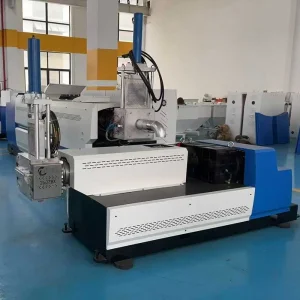
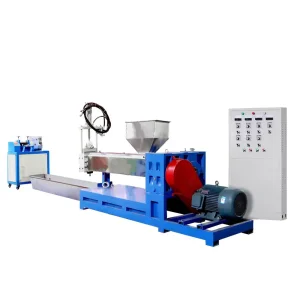
High-Efficiency Candle Filter Cartridges, Stainless Steel Mesh Filters, and Granulating Machinery Systems.