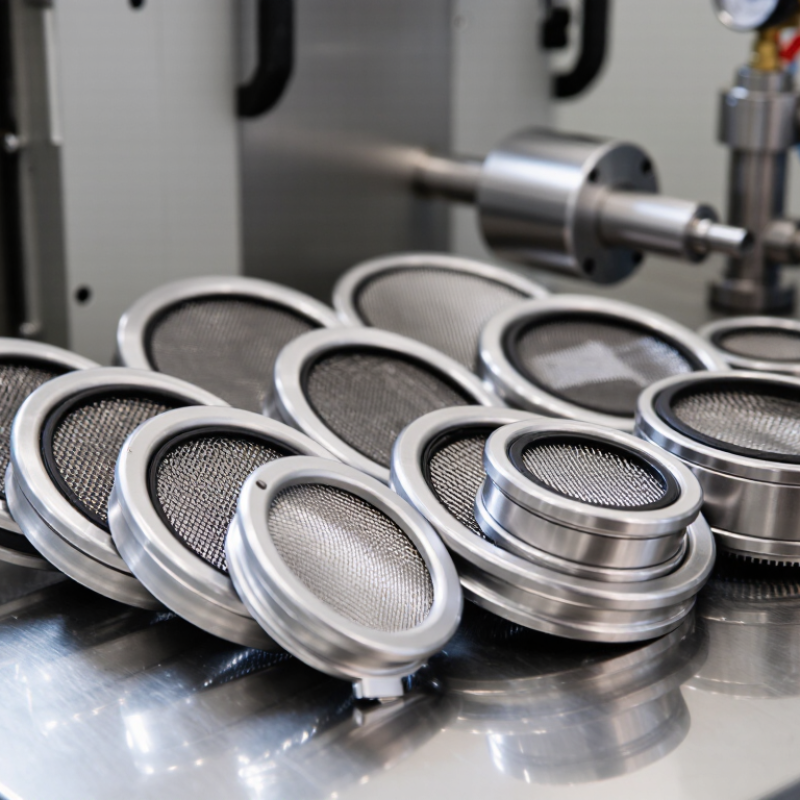
China Best Extruder Filter Media for Global Buyers?

Time:2026-10-09 Author:Sophia
0%

Choosing the right Extruder Filter Media can determine whether a production line runs smoothly or quietly loses money. Buyers often compare mesh count, filtration accuracy, pressure stability, material compatibility, and service life. Yet these specifications do not tell the whole story. The filter must match the polymer, temperature, contamination level, and screen changer design.

Dr. Tim A. Osswald, a respected polymer processing expert, offers a useful principle: “A stable process begins with understanding the material, not merely changing the machine.” This idea matters when global buyers evaluate suppliers from China. A low price may look attractive, but inconsistent wire diameter or poor welding can cause pressure spikes, black specks, and frequent screen replacement. Small details become expensive quickly.

Reliable sourcing requires more than a product catalogue. Buyers should request material certificates, dimensional tolerances, sample testing, and clear production records. Stainless steel grades, layered construction, edge sealing, and cleaning performance deserve close attention. Ask practical questions. Can the supplier maintain stable permeability? Can they reproduce the same filter design next month? Can they explain failure results honestly?

China has many capable manufacturers, but quality is not automatic. Some suppliers communicate well yet overlook application details. Others provide excellent samples but struggle with larger orders. That gap deserves attention. The best Extruder Filter Media partner combines engineering support, traceable quality control, responsive communication, and realistic delivery commitments. In the end, dependable filtration is not simply about buying a screen. It is about protecting output, reducing unplanned stoppages, and building confidence across every shipment.

China Best Extruder Filter Media for Global Buyers?

What Is Extruder Filter Media and Why Does It Matter?

Extruder filter media is the working barrier between clean production and costly defects. It captures gels, unmelted particles, rust, and other contaminants before they reach the die. The media may use woven wire, sintered layers, or shaped screen packs. Each design affects filtration accuracy, pressure stability, and service life.

For global buyers, “best” does not mean the finest mesh. A screen that is too fine can raise pressure quickly and reduce output. A coarse screen may allow visible black specks or surface lines. Selection should match polymer type, melt temperature, throughput, and contamination level. Ask for mesh data, wire material, dimensional tolerance, and inspection records. Batch traceability also matters. It supports reliable quality checks after delivery. No filter is perfect. In real production, trial testing still reveals problems that a specification sheet may hide.

Tips: Compare pressure changes during a controlled run, not only the opening size. Check whether the media fits the breaker plate without gaps. Request samples before large orders. Record screen life, melt pressure, and product appearance. These simple notes improve future purchasing decisions.

A lower purchase price can become expensive when frequent changes interrupt production. Some buyers also overlook storage. Moisture, dust, and careless handling can damage clean filter media before use.

Key Materials and Designs Used in Extruder Filter Media

China Best Extruder Filter Media for Global Buyers?

Extruder filter media relies on material strength, cleanability, and stable pore size. Stainless steel wire mesh remains common for general polymer processing. It handles heat, pressure, and repeated screen changes well. For finer filtration, sintered metal fiber media offers deeper particle capture. It also supports higher dirt-holding capacity than simple woven mesh.

Wedge wire designs create continuous slots with low flow resistance. They suit applications requiring steady melt pressure and fewer dead zones. Multilayer sintered mesh combines coarse support layers with finer filtering layers. This structure reduces deformation during operation. Nonwoven metal fiber media can provide very fine filtration, but its pressure drop needs careful testing. A finer screen is not always better. Fit matters.

During supplier evaluation, global buyers should request material certificates, pore-size data, and pressure-test records. Check the frame welds closely. Weak edges can allow bypass leakage, even when the media looks clean. Buyers should also compare filtration area, screen life, cleaning method, and replacement accuracy. Stainless steel grades must match the polymer, temperature, and possible corrosive additives. Production trials are essential because laboratory results may not reflect real melt contamination. I have seen specifications fail at the sealing edge. That assumption fails. A reliable design balances filtration precision, pressure stability, service life, and practical changeover time.

How to Match Filter Media With Different Polymer Processes

China Best Extruder Filter Media for Global Buyers?

How to Match Filter Media With Different Polymer Processes

Choosing extruder filter media starts with the polymer, not the lowest quoted price. Polyethylene and polypropylene usually need stable filtration at moderate melt temperatures. Their screen packs must remove gels, dust, and unmelted particles without causing rapid pressure growth. Recycled polymers are less predictable. They often require layered filtration, stronger support screens, and easier changeover.

Engineering experience matters at the die. For high-viscosity polymers, an overly fine mesh can restrict flow and create excessive back pressure. Watch the pressure gauge closely. A sudden increase may indicate contamination, poor melting, or an unsuitable filter combination. For engineering plastics, filter media must tolerate higher temperatures and abrasive fillers. Stainless steel wire, accurate weaving, and consistent opening sizes become especially important.

A practical selection should consider melt temperature, throughput, contamination level, and screen-change frequency. Ask for material certificates, mesh inspection records, and sample testing before placing large orders. We have seen buyers specify mesh size alone, then struggle with unstable output. That approach is incomplete. Process conditions can change by shift, recycled feedstock, or moisture content. Small pilot trials often reveal more than a polished specification sheet. Even experienced teams occasionally choose a filter that lasts well but reduces capacity. That trade-off deserves an honest review.

China Best Extruder Filter Media for Global Buyers? - How to Match Filter Media With Different Polymer Processes

Polymer / Material Typical Extrusion Process Typical Melt Temperature Range* Main Contamination Concern Preferred Filter Media Common Filtration Range** Selection Guidance
Polyethylene (PE)
LDPE, LLDPE, HDPE
Film, sheet, pipe, profile, cable coating 180–260 °C Black specks, gels, unmelted resin, paper or metal particles Multi-layer woven stainless-steel mesh; sintered metal-fiber media for finer filtration 20–150 μm Use coarser media for heavily contaminated recycled PE and finer media for clear film or thin-gauge products. Check pressure rise because high-density PE can require greater melt pressure.
Polypropylene (PP) Raffia, woven bags, film, sheet, pipe, fiber, nonwoven fabric 200–260 °C Pigment agglomerates, gels, unmelted polymer and foreign solids Square-weave or Dutch-weave stainless-steel mesh; sintered metal-fiber media for continuous fine filtration 15–120 μm For fiber and film applications, prioritize uniform flow and low screen-pack pressure. Finer filtration may be needed for spinning-grade PP.
Polystyrene (PS)
GPPS, HIPS
Sheet, profile, thermoforming sheet, filament 200–250 °C Carbonized polymer, degraded material, color streaks and fines Layered stainless-steel mesh; sintered porous metal for stable fine filtration 20–100 μm Use corrosion-resistant stainless steel and avoid excessive residence time, since degraded PS can form hard carbon deposits.
ABS Sheet, profile, filament, compound extrusion 220–260 °C Rubber-rich agglomerates, black specks, unmelted particles and recycled contaminants Robust multi-layer woven mesh or sintered metal-fiber media 25–100 μm Select a strong support layer to resist deformation. Keep melt temperature and residence time controlled to limit thermal degradation.
PET
Virgin or recycled polyester
Sheet, strapping, filament, fiber, bottle-to-fiber recycling 260–300 °C Solid contaminants, degraded polymer, aluminum, paper and moisture-related defects High-temperature stainless-steel sintered metal-fiber media or reinforced fine mesh 10–80 μm Use media designed for continuous high temperature and pressure. Drying is essential because moisture hydrolyzes PET and reduces molecular weight; filtration cannot correct moisture damage.
PA
Nylon 6, Nylon 66
Film, monofilament, fiber, profile, engineering compounds 250–300 °C Gel particles, carbonized polymer, glass fiber and mineral filler agglomerates Sintered metal-fiber media or heavy-duty woven stainless-steel mesh 15–100 μm For glass-filled PA, use high-strength support and allow for abrasive wear. Thorough drying is required before extrusion.
TPU / TPE Film, tube, profile, wire and cable, medical or technical components 180–240 °C Gel particles, moisture-related defects, soft contamination and degraded elastomer Smooth-surface stainless-steel mesh or low-hold-up sintered metal-fiber media 20–100 μm Choose a media structure that minimizes dead zones and material retention. Dry the resin according to its grade requirements.
PVC
Rigid and flexible PVC
Pipe, profile, sheet, flooring, cable and film 160–210 °C Unfused particles, unmelted additives, pigment agglomerates and degraded PVC Stainless-steel mesh with suitable open area; corrosion-resistant sintered media where fine filtration is required 40–150 μm Avoid excessive residence time and overheating because PVC can release corrosive hydrogen chloride during degradation. Confirm corrosion resistance for the full process system.
PLA / Biodegradable Polyesters Film, sheet, filament, fiber and 3D-printing feedstock 170–230 °C Unmelted granules, gels, degraded polymer and natural-fiber contamination Fine stainless-steel mesh or sintered metal-fiber media with low material retention 20–100 μm Control moisture and residence time carefully. Excessive filtration pressure or heat can accelerate degradation and reduce melt strength.
Recycled Polymer Blends
Mixed PE, PP, PS or engineering plastics
Recycled film, pelletizing, sheet, pipe and profile Material-dependent; commonly 180–300 °C Paper, aluminum, wood, glass, dirt, gels, cross-linked polymer and unmelted fragments Coarse support mesh followed by layered fine mesh or automatic backflush screen media 50–300 μm Use staged filtration and monitor differential pressure. Automatic screen changers are often preferred when contamination load is high or uninterrupted production is important.
Technical notes: *Temperature ranges are general processing references and vary with grade, additives, screw design, throughput and residence time. **Filtration ranges are practical starting points rather than universal specifications; the final selection should be validated using melt-flow rate, contamination load, allowable pressure drop, screen area, changeover method and required product quality.

Quality Standards for Evaluating Global Extruder Filter Suppliers

For global buyers, extruder filter quality begins with measurable evidence, not attractive pricing. PlasticsEurope’s Plastics—The Fast Facts 2024 reports 413.8 million tonnes of global plastics production in 2023. That scale makes stable melt filtration essential. A supplier should provide wire diameter, micron rating, open area, alloy grade, and dimensional tolerances. These details should match the buyer’s polymer, temperature, throughput, and pressure range.

Ask for inspection records, material certificates, and batch traceability. ISO 9044 can support evaluation of industrial woven wire cloth. ASTM E11 is also useful for checking sieve cloth characteristics. Supplier testing should include mesh uniformity, weld quality, flatness, cleanliness, and resistance to thermal cycling. Request sample data from actual production lots. A polished sample can hide inconsistent edges.

Pressure-drop testing matters more than marketing claims. Compare clean-filter pressure, operating pressure, and replacement limits under similar melt conditions. OECD’s Global Plastics Outlook projects plastic waste could nearly triple by 2060. Recycled feedstocks may therefore contain more variable contamination. Filter media must handle that variation without rapid blinding or fiber shedding. I would also inspect packaging closely; loose fragments inside a sealed carton are a warning. Supplier audits, video inspections, and independent laboratory checks improve reliability. Yet no checklist is perfect. Real production trials still expose weaknesses.

How to Choose, Install, and Maintain the Right Filter Media

Selecting extruder filter media starts with the polymer, not the catalog. Measure melt temperature, viscosity, filler content, and expected contamination before choosing mesh size. Recycled feedstock needs special attention. Expect variation. The OECD Global Plastics Outlook estimates that 353 million tonnes of plastic waste were generated worldwide in 2019, while only 9% was recycled. PlasticsEurope’s Plastics—The Fast Facts 2023 reports 400.3 million tonnes of global plastics production in 2022. These figures explain why filtration must balance cleanliness, throughput, and pressure stability.

During installation, confirm flow direction and seat each screen evenly against the breaker plate. Use a support layer behind finer media when pressure could deform the wire. Check the sealing edge carefully; a small gap can let unmelted particles pass. Record initial pressure before production starts. This simple number becomes useful later. It also exposes poor assumptions.

Maintenance should follow pressure differential, not an automatic calendar. A rapid pressure increase usually signals contamination, excessive cooling, or unsuitable mesh. Inspect removed media for broken wires, carbon deposits, and uneven loading. Clean only reusable media designed for that method. Do not force a clogged screen back into service. That shortcut can damage the pack. Reports guide decisions, but plant trials still matter. Sometimes the “right” filter looks efficient on paper and fails after two hours of real production. Recheck the data, especially when material sources change.

China Best Extruder Filter Media for Global Buyers?

How to choose, install, and maintain the right filter media for polymer extrusion. The chart compares common mesh grades with their approximate nominal openings; smaller openings provide finer filtration but usually increase pressure drop and cleaning frequency.

Selection guide: Coarse screens such as 20–40 mesh are commonly used for initial contamination removal, while 60–120 mesh supports finer filtration in many polymer extrusion processes. Fine screens such as 200 mesh should be selected only when the material, melt temperature, equipment pressure limit, and required product quality can support the additional pressure drop.

Installation and maintenance: Install the screen pack in the correct flow direction, center each layer, inspect the breaker plate for damage, and monitor melt pressure. Replace or clean the media when pressure rises beyond the process limit, flow becomes unstable, or product defects appear. Actual performance depends on polymer type, melt viscosity, throughput, temperature, and contamination level.

FAQS

What materials are commonly used in extruder filter media?

Stainless steel wire mesh suits general polymer processing. It tolerates heat, pressure, and repeated screen changes. Sintered metal fiber media captures finer particles. It also holds more contamination.

When is wedge wire media a practical choice?

Wedge wire creates continuous slots with low flow resistance. It supports steady melt pressure and fewer dead zones. This design may simplify cleaning. Actual flow testing remains necessary.

Is a finer filter always better?

No. A finer screen can increase pressure drop and reduce output. High-viscosity polymers may need a more open structure. Fit matters.

How should filter media match different polymers?

Start with polymer type, melt temperature, throughput, and contamination level. Standard materials may need stable filtration for gels and unmelted particles. Recycled feedstock often requires layered screens and stronger support.

What should buyers check before ordering filter media?

Request material certificates, pore-size data, mesh inspection records, and pressure-test results. Check alloy grade and dimensional tolerances. Inspect the frame welds closely. Weak edges can cause bypass leakage.

Why are production trials important?

Laboratory results may not reflect real melt contamination. A pilot trial reveals pressure growth, output stability, and screen life. Test it.

How can operators recognize an unsuitable filter combination?

Watch the pressure gauge during production. A sudden increase may signal contamination, poor melting, or excessive filtration. Moisture and recycled feedstock can change results between shifts.

What quality evidence should a supplier provide?

Useful evidence includes batch traceability, flatness data, cleanliness checks, and thermal-cycle results. Compare clean-filter pressure with operating pressure. Attractive samples are not enough.

How should buyers balance filtration precision and service life?

Consider filtration area, replacement accuracy, cleaning method, and changeover time. A durable filter may still reduce production capacity. That trade-off deserves review.

Conclusion

Extruder Filter Media plays a critical role in polymer processing by removing contaminants, stabilizing melt flow, and protecting downstream equipment. This article explains how filter media influence product consistency, pressure control, throughput, and overall production efficiency. It introduces common materials and designs, including woven wire mesh, sintered structures, layered screens, and customized support configurations, while highlighting how filtration performance depends on opening size, strength, permeability, and resistance to heat and corrosion.

The guide also describes how to match Extruder Filter Media with different polymers, additives, temperatures, viscosities, and extrusion conditions. For global buyers, it outlines key supplier evaluation criteria such as material traceability, dimensional accuracy, testing procedures, production capacity, and quality management. Finally, it provides practical advice on selecting the right specification, installing media correctly, monitoring pressure changes, and scheduling timely cleaning or replacement. These considerations help buyers achieve reliable filtration, longer service life, and stable output across diverse polymer processing applications.

Sophia

Sophia

Sophia is a dedicated marketing professional with an exceptional depth of knowledge about her company's products and services. With a keen understanding of market trends and customer needs, she crafts insightful blog posts that not only inform but also engage readers, enriching the company’s online......