What Is the Best Plastic Mesh Filter from China?

Time:2026-10-24 Author:Ethan
0%

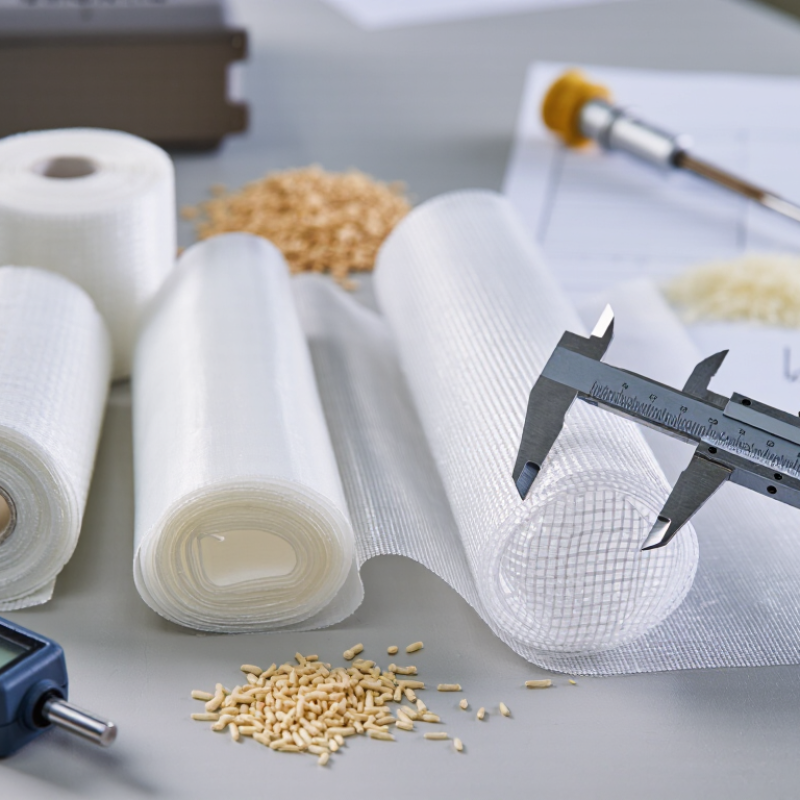
Choosing the best Plastic Mesh Filter from China requires more than comparing prices or product photos. The right option depends on mesh size, material, strength, opening shape, and working conditions. Polypropylene suits many chemical and general industrial uses. Nylon offers flexibility and fine filtration. Polyester can provide useful dimensional stability in demanding environments. Each material has limits.

A reliable evaluation begins with a clear sample specification. Record the mesh count, wire diameter, roll width, thickness, and tolerance. Then test the filter with the actual liquid, particles, temperature, and pressure. A filter that performs well in clean water may clog quickly with oily or fibrous materials. Small details matter. Very much.

Experienced buyers should review supplier quality records, production controls, inspection reports, and material traceability. Independent testing can confirm filtration accuracy and tensile performance. Appropriate food-contact, drinking-water, or industrial certifications should match the intended application and local requirements. Certificates alone are not proof of consistent production.

The cheapest quote may hide uneven openings, weak edges, or unstable delivery. A stronger supplier explains these risks clearly. That is reassuring. Still, no factory is perfect, and even a trusted supplier needs periodic checks. This guide compares Chinese Plastic Mesh Filter manufacturers through practical criteria, including technical capability, communication, customization, sample results, packaging, and after-sales reliability. The “best” choice is not universal. It is the filter that performs consistently, fits the process, and remains dependable after repeated use.
What Is the Best Plastic Mesh Filter from China?

What Is a Plastic Mesh Filter and How Does It Work?

A plastic mesh filter is a lightweight screen that separates solid particles from liquids or air. It usually uses woven nylon, polypropylene, or another chemically resistant plastic. The mesh contains many small openings. These openings let the fluid pass while holding back particles larger than the selected pore size.

The working principle is simple. Water enters one side, crosses the mesh, and exits with fewer suspended solids. Mesh count alone can confuse buyers. A micron rating gives a clearer size reference.

In practical checks, I inspect the mesh under bright light for uneven openings, loose edges, or blocked areas. Small defects can reduce flow quickly. They can also allow unwanted particles through.

When comparing filters made in China, I request samples before placing a large order. I check dimensions, sealing strength, material certificates, and pressure performance.

Ask whether the stated micron rating applies to the entire mesh or only selected areas. That detail matters.

I once trusted a specification sheet without testing the frame, and the seal warped during use. A better review includes repeated washing, temperature exposure, and a simple flow-rate test.

The most suitable filter should match the fluid, particle size, pressure, and cleaning method. Cost is only one part. Consistent production matters more.

Which Materials and Mesh Types Are Used in Chinese Filters?

What Is the Best Plastic Mesh Filter from China?

Which Materials and Mesh Types Are Used in Chinese Filters?

Chinese plastic mesh filters commonly use polypropylene (PP), nylon PA6 or PA66, polyester, PVDF, and PTFE. Each material behaves differently. PP resists many chemicals and remains lightweight. Nylon offers strong abrasion resistance, but it can absorb moisture. PVDF performs better in demanding chemical environments, although it costs more.

Common mesh structures include woven monofilament, multifilament, extruded, and sintered designs. Woven monofilament mesh gives more consistent openings. Extruded mesh suits coarse filtration and drainage. Sintered plastic mesh provides rigidity, but its pores may be less visually uniform. PlasticsEurope reported global plastic production at 400.3 million tonnes in 2022. That scale supports broad material availability, but availability does not guarantee quality. OECD’s Global Plastics Outlook reported only 9% of plastic waste was recycled globally in 2019. Material recovery deserves attention during product selection.

Tips: Request aperture, thickness, tensile strength, and temperature data. Check samples under a microscope. Ask for batch inspection records. Do not judge mesh only by color or price. A cheaper mesh can look identical at first. Long-term testing may prove otherwise. I would also question whether the selected polymer matches the actual fluid, pressure, and cleaning method. That small detail is often missed.

What Is the Best Plastic Mesh Filter from China?

The chart shows approximate nominal openings associated with commonly used woven mesh categories. Nylon and polyester meshes are widely selected for chemical resistance and flexibility, polypropylene mesh is lightweight and suitable for many water and process applications, while stainless-steel mesh is preferred when higher temperature, strength, or dimensional stability is required. Actual opening size varies with yarn or wire diameter, weave, and manufacturing tolerance.

How to Compare Filtration Accuracy, Strength, and Chemical Resistance

What Is the Best Plastic Mesh Filter from China?

Selecting a plastic mesh filter requires more than checking its advertised micron size. Filtration accuracy should be verified through ISO 16889 testing, where a beta ratio of 100 represents about 99% particle removal at a stated size. Ask for test conditions, flow rate, pressure, and particle material. A 100-micron rating can perform differently with dust, fibers, or irregular particles. Catalog figures alone are not enough.

Strength needs practical measurement. Request tensile, burst, and dimensional stability data, preferably using methods related to ASTM D638 or ISO 527. A reinforced mesh may survive repeated cleaning, vibration, and pressure changes better than a thinner screen. However, excessive rigidity can reduce flexibility during installation. This is an easy detail to miss.

The 2024 Industrial Filtration Market report by Grand View Research estimated the global market at approximately US$31.6 billion in 2023, reflecting growing demand for reliable process filtration across water, chemical, and manufacturing sectors.

Chemical resistance depends on concentration, temperature, and exposure time. Polypropylene often performs well against many acids and alkalis, while polyamide can require more careful evaluation, especially under heat. Use ASTM D543-style immersion testing and inspect swelling, cracking, discoloration, and weight change. Ask for real test records, not only a compatibility chart.

My practical view is simple: the best Chinese supplier is the one that documents accuracy, strength, and chemical performance under your actual operating conditions.

Which Chinese Manufacturing Standards and Quality Checks Matter?

When choosing a plastic mesh filter from China, manufacturing standards matter more than a polished catalog. Ask whether the factory operates under GB/T 19001, China’s quality management standard aligned with ISO 9001. This shows controlled procedures, but certification alone proves little. Request the certificate number, issuing body, and current validity. Confirm the mesh material, such as PP, PE, or PET, matches your temperature and chemical requirements.

Reliable quality checks should measure mesh opening, filament diameter, weight, tensile strength, and roll width. Ask for inspection records from the actual production lot. A clear sampling plan, such as GB/T 2828.1, can reduce random inspection decisions. The factory should also control raw resin, color consistency, edge trimming, and visible contamination. For demanding applications, request laboratory reports from an independent facility. Check test methods and dates carefully. A copied report is not useful evidence.

Tips: Order samples from several production lots, not only one roll. Measure openings with calibrated equipment. Test the filter under real flow conditions. Ask how rejected material is isolated and recorded. Visit the facility if possible, and inspect extrusion lines, storage areas, and final packaging. Small gaps can become major failures. I have found that supplier responses often reveal more than certificates; vague answers deserve a second review. No factory is perfect, and your checklist should be updated after every trial.

What Is the Best Plastic Mesh Filter from China? — Which Chinese Manufacturing Standards and Quality Checks Matter?

Evaluation Dimension Recommended Benchmark for a High-Quality Filter Relevant Standard or Reference Quality Check and Acceptance Evidence Why It Matters
Mesh Material Polypropylene (PP), polyethylene (PE), polyamide/nylon (PA), or polyester (PET), selected according to temperature and chemical exposure. Material specification, certificate of analysis, and applicable chemical-resistance data. Verify polymer identity using supplier documentation and, when required, FTIR or another approved material-identification method. The wrong polymer can swell, embrittle, soften, or lose strength in service.
Typical Material Selection PP: low density and good resistance to many acids and bases; PE: good chemical resistance and low moisture absorption; PA: high abrasion resistance but greater moisture uptake; PET: good dimensional stability and strength. Use the supplier’s chemical-compatibility chart at the actual operating temperature and concentration. Compare the declared resin with the purchase specification; test samples after chemical exposure if the application is critical. “Best” depends on the fluid, temperature, pressure, cleaning method, and required service life.
Nominal Aperture Specify the actual opening size in micrometres, for example 100, 250, 500, or 1,000 µm, rather than using mesh count alone. Optical measurement or calibrated image analysis; ISO 9044 may be referenced only when its scope is contractually applicable. Measure multiple locations across the roll or cut panel and record minimum, maximum, and average aperture values. Aperture controls particle retention, flow rate, and the risk of premature blockage.
Aperture Tolerance A practical purchasing target is typically within ±5% to ±10% of the specified aperture, depending on mesh size and manufacturing method. Tolerance must be defined in the purchase specification because no single tolerance fits every plastic mesh design. Approve a first-article sample and require a dimensional inspection report for each production lot. Uncontrolled variation can cause either inadequate filtration or excessive pressure drop.
Open Area Common commercial plastic meshes may have approximately 30%–70% open area, depending on aperture and strand geometry. Calculate from measured aperture and strand dimensions, or verify by validated image analysis. Confirm that the measured open-area percentage meets the approved drawing or technical data sheet. Higher open area generally supports greater flow, while lower open area can improve strength and particle retention.
Mesh Construction Extruded, woven, knitted, or laminated construction should be stated clearly. Woven mesh is preferred where repeatable aperture geometry is important. Approved drawing, construction specification, and retained reference sample. Inspect for broken strands, blocked openings, wrinkles, loose edges, weld defects, and non-uniform texture. Construction defects can create bypass paths or rapidly reduce usable filter area.
Thickness and Dimensional Stability Define thickness, roll width, cut length, edge condition, and allowable dimensional variation on the drawing or purchase order. GB/T 2918 or ISO 291 for conditioning before measurement, where applicable. Measure thickness and dimensions at several positions after conditioning; check shrinkage after the intended cleaning or heat cycle. Stable dimensions are essential for sealing, cartridge assembly, and consistent filtration area.
Tensile and Tear Strength Set minimum machine-direction and cross-direction values based on installation loads; do not rely on aperture data alone. GB/T 1040.1 or ISO 527 for tensile testing of plastics, when applicable to the mesh form. Test production samples in both directions and inspect welded or hemmed edges separately. Strength determines resistance to stretching, tearing, vibration, and pressure-induced deformation.
Temperature Capability Use the resin supplier’s temperature data. Continuous service limits vary by polymer, load, exposure time, and chemical environment. Polymer technical data sheet and application-specific validation; avoid using a generic melting point as the service limit. Run a heat-aging or thermal-cycle test at the intended operating temperature and inspect aperture, shrinkage, and strength afterward. Softening or shrinkage can change the opening size and cause seal failure.
Pressure and Flow Performance Require a pressure-drop-versus-flow curve using the actual mesh, fluid, temperature, and test fixture. Avoid generic pressure ratings without test conditions. Application-specific internal test method documented and approved before production. Record clean-filter pressure drop, flow rate, burst or deformation behavior, and post-test aperture condition. Plastic mesh performance depends strongly on support, fluid viscosity, temperature, and mounting.
Cleanliness and Contamination No visible oil, loose fibers, metal fragments, dust, or process residue; define extractables or particle limits for sensitive applications. Application-specific cleanliness specification; visual inspection and validated particle or extractables testing where required. Inspect under controlled lighting, check packaging integrity, and retain production samples for traceability. Contamination can damage downstream equipment or compromise product safety.
UV and Weathering Resistance Specify UV-stabilized resin when outdoor exposure is expected; indoor use generally requires a different durability assessment. GB/T 16422.3 or ISO 4892-3, when the agreed test method is suitable for the product. Compare tensile strength, elongation, color, brittleness, and aperture before and after the agreed exposure cycle. UV degradation can make plastic mesh brittle even when its initial appearance is acceptable.
Factory Quality System A documented quality management system with controlled drawings, inspection records, calibration, nonconformance handling, and corrective action. GB/T 19001 / ISO 9001 certification may support confidence but does not replace product testing. Review the certificate scope and validity, calibration records, process-control plan, and recent inspection reports. A quality system improves repeatability, traceability, and response to defects.
Sampling and Lot Acceptance Use a written sampling plan. A possible contract baseline is zero acceptance for critical defects, with major and minor defect limits agreed before production. GB/T 2828.1 / ISO 2859-1 for attribute-based sampling, with the inspection level and AQL stated in the purchase agreement. Define lot size, sample size, critical/major/minor defects, reinspection rules, and test frequency. Sampling prevents inconsistent acceptance decisions and makes supplier performance measurable.
Traceability and Packaging Each roll or batch should carry a lot number linked to material, production date, inspection results, and packaging quantity. Supplier traceability procedure and agreed packaging specification. Check labels, moisture protection, edge protection, roll damage, and documentation against the packing list. Traceability enables targeted containment if a production-lot problem is discovered.
Overall Selection Rule The best Chinese plastic mesh filter is the one that meets the application’s aperture, flow, strength, chemical, temperature, cleanliness, and traceability requirements consistently. Use standards as verification tools, not as a substitute for an application-specific specification. Approve samples, validate the production process, conduct pre-shipment inspection, and periodically retest critical characteristics. No single material, mesh count, or certification is automatically suitable for every filtration application.

How to Choose the Best Plastic Mesh Filter for Your Application?

Choosing the best plastic mesh filter from China starts with your application, not the lowest quotation. Start with the fluid. Identify its viscosity, temperature, particle size, and chemical behavior. Polypropylene may suit many water-based systems, while other fluids may need a different polymer. A filter that looks strong can still soften, swell, or crack during service.

Mesh size deserves careful attention. A finer mesh does not always provide better filtration. It can restrict flow and require frequent cleaning. Check the opening size, filter area, connection method, and expected pressure drop. Ask the supplier for material data, dimensional drawings, and test results from a similar application. Small details matter. Request production samples before placing a large order. This exposes weak frames, uneven mesh tension, or poor welding that photographs may hide.

Tips: Compare suppliers using the same technical requirements. Confirm operating temperature, pressure limits, chemical compatibility, and cleaning method. Review quality-control records, traceability, and inspection procedures. If the filter will contact sensitive fluids, request suitable compliance documents. Clarify tolerances in writing, including mesh opening and thickness. I once overlooked installation space in an early evaluation, and the filter technically worked but was difficult to remove. That mistake changed my checklist. Leave room for maintenance, not only initial performance. A reliable manufacturer should explain limitations clearly, rather than promise universal suitability. Samples, documented testing, and consistent communication provide stronger evidence than a polished sales page.

FAQS

Which plastic materials are common in mesh filters?

Common materials include polypropylene, nylon, polyester, PVDF, and PTFE. Polypropylene is lightweight and resists many chemicals. Nylon handles abrasion well but absorbs moisture. Material choice depends on fluid, temperature, pressure, and cleaning method.

Which mesh structure provides the most consistent openings?

Woven monofilament mesh usually offers uniform openings. Extruded mesh suits coarse filtration and drainage. Sintered mesh feels rigid, but its pores may look less even. Appearance can mislead.

How should I compare filter samples?

Request aperture size, thickness, tensile strength, and temperature data. Examine the mesh under a microscope. Look for blocked openings, uneven strands, and contamination. Color alone proves very little.

What quality documents should a supplier provide?

Ask for current quality certificates and the issuing organization. Request records from the actual production batch. Check test methods, dates, and sample numbers. A copied report is weak evidence.

Which production measurements matter most?

Important checks include mesh opening, filament diameter, weight, tensile strength, and roll width. Edge trimming and color consistency also matter. Small dimensional changes can affect flow performance.

How can batch inspection reduce quality risks?

Order samples from several production lots, not one roll. Use calibrated equipment to measure openings. Record results beside the batch number. One successful sample may not represent future production.

Should the filter be tested under real operating conditions?

Yes, test it with the actual fluid and expected flow rate. Include pressure, temperature, and cleaning cycles. Watch for swelling, cracking, clogging, or shape changes. Laboratory results may not predict every field problem.

What should I inspect during a factory visit?

Inspect raw-material storage, extrusion lines, inspection areas, and final packaging. Ask how rejected material is separated and recorded. Check whether rolls are protected from dust and moisture. I might still miss something; repeated audits are wiser.

Does a lower price indicate poorer filter quality?

Not always. A cheaper mesh can look identical during a brief inspection. Long-term testing may reveal weaker tensile strength or unstable openings. Price should follow verified performance, not replace it.

How does material recovery affect filter selection?

Ask whether production waste is separated and recovered responsibly. Global recovery remains limited, so disposal deserves attention. A technically suitable filter may still create avoidable waste. This part is easy to overlook.

Conclusion

A Plastic Mesh Filter is a practical solution for separating particles from liquids, air, or other flowing materials. It works by allowing the target fluid to pass through a grid of precisely sized openings while retaining particles larger than the selected mesh. Chinese filters may use materials such as nylon, polypropylene, polyester, or other engineered plastics, with woven, molded, or layered mesh designs suited to different applications. Choosing the correct material and mesh type depends on filtration accuracy, operating temperature, flow rate, flexibility, and exposure to chemicals.

To identify the best option, buyers should compare mesh consistency, tensile strength, dimensional stability, and chemical resistance under real working conditions. Manufacturing quality also matters, including controlled production processes, material traceability, clean edges, uniform openings, and inspections for defects or contamination. Application requirements should guide the final choice: define the particle size, pressure, fluid properties, service temperature, cleaning method, and expected lifespan before selecting a Plastic Mesh Filter. A well-matched filter can provide reliable performance, lower maintenance needs, and consistent filtration results.


Ethan

Ethan

Ethan is a seasoned marketing professional with a deep expertise in our company's innovative product line. With a passion for sharing knowledge and insights, he takes the lead in regularly updating our corporate blog, where he explores industry trends, product features, and effective marketing......