Why Choose Filter Cartridge for Industrial Water Filtration?

Time:2026-09-29 Author:Sophia
0%

Industrial water systems face changing loads, demanding flow rates, and costly contamination risks. Why choose Filter Cartridge technology for these conditions? The answer begins with control. A cartridge can target suspended solids, oil traces, microorganisms, or fine particles through a defined filtration rating. Its compact housing also fits crowded treatment rooms, where every pipe connection matters.

Dr. Peter S. Cartwright, a recognized filtration specialist, has stated, “The most important factor in selecting a filter is the application.” This principle remains practical. A food-processing line may require sanitary materials and frequent replacement. A cooling-water system may need stronger dirt-holding capacity. A pharmaceutical process demands documented compatibility, validation, and careful change control. One cartridge cannot serve every duty.

The evidence is visible during operation. A pressure gauge rises slowly as the media captures contaminants. Operators can track differential pressure, flow decline, and replacement intervals. These records support dependable decisions, not guesswork. Filter Cartridge systems also reduce maintenance exposure because elements can be changed without rebuilding an entire filtration vessel.

Yet cartridge filtration is not automatically the best answer. Poor sizing causes premature clogging. An unsuitable seal may leak. A low-cost element can create higher disposal and labor costs. That is the uncomfortable part. Selection must consider water chemistry, temperature, flow, contaminant loading, and cleaning procedures.

Small details matter. A clear installation plan helps. So does testing the first batch.

When engineered correctly, Filter Cartridge systems offer precise, modular, and measurable protection for industrial water processes. Their real value comes from application knowledge, verified performance, and disciplined maintenance.
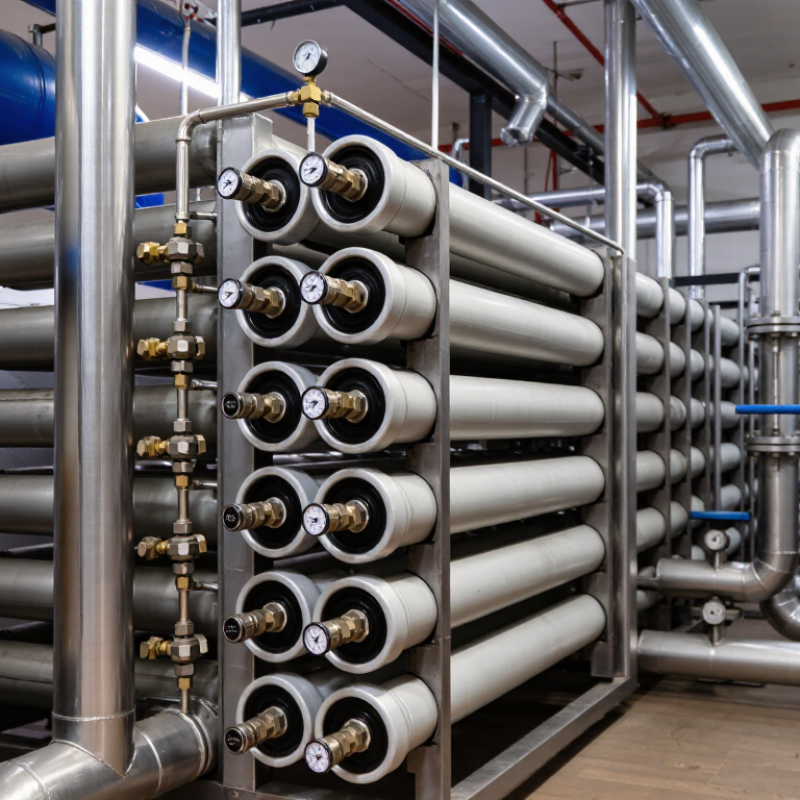
Why Choose Filter Cartridge for Industrial Water Filtration?

What Is a Filter Cartridge in Industrial Water Filtration?

A filter cartridge is a replaceable element installed inside a pressure-rated housing. It removes suspended solids from industrial water before reuse, discharge, or further treatment. The cartridge usually contains pleated membrane, depth-filtering media, or a wound fiber structure. Each design captures particles differently.

Pleated cartridges provide a larger filtration area in a compact cylinder. Depth cartridges trap particles through several layers, not only on the surface. During operation, water flows through the media while dirt remains inside or on its outer layer. Engineers select cartridges by pore rating, flow rate, temperature, chemical compatibility, and pressure loss. A nominal rating may not equal an absolute rating. That detail causes confusion.

Tips: Check pressure gauges on both sides of the housing. Rising differential pressure usually signals loading. Record flow, water quality, and replacement intervals. Inspect the old cartridge, too. Its dirt pattern may reveal upstream corrosion or poor pretreatment. Do not replace it only by habit. However, field conditions can change, and one cartridge size may not suit every shift. Pilot testing remains useful when feed water varies. Small errors matter. Proper sealing also prevents bypass, where untreated water slips around the media. Regular inspections support safer decisions and more consistent filtration performance.

How Filter Cartridges Remove Contaminants from Process Water

In process water, filter cartridges remove contaminants through controlled physical separation. Water passes through a porous structure that traps suspended solids, rust particles, and microbial debris. Depth cartridges capture particles throughout their internal media. Surface cartridges hold larger particles on the outer layer. Some specialized media also adsorb organic compounds or reduce residual chlorine.

The result depends on pore size, flow rate, and contaminant loading. A cartridge rated at five microns may capture many particles, but the rating requires careful interpretation. “Nominal” and “absolute” ratings do not provide identical protection. Operators should monitor differential pressure across the housing. A rising pressure often indicates trapped solids and approaching capacity. Small details matter.

In real facilities, cloudy rinse water can quickly darken a cartridge. That visual evidence helps technicians adjust pretreatment or replacement intervals. However, appearance alone cannot confirm filtration performance. Dissolved salts, very fine chemicals, and some oils may pass through ordinary cartridges.

This is a common limitation. Laboratory sampling and pilot testing provide more reliable evidence than assumptions. Cartridge selection should match the contaminant, temperature, flow demand, and acceptable pressure loss. Even a well-designed system can underperform when the water quality changes unexpectedly.

Key Benefits of Using Filter Cartridges in Industrial Systems

Filter cartridges offer a practical way to control suspended solids in industrial water systems. Their compact design fits inside standard housings and supports quick replacement. Operators can select different media for sediment, carbon, chemicals, or fine particles. This flexibility helps plants respond to changing water conditions.

The benefits become clear during daily operation. A cartridge can protect pumps, membranes, valves, and heat exchangers from damaging particles. Its sealed structure also reduces handling during maintenance. Technicians can monitor pressure loss across the housing and replace the element before flow drops sharply. Simple checks matter. A clear maintenance log can reveal recurring contamination and improve replacement planning. Proper sizing is essential, including flow rate, particle load, temperature, and chemical compatibility.

Filter cartridges are not automatically the best choice for every site. High-solids water may block them quickly and increase operating costs. That limitation deserves attention. In my experience, rushed selection often causes unnecessary shutdowns. A pilot test, realistic water analysis, and manufacturer-neutral performance data provide stronger evidence. Workers should inspect seals, confirm installation direction, and dispose of used elements according to local requirements. Small errors can create leaks. Regular pressure readings, visual inspections, and documented service intervals make the system more reliable. Performance may still vary with seasonal water changes, so the design should allow adjustment rather than assuming conditions will remain stable.

Why Choose Filter Cartridges for Industrial Water Filtration?

Filter cartridges provide a compact, modular solution for controlling suspended solids in industrial water systems. Their replaceable media and selectable micron ratings allow filtration performance to be matched to different process requirements.

How to Read the Chart

The chart shows common nominal particle-size ratings used for industrial filter cartridges, from fine filtration at 0.2 microns to coarse prefiltration at 50 microns. Lower micron ratings target smaller suspended particles, while higher ratings generally provide greater flow capacity and are often used for upstream protection. Actual retention depends on the filter media, construction, operating conditions, and whether the rating is nominal or absolute.

How to Select the Right Filter Cartridge for Your Application

How to Select the Right Filter Cartridge for Your Application

Selecting a filter cartridge starts with the water, not the housing. Test turbidity, suspended solids, oil, temperature, pH, and microbial risk. The required flow rate matters just as much. A cartridge rated at 10 m³/h may perform poorly when pressure rises or solids vary. UN-Water’s 2024 World Water Development Report states that agriculture uses about 70% of global freshwater withdrawals. This pressure makes dependable process-water recovery increasingly important.

Choose the filter media according to the contaminant and the target quality. Depth cartridges suit changing sediment loads, while pleated cartridges provide greater surface area for cleaner streams. Membrane cartridges require tighter control of fouling and pressure. Check absolute, not only nominal, micron ratings. Also verify chemical compatibility, operating temperature, pressure drop, and disposal requirements. The U.S. EPA’s 2023 Drinking Water Infrastructure Needs Survey estimates $625 billion in needs over the next 20 years. Poor filtration choices can add unnecessary maintenance costs to that wider burden.

Pilot testing is often worth the effort. Measure pressure loss across several operating cycles, not just on day one. Record cartridge life under real conditions. Laboratory water can be misleading. A smaller cartridge may appear cheaper, yet frequent replacement can increase labor, waste, and downtime. Selection is rarely perfect on the first attempt. Review the data, question the assumptions, and adjust the specification before full-scale installation.

Maintenance, Replacement, and Performance Considerations

Industrial water filtration depends on stable flow, clean equipment, and timely cartridge replacement. Cartridge filters offer practical control because operators can inspect, remove, and replace individual elements. In daily operation, measure inlet and outlet pressure before starting each shift. A rising pressure difference often signals particle loading. A clear housing helps reveal discoloration, sludge, or uneven flow. Do not trust pressure readings blindly. Gauge drift happens.

Maintenance should include housing inspection, seal checks, and careful cleaning of contact surfaces. Flush the system after installation to remove loose particles. Disposable cartridges should not be washed and reused unless the manufacturer clearly permits it. Reuse may damage fibers and increase microbial risk. Keep spare cartridges sealed and stored away from heat, moisture, and chemicals. Small storage mistakes can reduce performance.

Replacement timing should follow pressure drop, flow decline, water quality, and operating hours. A fixed calendar interval is convenient, but it may be wrong. High turbidity can load a cartridge within days, while cleaner water may extend service life. Select the micron rating according to the actual contaminant, not only the desired clarity. Finer filtration can improve protection, yet it may increase pressure loss and energy use. Field sampling remains important because visual inspection cannot measure every contaminant. A practical record should include flow rate, pressure, replacement date, and cartridge condition. Perfect scheduling is unrealistic. Review the data and adjust the interval.

Why Choose Filter Cartridge for Industrial Water Filtration? - Maintenance, Replacement, and Performance Considerations
Consideration Typical Industrial Cartridge-Filtration Data Maintenance or Replacement Implication Performance Benefit Practical Selection Note
Filtration ratings 0.2–100 µm nominal or absolute ratings are commonly available, depending on the application. Choose the rating according to the target contaminant and required downstream protection; an unnecessarily fine rating can increase pressure drop. Supports removal of suspended solids, sediment, rust particles, and selected microorganisms when the cartridge and process are properly validated. Particle-size requirements, not the lowest available micron rating, should determine cartridge selection.
Initial pressure drop Clean-cartridge pressure loss is commonly about 0.03–0.20 bar, depending on flow rate, media, housing, and cartridge length. Record the clean differential pressure after installation to establish a reliable replacement baseline. Lower initial pressure loss helps maintain pump efficiency and available process flow. Compare pressure-drop curves at the actual operating flow instead of relying only on nominal flow claims.
Replacement trigger A common operating limit is a differential pressure increase of approximately 0.7–1.5 bar, subject to equipment and process specifications. Replace the cartridge when the approved differential-pressure limit is reached, flow becomes inadequate, or water quality declines. Timely replacement reduces the risk of bypass, media damage, and unplanned process interruption. Use a differential-pressure gauge or transmitter on the housing inlet and outlet.
Typical service interval Approximately days to several months; actual life depends on solids loading, flow, pretreatment, and water quality. Do not use a fixed calendar interval alone. Review pressure trend, throughput, and treated-water results. Condition-based replacement can reduce premature disposal and avoid operating with overloaded media. High-turbidity water generally requires better pretreatment or more frequent cartridge changes.
Flow capacity Many industrial cartridges handle roughly 5–40 L/min each, while high-flow designs can handle substantially more. Oversizing the cartridge area can extend service life and reduce the frequency of changeouts. Correct sizing maintains stable flow and reduces excessive pressure loss across the filter bank. Calculate total flow, peak flow, viscosity, temperature, and allowable pressure drop before selecting the number of cartridges.
Particle-loading capacity Capacity varies widely by media and construction; a higher dirt-holding capacity generally provides longer service under comparable conditions. Inspect the removed cartridge and compare actual loading with operating data to improve future sizing. Higher loading capacity can reduce labor, shutdown frequency, and cartridge consumption. Do not compare capacity values unless test conditions and endpoint criteria are equivalent.
Material compatibility Common construction materials include polypropylene, cellulose, polyester, nylon, and fluoropolymer-based components. Check compatibility with pH, oxidants, solvents, oils, temperature, and cleaning chemicals before use. Compatible materials help prevent swelling, fiber release, deformation, and premature failure. Review chemical-resistance data for the complete cartridge assembly, including seals and support components.
Temperature capability Many polymeric cartridges are used below approximately 60–80°C; the allowable temperature is design- and material-dependent. Operating above the rated temperature can shorten service life or compromise structural integrity. Staying within the rated range preserves filtration performance and housing safety. Use the lowest applicable component temperature rating when the process has temperature fluctuations.
Microbial control Membrane cartridges with ratings around 0.2–0.45 µm may provide microbial reduction when validated for the target organisms and operating conditions. Sanitize or replace according to the validated procedure; monitor integrity where critical water quality is required. Can provide a physical barrier before sensitive process steps, but it is not automatically equivalent to sterilization. Validate retention, integrity testing, sanitization compatibility, and installation practices for critical applications.
Cleaning and reuse Some cartridges are designed for limited cleaning, while many disposable depth cartridges are intended for single use. Reuse only when the manufacturer’s material and process validation support it; otherwise, replace after loading or contamination. Appropriate reuse may reduce waste, but unsuitable cleaning can damage media or cause cross-contamination. Document cleaning chemicals, temperature, contact time, rinse quality, and post-cleaning performance.
Installation controls Correct sealing, flow direction, housing venting, and cartridge seating are essential for reliable operation. Inspect O-rings, gaskets, end caps, and housing surfaces during every changeout. Proper installation minimizes bypass, leakage, air locking, and premature pressure increase. Use a controlled changeout checklist and confirm the housing is depressurized before opening.
Monitoring requirements Useful indicators include inlet and outlet pressure, differential pressure, flow rate, turbidity, conductivity, and microbiological results where applicable. Trend data makes it easier to identify fouling, upstream process changes, or abnormal cartridge failure. Continuous or routine monitoring improves consistency and supports predictive maintenance. Set alarm limits below the maximum allowable differential pressure to provide time for planned replacement.
Waste and operating cost Cartridge operating cost includes media, labor, disposal, water loss, downtime, and pressure-related energy consumption. Longer-life cartridges and effective pretreatment can reduce changeout frequency, but must be evaluated against purchase cost. A total-cost approach can improve efficiency without compromising treated-water quality. Compare cost per treated cubic meter rather than cartridge price alone.
Best-fit applications Common uses include pretreatment, final polishing, cooling-water protection, process-water filtration, and membrane-system protection. Define the contaminant load and required water quality before selecting depth, pleated, or membrane media. Cartridge systems are modular, compact, and suitable for staged filtration. Use staged filtration when coarse solids would otherwise rapidly overload a fine or membrane cartridge.

FAQS

What is an industrial water filter cartridge?

It is a replaceable element inside a pressure-rated housing. It removes suspended solids from industrial water.

How do filter cartridges capture particles?

Pleated media offers a large filtration area in a compact cylinder. Depth media traps particles through several layers.

How should operators choose a cartridge?

Consider pore rating, flow rate, temperature, chemical compatibility, and pressure loss. Nominal and absolute ratings are not identical.

How can operators tell when replacement is needed?

Check inlet and outlet pressure regularly. Rising differential pressure often indicates particle loading.

Should cartridges be replaced on a fixed schedule?

Not always. High turbidity may block a cartridge within days, while cleaner water can extend its service life.

Can disposable cartridges be washed and reused?

Only when permitted by clear technical instructions. Washing may damage fibers and increase microbial risk.

What maintenance steps support stable filtration?

Inspect the housing, seals, and contact surfaces. Flush the system after installation to remove loose particles.

What can an old cartridge reveal?

Its dirt pattern may show upstream corrosion, uneven flow, or weak pretreatment. This clue is useful, but not conclusive.

Why is pilot testing sometimes necessary?

Feed water can change between shifts or seasons. Small trials help confirm whether one cartridge design remains suitable.

What records should operators keep?

Record flow rate, pressure, replacement dates, water quality, and cartridge condition. Perfect scheduling is unrealistic.

Conclusion

A Filter Cartridge is a replaceable filtration element designed to remove suspended solids, particles, and other unwanted substances from industrial process water. As water passes through its porous media, contaminants are captured by surface filtration, depth filtration, or a combination of both. This helps protect pumps, pipelines, membranes, heat exchangers, and other equipment while supporting stable water quality throughout the production process.

The main advantages of filter cartridges include flexible installation, efficient contaminant removal, compact design, and convenient replacement. To choose the right cartridge, users should consider the water characteristics, target contaminants, flow rate, operating pressure, temperature, filtration rating, and material compatibility. Proper maintenance is also essential. Regular inspections, pressure monitoring, timely replacement, and correct installation can prevent reduced performance and unexpected downtime. Selecting and managing the cartridge according to actual operating conditions allows industrial systems to achieve reliable, consistent, and cost-effective filtration results.


Sophia

Sophia

Sophia is a dedicated marketing professional with an exceptional depth of knowledge about her company's products and services. With a keen understanding of market trends and customer needs, she crafts insightful blog posts that not only inform but also engage readers, enriching the company’s online......