Choosing the right Filter Element is not a simple matter of matching a part number. It requires understanding the fluid, equipment, operating pressure, temperature, and contamination profile. A cartridge that performs well in clean hydraulic oil may fail quickly in dusty process water. The details matter.
“Filtration performance begins with understanding the contaminant, not merely selecting a finer rating,” says Dr. Andrew N. H. Ward, an industrial filtration specialist. His observation reflects a practical truth: micron ratings alone cannot predict service life. Engineers should examine nominal versus absolute ratings, media compatibility, flow capacity, pressure-drop limits, and sealing materials. They should also confirm whether the element suits continuous operation, sudden surges, or frequent cleaning cycles.
A useful selection process starts with real operating evidence. Record the fluid temperature at the inlet. Measure differential pressure across the housing. Inspect the removed element. Its surface may reveal rust, fibers, sludge, or unexpected chemical attack. These clues can be more useful than assumptions in a specification sheet.
Standards and test data improve reliability, but they do not remove uncertainty. Laboratory conditions may differ from a busy plant with vibration, fluctuating flow, and inconsistent maintenance. That is an uncomfortable limitation. No Filter Element remains effective when installation is careless or replacement intervals are guessed.
This guide explains how to compare filter media, ratings, dimensions, and performance claims. It also considers total operating cost, not only purchase price. The best choice protects equipment, stabilizes production, and provides measurable results. Sometimes, the correct answer emerges only after reviewing a failed element closely.
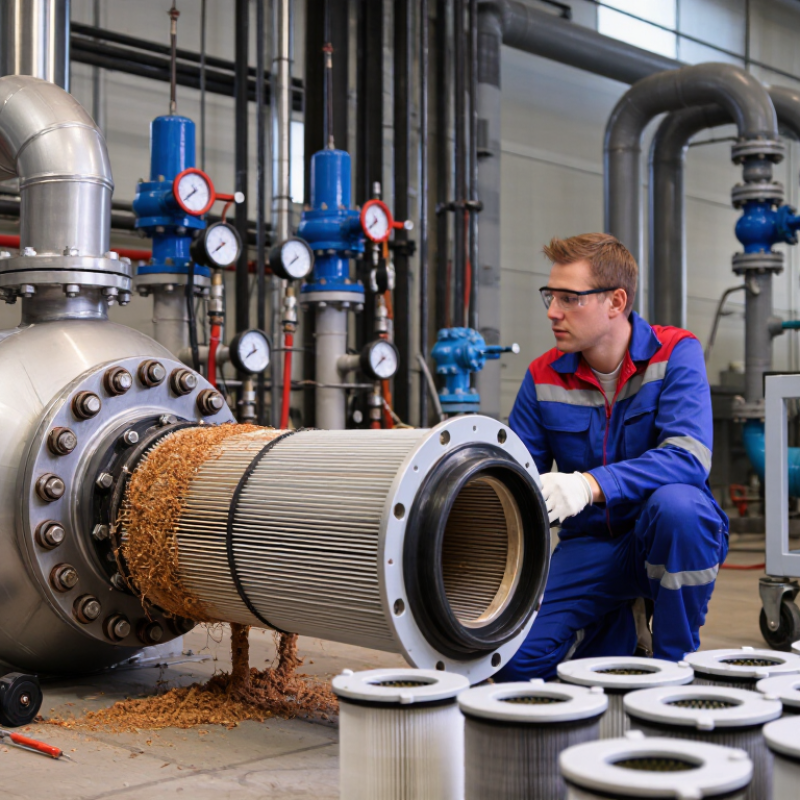
How to Choose the Right Filter Element?
Define the filter element’s purpose and operating conditions before comparing materials or pore ratings. Is the element protecting a pump, removing visible particles, or supporting a precise process? Each purpose demands a different retention level, flow capacity, and service life. A filter designed for final cleanliness may restrict flow when used as a high-contamination prefilter.
Purpose comes before pore size.
Review the fluid carefully. Record its temperature, viscosity, chemical compatibility, and expected particle load. Then check the normal flow rate, pressure range, and allowable pressure drop. The element must also tolerate start-up surges, pulsating flow, and pressure changes. In hydraulic service, for example, a small increase in differential pressure can signal loading before performance visibly declines. Ignoring this warning may damage the element or reduce equipment protection.
Details matter.
Select an element with suitable media, seals, strength, and connection geometry. Confirm collapse and burst ratings under real operating conditions, not only nominal laboratory values. Maintenance access also matters; an element that is difficult to inspect may be replaced too late. A common mistake is choosing the finest available rating without checking viscosity or dirt-holding capacity. That choice can look efficient on paper but cause frequent replacement in practice. Recheck assumptions after the first operating cycle, because actual contamination rarely matches initial estimates.
| Filter Purpose | Typical Fluid | Main Contaminant | Recommended Filter Media | Typical Filtration Rating | Typical Flow Range | Operating Temperature | Key Selection Considerations |
|---|---|---|---|---|---|---|---|
| General particulate removal | Water or low-viscosity liquid | Sand, rust, scale, and suspended solids | Polypropylene depth media or pleated polyester | 5–50 μm | 5–100 L/min per element | Approximately 5–60°C | Select the pore rating according to the smallest particle that must be removed and the acceptable pressure drop. |
| Fine liquid clarification | Process water, solvents, or chemicals | Fine particles and process debris | Pleated membrane or fine fiber media | 0.2–5 μm | 2–50 L/min per element | Depends on media and chemical compatibility | Confirm compatibility with pH, solvents, oxidizing agents, and the required absolute or nominal rating. |
| Hydraulic oil protection | Mineral-based hydraulic oil | Wear particles, dust, and metal fines | Glass-fiber or synthetic pleated media | 3–25 μm(c) | 10–300 L/min per element | Approximately −20–100°C | Use beta-rated performance data, verify oil compatibility, and size the element for cold-start viscosity. |
| Compressed-air coalescing | Compressed air | Oil aerosols, water aerosols, and fine solids | Borosilicate microglass or synthetic coalescing media | 0.01–1 μm aerosol range | 20–2,000 m³/h | Typically 5–65°C | Check air velocity, inlet pressure, aerosol loading, drainage design, and initial pressure drop. |
| Gas and air particle removal | Dry air or industrial gas | Dust, powder, and solid particles | Pleated synthetic or cellulose-based media | 1–10 μm | 50–5,000 m³/h | Typically 5–80°C | Account for gas density, pressure, humidity, dust concentration, and the required cleaning interval. |
| High-efficiency air filtration | Ventilation or cleanroom air | Fine dust, smoke, and airborne particles | Fine-fiber or microglass pleated media | Approximately 0.1–1 μm test particles | 300–4,000 m³/h per filter | Typically 5–80°C | Specify the applicable efficiency classification, airflow, leakage limits, and maximum final pressure drop. |
| Food and beverage liquid filtration | Water, syrup, juice, or process liquid | Particles, fibers, and microbial contaminants | Food-contact polypropylene or validated membrane media | 0.2–10 μm | 1–100 L/min per element | Typically 5–80°C | Verify food-contact compliance, cleanability, sanitization conditions, extractables, and retention performance. |
| High-temperature gas filtration | Hot process gas or combustion gas | Ash, catalyst fines, and high-temperature dust | Sintered metal, ceramic, or high-temperature fiber media | 1–20 μm | Process-specific; commonly 100–10,000 m³/h | Approximately 200–800°C, depending on construction | Confirm thermal shock resistance, corrosion resistance, cleaning method, and allowable pressure drop. |
Particle size changes how contaminants move through filter media. Large dust may collect on the surface. Fine particles can travel deeper. Oil, water, fibers, and biological matter also need different materials.
Under defined liquid test conditions, it represents about 99.5% efficiency near 10 micrometers. It is useful, but not a complete selection answer.
Synthetic media usually tolerate moisture better than many cellulose options. Cellulose may suit dry dust. Glass fiber can provide high efficiency, but pressure loss may increase.
Pleated elements provide more surface area than flat panels. Deep pleats may extend service life. Tight spacing can trap dust quickly and raise resistance.
Yes. Greater efficiency often increases pressure drop. Check airflow and fan capacity together. A powerful-looking filter may consume more energy.
Confirm dimensions, connection style, pressure rating, flow direction, fluid, temperature, and chemical exposure. Check the seal carefully. A small gap can cause bypass leakage.
Track differential pressure, airflow changes, and visible contamination. Take readings under similar conditions. Dirty or badly positioned sensors can mislead maintenance decisions.
Not always. Replacement timing should combine pressure readings, operating history, dust loading, and technician judgment. Recheck the plan after three months. Some decisions remain imperfect.
Choosing the right Filter Element begins with a clear understanding of its purpose and operating conditions. Consider the type of equipment, fluid or gas being processed, working temperature, pressure, flow rate, and the level of contamination expected. The element’s filtration performance should match the size and nature of the particles being removed, whether they are dust, debris, moisture, oil, or other contaminants. Selecting a suitable filter material and structure is also essential, as different designs offer varying levels of efficiency, strength, and dirt-holding capacity.
Before purchasing, evaluate the Filter Element’s compatibility with the system and estimate its service life under actual operating conditions. Easy maintenance, replacement frequency, and safe handling can strongly affect long-term performance and operating costs. It is also important to compare relevant quality standards, total ownership costs, manufacturing consistency, and supplier support. A careful evaluation of these factors helps ensure reliable filtration, protects equipment, and provides a practical balance between performance, durability, and value.