Global buyers rarely need the same Candle Filter Elements. A beverage plant may prioritize sanitary stainless steel and easy validation. A chemical processor may require PTFE, polypropylene, or corrosion-resistant alloys. The correct choice depends on the fluid, solids, temperature, pressure, and cleaning method.
Small details matter. A filter element with the wrong pore rating may reduce flow or allow unwanted particles through. Surface finish also affects cleaning performance and product retention. Buyers should review micron ratings, filtration area, connection type, gasket material, and operating limits. Supplier documentation should include batch traceability, inspection records, test results, and clear replacement guidance. These records support responsible purchasing and help teams compare suppliers across different markets.
There is no universal best option. That is easy to forget. The lowest quoted price may hide short service life, difficult maintenance, or inconsistent quality. A practical evaluation should combine technical data with supplier experience, application references, and after-sales support. Buyers can request samples, inspect welds, and test pressure drop under realistic conditions. Regional requirements may also influence material approvals, hygiene standards, labeling, and import documents. Specifications can look complete but still miss cleaning chemicals or seasonal viscosity changes. That deserves a second review. This guide examines the leading Candle Filter Elements for global purchasing decisions, while recognizing that dependable performance comes from matching the element to the complete process, not from selecting a popular product alone.
What Are the Top Candle Filter Elements for Global Buyers?
Candle Filter Elements: Definition, Purpose, and Core Functions
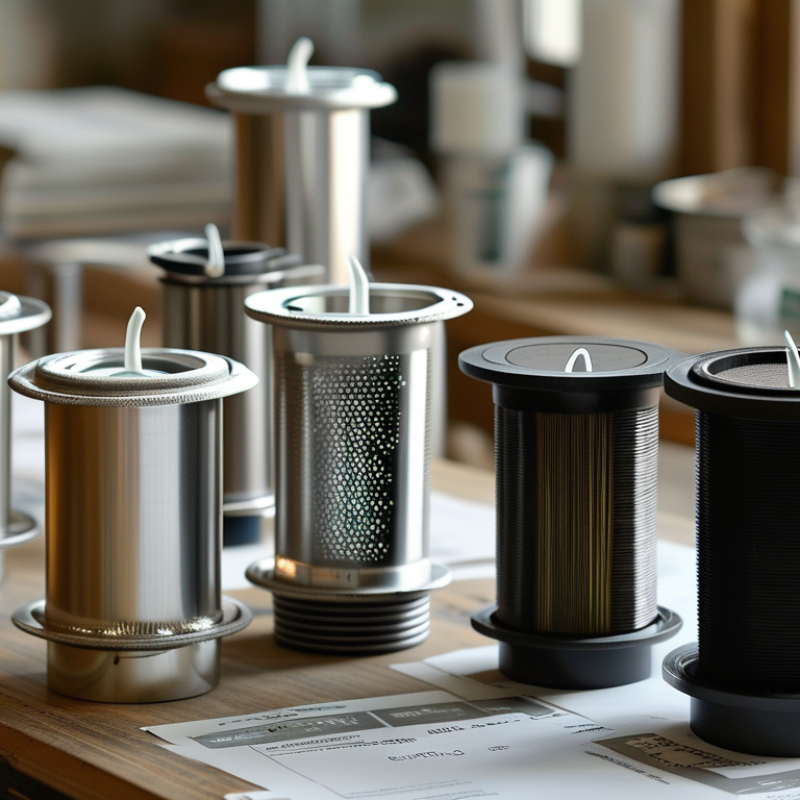
Candle filter elements are cylindrical filtration components fitted inside a pressure vessel. Their shape resembles a long candle. Fluid passes through a porous surface, while particles remain on the element’s outer layer or within its media. Common materials include stainless steel mesh, sintered metal, ceramics, and engineered polymers. The correct material depends on fluid chemistry, temperature, pressure, and cleaning conditions.
Their main purpose is controlled solid-liquid or gas-solid separation. In process plants, candle elements can remove fine particles from water, oils, chemicals, compressed gases, and other industrial fluids. They support stable flow and protect downstream pumps, valves, membranes, and filling equipment. During operation, collected solids form a filter cake. This cake may improve filtration, but excessive buildup increases pressure loss. Operators must monitor differential pressure instead of relying only on scheduled replacement.
Core functions include particle retention, flow distribution, mechanical support, and cleanability. Buyers should check micron rating, permeability, effective filtration area, connection size, operating pressure, and temperature limits. A smaller micron rating is not automatically better. It can restrict flow and raise energy use. Real process data is often incomplete, which makes selection less precise. Pilot testing or a documented sample evaluation can reveal weaknesses before full-scale purchasing. Traceable material certificates, inspection records, and consistent dimensional tolerances also improve supply reliability across international projects.
What Are the Top Candle Filter Elements for Global Buyers?
Candle filter performance begins with the element’s construction material. Stainless steel, especially 316L, is widely used for high-pressure and repeated cleaning cycles. Its rigid structure supports stable micron ratings and strong mechanical resistance. Sintered metal and woven mesh offer different pore patterns, so buyers should not compare them by micron size alone.
Polypropylene suits many water-based and mildly corrosive processes. PTFE provides stronger chemical resistance and performs well with aggressive fluids. PVDF offers a practical balance between purity, durability, and cost. Ceramic elements tolerate high temperatures and can handle demanding thermal applications, but they are more fragile during transport and installation. Small detail. It matters.
The choice should match temperature, viscosity, pressure, cleaning method, and required service life. MarketsandMarkets’ Industrial Filtration Market report identifies rising process-efficiency requirements as a major demand driver through 2028. Grand View Research also reports continued growth in global industrial filtration, linked to water treatment and stricter process controls. These figures support the market direction, not every purchase decision. A specification can still be wrong.
In field evaluations, buyers should request test data for pressure drop, particle retention, chemical compatibility, and cleanability. A 5-micron rating does not guarantee identical performance across materials. Housing design, sealing quality, and flow distribution can change actual results. For global procurement, documentation and batch traceability deserve equal attention.
Representative maximum continuous service temperatures of common materials used in candle filter element media or support construction. Actual limits vary by grade, pressure, chemical exposure, and equipment design.
Polypropylene and polyethylene are economical choices for moderate-temperature liquid filtration. PVDF and PTFE provide stronger chemical resistance, while 316L stainless steel is selected for high-temperature, pressure-resistant, and cleanable applications.
Global buyers should compare candle filter elements through three connected measures: filtration accuracy, flow rate, and capacity. Nominal micron ratings alone can mislead. A 5-micron element may perform differently under changing viscosity, pressure, and particle shape. ISO 16889:2022 recommends reporting filter performance with beta ratios, such as β1000, rather than relying only on a micron label. This ratio indicates particle removal efficiency at a defined size. Ask suppliers for test fluid, temperature, differential pressure, and particle concentration. Otherwise, the number lacks context.
Flow rate should be stated in liters per minute per square meter, with viscosity clearly shown. A laboratory value using water may not represent a real process using oil, syrup, or solvent-free industrial liquids. Capacity is equally important. Compare total throughput before reaching the supplier’s terminal pressure-drop limit. ASTM F838 data, for applicable sterilizing-grade applications, uses a bacterial challenge of at least 10⁷ organisms per square centimeter. That demonstrates why validated testing matters more than attractive catalog claims. Keep records.
A practical trial should monitor pressure every few minutes. Small details matter. Measure the clean-element pressure drop first, then track the rise during operation. Elements with higher surface area often extend service life, but excessive area can increase housing cost and cleaning difficulty. This is where comparisons become imperfect. Real feed conditions change. Buyers should request independent test reports, repeat testing with representative fluids, and examine whether capacity figures reflect actual production or controlled laboratory conditions.
What Are the Top Candle Filter Elements for Global Buyers?
Global buyers should evaluate candle filter elements against recognized quality standards, not attractive catalog descriptions. Important references may include ISO 2942 for filter integrity and ISO 16889 for filtration performance. The correct standard depends on the equipment and application. A candle element used in hydraulic oil may not suit water, chemicals, or process gases. Confirm the test method, pressure rating, temperature range, and filtration accuracy before ordering.
Compatibility is equally important. Check the element length, outer diameter, connection type, sealing material, and installation direction. A small mismatch can cause bypass leakage. In practical sourcing reviews, drawings often reveal problems that samples hide. Material certificates, inspection reports, and batch traceability also support reliable purchasing. Stainless steel may resist corrosion, but it is not automatically suitable for every fluid. Chemical exposure still needs careful review.
Tips: Ask for a dimensional drawing and a complete test report. Compare the reported micron rating with the actual operating flow. Request a sample before approving a large order. It is wise to check seal swelling after exposure to the working fluid. A perfect specification on paper can still fail in service. Some suppliers provide incomplete data, and buyers should question that gap. Regional certification needs may also differ, so confirm current requirements with a qualified compliance professional.
| Filter Element Category | Typical Filter Media | Common Filtration Rating | Typical Temperature Capability | Compatibility Considerations | Relevant Quality or Test Requirements | Typical Applications |
|---|---|---|---|---|---|---|
| Sintered Metal Candle | Stainless steel powder, woven wire mesh, or sintered bronze | Approximately 1–100 µm, depending on pore structure | Often suitable for high-temperature service; the practical limit depends on alloy, seals, pressure, and process conditions | Confirm resistance to the process fluid, galvanic compatibility, cleanability, and connection dimensions | Dimensional inspection, material traceability, pressure or burst testing, and integrity testing where applicable | Gas filtration, catalyst recovery, hydraulic systems, hot process fluids, and reusable filtration |
| Pleated Stainless-Steel Mesh Candle | Multi-layer woven stainless-steel mesh with a perforated support tube | Commonly about 5–200 µm; rating must be defined as nominal or absolute | Generally appropriate for elevated temperatures when metal construction and compatible seals are used | Check mesh grade, pleat geometry, flow direction, pressure drop, and housing fit | ISO 2942-style filter-element integrity testing may be specified for suitable filter constructions; verify the test method with the supplier | Liquid clarification, polymer processing, chemical processing, and oil filtration |
| Sintered Porous Plastic Candle | Porous polyethylene or polypropylene | Commonly about 5–100 µm | Typically lower than metal elements; polypropylene and polyethylene limits vary by grade and operating pressure | Evaluate solvent resistance, swelling, extractables, temperature, and chemical compatibility before use | Lot consistency, bubble-point or pressure-hold testing when applicable, dimensional checks, and documented material grade | Water treatment, low-temperature chemical filtration, plating solutions, and air or gas prefiltration |
| Depth-Filter Candle | Cellulose, polypropylene microfiber, glass fiber, or graded-depth media | Typically 0.5–100 µm nominal; performance varies with contaminant type and loading | Depends strongly on the media and binder; polymeric media generally require lower operating temperatures than metal media | Confirm compatibility with the fluid, adhesive or binder, allowable pressure drop, and disposal requirements | Particle-retention testing, extractables assessment where required, flow-rate testing, and batch identification | Pre-filtration, paint and coating fluids, process water, lubricants, and general industrial liquid filtration |
| Membrane Candle | Polyethersulfone, polyamide, PTFE, or polypropylene membrane | Commonly 0.1–1.2 µm for sterilizing or fine liquid filtration, depending on membrane type | Controlled by membrane polymer, support material, seals, and sterilization method | Review hydrophilicity, solvent resistance, pH range, operating pressure, and whether the membrane is suitable for gas or liquid service | Integrity testing such as bubble-point, diffusion, or pressure-hold testing; microbial-retention claims require validated product-specific data | Fine chemical processing, sterile liquid filtration, laboratory service, and high-purity water systems |
| PTFE Gas-Filter Candle | Expanded PTFE membrane with a support layer | Often specified by membrane pore size or aerosol-retention performance rather than a simple liquid micron rating | Suitable for many chemically aggressive gases; the actual limit depends on support, seals, pressure, and temperature | Confirm compatibility with hydrocarbon vapors, oxidizing gases, solvents, humidity, and sterilization conditions | Hydrophobicity verification, pressure-hold or integrity testing, aerosol-retention testing where required, and leak testing | Compressed-gas filtration, vent filtration, tank venting, and protection of sensitive process equipment |
| Coalescing Candle | Glass fiber, synthetic fiber, or multilayer coalescing media | Usually selected by liquid-droplet removal efficiency and gas-flow performance rather than nominal particle size alone | Depends on fiber material, binder, drain layer, seals, and gas composition | Check aerosol loading, oil carryover, differential pressure, orientation, drainage, and compatibility with compressed gases | Pressure-drop testing, liquid carryover measurement, efficiency testing, and element integrity or leak testing | Compressed-air treatment, natural-gas conditioning, vacuum systems, and removal of oil aerosols |
| High-Flow Candle | Large-area pleated synthetic or glass-fiber media | Commonly about 1–100 µm, with rating defined by the manufacturer’s test method | Usually selected for moderate-temperature service unless a high-temperature media grade is specified | Verify flow direction, available installation space, end-cap design, maximum differential pressure, and bypass risk | Flow-rate and pressure-drop curves, particle-retention data, end-cap bond inspection, and batch traceability | Cooling water, industrial process water, feedwater, and high-throughput liquid systems |
| Hydraulic Filter Candle | Microglass fiber, cellulose, stainless-steel mesh, or synthetic media | Often specified using an ISO 16889 multi-pass rating; beta ratios must be stated with the test particle size | Depends on media, seals, fluid type, and hydraulic system temperature | Check fluid viscosity, pressure rating, collapse strength, seal material, cleanliness level, and bypass-valve settings | ISO 16889 multi-pass performance, ISO 2941 collapse or burst testing, ISO 3723 end-load testing, and ISO 3968 pressure-drop evaluation may be specified | Mobile hydraulics, industrial power units, lubrication circuits, and transmission systems |
| Food or Pharmaceutical-Process Candle | 316L stainless steel, validated polymer membrane, or approved depth media | Application-specific; fine filtration may range from submicron membrane ratings to several microns for clarification | Must be established for the media, seals, cleaning agents, and sterilization cycle | Require suitable surface finish, cleanability, extractables information, hygienic connections, and documented material compliance | Material certificates, surface-finish records, clean-in-place compatibility, integrity testing, and product-specific regulatory documentation | Food and beverage processing, pharmaceutical solutions, biotechnology, and high-purity process fluids |
| Dust-Collection Candle | Spunbond polyester, cellulose-polyester blend, PTFE-coated media, or other dry-filtration media | Often selected by particle-size efficiency, air-to-cloth ratio, and emissions target rather than a nominal liquid micron rating | Varies by media, coating, dust chemistry, humidity, and cleaning temperature | Consider dust explosibility, moisture, static control, abrasion, pulse-cleaning pressure, and operating airflow | Airflow and pressure-drop testing, dust-release evaluation, dimensional inspection, grounding requirements, and applicable local emissions testing | Cement, minerals, powder processing, woodworking, food powders, and industrial dust collection |
Selecting a candle filter element starts with the liquid, not the equipment catalogue. Viscosity, temperature, solids concentration, and chemical compatibility directly affect performance. Fine-particle removal may require a smaller pore rating, but excessive fineness can reduce flow and increase cleaning frequency. For high-temperature liquids, the element material must tolerate repeated thermal cycles without distortion. In corrosive service, confirm compatibility with both the process liquid and cleaning chemicals.
Application experience also matters. A filter used for water-based processing may need a different surface structure than one handling resin, oil, or mineral slurry. Surface filtration can capture particles efficiently, while deeper structures may hold more contaminant before pressure rises. Check the operating pressure, available filtration area, connection size, and expected flow rate together. One overlooked detail can cause premature blockage. Laboratory data helps, but a small pilot test is still valuable. Results may differ in real production.
It is a long, cylindrical filter fitted inside a pressure vessel. Fluid crosses its porous surface. Particles stay on or inside the media.
Common options include stainless steel, sintered metal, woven mesh, ceramic, and engineered polymers. Each material behaves differently. Choose carefully.
It separates solids from liquids or gases. Typical fluids include water, oils, chemicals, and compressed gases. It also protects pumps and valves.
Trapped particles form a filter cake on the surface. The cake may improve filtration. Too much buildup raises pressure loss.
Check micron rating, permeability, filtration area, connection size, pressure, and temperature limits. Confirm the element length and outer diameter.
No. A smaller rating can restrict flow and increase energy use. The finest option may be unsuitable.
Compare pressure drop, particle retention, chemical resistance, cleaning performance, and service life. Identical micron ratings can perform differently.
Request dimensional drawings, material certificates, inspection records, test data, and batch traceability. Ask for a sample first. Paperwork can still miss problems.
Check seals, connections, flow direction, and chemical exposure. Test seal swelling with the working fluid. Small mismatches can cause bypass leakage.
Candle Filter Elements are cylindrical filtration components designed to remove suspended solids, particles, and other contaminants from liquids or gases. Their structure typically includes a porous filtering layer supported by a durable core, allowing fluid to pass through while retaining unwanted materials. Common construction materials include stainless steel, polymeric media, ceramic, and other corrosion-resistant substances, with the ideal choice depending on temperature, chemical exposure, pressure, and hygiene requirements.
For global buyers, selecting the right Candle Filter Elements requires a balanced comparison of filtration accuracy, flow rate, dirt-holding capacity, service life, and maintenance needs. Buyers should also confirm dimensional compatibility, connection standards, pressure ratings, and quality documentation before purchase. Different applications may require fine filtration for sensitive processes, higher capacity for heavily contaminated fluids, or robust materials for demanding industrial conditions. A careful evaluation of operating conditions, regulatory expectations, and total lifecycle cost can help ensure reliable performance and consistent filtration results.