China’s industrial filtration market serves demanding operations, from chemical processing to water treatment and polymer production. A Plastic Candle Filter can remove suspended solids while maintaining steady flow, but its performance depends on more than the filter’s shape. Buyers need to compare media compatibility, filtration rating, operating pressure, temperature limits, cleaning method, and replacement intervals. Small details matter.
The OECD’s Global Plastics Outlook (2022) reports that global plastics production reached 460 million tonnes in 2019, roughly double its 2000 level. The report tracks plastics production and waste, not filtration equipment demand, so it should not be treated as a market forecast for candle filters. Still, it highlights the scale of plastic processing, where reliable filtration can protect equipment and help maintain product consistency. Supplier claims deserve careful checking.
For companies assessing China-based suppliers, useful evidence includes material specifications, dimensional drawings, documented quality controls, and test results tied to the proposed application. Ask how a supplier verifies micron ratings and manages batch traceability. Request references for comparable fluids and operating conditions, not just a broad customer list. A polished catalog is not proof. This guide examines what distinguishes capable suppliers, which questions reveal practical experience, and where quotations may leave important details unclear. No shortlist can replace application-specific testing; that is an imperfect but necessary step before selecting a filter for continuous service.
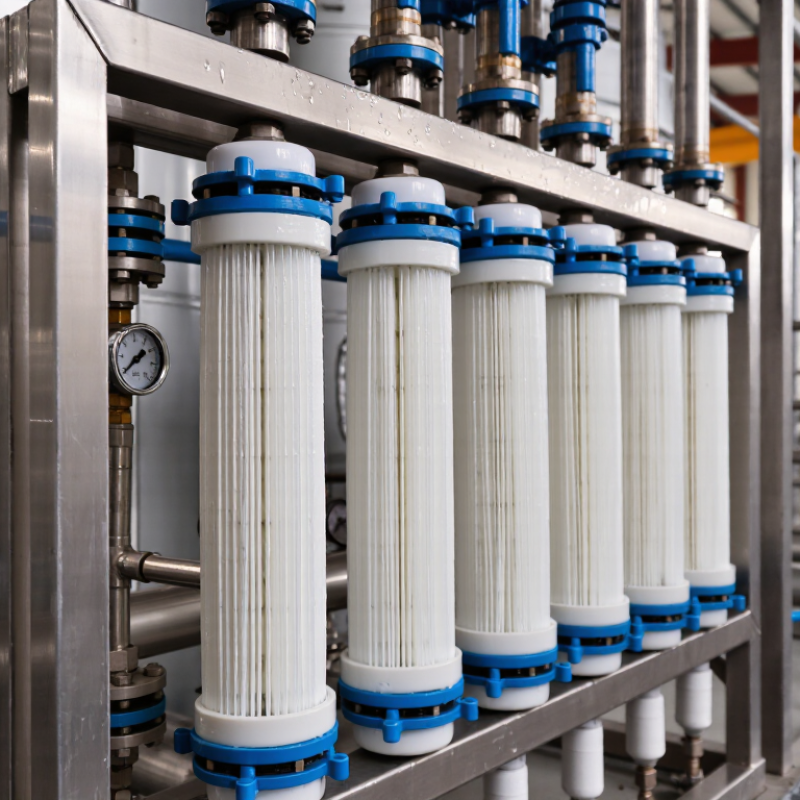
Plastic candle filters use porous polymer elements to capture suspended particles from liquids. Their cylindrical shape offers a large filtration area within a compact housing. Depending on the material and pore rating, they may suit water treatment, chemical processing, food production, or other industrial applications.
Compatibility matters. Confirm that the filter material can withstand the liquid’s temperature, chemistry, and operating pressure.
A filter that works well in one process may perform poorly in another. Fine particles can block pores, while aggressive cleaning may shorten element life. Check pressure drop, flow rate, and cleaning requirements under realistic operating conditions.
A specification sheet rarely tells the whole story; actual feed conditions can reveal overlooked issues. Ask suppliers for clear material data and test guidance, not just a claimed filtration rating.
Tips: Match the pore rating to the target particles, then verify performance with a sample or process trial. Check dimensions and sealing details before installation. Keep records of pressure changes and cleaning cycles. Small details matter. Recheck compatibility whenever the process liquid or temperature changes.
China’s plastic candle-filter supplier market is a production chain, not a single supplier category. It includes plastic resin processors, mold makers, precision-machining shops, and firms that assemble complete filter elements. Some suppliers control most steps; others rely on nearby subcontractors for molded end caps or perforated support cores. Buyers may therefore see similar-looking products with very different levels of process control.
The National Bureau of Statistics of China reported
74.885 million tonnes of plastic-products output in 2023.
That figure covers the wider industry, not candle filters specifically. It indicates manufacturing capacity, not filter demand. The distinction matters. A factory’s scale alone says little about pore consistency or chemical compatibility. Ask for material grades, dimensional tolerances, and test records tied to the actual filter model. Request samples from more than one production batch, then check sealing surfaces and dimensions. Small details count. The market is not perfectly tidy, and supplier roles can overlap. I would treat claims of full in-house production as something to verify, not assume.
Choosing a plastic candle filter supplier takes more than comparing quoted prices. Grand View Research’s industrial filtration market analysis estimated the global market exceeded US$30 billion in 2023, reflecting demand for dependable filtration across industries. For buyers, the practical question is whether a supplier can verify performance under the actual process conditions.
Ask for resin specifications, operating-temperature limits, pressure ratings, pore-size tolerances, and chemical-compatibility data. Request test records for the finished element, not only raw material certificates.
ISO 16889 offers a useful reference for filtration-efficiency reporting: a beta ratio of 1,000 corresponds to 99.9% particle removal at the stated particle size. It was developed for hydraulic filter testing, so it should not be treated as direct certification for every process candle filter. Check whether the supplier’s test method fits your application.
Review sample dimensions and inspect welds, end caps, and surface finish. Then compare samples against a written specification and test them with your fluid, temperature, and cleaning cycle.
A polished catalogue is not proof. I would also ask how the factory handles rejected batches; that answer can be less tidy than its sales material, but more revealing. Keep a record of results, including failures and retests.
China’s plastic candle filter suppliers differ less by catalog size than by process control. Compare resin grade, pore distribution, element strength, and documented batch consistency. Polypropylene suits many aqueous and mildly corrosive streams; polyethylene can offer a practical option for specific chemical and temperature conditions. Neither material is universal. Ask suppliers for compatibility data against your actual fluid, temperature, and cleaning cycle.
Grand View Research estimated the global industrial filtration market at about USD 34.1 billion in 2023. That scale signals broad demand, not proof of any supplier’s quality. Request test reports for nominal or absolute micron ratings, flow rate, and differential-pressure limits. Then check whether sample results match production batches. Small details matter. A poorly fitted end cap can cause bypass, even when the filter media looks sound.
Customization should cover element length, diameter, connection type, sealing material, and support structure. Share operating pressure and installation drawings before comparing quotations. Ask whether the supplier can provide pilot samples and traceable material records. A polished specification sheet is useful, but it cannot replace a trial under real process conditions. I would also verify cleaning and reuse claims independently; suppliers may describe service life too confidently.
This comparison summarizes capabilities and options commonly available from manufacturers in China. It is a market-level guide, not a verified ranking of individual suppliers. Specifications vary by product design; request current drawings, test data, and written guarantees before purchasing.
| Comparison Dimension | Common Options and Specifications | Supplier Capability to Confirm | Practical Buying Consideration |
|---|---|---|---|
| Filter Media | Porous or sintered polymer media; some designs use pleated polymer media. Available polymer choices may include polypropylene (PP), polyethylene (PE), PVDF, and PTFE, depending on the application. | Ask which polymers are used in the filter medium, support core, end fittings, and seals. Confirm whether the stated material is virgin, filled, or blended resin. | Check chemical compatibility for every wetted component, not just the filter medium. Compatibility depends on chemical concentration, temperature, and exposure time. |
| Nominal Pore Rating | Plastic porous elements are offered in a range of pore ratings; approximately 1–100 μm is a commonly marketed range, but availability depends on material and manufacturing method. | Request the available pore-rating range for the exact material and element design, plus the method used to determine the rating. | Clarify whether the rating is nominal or absolute. These terms are not interchangeable, and a micron rating alone does not establish particle-removal efficiency. |
| Filtration Performance | Performance depends on pore structure, media thickness, effective area, fluid properties, and operating conditions. | Request test results or a performance curve for retention, flow, and pressure drop under stated conditions. Confirm the test fluid and particle challenge used. | Compare data collected under similar conditions. Avoid treating a maximum flow figure as a guaranteed operating flow for a different fluid or process. |
| Operating Temperature | Temperature limits vary by polymer grade, element construction, seals, and operating pressure. The complete assembly may have a lower limit than the filter medium alone. | Obtain the supplier’s maximum continuous and peak temperature ratings for the complete element, including end fittings and seals. | Confirm the rating against the actual fluid, pressure, cleaning method, and temperature cycle. Do not infer a safe operating limit from the polymer name alone. |
| Pressure and Differential Pressure | Allowable pressure depends on element geometry, support structure, temperature, and installation. Differential-pressure limits can differ from housing pressure limits. | Ask for maximum working pressure, maximum differential pressure, and any collapse or burst test data for the exact configuration. | Check whether the values apply at operating temperature and whether they cover forward flow, reverse flow, or both. |
| Dimensions and Connections | Suppliers may offer standard or made-to-order lengths, outside diameters, end configurations, and connection styles. Options depend on the filter housing and product design. | Confirm a controlled drawing showing overall length, effective filtration area, tolerances, connection dimensions, and sealing details. | Provide the housing drawing or a sample element. Verify fit, sealing, and clearance before ordering a production quantity. |
| Customization | Potential customizations include element dimensions, end fittings, media material, pore rating, seals, and packaging. | Ask which changes are supported, whether tooling or minimum order quantities apply, and how the supplier validates modified products. | Request a pre-production sample and written approval of the final drawing and material specification before mass production. |
| Quality Documentation | Documentation may include product drawings, material declarations, inspection records, and batch or lot identification. The scope varies between suppliers. | Ask for the quality-system certificate, inspection plan, traceability details, and sample test reports relevant to the specific product. | Verify certificate validity and scope independently. A management-system certificate does not by itself prove filter performance. |
| Cleaning and Reuse | Some elements are designed for cleaning or reuse; suitability depends on media, contaminant type, cleaning chemicals, temperature, and pressure direction. | Request written cleaning instructions, limits on backwashing or chemical cleaning, and criteria for replacing an element. | Do not assume that a washable element can tolerate every cleaning procedure. Confirm that cleaning does not damage the media or seals. |
| Lead Time and Order Terms | Lead time and minimum order quantity vary with standard-stock availability, customization, tooling, and production schedule. | Request a dated quotation specifying sample lead time, production lead time, minimum order quantity, packaging, and shipment terms. | For customized elements, include drawing approval and sample testing in the project schedule rather than relying only on the quoted production time. |
Sourcing plastic candle filters from China responsibly starts with a clear technical specification, not a low quotation. State the process fluid, operating temperature, pressure, filtration rating, dimensions, and cleaning method. Ask suppliers to identify the polymer grade and provide batch-level material traceability. The OECD’s Global Plastics Outlook (2022) reports that only 9% of plastic waste was ultimately recycled. That figure makes material choice and end-of-life planning worth discussing, even for a small filter component. Details matter.
Before placing a bulk order, review drawings, sample measurements, and test records. Check that the supplier’s stated pressure and temperature limits match your actual operating conditions. Request evidence showing how pore size, weld integrity, and dimensional tolerances are tested. For critical applications, arrange independent testing and confirm how rejected parts are handled. A polished factory tour is useful, but it cannot replace records tied to the production batch. I would also ask how design or material changes are communicated; this is easy to overlook.
Tips: Compare quotations using the same specification. Keep written approval samples, inspection criteria, and change-control requirements. If documentation is vague, pause and ask for clarification before payment. A small pilot order can reveal issues that a spreadsheet cannot.
The chain may include resin processors, mold makers, machining shops, and filter-element assemblers. Some suppliers handle several steps; others use nearby subcontractors. Similar-looking filters may have different process controls.
No. China produced 74.885 million tonnes of plastic products in 2023, but that figure does not measure candle-filter demand or quality. Ask for model-specific material grades, tolerances, and batch test records. Scale alone is not enough.
Polypropylene suits many aqueous and mildly corrosive fluids. Polyethylene may fit certain chemical and temperature conditions. Neither works for every application. Check compatibility with your fluid, operating temperature, and cleaning cycle.
Request reports for micron rating, flow rate, and differential-pressure limits. Ask how pore size, weld integrity, and dimensions are checked. Tie records to the filter model and production batch. Details matter.
Confirm element length, diameter, connection type, sealing material, and support structure. Share installation drawings, pressure, and temperature conditions. A neat specification sheet helps, but it cannot replace a real process trial.
Compare samples from multiple batches. Measure dimensions and inspect sealing surfaces, end caps, and support cores. A poorly fitted end cap can cause bypass. Small parts matter.
Review drawings, sample measurements, and test records. Approve a reference sample and write down inspection criteria. A pilot order can reveal problems a spreadsheet misses. I still find this easy to overlook.
Ask for polymer-grade details and batch-level material records. Discuss how material or design changes are communicated. Only 9% of plastic waste was ultimately recycled, according to a 2022 global report. Plan disposal early; the details can be awkward.
Plastic Candle Filter systems are used in industrial processes to capture particles from liquids while supporting consistent filtration and practical maintenance. Their performance depends on factors such as the process conditions, required filtration level, operating temperature, and compatibility between the filter material and the fluid. China’s supplier market includes manufacturers with different production scales and areas of specialization, so buyers may encounter a wide range of product designs and service capabilities.
When evaluating suppliers, compare material specifications, manufacturing quality controls, product documentation, customization options, sampling procedures, and communication practices. Ask how dimensions, connections, and filtration requirements can be adapted to your application, and confirm that proposed specifications are clearly recorded. Responsible sourcing also means assessing production and quality processes, agreeing on inspection and delivery expectations, and keeping a clear record of decisions. A careful comparison helps buyers choose a Plastic Candle Filter supplier whose capabilities align with operational needs and long-term reliability expectations.