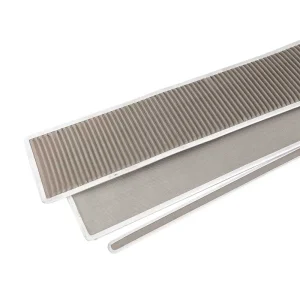
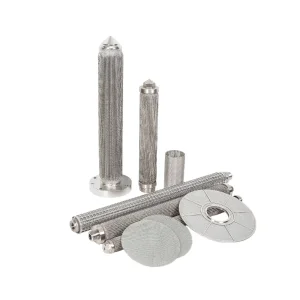
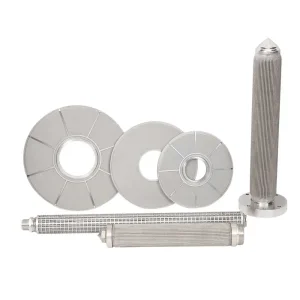
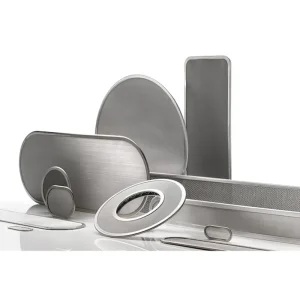
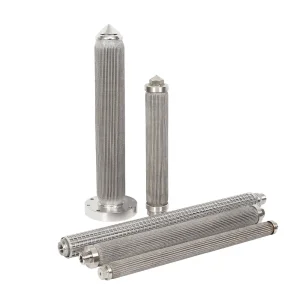
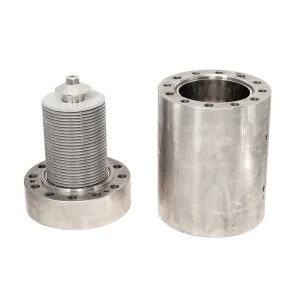
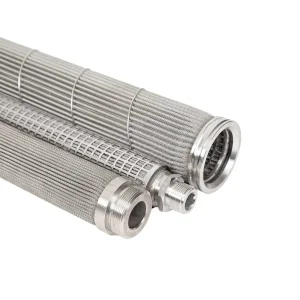
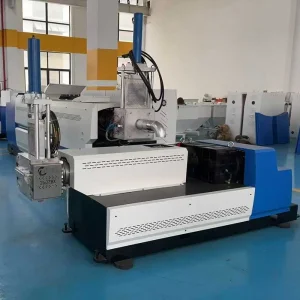
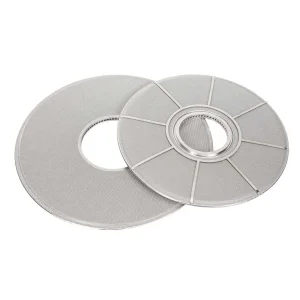
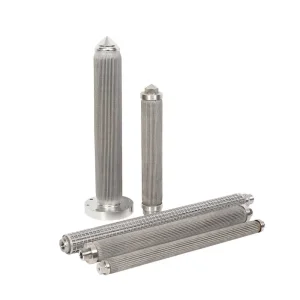
Explore our specialized continuous screen changer mesh elements, candle filters, and leaf discs manufactured for maximum operational uptime and ultra-fine polymer purity.
A Comprehensive Technical Analysis of Market Evolution, Fluid Dynamics, and Information Gain in Modern Extrusion Systems
Over the past two decades, China has transitioned from a high-volume component producer to a global epicenter of highly sophisticated, precision-engineered melt filtration technology. Modern polymer processing lines demand uninterrupted operations, minimal differential pressure (ΔP) spikes, and stringent impurity trapping capabilities down to the single-micron scale.
Leading Chinese manufacturers, spearheaded by specialized producers like Pujiang HG Plastic Machinery Co., Ltd., now leverage state-of-the-art CNC machining, vacuum sintering technology, and finite element fluid dynamics (CFD) modeling. This shift ensures that screen changers—whether hydraulic slide plate, continuous double-piston, continuous belt, or multi-bolt plate changers—deliver zero-leakage performance under extreme operating temperatures exceeding 350°C and melt pressures up to 35 MPa.
Driven by global sustainability mandates and the demand for high-value optical film, technical textiles, and medical-grade polymers, five pivotal macro trends are defining the roadmap for extruder screen changer innovation:
Deciphering User Intent for OEM Line Builders, Masterbatch Manufacturers, and High-Volume Plastic Recyclers
Primary Intent: Seamless mechanical integration, customizable flange dimensions, and absolute hydraulic reliability.
OEM integrators require screen changers that act as plug-and-play modules within their twin-screw or single-screw extrusion architecture. Key parameters include standardized PLC communication protocols (Modbus, Profinet, EtherCAT), minimal physical footprint, and proven compatibility with high-viscosity polymers like PET, PA66, and PC.
Primary Intent: Contaminant tolerance, automated backwashing, low polymer loss, and long screen lifespan.
Processing heavily contaminated waste (paper, foil, crosslinked gels) requires continuous screen changers with high backwash efficiency. Recyclers prioritize machines that minimize scrap rates during purge cycles while maintaining continuous throughput of 1,000 to 5,000+ kg/hr.
Primary Intent: Zero bubble entrapment, ultra-fine micron rating (<10μm), and thermal gel elimination.
In high-speed cast film, blown film, and spunbond nonwoven manufacturing, tiny impurities lead to web breaks or optical defects. Buying decisions hinge on high-area candle filter elements, polished internal flow channels without dead zones, and stainless steel 316L metallurgy.
Comparing Hydraulic Slide Plate, Continuous Dual-Piston, Continuous Belt, and High-Area Candle Filter Systems
Selecting the optimal screen changer architecture requires balancing capital expenditure (CAPEX), operational costs (OPEX), melt rheology, allowable pressure drop, and impurity loading levels. Below is an engineering comparison of the primary system configurations manufactured in China today.
| Screen Changer Type | Operation Mode | Max Pressure (ΔP) | Filtering Area Range | Primary Target Applications | Melt Flow Interruption |
|---|---|---|---|---|---|
| Hydraulic Single Board / Slide Plate | Discontinuous / Fast Shift | 25 - 35 MPa | Standard (30 - 300 cm²) | Color Masterbatch, Pipe, Profile, Cable Extrusion | Brief Interruption (< 1 sec) |
| Double Piston Continuous | Continuous Flow | 30 - 40 MPa | Medium to High (100 - 1500 cm²) | Sheet, Sheet Co-extrusion, Recycled Granulation | Zero Interruption |
| Automatic Backwashing Screen Changer | Continuous Auto-Cleaning | 25 - 35 MPa | Large Multi-Pocket | Heavily Contaminated PCR Plastics (PE/PP/PS) | Zero Interruption |
| Continuous Mesh Belt Changer | Continuous Ribbon Feed | 20 - 30 MPa | Constant Active Area | BOPP, Cast Film, Fine Filament, Fiber Lines | Zero Interruption & Zero ΔP Pulse |
| High-Area Candle & Disc Filter Housing | Batch / Dual Vessels | 35+ MPa | Ultra Large (1.5 - 30 m²) | Virgin PET/PA Polycondensation, Nonwovens | Continuous via Dual Valves |
Polymer melts exhibit non-Newtonian, shear-thinning fluid behavior. When a screen changer actuates, the sudden alteration in flow channel volume can trigger pressure spikes or drops. In precision sheet or filament lines, even a 2% variance in pressure causes gauge variation or fiber breakage.
HG Plastic Machinery incorporates specialized hydraulic pre-fill and venting channels within double-piston units. Before the new filter pocket is indexed into the main melt stream, it is evacuated of trapped air and pre-pressurized with molten polymer, guaranteeing shock-free stream switching.
Corrosive polymers (such as PVC, fluoropolymers, or flame-retardant compounds with halogen additives) and abrasive fillers (such as 40% glass fiber or calcium carbonate) quickly degrade standard tool steels. Modern Chinese screen changers utilize high-grade alloy steels such as 38CrMoAlA (nitrided), 1.8550, or stainless steel 316L, paired with specialized surface treatments:
Demonstrating Uncompromising Reliability, Material Traceability, and Worldwide Technical Field Service
Every screen changer unit and high-pressure vessel is engineered in strict compliance with international safety codes. Manufacturing processes conform to ISO 9001:2015 quality management systems, European CE Directives (2006/42/EC Machine Safety and 2014/68/EU Pressure Equipment Directive PED), and ASME Section VIII standards where required by North American purchasers.
To eliminate risk in high-viscosity and high-temperature processing, 100% material traceability is guaranteed. Raw steel billets undergo ultrasonic flaw detection, chemical spectrographic analysis, and 3.1 material test certificates (EN 10204). Pressure chambers undergo hydrostatic pressure testing at 1.5x design limits prior to factory release.
China's top manufacturers provide comprehensive localization support, including remote IoT diagnostic support, rapid-dispatch field service engineers, and stocked spare parts hubs across Europe, Southeast Asia, and North America. Precision mesh filters, seals, and heating elements are standardized for immediate off-the-shelf replacement.
Emerging Breakthroughs in Smart Melt Filtration, AI-Driven Predictive Maintenance, and Circular Economy Integration
The integration of Industry 4.0 IoT sensors directly into the screen changer body allows continuous monitoring of melt differential pressure (ΔP), temperature gradients, and shear stress. Machine learning algorithms analyze historical pressure curve data to predict exact filter blinding times, automatically initiating backwashing or alerting operators prior to melt degradation.
As recycled plastic content (PCR) mandates approach 30% to 50% in rigid packaging and films, standard screen meshes (40 to 100 mesh) are insufficient. The industry is moving toward vacuum-sintered stainless steel fiber felts capable of 3-micron absolute filtration while providing 8 times the dirt-holding capacity of conventional woven wire cloth.
Conventional backwash screen changers discard 1% to 3% of the total melt throughput along with purged contaminants. Next-generation Chinese designs feature secondary micro-extrusion purging pins that compress the rejected sludge, extracting clear polymer back into the main process stream and reducing polymer loss to under 0.1%.
With chemical recycling (pyrolysis oil depolymerization) expanding globally, melt filtration systems are being adapted for extreme temperature hydro-processing units operating under supercritical fluid dynamics, demanding specialized nickel-chromium superalloys and dynamic metal-to-metal seals.
Expert Engineering Insights Addressing Selection, Maintenance, Operational Downtime, and Compatibility
Discover our custom SUS 304/316 leaf disc filters, high-viscosity candle elements, and end-to-end granulating recycling lines.
Whether you require custom OEM screen changer integration, replacement stainless steel candle filter elements, or advanced recycling line consultation, our technical team delivers tailored solutions within 24 hours.
Request Technical Proposal & Engineering Quotation