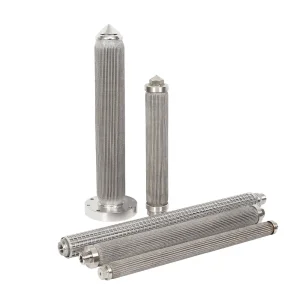
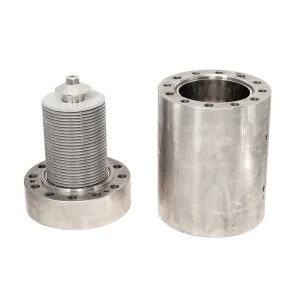
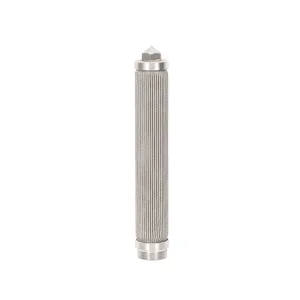
Direct factory supply of SUS 304/316L wire mesh filters, pleated candle cartridges, and precision polymer filtration components engineered for minimal pressure drop and maximum contamination capture.
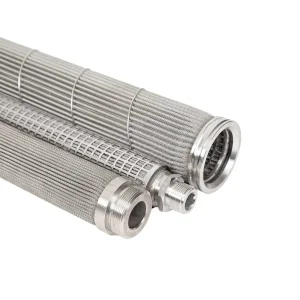
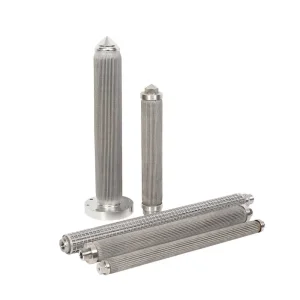
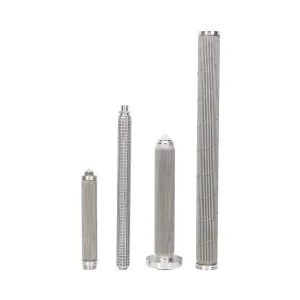
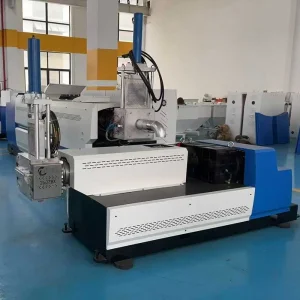
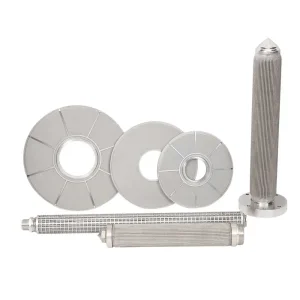
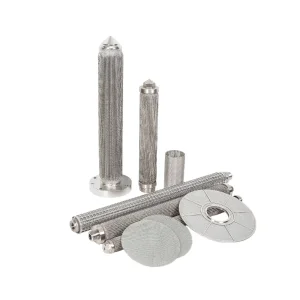
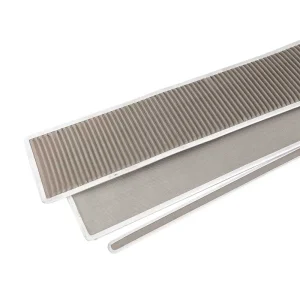
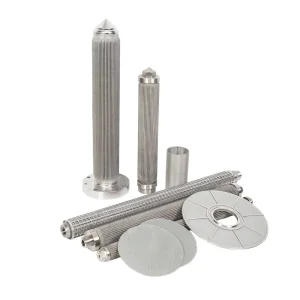
In modern industrial polymer processing, thermoplastic extrusion, chemical fiber spinning, and continuous plastic recycling, the Mesh Size Filter serves as the central barrier ensuring operational continuity and product purity. Operating under extreme shear stresses, high operating temperatures (exceeding 300°C to 350°C), and differential pressures up to 250 bar, filtration systems manufactured in China have evolved from basic wire screens into ultra-engineered, multi-layered micro-pore sintered structures.
As a leading China Mesh Size Filter Factory & Exporter, Pujiang HG Plastic Machinery Co., Ltd. integrates over two decades of metallurgical experience, precision CNC wire weaving technology, and automated vacuum sintering protocols. The selection of precise mesh sizes, wire diameters, and weaving geometries directly dictates hydraulic pressure drop ($\Delta P$), dirt-holding capacity (DHC), gel sieving mechanisms, and total on-stream operational lifespan.
Technical Insight (Information Gain): Polymer melt behavior exhibits dynamic non-Newtonian shear-thinning characteristics. Standard single-layer wire screens frequently fail under high differential pressures due to mesh wire migration and pore enlargement. Multi-layer sintered screen packs and cylindrical pleated candle filters stabilize pore dimensions under cyclic thermal expansion, extending effective operational cycle times by up to 350% compared to traditional loose screen discs.
Next-generation filtration media engineered for circular plastic economies, ultra-fine fiber spinning, and severe thermal-chemical environments.
Fusing up to 5 to 7 layers of wire cloth through diffusion bonding creates rigid, non-deformable filter matrices capable of precise micro-rating retention down to 3 microns under immense pressure surges.
Utilizing non-woven stainless steel micro-fibers sintered into high-porosity (up to 85%) media, providing exponentially higher dirt holding capacity and lower initial pressure drop for high-viscosity PET/PA66 melts.
Implementation of Hastelloy C-276, Inconel 625, and chemical nickel plating to resist severe acid degradation and corrosive additives during recycled plastic pyrolytic pelletizing and PVC melt processing.
Understanding the exact mathematical relationship between U.S. Mesh Count, nominal aperture size ($\mu m$), wire diameter, and structural permeability is fundamental for optimizing polymer extruder performance.
| Mesh Count (per inch) | Wire Diameter (mm) | Aperture Size ($\mu m$) | Open Area (%) | Primary Material Alloys | Target Industrial Application |
|---|---|---|---|---|---|
| 20 Mesh | 0.40 mm | 870 $\mu m$ | 46.9% | SUS 304 / Carbon Steel | Coarse Plastic Recycling & Co-Extrusion Breaker Plates |
| 60 Mesh | 0.19 mm | 233 $\mu m$ | 30.3% | SUS 304 / SUS 316 | Standard Granulation & Masterbatch Compounding |
| 100 Mesh | 0.10 mm | 154 $\mu m$ | 36.8% | SUS 316L / Hastelloy | PP/PE Film Extrusion & Sheet Production Lines |
| 200 Mesh | 0.05 mm | 77 $\mu m$ | 36.7% | SUS 316L Sintered Mesh | BOPP / BOPET Ultra-Thin Packaging Film Lines |
| 325 Mesh | 0.035 mm | 43 $\mu m$ | 30.5% | 316L Metal Fiber Felt | Spunbond & Meltblown Nonwoven Synthetic Fibers |
| 500 Mesh (Dutch Weave) | 0.025 / 0.018 mm | 5 - 15 $\mu m$ | Graded Micro-Porosity | 5-Layer Sintered Wire Cloth | High-Purity Monomer Melt Spinning & Pharmaceutical Filters |
Extending equipment uptime and reducing maintenance cycles across demanding production lines.
In high-speed oriented film extrusion, pinhole defects, gels, or micro-particles lead to immediate web breaks, resulting in thousands of dollars in lost yield per hour. Our continuous leaf disc filters and candle filter elements utilize multi-layered SUS 316L wire mesh, delivering absolute filtration ratings down to 10 microns with uniform melt flow distribution across the entire surface area.
The manufacturing of spunbond nonwovens requires flawless melt homogeneity to prevent nozzle blockage in spinnerets. Our candle filter cartridges provide ultra-clean filtration, low structural weight, high mechanical strength against high-pressure washbacks, and full thermal cleanability for multiple reuses.
Recycling heavily contaminated post-consumer plastic (PCR) requires robust continuous auto-cleaning screen changers and high-rigidity mesh filters. Pujiang HG supplies reinforced rim screen packs and heavy-duty Dutch weave cylinder mesh filters designed to withstand intense mechanical friction, continuous backwashing, and heavy solid particulate loads.
How state-of-the-art automation and localized industrial clusters give global buyers unbeatable efficiency, quality control, and cost advantages.
Our facility utilizes German-imported heavy CNC wire weaving machines, achieving micrometer-level aperture consistency. Automated TIG and seam plasma welding ensure burr-free end cap bonding without thermal deformation.
Every batch of sintered mesh and candle filter cartridges undergoes rigorous ISO 4003 bubble point testing to verify maximum pore size and ISO 16889 multi-pass efficiency testing prior to global export packaging.
Located in Zhejiang’s advanced manufacturing belt, we control raw wire drawing, annealing, mesh weaving, surface passivation, component machining, and direct export logistics—reducing lead times by up to 40%.
Key technical criteria evaluated by international OEM procurement directors when selecting mesh filter exporters from China.
When enterprise procurement engineering teams source mesh size filters globally, key evaluation metrics go beyond simple price-per-unit calculations. A holistic Total Cost of Ownership (TCO) evaluation encompasses structural reliability, compliance certifications, custom OEM drawing flexibility, and rapid replacement availability.
Compliance & Material Traceability Guarantee: Pujiang HG supplies full Mill Test Certificates (MTC) according to EN 10204 3.1 with every shipment, verifying chemical spectroscopic analysis (Ni, Cr, Mo percentages) and mechanical tensile properties for pure SUS 304/316L grades.
Direct answers to critical questions asked by plant managers, maintenance engineers, and global buyers.
Standard wire mesh filter discs consist of loose or spot-welded woven wire layers. Under high polymer melt pressure or backwashing, individual wires can shift, altering the effective aperture size. Sintered filter elements undergo a high-temperature vacuum diffusion bonding process that permanently fuses wire contact points. This creates a rigid, highly stable porous structure with fixed pore sizes, superior mechanical strength, and zero wire displacement during intense operational cycles.
Mesh count refers to the number of openings per linear inch. To determine the micron rating ($\mu m$), wire diameter must be accounted for. The formula is: Aperture Size (mm) = (25.4 / Mesh Count) - Wire Diameter (mm). Convert mm to microns by multiplying by 1000. For example, a 100-mesh filter with a 0.10mm wire diameter yields an aperture of (25.4/100) - 0.10 = 0.154mm or 154 microns. Our engineering team provides precise conversion tables for all custom weaves.
Polymer candle filters can be cleaned and reused up to 10–15 times using a standardized 4-step protocol: 1) Thermal Pyrolysis / Vacuum Calcination Furnace (450°C–500°C) to vaporize organic polymers; 2) TEG (Triethylene Glycol) bath boiling at 280°C to dissolve residual oligomers; 3) High-pressure reverse water flushing; 4) Ultrasonic solvent bath cleaning followed by bubble point integrity testing.
SUS 304 is cost-effective and suitable for standard non-corrosive polymers such as Polypropylene (PP), Polyethylene (PE), and Polystyrene (PS) under normal operational conditions. SUS 316L contains 2–3% Molybdenum, providing superior resistance to pitting, organic acids, and halide corrosion. SUS 316L is strongly recommended for PET, Polyamide (PA6/PA66), engineering thermoplastics, and high-temperature corrosive polymer processing.
Yes. Over 60% of our production consists of OEM/ODM custom-engineered components. Our technical department accepts 2D/3D CAD drawings (STEP, DWG, DXF, IGES) and can replicate or upgrade existing OEM filter part numbers for extrusion machinery brands worldwide.
Standard mesh filter screens and stock candle element configurations ship within 7 to 10 business days. Custom sintered assemblies, specialized pleating geometries, or bulk container orders typically require 15 to 25 days. Express air shipping is available for emergency downtime situations.
Complete product range direct from our ISO-certified factory in Zhejiang, China.