Explore our certified OEM & ODM metal candle filter cartridges engineered for high-temperature melt processing, impurity extraction, and extended continuous filtration cycles.
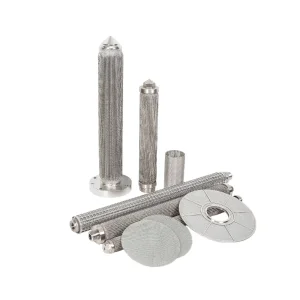
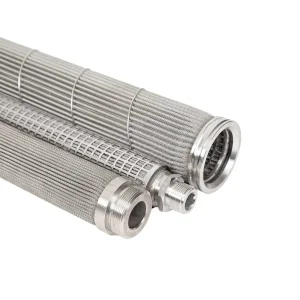
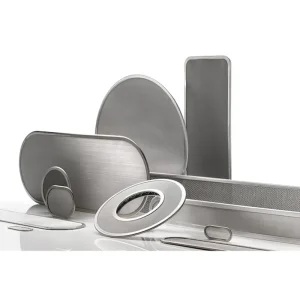
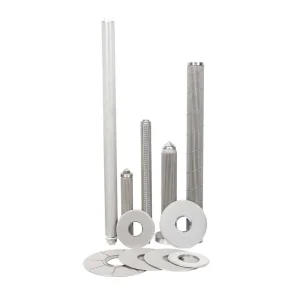
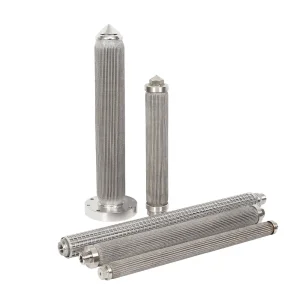
In modern continuous polymer processing, chemical synthesis, and high-pressure fluid clarification, metallic candle filters represent the critical boundary between process success and catastrophic downstream contamination.
As global plastic recycling standards tighten and high-viscosity synthetic polymer production demands finer micronic absolute ratings, traditional disposable or low-strength filter elements no longer satisfy industrial operational requirements. Precision engineered metallic candle filters—manufactured primarily from AISI 316L stainless steel sintered metal fiber felt, multi-layer woven wire cloth, and sintered powder matrices—have established themselves as the global benchmark for high-temperature, high-viscosity, and corrosive filtration.
As a premier China Metallic Candle Filter Manufacturer & Supplier, Pujiang HG Plastic Machinery Co., Ltd. bridges high-performance metallurgy with automated precision manufacturing. The fundamental mechanics of metallic candle filters lie in their ability to provide an expansive surface area within a compact vessel volume. By utilizing cylindrical candle geometries, process plants achieve maximum filtration surface area, low differential pressure ($\Delta P$), high dirt holding capacity (DHC), and extended operating cycles before required backflushing or cleaning protocols.
To select the optimal metallic filter element for high-viscosity polymer melts (such as PET, PA6, PA66, PP, PE, BOPET, and BOPP) or aggressive liquid chemicals, engineering teams must evaluate the underlying structural architecture of the filtration media.
Produced by non-woven laying and high-temperature vacuum sintering of micro-gauge 316L stainless steel fibers. Provides extremely high porosity (up to 85%), minimal hydraulic flow resistance, exceptional dirt holding capacity, and prolonged continuous service life under high shear rates.
Utilizes precise square weave or Dutch twill stainless steel wire mesh pleated over a robust inner perforated support core. Pleating increases effective filtration area by 200% to 400% compared to cylindrical mesh designs, significantly reducing surface velocity and pressure drop.
Formed by isopressing and vacuum sintering of spherical metal powder (Stainless Steel, Hastelloy, Inconel, Titanium). Delivers fixed pore structure, rigid particle retention, zero media migration, and extreme mechanical strength under severe pressure fluctuations.
| Performance Parameter | Sintered Metal Fiber Felt | Pleated Stainless Wire Mesh | Sintered Metal Powder |
|---|---|---|---|
| Porosity Range (%) | 75% - 85% | 35% - 55% | 30% - 50% |
| Dirt Holding Capacity (DHC) | Exceptional (Very High) | Moderate / High | Standard |
| Filtration Rating (Microns) | 3µm - 60µm Absolute | 5µm - 250µm Nominal/Absolute | 0.5µm - 100µm Absolute |
| Pressure Differential Limit | Up to 210 Bar | Up to 250 Bar | Up to 300+ Bar |
| Primary Application | BOPET/BOPP, Fiber Spinning, Resin Melt | Plastic Recycling, Extrusion, Fine Wire Mesh | Chemical Process, Gas Clarification, Catalyst |
| Regeneration / Cleaning Method | TEG Calcination, Solvent, Ultrasonic | Pyrolysis Burn-out, Backwashing, Acid Pickling | Reverse Gas Blow, Chemical Solvent Bath |
The global industrial filtration sector demands rigorous manufacturing consistency, rapid customization capability, and competitive Total Cost of Ownership (TCO). Pujiang HG Plastic Machinery Co., Ltd. has established an integrated Industry 4.0 digital manufacturing base in Zhejiang, China, leveraging advanced production technologies to serve international clients across 80+ countries.
Candle filter structural failure often occurs at end-cap adapter joins under thermal expansion stresses. Our automated robotic plasma welding systems guarantee 100% full-penetration seam integrity, zero oxidation inclusions, and flawless mechanical bonds between stainless steel end-adapter fittings (M28, M36, NPT, Threaded, Flanged) and pleated filter cores.
Every batch of metallic candle filters manufactured in our factory undergoes rigorous non-destructive quality assurance testing. This includes Bubble Point Pressure Testing (ISO 4003) to verify maximum pore size integrity, Air Permeability Testing (ISO 4022), and Collapse Pressure Resistance Testing (ISO 2941) to ensure operational dependability.
Industrial polymer processing requires specialized filtration setups tailored to unique physical parameters including melt viscosity, process temperature, differential pressure tolerance, and gel degradation risks. Below are four primary deployment scenarios where our metallic candle filters excel.
Challenge: In synthetic fiber manufacturing, non-melted polymer gel particles or degraded micro-impurities clog fine spinneret orifices, causing thread breakage, non-uniform denier distribution, and expensive production downtime.
Solution: High-porosity SS316L sintered fiber felt candle elements rated at 5µm to 15µm absolute. The depth filtration structure traps microscopic gel bodies without imposing sharp pressure spikes, ensuring steady polymer flow to spin packs.
Challenge: Biaxially oriented film production (for optical displays, capacitor insulation, and flexible barrier packaging) demands pristine melt quality free of specks above 3 microns to avoid pinholes or film tearing.
Solution: Custom pleated metal candle filters configured in large duplex filter housings. The pleated geometry reduces face velocity, allowing precise filtration down to 3µm while maintaining long stream lifetimes exceeding 60 days of continuous operation.
Challenge: Recycled PP/PE resins contain severe contaminants such as wood fibers, paper dust, aluminum specks, and degraded oxidized polymers that rapidly blind standard screen mesh.
Solution: Heavy-duty continuous continuous backflush metallic candle filters engineered with multi-layer sintered woven wire cloth. Designed for high mechanical impact, backwashing cycles, and rapid thermal cleaning via pyrolysis.
Challenge: Clarification of volatile chemical fluids, aggressive acids, and high-temperature catalyst slurries in petrochemical refining.
Solution: Corrosion-resistant Hastelloy C-276 or 316L sintered metal powder candle filter elements with welded end fittings, certified for extreme chemical compatibility, zero seal leakage, and complete fluid recovery.
When evaluating China metallic candle filter manufacturers, international procurement officers, process engineers, and plant managers must look beyond unit purchase prices. A comprehensive Total Cost of Ownership (TCO) evaluation framework ensures technical compatibility, operational safety, and maximum return on investment.
Ensure authentic material certification (XRF alloy verification / Spectrometry analysis) for AISI 316L (1.4404) or Hastelloy. Low-grade stainless steel will suffer intergranular corrosion under high temperature (300°C+) and organic solvent environment.
Verify the inner perforated support core strength. In polymer melt filtration, differential pressures ($\Delta P$) can spike rapidly due to gel accumulation. The inner core must withstand up to 210–250 bar differential pressure without radial buckling.
Inquire about the maximum allowable cleaning cycles. High-quality sintered metal fiber felt elements can undergo 10 to 20+ cycles of TEG (Triethylene Glycol) vapor cleaning, calcination, ultrasonic bath, and acid pickling without structural media degradation.
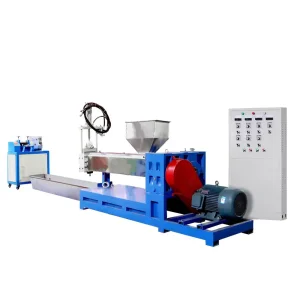
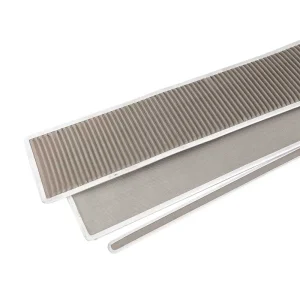
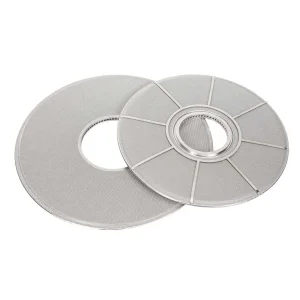
Discover our broader spectrum of polymer processing hardware, including leaf disc filters, wire mesh screen packs, and plastic recycling granulating systems.
In-depth technical answers addressing common operational, metallurgical, and selection inquiries from process engineers and B2B buyers worldwide.
Whether you require custom OEM pleated candle filter cartridges, high-viscosity melt filter elements, stainless steel screen mesh, or complete plastic recycling systems, Pujiang HG Plastic Machinery Co., Ltd. delivers engineered reliability, metallurgical authority, and direct-factory value.