Direct factory-engineered wire mesh screens, candle filter cartridges, and high-viscosity melt filtration solutions manufactured in ISO-certified Chinese facilities.
In modern industrial processing, continuous polymer extrusion, synthetic fiber spinning, and chemical purification demand absolute fluid purity under extreme thermal and rheological pressures. Stainless steel mesh screens, multi-layer sintered laminates, and continuous candle filter elements represent the front line of defense against particulate contamination, gel degradation, and mechanical downtime.
The global shift toward high-performance technical plastics (such as PEEK, PET, BOPP, and Fluoropolymers) alongside aggressive circular economy initiatives (Post-Consumer Recycled - PCR processing) has transformed the technical requirements for extrusion screen changers and melt filtration equipment. Industrial processors can no longer rely on commercial-grade wire cloth; modern manufacturing requires metallurgical precision, tightly controlled pore size distribution, and superior resistance to differential pressure ($\Delta P$).
China has established itself as the global epicenter for advanced stainless steel wire drawing, high-vacuum sintering, and precision filtration media fabrication. By combining raw material scale with rigorous metallurgical testing, leading Chinese exporters deliver fully customized filtration media engineered to match OEM standards specified by world-class machinery manufacturers across Europe, North America, and Southeast Asia.
The mechanical integrity of a stainless mesh screen depends entirely on wire drawing accuracy, weave geometry, thermal heat treatments, and joining technology. Leading Chinese manufacturers utilize premium grade SUS304, SUS316, and SUS316L stainless steel alloys, as well as specialized nickel-based superalloys (such as Hastelloy C-276) for highly acidic or corrosive media environments.
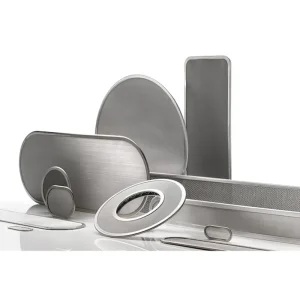
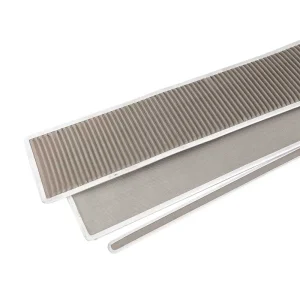
Available in Plain Weave, Twill Weave, Plain Dutch Weave, and Reverse Dutch Weave (RDW). Dutch weaves provide dense, stable pore openings ideal for continuous screen changers and high-pressure extruder screens.
Diffusion-bonded multi-layer woven wire mesh and non-woven stainless fiber felts. Sintering fuses contact points without altering mesh apertures, dramatically increasing structural strength and flow rate capacity.
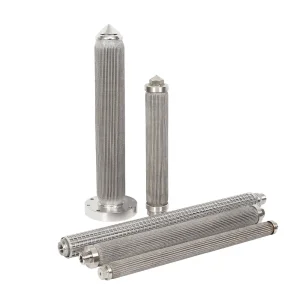
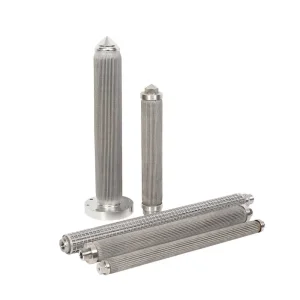
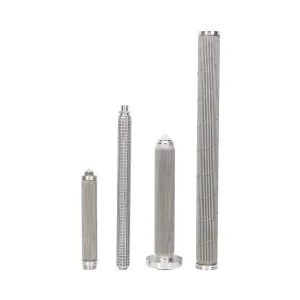
Cylindrical, pleated, or smooth mesh cartridges constructed around a heavy-duty perforated inner core. Designed for deep-bed filtration in high-viscosity polymer melt systems (PET, PA6, PA66, PP).
Selecting the appropriate alloy and weave design is critical to avoiding pre-mature mesh blind spots, stress corrosion cracking, and melt leakage:
| Material Grade | Chemical Composition Features | Max Temperature | Corrosion Resistance | Primary Application Area |
|---|---|---|---|---|
| SUS 304 | 18% Cr / 8% Ni | 300 °C | Standard Industrial | Standard plastic recycling, PE/PP blown film extrusion. |
| SUS 316 | 16% Cr / 10% Ni / 2% Mo | 400 °C | High (Organic Acids & Chlorides) | BOPP/BOPET film production, rubber granulating. |
| SUS 316L | Low Carbon 316 Variant | 450 °C | Superior Intergranular Corrosion | High-viscosity polymer melt spinning, CPF candle filters. |
| Hastelloy C-276 | High Ni-Mo-Cr alloy + Tungsten | 650 °C | Extreme (Strong Acids/Halogens) | Fluoropolymer processing (PTFE/PVDF), corrosive chemical refining. |
Stainless mesh screens and specialized melt filter elements serve distinct operational requirements across diverse processing environments. Below are key field deployment scenarios engineered by top-tier Chinese manufacturers:
Procuring industrial filtration components from China requires strict adherence to international standardizations to ensure seamless integration into European, American, and Asian processing equipment.
Every batch of wire mesh undergoes Bubble Point Testing (ISO 4003), Dirt Holding Capacity testing (ISO 16889), and Spectrometric Material Verification (PMI) to guarantee exact alloy ratios.
Filter products manufactured for food-contact polymer packaging comply fully with FDA CFR 21 177.1520 regulations, REACH chemical safety mandates, and RoHS environmental directives.
Chinese manufacturers offer localized OEM drawing support, rapid custom prototyping (under 72 hours), standard stock safety management, and DAP/DDP direct door-to-door global freight.
As polymer engineering trends toward thinner film gauges, higher processing speeds, and 100% recycled polymer feeds, wire mesh and melt filter manufacturing is evolving rapidly. Key technological directions include:
Implementation of high-speed optical vision scanners across wire looms to ensure zero aperture variance, guaranteeing uniform pore distribution across millions of square meters of filter cloth.
Advancements in TEG (Triethylene Glycol) vacuum pyrolysis ovens and ultrasonic chemical cleaning methods, allowing complex 316L candle filters to be cleaned and reused up to 20+ cycles without media degradation.
Explore our full line of leaf disc filters, extruder mesh screens, and plastic recycling equipment.
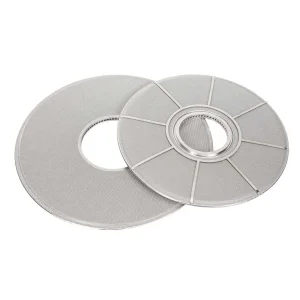
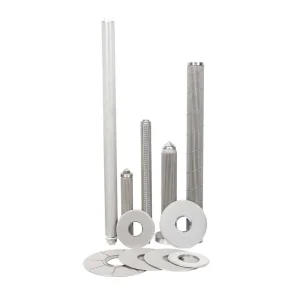
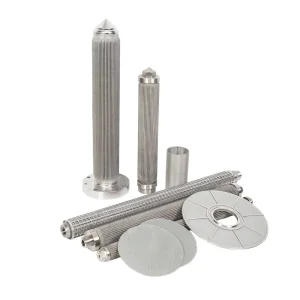
Expert answers regarding stainless steel mesh specifications, polymer melt filtration performance, and custom OEM manufacturing.
Woven wire mesh consists of individual wires woven into patterns (Plain, Twill, or Dutch). Under high heat and differential pressure ($\Delta P$), single-layer woven wires can shift, altering aperture dimensions. Sintered wire mesh fuses multi-layer woven wire screens together under high-vacuum thermal diffusion bonding. This creates a rigid, permanent pore structure that prevents wire movement and withstands pressures up to 30 MPa.
SUS 316L is a low-carbon austenitic stainless steel containing 2-3% Molybdenum. It exhibits superior resistance to pitting corrosion, organic chemicals, and high-temperature oxidation compared to 304 grade. For polymer candle filters handling high-viscosity melts (like PET or PA66) at temperatures exceeding 280 °C, 316L prevents intergranular corrosion during cleaning cycles (such as TEG pyrolysis or calcination ovens).
Yes. Chinese manufacturers offer full OEM and ODM customization for extruder screens. Screen mesh packs can be customized by diameter, shape (circular, kidney, rectangular, continuous ribbon), rim material (aluminum, stainless steel rim), spot-welded layer configuration (e.g., 20/60/100/20 mesh), and micron rating according to machine engineering drawings.
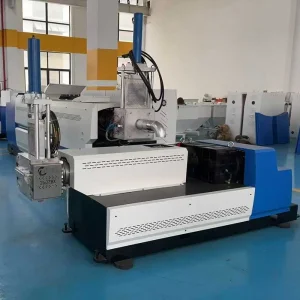
Post-consumer plastics (HDPE, LDPE, PP, PET) contain inconsistent contaminants like dirt, paper, aluminum foil, and foreign polymers. High-durability stainless steel mesh screens withstand frequent pressure spikes caused by high contaminant loads. Utilizing continuous belt screens or multi-layer sintered disc screens prevents screen blow-outs, reduces melt leakage, and guarantees clean, consistent pelletization.