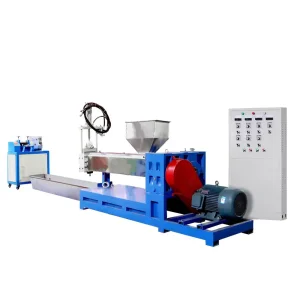
Engineered for high temperature, extreme melt viscosity, and severe pressure differential operating environments.
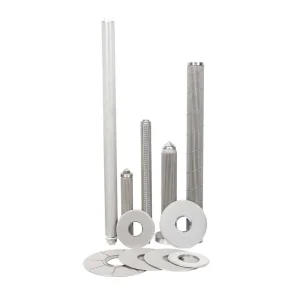
Analyzing how Chinese wire mesh producers have transitioned from basic woven screen fabrication to high-precision micro-filtration media engineering.
In modern industrial manufacturing, precise liquid-solid separation, melt purification, and particulate entrapment serve as critical operational benchmarks. The global market for stainless steel wire mesh and specialized filter elements has experienced a structural paradigm shift over the last two decades. Central to this transformation is the maturity of China Steel Wire Mesh Factories, which have evolved from regional wire-weaving workshops into technologically advanced industrial clusters capable of producing sub-micron sintered metal fiber felts, multi-layer sintered wire mesh matrices, and complex polymer melt filtration elements.
Driven by intensive R&D investments, adoption of automated German and Japanese weaving looms, and comprehensive backward integration into special alloy wire drawing, Chinese manufacturers now deliver industrial wire mesh solutions that rigorously adhere to international benchmarks including ISO 9001:2015, ASTM E2814, and DIN 3168 standards. Industry end-users—ranging from multinational polymer resin synthesizers to BOPET film extruders, nonwoven fabric spinners, and chemical recycling plant operators—increasingly rely on China's supply chain for high-duty, cost-efficient, and engineered filtration media.
Understanding how material grade chemistry and weaving physics dictate thermal stability, corrosion mitigation, and operational longevity.
Standard austenitic chromium-nickel alloy offering optimal mechanical ductility and excellent resistance to organic acids. Widely utilized in standard plastic extruders, pelletizers, and secondary non-corrosive fluid separation lines.
Molybdenum-bearing austenitic steel engineered for maximum resistance to intergranular corrosion and chloride pitting. Essential for high-viscosity PET/PA melt candle filters, leaf disc filters, and aggressive monomer purification vessels.
Nickel-chromium-molybdenum superalloys designed for extreme chemical processing environments characterized by high concentrations of wet chlorine, hot inorganic acids, and operating temperatures exceeding 450 °C.
| Weave / Structure Type | Pore Micron Range | Structural Porosity % | Primary Flow Characteristic | Ideal Industrial Application |
|---|---|---|---|---|
| Plain Square Weave | 20 μm – 2000 μm | 35% – 60% | Linear laminar flow, minimal pressure drop | Coarse polymer pre-filtration, extruder screen mesh |
| Twill Square Weave | 15 μm – 100 μm | 30% – 45% | Higher mechanical strength for heavy loads | High-pressure hydraulic lines, fine powder screening |
| Plain Dutch Weave (PDW) | 10 μm – 80 μm | 20% – 35% | Asymmetric tortuous paths for high cake load | Polymer melt candle filter support layers, liquid clarification |
| Reverse Dutch Weave (RDW) | 15 μm – 150 μm | 25% – 40% | High tensile wrap wire, superior warp tension | Continuous auto-belt screen changers in plastic recycling |
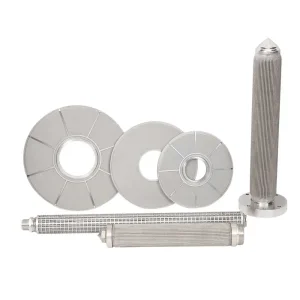
| 5-Ply Sintered Wire Mesh | 1 μm – 100 μm | 30% – 50% | Rigid diffusion-bonded structural integrity | High-pressure BOPET film leaf disc filters, monomer units |
| Metal Fiber Sintered Felt | 3 μm – 60 μm | 70% – 85% | Ultra-high dirt holding capacity, low delta-P | Chemical fiber melt spinning, nonwoven candle filters |
How localized industrial ecosystems enable unprecedented operational agility, fast OEM customization, and competitive total cost of ownership (TCO).
Unlike regional suppliers who source components globally, premier China Steel Wire Mesh Factories maintain vertically integrated production hubs. From raw alloy wire drawing, precision annealing, and computerized loom weaving to vacuum sintering, CNC machining of end caps, and automated cleanroom assembly, every production stage occurs within localized industrial zones like Hebei Anping and Zhejiang Pujiang. This density eliminates transportation bottlenecks and drastically reduces manufacturing lead times.
Leading Chinese filter manufacturing plants have adopted vacuum diffusion bonding sintering furnaces with precise multi-zone temperature controls. Furthermore, Quality Assurance (QA) labs are equipped with ISO 4003 Bubble Point Test stands, Coulter Porometers, and automated optical particle scanning systems. This infrastructure guarantees that every batch of polymer candle filter cartridges and leaf discs delivers predictable bubble point values and pore size integrity.
XRF analyzer chemical verification of nickel, chromium, and molybdenum content per heat lot.
Optoelectronic sensors track warp and weft tension to prevent wire breakage and micro-flaws.
High-vacuum thermal diffusion bonding at 1100 °C to fuse wire intersections without pore deformation.
Plasma welding of stainless steel hub adapters, pleating, and ultrasonic degassing in Class 10,000 cleanrooms.
Final testing for maximum pore opening, pressure collapse threshold, and micron rating accuracy.
Detailed technical breakdowns of how custom steel wire mesh media and polymer filter elements solve operational bottlenecks in demanding sectors.
Operational Challenge: Microscopic gel impurities or black spec carbonized particles during high-speed polyester extrusion cause film tears, optical haze, and high rejection rates in capacitor film or flexible packaging lines.
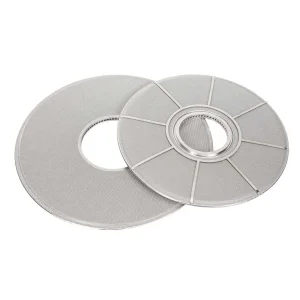
Mesh Filter Solution: Sintered stainless steel wire mesh leaf disc filters (Win Series) engineered with a 5-ply gradient structure (SUS 316L, 10 μm absolute rating). The specialized hard-rim design ensures dynamic zero-leakage sealing across filter housings, providing smooth melt distribution and extending continuous operation on-stream life from 20 days up to 90 days before backwashing is required.
Operational Challenge: High shear stress and extreme melt viscosity (over 300 Pa·s) in polypropylene (PP) or polyamide (PA66) spinning manifolds cause standard screen packs to deform or blind prematurely.
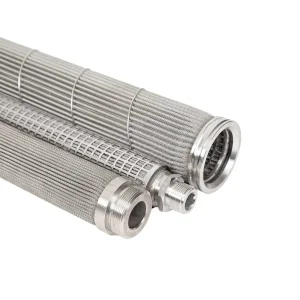
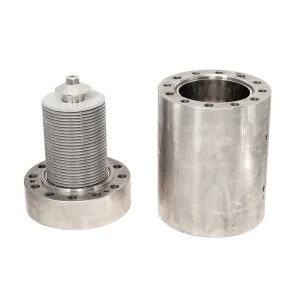
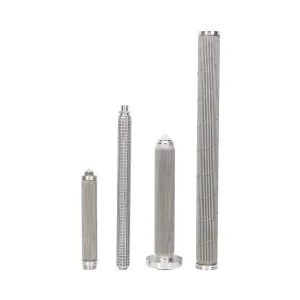
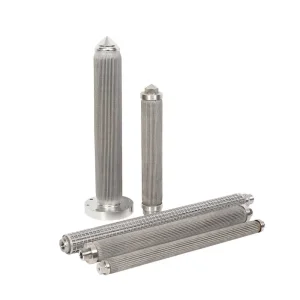
Mesh Filter Solution: Pleated SUS 316L polymer candle filter cartridges utilizing multi-layer stainless steel metal fiber felt media. The pleated geometry expands the active filtration surface area by up to 350% compared to smooth cylindrical elements, maintaining a low pressure drop (ΔP < 2.5 MPa) while capturing sub-micron cross-linked polymer degradation products.
Operational Challenge: Recycled PE/PP flakes contain abrasive contaminants such as silica sand, paper fibers, and degraded rubber particles that destroy pelletizing die faces.
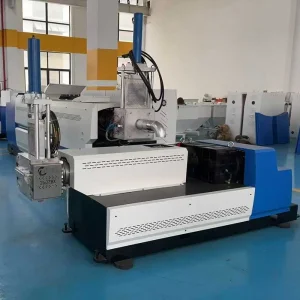
Mesh Filter Solution: Heavy-duty Reverse Dutch Weave (RDW) stainless steel mesh belts operating inside continuous auto-belt screen changers. The high warp-density construction withstands extruder head pressures exceeding 25 MPa without tearing, enabling non-stop pelletizing machinery throughput.
Operational Challenge: Aggressive acid catalyst recovery loops require robust metal filter media capable of continuous backflushing under high temperature (300 °C) without structural pore pore-plugging or mechanical erosion.
Mesh Filter Solution: Multi-layer sintered square mesh tubes fused with custom Machined NPT/BSP stainless steel adapters, providing rigorous pore stability and allowing hundreds of ultrasonic or chemical cleaning cycles without performance degradation.
Examining emerging developments in wire mesh metallurgy, nano-coatings, AI defect scanning, and sustainable industrial recycling solutions.
Surface modification of stainless steel mesh via chemical vapor deposition (CVD) to apply fluoropolymer or ceramic nano-films. These coatings significantly reduce melt adhesion, prevent polymer degradation caking, and facilitate effortless backwashing during inline filter changeovers.
Implementation of real-time computer vision cameras on high-speed weaving looms. AI algorithms detect wire pitch variations, micro-burrs, or weave distortion down to 0.5 microns, automatically marking defective zones and ensuring 100% pore uniformity across the entire master roll.
To support global Net-Zero carbon goals, advanced Chinese factories have instituted closed-loop refurbishment programs. Spent polymer candle filter elements undergo thermal TEG pyrolysis cleaning, ultrasonic decontamination, and non-destructive bubble point verification—allowing up to 5 reuse cycles per cartridge.
Ensuring seamless procurement, custom engineering drawing conversion, and international regulatory compliance for global B2B procurement partners.
Engineering teams at Pujiang HG Plastic Machinery convert customer CAD/SolidWorks drawings into precise manufacturing steps. Custom end-cap adapters (threaded, bayonet, snap-in, or flanged) are CNC machined to exact tolerances (±0.02 mm).
Every shipment is backed by EN 10204 3.1 Material Test Certificates (MTC), guaranteeing raw wire melt chemistry, tensile strength test reports, and bubble point validation records for audit compliance.
Strategic proximity to Ningbo and Shanghai ports enables expedited sea and air logistics. Protective moisture-proof vacuum packaging and custom wooden export crates prevent physical damage during maritime transit.
Addressing core engineering questions regarding material selection, pressure drop calculation, cleaning procedures, and factory sourcing.
Direct factory direct supply for plastic pelletizing lines, screen changers, and custom polymer candle filter cartridges.