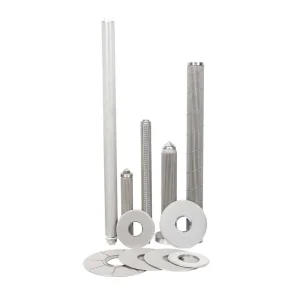
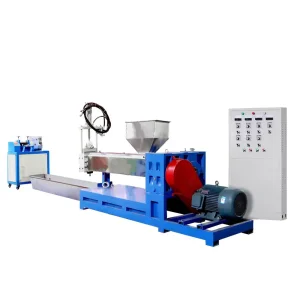
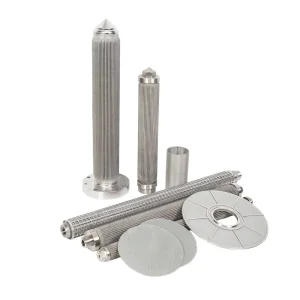
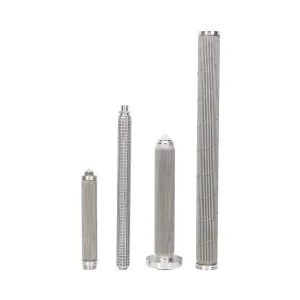
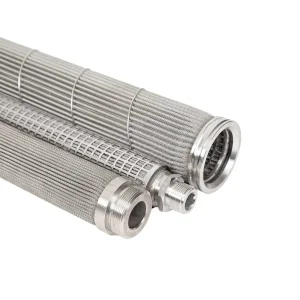
Explore our primary portfolio of precision polymer candle filters, wire mesh elements, and heavy-duty pelletizing systems designed for blowing film recycling operations.
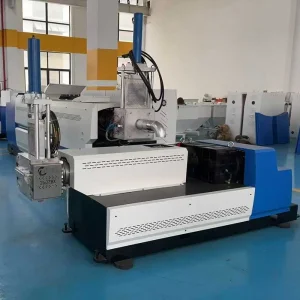
The global plastics industry is undergoing a structural paradigm shift toward closed-loop sustainability, accelerated by strict ESG directives, the European Union Packaging and Packaging Waste Regulation (PPWR), and global brand commitments to incorporate 30% to 50% Post-Consumer Recycled (PCR) resin into flexible packaging by 2030. Within this macroeconomic context, Blowing Film Recycling Machines have evolved from auxiliary waste management equipment into mission-critical production assets.
Blown film production—encompassing Low-Density Polyethylene (LDPE), Linear Low-Density Polyethylene (LLDPE), High-Density Polyethylene (HDPE), and Polypropylene (PP)—generates significant volumes of both post-industrial scrap (edge trims, start-up rolls, rejected film) and post-consumer waste (agricultural film, stretch wrap, shopping bags). Processing film waste presents unique rheological and mechanical challenges: extremely low bulk density, high surface-to-volume ratio, moisture retention, and severe contamination from inks, paper labels, and inorganic dust.
To achieve high-value re-granulation capable of re-entering high-speed blown film lines without causing bubble collapse, gauge variation, or pinhole defects, modern custom recycling machines must integrate advanced shredding-compacting units, dual-stage vacuum degassing, and high-precision melt filtration systems utilizing SUS 304/316 metal candle filters and leaf discs.
| Recycling Stage | Technical Challenge | Engineering Solution | Impact on Pellet Quality |
|---|---|---|---|
| Film Feeding & Densification | Low bulk density causing screw feeding bridge | Integrator Cutter-Compactor with rotational thermo-blade design | Ensures continuous, uniform melt rate without thermal degradation. |
| Extrusion & Degassing | High moisture (up to 8%) & volatiles from printing inks | Dual-zone high-vacuum multi-venting ports (L/D 32:1 to 36:1) | Eliminates voids, bubbles, and odors in recycled pellets. |
| Melt Filtration | Microscopic gel formation & inorganic debris | SUS 316 Pleated Candle Filters / Continuous Screen Changers | Prevents film rupture on re-extrusion lines down to 25 microns. |
| Pelletizing System | Inconsistent MFI leading to irregular pellet size | Automated Water-Ring Pelletizer with micro-adjustable cutter head | Produces uniform spherical pellets identical to virgin resins. |
Building a customized blowing film recycling line requires precise engineering alignment between mechanical pre-treatment, screw design metallurgy, and downstream filtration. Factory customization allows global buyers to select modular components based on input feed characteristics (e.g., highly contaminated agricultural film vs. clean factory edge trim).
Direct single-shaft cutter-compactors eliminate the need for separate pre-shredding. Rotating guide vanes cut, dry, and pre-heat film scrap via friction, feeding plasticized material directly into the extruder screw at controlled temperatures, protecting polymer molecular weight.
Extrusion screws are manufactured from high-grade alloy steel with tungsten carbide or nickel-based alloy flight coatings (HV 900-1100 hardness). Specialized barrier flights and mixing elements ensure homogenizing melt temperature when blending different film densities.
Equipped with double-stage Roots vacuum pump systems operating at <-0.095 MPa. This removes moisture trapped in multi-layer films (e.g., PE/PA or PE/EVOH structures) and extracts volatile organic compounds (VOCs) originating from heavy surface printing.
In blown film extrusion, even sub-100-micron contaminants can cause catastrophic film tears, localized gauge variations, or aesthetic gel blemishes. Selecting the correct melt filtration technology determines operational productivity and final product value.
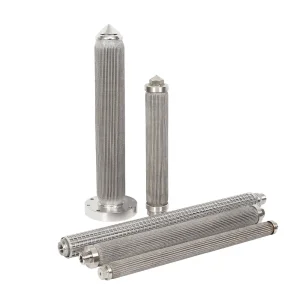
Pujiang HG Plastic Machinery Co., Ltd. specializes in manufacturing SUS 304 and SUS 316 stainless steel filtration components engineered for high-viscosity polymer melts under pressure exceeding 25 MPa. Below is an engineering comparative analysis of primary filtration architectures:
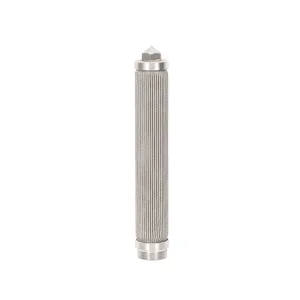
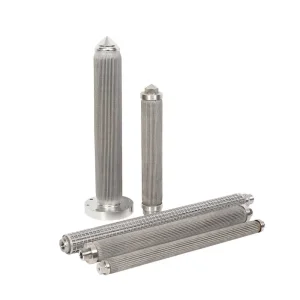
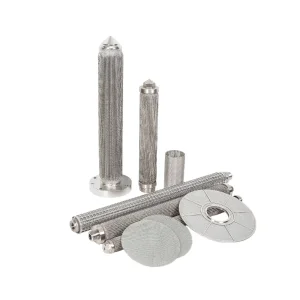
Constructed with multi-layer pleated stainless steel wire mesh or sintered fiber felt around a heavy-duty perforated core. Provides maximum filtration surface area per volume unit. Ideal for high-throughput lines (>500 kg/h) where ultra-low pressure drops and extended filter life are required.
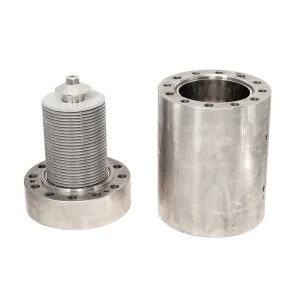
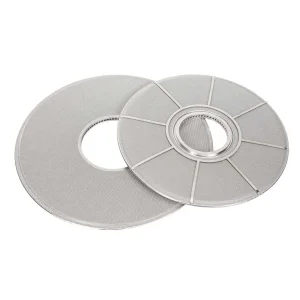
Filter Rating: 5μm to 100μmUtilizes flat, donut-shaped sintered discs mounted on a central shaft inside a high-pressure housing. Exceptional mechanical rigidity prevents media deformation under extreme shear stress. Excellent for processing optical-grade film or micro-thin stretch films requiring zero gel pass-through.
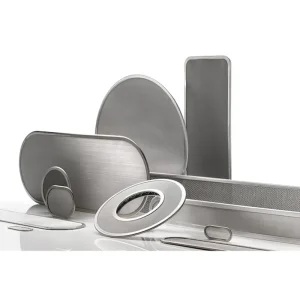
Filter Rating: 10μm to 80μmMulti-layer spot-welded or rim-encapsulated wire mesh screens. Economical and versatile choice for hydraulic slide-plate continuous screen changers. Provides reliable protection for standard utility packaging film recycling applications.
Filter Rating: 40μm to 250μmWhen global enterprises partner with Chinese OEM/ODM factories like Pujiang HG Plastic Machinery Co., Ltd., they unlock compelling structural cost advantages without compromising precision engineering standards. Over two decades of dedicated R&D in polymer melt filtration and recycling machinery has positioned China as the world center for plastic machinery export.
From raw SUS 304/316 wire drawing and micro-mesh weaving to CNC machining of filter housings and complete recycling line assembly, our integrated supply chain eliminates middle-tier markup. This allows custom machinery configurations at 35% to 50% lower capital expenditure (CAPEX) compared to European equivalents.
Every candle filter cartridge and leaf disc undergoes rigorous quality audits, including bubble point integrity testing, pressure-drop flow profiling, and ultrasonic weld quality verification. All recycling machines undergo a continuous 72-hour factory dry run and hot melt test prior to international dispatch.
Polymer recycling operations vary significantly depending on local regulatory pressures, labor costs, and scrap contamination levels. Custom blowing film recycling machine builders tailor equipment configurations for target global markets:
Market Focus: Closed-loop post-consumer film (PCR) & food-grade contact film scrap.
Required Configuration: High-automation lines featuring continuous back-flush screen changers, dual-stage degassing, micro-pelletizing systems, and inline optical sorters. Heavy reliance on cleanable SUS 316 candle filters for extended filter lifecycles.
Market Focus: Agricultural mulch film, woven bags, and heavy-duty shipping sacks.
Required Configuration: Heavy-duty shredder-compactors with high torque gearboxes, intensive pre-washing tanks, and robust hydraulic slide plate screen changers capable of handling 2% to 5% sand/inorganic soil contamination.
Market Focus: Post-industrial LLDPE stretch film & commercial shrink wrap.
Required Configuration: High-speed single-stage pelletizing systems optimized for low electrical consumption in high-ambient-temperature environments, using stainless steel wire mesh filter packs for rapid manual or semi-automatic changeovers.
Answers to key operational and engineering questions frequently raised by plant managers and procurement officers.
A1: Gels in recycled PE film typically originate from oxidized cross-linked polymers or trapped inorganic particulates. SUS 316 pleated candle filters utilize multi-layer sintered stainless steel fiber felt with high porosity (up to 80%). The tortuous depth path captures micro-gels while maintaining uniform fluid shear, preventing polymer stagnation and thermal degradation inside the filter housing.
A2: Unlike disposable paper or mesh packs, metallic candle filter cartridges are fully cleanable and reusable. Under standard operating pressures, a filter cartridge can undergo 10 to 20 cleaning cycles using TEG (Triethylene Glycol) hydrolysis, vacuum pyrolysis furnaces, or ultrasonic chemical baths. Total service life frequently exceeds 2 to 3 years of continuous operation.
A3: Thin blown films (10–50 microns) have a very low bulk density, causing conventional force-feeders to bridge or clog in standard extruder hoppers. A cutter-compactor mechanically cuts, pre-heats, and pre-densifies the film using frictional kinetic energy, converting fluff directly into semi-molten feed. This increases extruder throughput by 30–50% while consuming less energy than standalone granulators.
A4: Solvent-based flexographic and rotogravure printing inks decompose at extrusion temperatures (180°C–220°C), releasing trapped gases and organic volatiles. Dual-stage vacuum degassing exposes the thin polymer melt stream inside an elongated barrel zone to deep vacuum (-0.095 to -0.098 MPa), drawing out gases before the melt reaches the pelletizing die, ensuring dense, bubble-free pellets.
A5: We provide full OEM/ODM design flexibility: custom L/D screw ratios (28:1 to 36:1), tailored filter cartridge micron ratings (3μm to 200μm), specialized alloy coatings for corrosive flame-retardant plastics, custom machine footprint dimensions, PLC automation integration (Siemens/Schneider), and private-label logo branding for international distributors.
Browse our specialized filter elements, high-viscosity candle cartridges, and complete PP/PE granulating solutions.