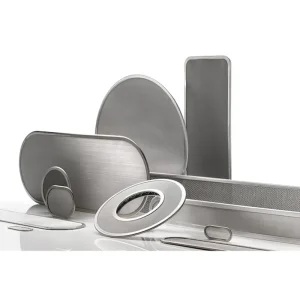
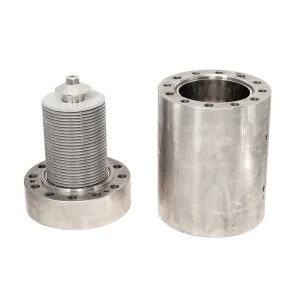
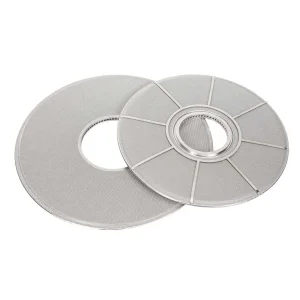
Directly manufactured precision filter elements engineered for severe operational loads, high differential pressure tolerance, and zero-defect melt output.
Analyzing the technical imperatives, thermal dynamics, and filtration mechanics required for processing contaminated Post-Consumer Resin (PCR) and Post-Industrial Resin (PIR).
Modern plastic recycling extruders encounter highly variable feedstocks. While Post-Industrial Resin (PIR) typically maintains predictable melt viscosity and clean scrap streams, Post-Consumer Resin (PCR) introduces complex contaminants: cross-contaminated polymers (e.g., PET in PE lines), residual aluminum foils, paper pulp, silicone, gels, and charred organic degradation products. Standard woven screens quickly blind under these conditions, causing sudden pressure spikes ($\Delta P$) that force emergency line shutoffs.
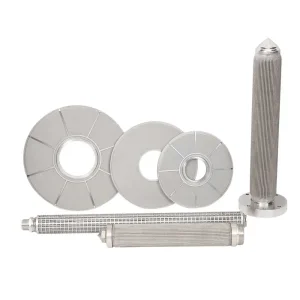
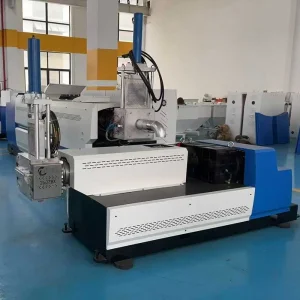
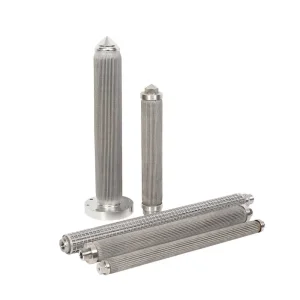
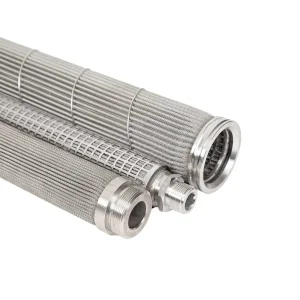
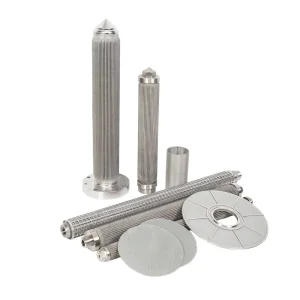
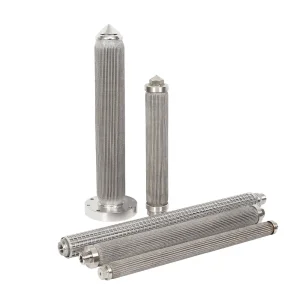
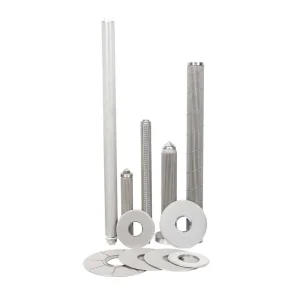
Procurement teams must navigate the total cost of ownership (TCO) between manual slide-plate screen changers and high-capacity continuous hydraulic backflush systems. Utilizing custom multi-layer candle filters or pleated leaf discs significantly expands active filtration surface area by up to 500% within the same vessel envelope, permitting prolonged operational cycles without rheological degradation or thermal burning of the polymer melt stream.
How advanced melt filtration enables compliance with global packaging mandates while reducing energy consumption in plastic granulating and pelletizing lines.
Under the European Union Packaging and Packaging Waste Regulation (PPWR) and US state-level minimum post-consumer recycled (PCR) content mandates, packaging manufacturers are required to integrate upwards of 30% to 50% PCR by 2030. Achieving food-grade clarity, melt purity, and mechanical tensile strength in recycled rPET, rHDPE, and rPP demands micro-level filtration down to 25 microns to remove microscopic gel inclusions and charred particles.
High pressure drops across clogged filter elements increase extruder motor torque requirements and elevate specific energy consumption (kWh/kg of resin processed). By deploying custom geometry candle filter elements with optimized deep-pleating, melt channel flow resistance is minimized, leading to a 12% to 18% reduction in overall extrusion line energy consumption.
Extrusion of heat-sensitive polymers like PET, PVC, and PC under excessive head pressure causes polymer chain scission, discoloration, and loss of intrinsic viscosity (IV). Engineered filter screen packs ensure uniform velocity distribution across the entire mesh media, preventing stagnant dead zones where polymer melt can degrade and burn.
Comprehensive comparison of filter media structures, stainless steel alloys, and mechanical configurations for severe industrial recycling operations.
| Filter Element Type | Primary Structure | Porosity Rate | Differential Pressure Limit | Best Application Stream |
|---|---|---|---|---|
| Pleated Sintered Metal Fiber Felt | Random non-woven 3D stainless steel micro-fiber matrix | 75% - 85% | Up to 210 Bar | High-viscosity PCR PET/PA pelletizing, fiber spinning, film lines |
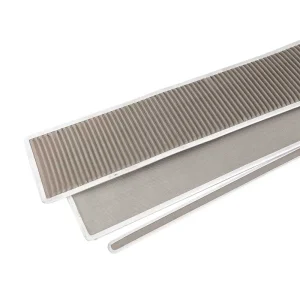
| Multi-Layer Sintered Wire Mesh | Laminated 5-7 layer woven wire mesh diffusion bonded | 50% - 65% | Up to 180 Bar | Continuous hydraulic screen changers, PE/PP granulating |
| Plain/Twill Woven Mesh Discs | Single or rim-bound multi-layer SS wire mesh packs | 35% - 45% | Up to 100 Bar | Standard blown film, pipe extrusion, low-contamination PIR |
| Segmented Leaf Disc Filter | Radial hub stacked double-sided disc elements | 70% - 80% | Up to 250 Bar | BOPET, BOPP, and ultra-clean polymer monomer filtration |
AISI 304 / 304L: Standard industrial grade for general polyolefin recycling (PE, PP, PS). Offers robust tensile strength and thermal stability up to 300°C.
AISI 316 / 316L: Superior molybdenum-alloyed stainless steel designed for corrosive melt environments, acidic additives, or flame-retardant compounded polymers.
Hastelloy C-276 / Nickel Alloys: Custom fabricated for ultra-corrosive fluoropolymer (PVDF, PTFE) melt processing and halogenated plastic recycling.
Every filter element manufactured by Haigong (HG Plastic Machinery) undergoes Computational Fluid Dynamics (CFD) simulation to eliminate dead zones and ensure uniform shear rates across the pleats. Our patented core tube perforations maximize open flow area while maintaining absolute structural integrity under extreme radial compressive force during backflushing cycles.
Deploying engineered polymer filtration solutions across diverse manufacturing hubs in North America, Europe, Asia-Pacific, and Latin America.
High-capacity screen mesh belt filters and hydraulic candle changers integrated into twin-screw recycling granulators for converting agricultural film, woven bags, and bottle flakes into high-purity pellets.
Ultra-fine polymer candle filter cartridges engineered for PP/PET melt spinning spinnerets, stopping micro-inclusions to eliminate filament breakage on continuous nonwoven production lines.
Precision leaf disc filters used in high-speed biaxially oriented film extrusion lines to eliminate pinholes, optical haze, and structural weaknesses in flexible packaging substrates.
Heavy-duty stainless steel melt filter elements installed at monomer polymerization plant outlets to ensure virgin resin batches meet rigid purity standards prior to global export.
Over 20 years of precision engineering experience, accredited ISO 9001:2015 manufacturing protocols, and rigorous quality verification.
Every continuous screen changer or filter housing operates under unique geometry. We provide custom machining for end-cap fittings—including NPT threads, M12/M18/M24 tie-rods, quick-release bayonet mounts, and custom flange interfaces—ensuring direct drop-in replacement for European, American, and Asian extrusion machinery.
Every batch of filter cartridges undergoes strict quality verification: Bubble Point Testing (ISO 4003) for absolute pore size validation, Pressure Drop vs. Flow Rate Testing, and Metallurgical Spectrometry Analysis to guarantee 100% compliance with SUS304/SUS316L alloy specifications.
Our all-welded stainless steel construction withstands repeated thermal calcination, TEG (Triethylene Glycol) boiling, vacuum pyrolysis, and ultrasonic cleaning cycles. With proper maintenance, HG candle filters can be cleaned and re-installed up to 10-15 times, dramatically reducing lifetime operational expenditures.
In-depth answers from our senior filtration engineers regarding filter selection, maintenance, micron ratings, and operational troubleshooting.
Selecting the ideal micron rating depends on the end application of the recycled pellet. For injection molding grade pellets, a 100μm to 150μm screen pack is usually sufficient. However, if the recycled PE/PP pellets are intended for thin film blowing or nonwoven extrusion, fine filtration between 40μm and 75μm using pleated sintered metal fiber candle filters is required to prevent downstream bubble breakage and pinholes.
Pleated candle filters provide up to 5 to 8 times more active filtration area within the same pressure vessel footprint compared to flat discs. This increased surface area significantly reduces the localized flow velocity through the media, lowering initial pressure drop ($\Delta P$), expanding dirt holding capacity (DHC), and extending operational cycle times before backflushing or replacement is required.
Halogenated polymers such as PVC can release corrosive hydrochloric acid (HCl) gases during thermal processing. For these aggressive environments, standard SUS304 is insufficient. We recommend specifying AISI 316L stainless steel with passivation treatment or upgrading to high-nickel Hastelloy C-276 alloys to prevent stress corrosion cracking and pitting.
Yes, our all-welded stainless steel candle filter elements are designed for multi-cycle cleaning. The recommended process involves: 1) Thermal pyrolysis or vacuum calcination at 450°C to burn off organic polymer residue, 2) TEG (Triethylene Glycol) solvent bath for PET/PA removal, and 3) Ultrasonic bath cleaning with a mild alkaline agent followed by reverse air/water flushing. Proper cleaning restores bubble point pressure and flow permeability to over 95% of original specifications.
Our standard SUS 304/316L polymer candle filter cartridges are engineered with inner perforated support cores rated for differential collapse pressures of 120 bar to 210 bar (1,740 psi to 3,045 psi). We recommend configuring automated screen changers to initiate backflush or element replacement when differential pressure reaches 35-50 bar to protect melt pump longevity and preserve polymer stability.
Explore our full line of leaf discs, extruder wire mesh packs, high-viscosity candle filters, and integrated plastic granulating systems.
Work directly with Haigong's engineering team to design custom micron-rated candle cartridges, screen packs, or leaf disc systems tailored to your specific polymer viscosity and throughput requirements.
Request Direct Engineering Consultation