In high-viscosity polymer processing, continuous film extrusion, and chemical fiber spinning, selecting qualified custom stainless steel screen filter suppliers & factories is a critical engineering decision. Process stability, differential pressure management ($\Delta P$), thermal shear minimization, and impurity retention are directly governed by the physical integrity of the screen media.
Polymer melts under extreme temperatures ($250^\circ\text{C}$ to $340^\circ\text{C}$) and operating pressures exceeding 25 MPa demonstrate non-Newtonian fluid behaviors. Inferior mesh structures cause localized shear heating, polymer degradation, and gel formation. Our engineered 316L woven wire and sintered felt filters maintain a uniform pore-size distribution, drastically reducing shear stress while eliminating melt stagnation zones inside continuous screen changers.
Standard commercial screens suffer from intergranular corrosion and wire displacement under continuous pressure surges. We employ vacuum-annealed AISI 316L stainless steel, nickel alloys, and Hastelloy C-276. Micro-plasma welding and precision sintering lock individual wire intersections into place, preventing media migration and guaranteeing structural stability up to 35 MPa differential collapse pressure.
Every polymer processing domain faces unique thermal, mechanical, and chemical challenges. A generic wire mesh fails quickly, leading to costly line shutdowns, degraded end-products, and frequent manual element replacements.
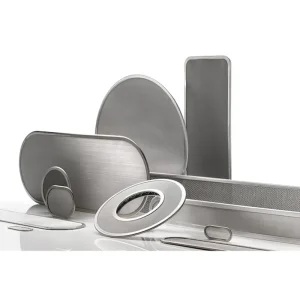
Biaxially oriented film lines demand ultra-clean melt streams. Impurities larger than 5 microns cause film breaks during high-speed transverse stretching. Custom leaf disc filters and multi-layer sintered screen packs deliver zero particle bypass, extending clean-in-place (CIP) cycles by up to 300%.
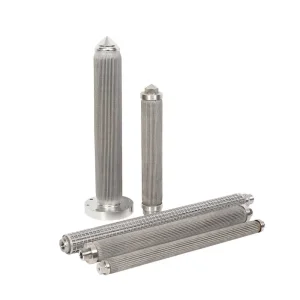
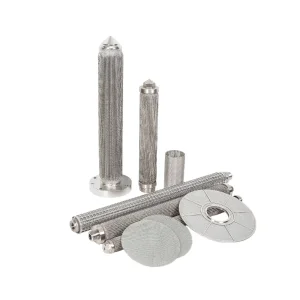
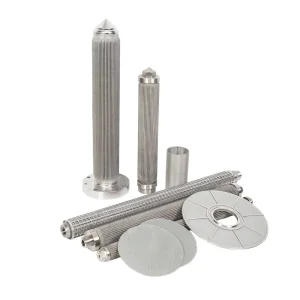
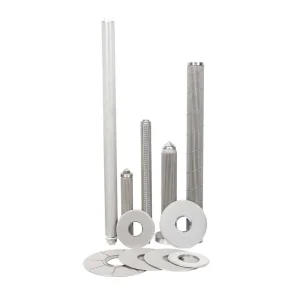
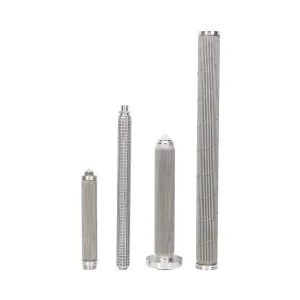
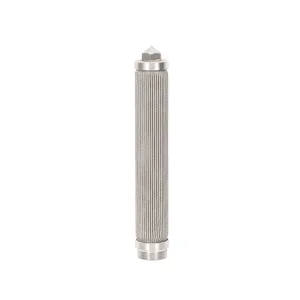
Filament spinning spinnerets feature thousands of micro-orifices easily clogged by trace cross-linked gels. Pleated stainless steel candle filter elements provide up to 500% more surface area than cylindrical designs, preventing pressure spikes and spinneret blinding.
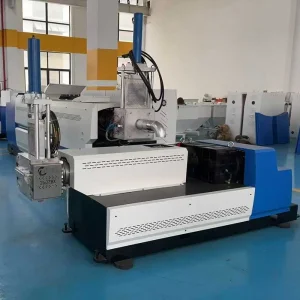
Recycling heavily contaminated PP, PE, and PET post-consumer flake requires rugged continuous belt screens and auto-backwash filter systems. Our heavy-duty reverse Dutch weave meshes withstand continuous abrasive friction while maintaining precise dirt holding capacity.
Comprehensive technical comparison of primary stainless steel screen filter media for OEM industrial procurement.
| Filter Media Type | Common Materials | Micron Rating Range | Operating Temp Limit | Primary Industrial Application | Cleaning / Reusability |
|---|---|---|---|---|---|
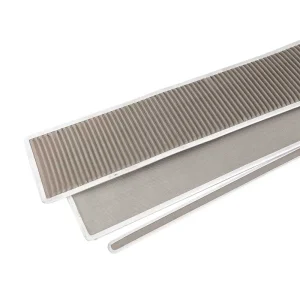
| Multi-Layer Sintered Wire Mesh | SUS316L / SUS304 | 1μm – 100μm | 480°C | Optical Film Extrusion, Polymer CPF Systems | Excellent (Ultrasonic / Calcination) |
| Sintered Stainless Steel Metal Fiber Felt | AISI 316L | 3μm – 60μm | 550°C | Melt Spinning, Chemical Fiber Candle Filters | Superior (Solvent + Burnout) |
| Reverse Dutch Weave (Screen Belt) | SUS304 / SUS316 | 40μm – 250μm | 350°C | Auto-Continuous Recycler Screen Changers | High Mechanical Durability |
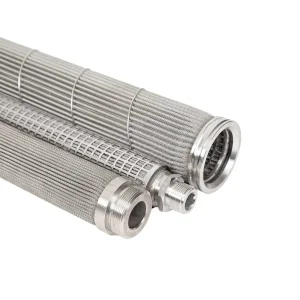
| Pleated Stainless Wire Cloth Cartridge | SUS304 / SUS316L | 10μm – 300μm | 400°C | High Viscosity Resin Granulation & Compounding | Good (Backwashing / Chemical Bath) |
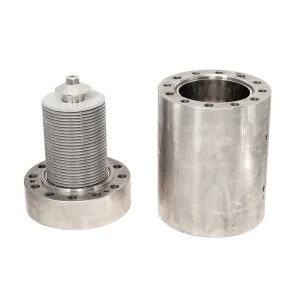
| Framed Rim Screen Discs (Multi-Layer) | SUS304 / Aluminum Rim | 20μm – 500μm | 300°C | Single/Twin Screw Extruder Breaker Plates | Single-use / Disposable Batch |
The worldwide demand for high-performance custom stainless steel screen filters is expanding rapidly, driven by strict circular economy mandates, increasing PCR resin usage, and the demand for ultra-thin high-barrier packaging films.
Modern plant managers are shifting focus from initial purchasing cost to Total Cost of Ownership (TCO). Inexpensive, low-grade mesh filters fail under pressure spikes, causing un-scheduled line stops that cost thousands of dollars per hour. Investing in high-yield sintered mesh elements reduces thermal degradation, extends runtime between maintenance, and lowers long-term operational expenditure.
Global plastic machinery OEMs in Europe, North America, and Asia require reliable factory partners capable of rapid prototyping, strict metallurgical traceability, and steady lead times. Our direct factory manufacturing model bridges the gap between customized technical engineering and cost-effective bulk production.
Every screen filter component manufactured at our factory undergoes comprehensive quality validation to guarantee zero-defect deployment in international production lines.
100% material heat-number tracking from raw stainless steel wire to finished filter assemblies. Full mill test certificates (MTC) supplied with every export batch.
For food packaging film, medical plastic tubing, and pharmaceutical fluid filtration, our stainless steel filters comply fully with FDA CFR 21 and EU 10/2011 regulations.
Bubble point testing according to ISO 4003 verifies absolute micron pore rating and ensures no mesh defects, pinholes, or seam cracks exist.
Challenge: Excessive continuous pressure drops in glass-fiber reinforced Nylon (PA66) extrusion lines causing severe screen changer wear.
Solution: Custom-designed 5-layer sintered stainless steel breaker plate screens with reinforced outer support frames. Result: Continuous operating cycles extended from 18 hours to 72 hours under $280^\circ\text{C}$ operating temperatures.
Challenge: Heavy aluminum and paper impurity contamination causing rapid clogging of standard wire screen mesh packs.
Solution: Implementation of continuous reverse Dutch weave screen belts paired with automated differential pressure sensors. Result: Uninterrupted extrusion throughput increased by 42% while protecting melt pump gears.
As polymer processing moves toward higher speed automation and zero-carbon circular production, filtration media must evolve. Our engineering laboratory is focused on three primary innovations:
Integrating chemical vapor deposition (CVD) coatings on stainless steel wire meshes to prevent polymer carbonization, resin adhesion, and thermal degradation during high-temperature degradation cycles.
Embedding micro-thermal and acoustic sensors into continuous filter housings to monitor real-time cake buildup, predicting filter change requirements via predictive maintenance algorithms.
Combining additive manufacturing with traditional sintered wire cloth to create complex 3D fluid channels that minimize pressure loss and optimize flow distribution across candle filter bundles.
Expert engineering answers to common procurement, design, and operational queries.