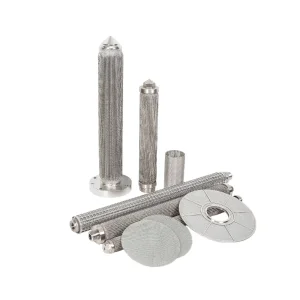
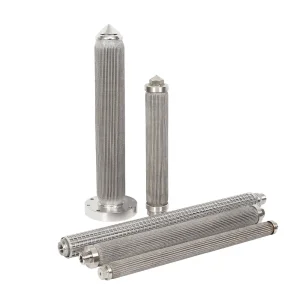
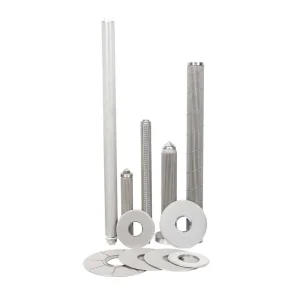
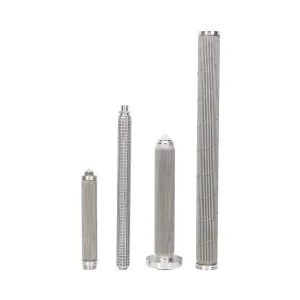
Explore our primary industrial catalog of high-efficiency melt filter elements, stainless steel screen meshes, and nonwoven spunbond filtration components exported globally.
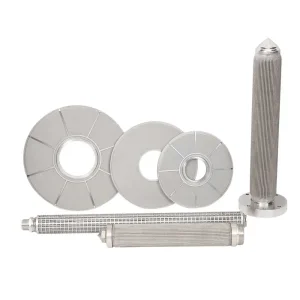
In contemporary industrial manufacturing, advanced climate control, thermal management, and high-temperature polymer melt filtration, the term AC Filter Mesh spans a spectrum of critical engineering components. Ranging from synthetic air conditioning dust prevention screens to heavy-duty, multi-layered stainless steel mesh elements used in polymer melt extruders and air-handling equipment, filter mesh media serves as the fundamental defense against particle contamination. Global industrial automation, stringent indoor air quality (IAQ) standards, and the rapid expansion of synthetic fiber and film manufacturing have accelerated demand for specialized filter mesh exporters.
According to recent global industrial filtration analytics, the market for metallic and high-grade synthetic filter media is projected to expand at a CAGR of 6.8% through 2030. Key growth drivers include the rapid industrialization of Southeast Asia, retrofitting of commercial HVAC systems in North America and Europe, and the booming demand for ultra-fine meltblown and spunbond nonwoven materials in hygiene and automotive industries.
Selecting the appropriate filter mesh exporter requires a granular understanding of material science. Filter meshes operate under extreme environmental stress—ranging from high humidity and corrosive chemical vapors in HVAC AC units to temperatures exceeding 300°C in polymer melt extruders. Exporters evaluate mechanical properties, mesh geometry, and weave dynamics to tailor products for specific applications.
The gold standard for high-temperature melt filtration and corrosive AC environments. Austenitic stainless steel with molybdenum content ensures superior resistance to pitting, intergranular corrosion, and mechanical creep.
Diffusion-bonded under high heat and pressure without binders. Combines protective layers, control layers, and support layers to deliver exceptional rigidity, precise pore rating, and ease of backwashing.
Engineered for lightweight commercial AC pre-filtration. Features low initial flow resistance, hydrophobic moisture barrier properties, high tensile flexibility, and cost-effective washable reusable cycles.
| Mesh Material Grade | Weave Pattern Type | Micron Absolute Rating | Max Operating Temp | Primary Industrial Application |
|---|---|---|---|---|
| SUS 316L Sintered Mesh | Multi-Layer Dutch Weave | 5μm - 40μm | 600°C | Polymer Melt Candle Filters, Spunbond Fiber |
| SUS 304 Wire Mesh | Plain Square Weave | 50μm - 200μm | 400°C | Extruder Screen Discs, Plastic Granulation |
| Woven Polypropylene (PP) | Monofilament Plain Weave | 150μm - 500μm | 90°C | Commercial AC Dust Filters, HVAC Units |
| High-Density HDPE Mesh | Extruded Diamond Mesh | 300μm - 1000μm | 80°C | Automotive Air Inlet Filter Media Support |
Global enterprise procurement teams increasingly turn to Chinese AC filter mesh exporters for high-volume, high-precision orders. This geographic concentration of manufacturing excellence—particularly centered in Zhejiang and Hebei industrial clusters—delivers distinct strategic advantages that traditional European or North American producers struggle to duplicate at scale.
Chinese industrial hubs operate fully integrated supply chains. Raw wire drawing, micro-diameter annealing, automated CNC mesh weaving, bubble-point testing, and ultrasonic cleaning occur within tight geographical zones, drastically compressing lead times.
State-of-the-art Chinese factories utilize multi-axis CNC laser cutting and automated longitudinal plasma seam welding. This ensures zero heat-affected zone (HAZ) distortion, maintaining strict tolerances ($\pm 0.05\text{mm}$) across complex candle filter geometries.
With agile tooling capability, Chinese exporters deliver custom OEM/ODM prototypes—such as multi-layered pleated candle elements or specialized extruder screen mesh belts—in days rather than months, accelerating client time-to-market.
AC filter mesh elements perform vital functions across diverse commercial and heavy industrial sectors. The engineering required for a cleanroom HVAC air intake mesh differs vastly from that of a polymer melt filter cartridge operating at 200 bar within a nonwoven production line.
In plastic recycling granulators and extrusion lines, continuous belt filter screens and disc mesh packs capture gels, degraded polymers, and metallic debris. High dirt-holding capacity (DHC) extends screen-changer operational cycles, preventing costly line stoppages.
High-density pleated candle filter cartridges equipped with 316L sintered stainless mesh refine polypropylene melt prior to spinneret extrusion. Removing particles down to 5 microns prevents filament breakage and guarantees uniform fabric web density.
Synthetic and lightweight aluminum AC filter mesh frames protect evaporator coils from lint, dust, and pollen. Antimicrobial coatings embedded in the mesh matrix inhibit mold and bacterial proliferation in commercial building air handlers.
Enterprise buyers sourcing AC filter mesh and polymer filter cartridges must evaluate supplier capabilities against rigorous quality assurance metrics to prevent catastrophic operational downtime.
Insist on ISO 4003 bubble-point test certification. Verifying maximum pore size ensures that no oversized contaminants pass through the melt filter media into high-value spinnerets or extruder dies.
High-viscosity polymer melts generate extreme differential pressures. Verify that candle filter cores and mesh packs are rated to withstand differential pressures up to 210–250 bar without structural deformation.
Confirm alloy spectral analysis (PMI testing) for SS 316L/304 materials. Check heat treatment processes to guarantee zero mesh brittle cracking during thermal cleaning burn-off cycles (pyrolysis or TEG baths).
The filtration industry is undergoing rapid technical evolution driven by sustainability imperatives, energy efficiency goals, and smart manufacturing integration.
Integrating electrospun polymeric nanofibers onto traditional mesh substrates allows sub-micron particle collection without increasing air flow resistance—drastically lowering HVAC energy consumption.
Advanced sintered metal AC filter meshes are engineered for dozens of cleaning cycles via vacuum pyrolysis ovens or ultrasonic baths, aligning with ESG zero-waste objectives.
Embedding IoT-connected differential pressure sensors within industrial AC filter housing manifolds enables real-time predictive maintenance and automated filter replacement scheduling.
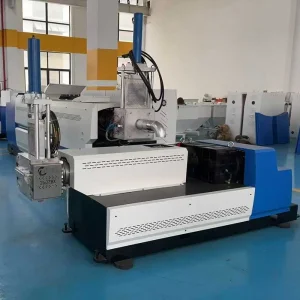
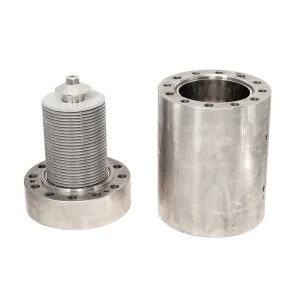
Explore our secondary series of polymer filter cartridges, customized film production filter elements, and plastic granulating recycling machinery.
Find authoritative answers to common technical, procurement, and operational questions regarding AC filter mesh elements, supplier selection, and maintenance practices.
HVAC AC mesh is typically fabricated from lightweight synthetic polymers (PP, Nylon) or fine woven aluminum/SS wire mesh designed for low pressure drop and ambient air velocity filtering of dust and particles. Polymer melt filter mesh, by contrast, utilizes multi-layer sintered 316L stainless steel wire mesh or felt engineered to withstand high temperatures (up to 350°C), viscous pressures up to 250 bar, and aggressive chemical polymers.
SUS 316L contains 2-3% Molybdenum, providing superior resistance to chemical corrosion, organic acids, and pitting compared to SUS 304. Furthermore, the low carbon ("L") content minimizes carbide precipitation during high-temperature vacuum pyrolysis cleaning, ensuring long-term ductility and structural integrity.
Leading Chinese manufacturers employ 100% bubble point testing (ISO 4003 compliant) to verify maximum pore diameter across every production lot. Automated laser welding, continuous microscopic edge inspection, and high-purity cleanroom packaging prevent defects before export dispatch.
For standard PP spunbond nonwoven fabrics, filter micron ratings generally range between 15μm and 40μm absolute. Ultra-fine meltblown medical applications may require 5μm to 10μm sintered metal felt media to ensure complete removal of micro-gels and degraded polymer specks.
Yes. Stainless steel candle and disc filter mesh elements are engineered for reusable performance. Common industrial cleaning procedures include TEG (triethylene glycol) boiling, thermal vacuum pyrolysis furnaces, alkali baths, and ultrasonic solvent flushing, restoring dirt-holding capacity to over 90% of original levels.
Standard prototype samples are produced in 3 to 7 business days. Full batch export orders (1,000–10,000 units) typically require 14 to 21 calendar days depending on mesh weave complexity, customized flange machining, and quality certification requirements.