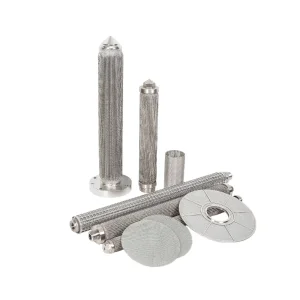
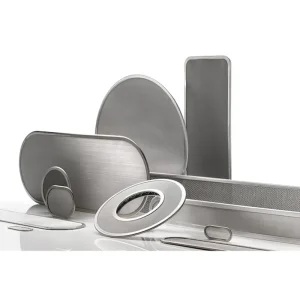
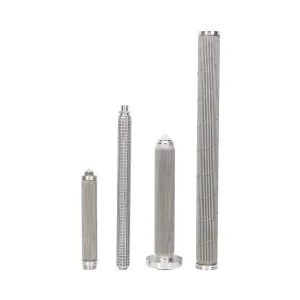
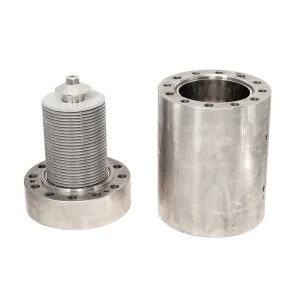
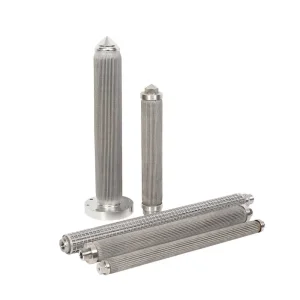
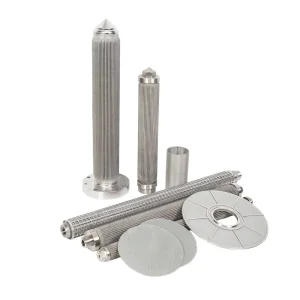
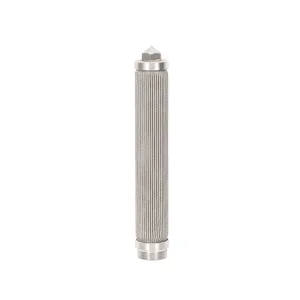
Precision-engineered stainless steel filter elements, candle cartridges, and plastic recycling equipment directly from premier China manufacturing facilities.
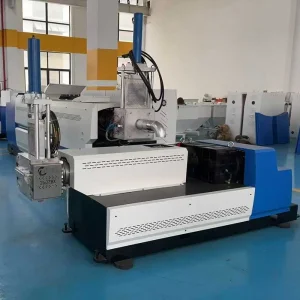
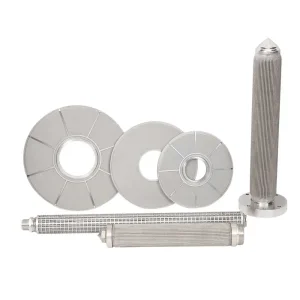
Analyzing market drivers, process demands, and modern engineering challenges across chemical processing and polymer transformation industries.
In modern industrial chemistry, polymer synthesis, and synthetic fiber manufacturing, physical fluid purification represents a critical bottleneck governing both product quality and operational economics. Leading chemical filter factories and global exporters operate at the intersection of metallurgy, fluid mechanics, and polymer rheology. Modern chemical manufacturing requires continuous operation under severe conditions: molten polymers such as Polyethylene Terephthalate (PET), Polypropylene (PP), Polyamide (PA6/PA66), and Polycarbonate (PC) are processed at temperatures exceeding 300°C and hydrodynamic differential pressures up to 320 bar.
As global demand for high-purity chemical products surges—driven by electronic-grade polymer films, medical-grade nonwovens, and high-performance recycled resins—the role of specialized filter chemical exporters has evolved from simple hardware suppliers to strategic technical partners. Chinese OEMs and specialized filter factories have capitalized on advanced metallurgical sintering techniques, automated micro-welding, and rigorous quality assurance protocols to capture a substantial share of the international industrial filtration market.
Filter elements must maintain structural integrity and micron rating precision under exposure to aggressive organic solvents, strong acids, molten alkalis, and continuous high-temperature exposure without media migration.
Engineered micro-porous architectures minimize differential pressure ($\Delta P$) buildup, reducing thermal degradation of temperature-sensitive polymers and optimizing energy efficiency in heavy extrusion pumps.
Unlike disposable synthetic depth filters, premium stainless steel (SUS 316L) candle elements and leaf discs allow repeated chemical, thermal, and ultrasonic regeneration, cutting long-term operational costs by up to 70%.
A technical comparison of alloy compositions and porous filter media configurations utilized by global chemical factories.
The operational lifespan and filtration efficacy of a chemical filter depend heavily on material selection and structural geometry. Industrial polymer filtration systems utilize three primary structural media formats: Sintered Metal Fiber Felt, Multi-Layer Sintered Wire Mesh, and Wedge Wire Screen Elements.
| Filter Media Type | Common Materials | Micron Rating ($\mu m$) | Porosity Range | Primary Industrial Application |
|---|---|---|---|---|
| Sintered Fiber Felt | SUS 316L / Inconel 600 | 3 - 60 $\mu m$ (Absolute) | 75% - 85% | High-viscosity polymer melt, BOPET film, synthetic fiber spinning. |
| Multi-Layer Sintered Mesh | SUS 304 / 316 / Hastelloy C-22 | 5 - 250 $\mu m$ | 35% - 50% | High-pressure hydraulic fluid, resin monomer purification, CPF candles. |
| Dutch Woven Wire Mesh | SUS 304 / 316L | 20 - 500 $\mu m$ | 30% - 45% | Extruder screen changers, plastic recycling granulators, coarse strainers. |
| Wedge Wire (Profile Wire) | SUS 316L / Monel 400 | 50 - 1000 $\mu m$ | 15% - 30% | Petrochemical slurry reactors, continuous self-cleaning scrapers. |
For high-viscosity polymer purification, Sintered Stainless Steel Fiber Felt provides distinct advantages over traditional woven mesh. Manufactured by non-woven laying and high-temperature vacuum sintering of ultra-fine metallic fibers, this medium exhibits a three-dimensional labyrinthine pore matrix. This structural layout provides an exceptionally high void volume (up to 85%), which yields a lower initial pressure drop and significantly larger dirt-holding capacity (DHC) per unit surface area.
In quantitative filtration performance metrics, the Beta Ratio ($\beta_x$) measures particle removal efficiency:
Custom chemical and polymer filter deployment scenarios across major manufacturing sectors worldwide.
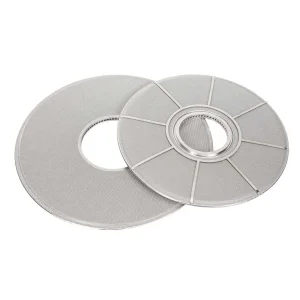
Biaxially-oriented films demand continuous filter performance without pressure fluctuations. High-viscosity OEM Polymer Leaf Disc Filters installed in continuous polymer filter (CPF) housings remove degraded gels, catalyst residues, and particulate matter, preventing film breakage during high-speed multi-axis orientation.
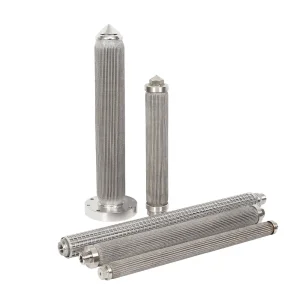
In PP/PET spin-packs and melt-blown nonwoven extrusion, Candle Filter Cartridges with cylindrical or pleated pleated geometries protect spinnerets from clogging. Uniform pore size distribution ensures consistent fiber denier and eliminates filament snap during high-velocity air drawing.
Post-consumer and post-industrial recycling streams carry severe contamination (paper fibers, foreign polymers, aluminum flecks). Multi-layer SUS 304/316 Wire Mesh Screen Discs integrated into automated hydraulic screen changers isolate impurities while handling heavy mechanical loads.
In harsh chemical synthesis, slurry oil filtration, and catalyst recovery, heavy-duty sintered metallic elements withstand corrosive fluids (HCl, H2SO4, organic acids) and thermal shock up to 450°C, ensuring continuous fluid purification.
Ultrapure chemical synthesis requires sub-micron liquid clarification. Sintered porous metal cartridges provide high structural rigidity, eliminating media compaction and fluid bypass in pressure vessel filter housings.
Viscous rubber compounding requires robust filter screens capable of handling non-Newtonian flow behavior. Heavy-duty woven stainless steel screens prevent particulate contamination without shearing the rubber polymer matrix.
Next-generation innovations reshaping the chemical filtration and polymer equipment export sector over the next decade.
The global filtration landscape is experiencing rapid technological evolution driven by Industry 4.0 digitisation, stringent environmental mandates, and the shift toward circular plastic economies. Premier filter chemical manufacturers and exporters are investing heavily in four transformational technology domains:
Modern Continuous Polymer Filtration (CPF) systems are increasingly integrated with digital twin architectures. High-frequency pressure transducers and acoustic sensors continuously measure pressure gradients across candle filter banks. AI-driven predictive algorithms model real-time fluid shear rates and filter cake build-up, giving plant engineers accurate predictions for element swapping and automated backwashing cycles before flow restrictions occur.
To combat polymer gel adhesion and thermal carbonization on filter wire surfaces, leading chemical exporters are introducing Atomic Layer Deposition (ALD) coatings. Titanium Nitride (TiN), Diamond-Like Carbon (DLC), and specialized fluoro-silane nanocoatings lower surface energy on stainless steel media, preventing polymer degradation, reducing gel formation, and speeding up chemical cleaning cycles.
Traditional manual TIG welding of filter cartridge end-caps is being replaced by robotic automated fiber laser welding and 3D metal printing (Selective Laser Melting - SLM). Laser micro-welding eliminates seam imperfections, heat-affected zone (HAZ) oxidation, and microscopic flow bypass points, delivering absolute seal integrity under high differential pressure surges.
Comprehensive protocol for restoring clogged stainless steel candle filter elements to 100% clean differential pressure capability.
A major economic driver for specifying stainless steel candle filters and leaf discs over disposable media is their reusability and long operational lifecycle. When proper cleaning and regeneration processes are maintained, premium SUS 316L filter elements can undergo 20 to 50 operational cycles without losing structural integrity or filtration performance.
Technical guidance directly from senior chemical filtration engineers addressing common procurement, specification, and maintenance questions.
Selection depends primarily on allowable differential pressure ($\Delta P$), target micron rating, and dirt-holding capacity requirements. Sintered Fiber Felt offers high porosity (75%-85%) and a 3D depth structure, making it ideal for high-viscosity melts (PET, PA, BOPET) where low shear and high gel retention are required. Woven Wire Mesh features a precise 2D planar structure, making it preferable for surface filtration, easy cake removal, plastic recycling extruders, and application environments requiring robust mechanical scrapers.
Rapid $\Delta P$ spikes are typically caused by four factors: (1) Thermal degradation or cross-linking of polymer melt producing high concentrations of hard micro-gels; (2) Inadequate temperature control causing melt viscosity to rise sharply; (3) Foreign inorganic contaminant spikes in virgin or recycled feedstock; or (4) Incomplete chemical/thermal cleaning of regenerated filter cartridges, leaving residual carbonized ash blocking internal pore channels.
While SUS 304 is suitable for general plastic recycling and non-corrosive polymers, SUS 316L (EN 1.4404) is the industry standard for chemical and polymer filtration due to its low carbon content and molybdenum addition, which provides superior resistance to pitting and crevice corrosion. For highly acidic processes, organic solvents, or halogenated compounds, high-nickel alloys such as Hastelloy C-22 or Inconel 625 are specified.
Leaf disc designs utilize specialized internal drainage hubs and multi-layer support mesh to create uniform radial flow paths across the entire disc area. Proper drainage geometry prevents dead zones where polymer melt can stagnate, degrade thermally, or form color streaks in optical-grade BOPET film lines.
Top-tier Chinese manufacturers offer end-to-end industrial value: advanced vacuum sintering furnaces, automated CNC laser welding, ISO 9001 certified quality testing, and fully customizable OEM/ODM designs—at significantly lower capital expenditure compared to European manufacturers. In addition, established exporters maintain robust global logistics pipelines and rapid sample delivery.
Explore custom polymer candle elements, CPF filters, leaf discs, and granulating equipment tailored to global chemical plant standards.
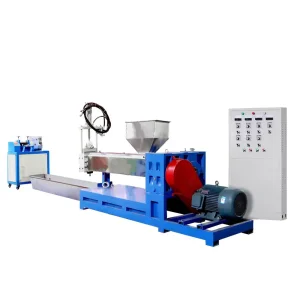
Partner with a trusted China polymer filtration manufacturer. Send us your CAD drawings, micron rating specifications, and operating fluid parameters for expert technical analysis and rapid quotation.