Engineered for extreme thermal resistance, zero-leakage structural integrity, and micrometric melt purity control.
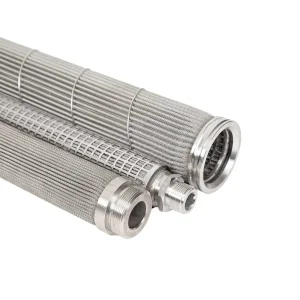
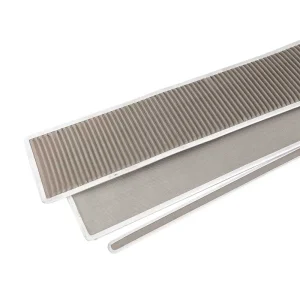
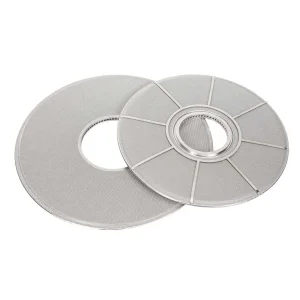
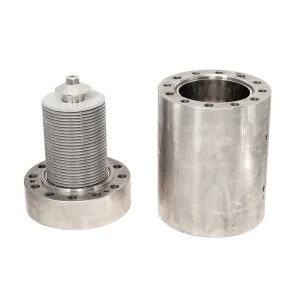
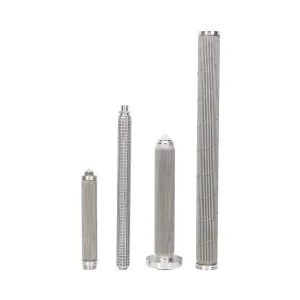
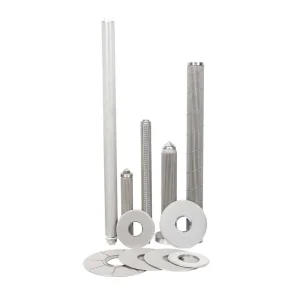
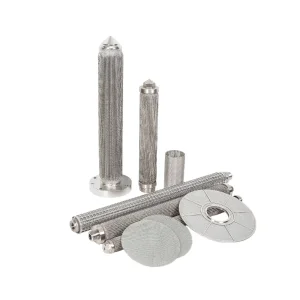
In the contemporary polymer processing ecosystem, achieving exceptional pellet uniformity and zero-defect melt streams is paramount for high-tier applications ranging from BOPET optical films to synthetic multi-filament yarn spinning. As a premier Famous Granulator Machine Manufacturer & Exporters, our engineering paradigm integrates advanced mechanical size reduction with micro-rating melt filtration, establishing an unbroken chain of quality control from raw resin compound to final re-granulated pellet.
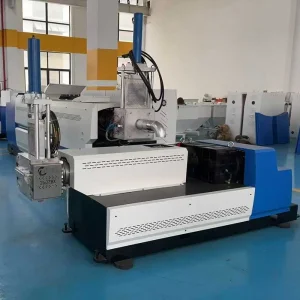
Granulator machines serve as the fundamental mechanical anchor in modern plastics recycling and compounding lines. However, the efficiency of any granulating or pelletizing system (whether underwater pelletizing, strand granulating, or water-ring face cutting) relies inextricably on the chemical homogeneity and particulate cleanliness of the polymer fluid. Below, we examine the rheological dynamics, mechanical tolerances, and filtration integration critical to maximizing production throughput while curbing thermal degradation.
When high-viscosity polymers (such as PET, PA66, PP, or HDPE) are melted inside single or twin-screw extruders prior to granulation, they exhibit non-Newtonian shear-thinning behavior. Under high pressure (often exceeding 150 to 250 bar) and temperatures reaching up to 330°C, solid contaminants—including degraded gels, cross-linked polymers, black spots, and airborne metallic dust—introduce severe stress concentration points in the final extrudate.
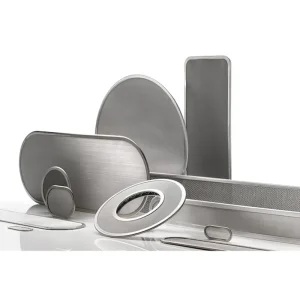
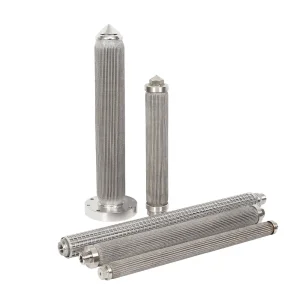
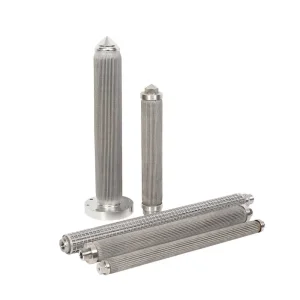
Integrating high-precision SUS 304/316L stainless steel candle filter elements or polymer leaf disc filters directly upstream of the granulator die face creates a controlled shear zone. This filtration barrier ensures:
Increasing effective filtration area via pleated candle geometries or multi-stack leaf discs reduces the localized linear velocity ($v$) of the polymer melt. Lower flux rates ($m^3 / m^2 \cdot h$) drastically lower shear stress on temperature-sensitive polymers (like PLA or PET), preventing hydrolytic degradation and preserving intrinsic viscosity (IV).
Selecting the optimal alloy for granulator screen changers and melt filter cartridges dictates operational longevity and maintenance intervals. The table below highlights the performance metrics across primary stainless steel alloys utilized in our manufacturing facilities:
| Metallurgical Grade | Corrosion Resistance | Max Temp (°C) | Tensile Strength (MPa) | Primary Application Area |
|---|---|---|---|---|
| SUS 304 Wire Mesh | Standard Industrial | 480°C | ≥ 520 | Standard PE/PP Extruder Screens & Granulator Intake |
| SUS 316L Sintered Mesh | High (Acid/Alkaline) | 650°C | ≥ 620 | High-Viscosity PET/PA Melt Spinning & BOPP Film Lines |
| Hastelloy C-276 | Extreme Chemical | 800°C | ≥ 690 | Fluoropolymer (PVDF/PTFE) Recycling & Corrosive Additives |
| Multi-Layer Sintered Felt | High Dirt-Capacity | 600°C | Custom Core | Continuous Deep-Bed Filtration for Ultra-Fine Micronic Extraction (3-20µm) |
How tier-1 global resin manufacturers and recycling conglomerates evaluate OEM/ODM granulator and filtration suppliers.
International buyers prioritize operational lifecycle over initial CapEx. Our precision-engineered candle filters feature ultrasonic cleanability, allowing up to 15-20 regeneration cycles without mesh structural deformation, cutting recurring filter replacement costs by 40%.
Adhering strictly to ISO 9001:2015 standards, every batch of SUS 304/316L wire mesh undergoes X-ray fluorescence (XRF) alloy verification, bubble-point pore size integrity testing, and hydrostatic pressure burst resistance validation prior to dispatch.
Global plant managers demand seamless integration with European and American extruder brands (e.g., Coperion, EREMA, Starlinger, KraussMaffei). Our custom flange connectors, hub dimensions, and keyway geometries ensure 100% plug-and-play compatibility.
Leveraging Zhejiang's world-class machinery clusters to deliver rapid prototyping, cost leadership, and unmatched scaling capability.
Our production facility encompasses every stage of manufacture: from ultra-fine stainless steel wire drawing and vacuum sintering to high-precision CNC end-cap machining and automated laser seam welding. By eliminating third-party sub-contracting, we maintain absolute control over tolerances (up to ±0.05mm) and achieve lead times up to 35% faster than European counterparts.
Whether your facility operates non-standard barrel diameters, specialized hydraulic screen changers, or proprietary granulator cutter assemblies, our dedicated R&D engineering team utilizes 3D CAD/CAM modeling and FEA (Finite Element Analysis) stress simulations to deliver bespoke filter geometries and custom mesh configurations in as little as 7 business days.
Exploring how closed-loop recycling, PCR resin adoption, and AI-driven pressure sensing are reshaping polymer processing.
Global sustainability mandates require plastic processors to incorporate up to 100% Post-Consumer Recycled (PCR) content. Higher paper, foil, and organic impurity levels necessitate high-capacity continuous back-flush filter systems and robust granulator knives capable of processing mixed polyolefins without frequent chipping.
Modern smart factories integrate IoT pressure sensors directly upstream and downstream of polymer candle filters. AI algorithms analyze differential pressure rates ($\Delta P / \Delta t$) to predict filter clogging times, automatically triggering screen changes or granulator cutter speed adjustments to avert melt line stoppage.
Shift toward high-efficiency underwater pelletizing systems for TPU, micro-pellets, and low-viscosity hot melts. Combined with micronic leaf-disc filtration (down to 5µm), underwater granulators achieve perfect spherical pellet geometries with zero dust generation.
Tailored filtration & granulator solutions optimized for specific industrial plant environments.
Challenge: Micro-pinholes and film breaks caused by particulate gels > 15µm during high-ratio bi-axial stretching at speeds exceeding 400 m/min.
Solution: Implementation of multi-assembly SUS 316L Polymer Leaf Disc Filters featuring hard-rim metal seals and vacuum-sintered fiber felt. Resulted in 94% reduction in line stoppage and extended filter pack lifecycle to over 65 days continuous operation.
Challenge: Heavy abrasive sand, dirt, and paper residue causing rapid blunting of granulator knives and clogging of standard wire mesh.
Solution: Deployment of heavy-duty dual-bolt hydraulic continuous screen changers paired with reinforced SUS 304 multi-layer square wire mesh screens and carbide-tipped granulator cutter blades, doubling daily throughput to 15 metric tons.
Empowering international partners with seamless regulatory adherence and localized technical backup.
All filter housings, candle elements, and granulating equipment comply fully with EU CE Machinery Directives, ASME Pressure Vessel Code Section VIII, REACH chemical safety standards, and RoHS environmental directives.
We maintain regional warehousing stocks of standard size screen meshes, standard candle cartridges, and granulator replacement knives. Critical replacement components can be dispatched via express air transport within 24–48 hours to minimize plant downtime.
Our technical support engineering team provides 24/7 remote video diagnostics, line commissioning support, and comprehensive maintenance manuals in English, Spanish, Russian, German, and Arabic.
Expert answers addressing critical search intent queries regarding polymer granulators and melt filtration systems.
A: The primary differentiator lies in chemical corrosion resistance and process environment. SUS 304 is ideal for non-corrosive polyolefin processing (PE, PP, PS) at standard melt temperatures. However, for PET, PA (Nylon), or processes involving acidic additives, halogenated flame retardants, or aggressive solvent washing prior to granulation, SUS 316L is mandatory due to its molybdenum content (2-3%), which drastically halts pitting corrosion and grain-boundary oxidation.
A: Fine micron filtration (e.g., 10µm to 40µm) traps abrasive inorganic fillers, sand, and un-melted hard particles before the polymer reaches the die face. By preventing hard inclusions from exiting the strand or underwater die holes, the granulator rotary cutter blades experience up to 3x less edge wear, maintaining clean pellet shearing without producing stringy, tailing, or irregular pellets.
A: Yes, high-quality metallic candle filter elements engineered from sintered wire mesh or fiber felt are specifically designed for multiple cleaning cycles. Standard regeneration procedures include thermal pyrolysis (TEG cleaning ovens or vacuum calcination furnaces) to decompose residual polymer, followed by ultrasonic bath cleaning with chemical solvents and reverse liquid flushing. When performed correctly, elements regain 95%+ of their original clean pressure drop.
A: Standard specification products (such as stock SUS 304 extruder mesh screens) ship within 3–5 business days. Custom engineered candle filter elements or leaf disc assemblies requiring specific flange machining, drawing validation, and specialized mesh weaving typically ship within 15–20 calendar days. Fast-track air freight options are available for urgent plant emergency maintenance.
A: While structural burst pressure for our heavy-duty candle elements exceeds 150–200 bar differential, optimal operational guidelines recommend initiating filter screen changeover or back-flushing when differential pressure ($\Delta P$) reaches 30 to 50 bar above the clean starting baseline. Exceeding this range risks polymer shear degradation, gel extrusion through the mesh, and excessive motor load on the main extruder drive.
Explore our full range of OEM/ODM equipment engineered for peak operational uptime.