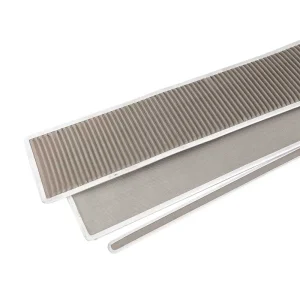
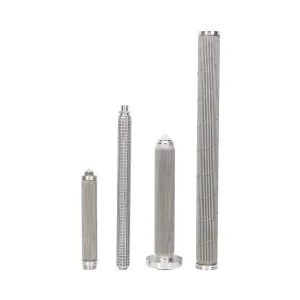
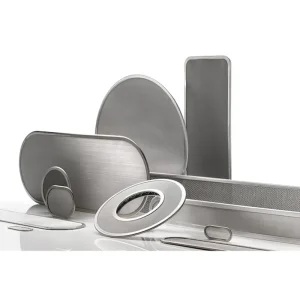
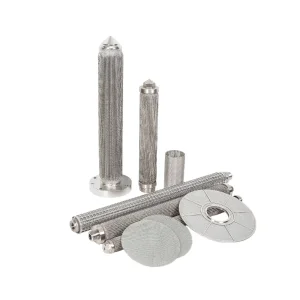
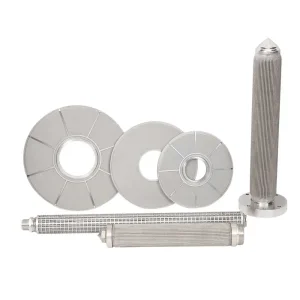
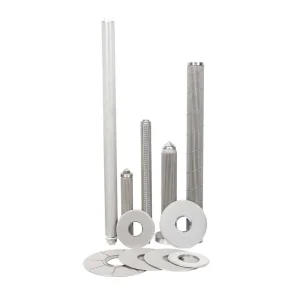
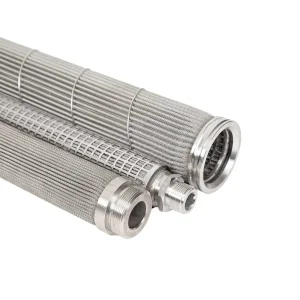
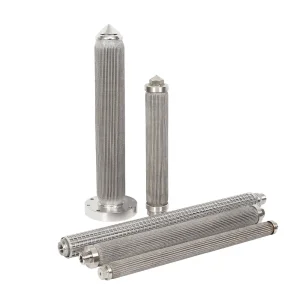
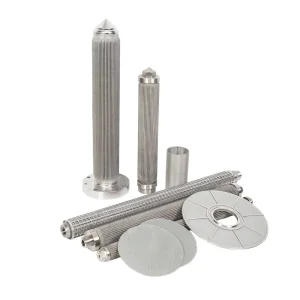
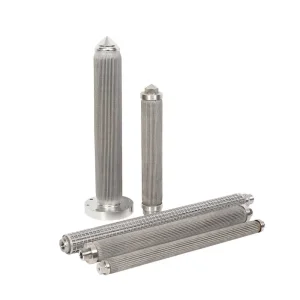
Explore top-tier melt filter elements, stainless steel screen meshes, and candle filter assemblies supplied directly by leading Chinese manufacturers.
Polypropylene (PP) remains one of the most widely utilized thermoplastic polymers across global industries, ranging from automotive components and packaging films to spunbond nonwovens and medical devices. However, the commercial scaling of PP recycling presents unique rheological and technical hurdles that require sophisticated melt filtration solutions.
While post-industrial PP scrap (such as edge trims, sprues, and off-spec nonwovens) maintains relatively high purity and stable Melt Flow Index (MFI), post-consumer recycling (PCR) PP exhibits severe cross-contamination. PCR streams often carry paper fibers, aluminum foils, dirt, degradation gels, and incompatible polymers like PE or PET. Overcoming these contaminants demands multi-stage continuous filtration systems equipped with high-burst-strength stainless steel candle filters and automated screen changers capable of handling high differential pressures without process interruption.
Regulatory frameworks worldwide—such as the European Union's Packaging and Packaging Waste Regulation (PPWR), US state-level recycled content mandates, and global ESG disclosure requirements—are compelling plastic converters to incorporate 30% to 50% PCR content into high-value extruded products. Reaching these targets without compromising film tensile strength, clarity, or fiber spinning stability requires partnering with established PP recycling machine exporters and filtration manufacturers who understand melt rheology and microscopic contamination dynamics.
| Recycling Category | Primary Contaminants | Required Filtration Type | Target Micron Rating | Downstream Product Application |
|---|---|---|---|---|
| Post-Industrial PP (PIR) | Dust, light oxidation gels, thermal degradation spots | Single/Multi-Layer Screen Mesh Filters | 80 - 150 Micron | PP Injection Molding, Pipe Extrusion |
| Post-Consumer PP (PCR) | Paper, organic grit, cross-polymers, inks, metal flakes | Continuous Backwash Melt Filters / Pleated Candle Filters | 40 - 90 Micron | PP Blow Film, Thermoforming Sheets, Woven Bags |
| High-Purity PP Nonwoven / Fiber | Micro-gels, sub-micron carbon specks, degraded oligomers | SUS 316L Sintered Pleated Candle Filters / Leaf Discs | 15 - 35 Micron | Spunbond & Meltblown Fabrics, Fine Yarns |
China’s industrial sector has evolved into the undisputed global hub for polymer machinery and high-precision melt filtration manufacturing. Enterprises like Pujiang HG Plastic Machinery Co., Ltd. represent the apex of this evolution, combining state-of-the-art metallurgical fabrication with unmatched supply chain integration.
Chinese exporters leverage localized raw material sourcing—from premium Grade 304 and 316L stainless steel wire to vacuum sintering furnaces—reducing lead times by up to 45% compared to European equipment builders. This proximity allows for rapid prototype iterations and massive scale economies.
Advanced Chinese factories utilize high-temperature vacuum sintering for stainless steel fiber felt and woven wire mesh media. This process creates atomic-level metallic bonds between wire intersections, preventing fiber migration and guaranteeing absolute pore size integrity under extreme hydraulic pressure (up to 250 bar).
By optimizing engineering workflows and automated CNC laser cutting/welding, Chinese manufacturers provide world-class, reusable candle filters and screen changers at 30% to 50% lower CAPEX. Reusability via ultrasonic and pyrolytic cleaning minimizes OPEX across multi-year operational cycles.
With over 20 years of continuous innovation, Pujiang HG Plastic Machinery Co., Ltd. specializes in engineering high-viscosity melt filtration systems, leaf disc filters, screen mesh elements, and turnkey PP plastic recycling machines. Exporting to over 80 countries, the factory operates under strict ISO 9001 quality protocols, ensuring each filter element undergoes bubble-point validation and dimensional micro-inspection prior to shipment.
The efficiency of PP recycling machines and filtration elements varies dramatically depending on the specific thermal and mechanical processing environment. Below are primary industrial scenarios where specialized filter configurations are mission-critical.
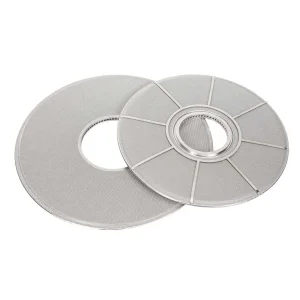
In CPP and BOPP film manufacturing, un-melted gels or microscopic specks cause immediate film web tears, pinholes, and optical flaws. Integrating High-Viscosity Polymer Candle Filters or Leaf Disc Filter Packs (rated at 20–40 microns) directly before the gear pump stabilizes downstream melt pressure, eliminating gauge variation and ensuring pristine surface clarity even when processing recycled PP resin blends.
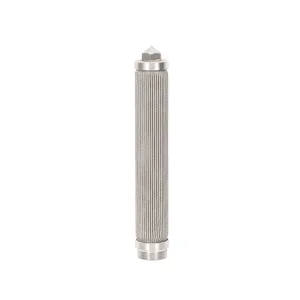
Spunbond nonwoven extrusion uses spinnerets with hole diameters as small as 0.15–0.35 mm. A single foreign particle can plug spinneret holes, causing filament breakage and costly downtime. SUS 316L Sintered Candle Filter Cartridges provide precise depth filtration, trapping cross-linked polymers and hard inorganic particles with high dirt-holding capacity and minimal pressure drop spikes.
Recycling washed PP film scrap or rigid packaging flakes into premium pellets requires high-throughput continuous recycling equipment. Exporters equip these machines with multi-layer continuous screen changers featuring Extruder Screen Mesh Filters. As contamination builds, automated backwashing purges trapped debris without stopping the main extruder screw, preserving high output rates (up to 1,500 kg/hr).
Chemical fiber plants refining virgin or recycled PP melt require robust filter media able to withstand extreme temperature conditions (up to 320°C) and corrosive additives. Multi-layer Stainless Steel Pleated Candle Cartridges offer structural integrity against high collapse differential pressure (up to 210 bar), maximizing effective filtration surface area by up to 500% over cylindrical designs.
As global sustainability directives intensify, PP recycling machine exporters and filtration pioneers are introducing groundbreaking innovations to overcome traditional recycling bottlenecks.
Modern PP recycling systems increasingly incorporate dual-piston or multi-bolt continuous screen changers equipped with hydraulic backwashing mechanisms. When melt pressure delta (ΔP) reaches a preset threshold, a small portion of clean polymer melt is reversed through the filter element, purging up to 95% of accumulated contaminants into a discharge chute—drastically cutting manual filter disc replacement frequency.
Industry 4.0 IoT integration allows real-time monitoring of melt viscosity, temperature gradients, and differential pressure across the filter pack. AI algorithms analyze pressure rise curves to predict filter clogging, automatically adjusting extruder screw speeds and backwash cycles to maintain steady melt output without thermal degradation of PP chains.
Replacing standard woven wire meshes with non-woven 316L stainless steel sintered metal fiber webs provides a 3D depth-filtration matrix. Sintered fiber media feature extremely high porosity (up to 85%), delivering 3x to 5x higher dirt-holding capacity, lower initial flow resistance, and longer on-stream operational lifespans before requiring chemical off-line cleaning.
Selecting the right PP recycling machine exporter and filtration partner requires a rigorous evaluation framework spanning technical specifications, quality control, and post-sale technical support.
| Evaluation Pillar | Standard Requirement | Tier-1 Exporter Benchmark (HG) |
|---|---|---|
| Quality System | ISO 9001 standard | ISO 9001:2015 + CE + RoHS Compliance |
| Customization | Standard sizes only | Full OEM/ODM CAD/CAM Customization |
| Lead Time | 6 - 10 Weeks | 2 - 4 Weeks (Integrated Supply Chain) |
| Testing Protocols | Visual Inspection | Bubble Point, Pressure Burst, Spectrometry |
Answers to fundamental engineering and procurement queries regarding PP recycling machinery, melt filter selection, and operational optimization.
Select from our premium range of high-viscosity polymer melt candle filters, leaf disc filters, and screen elements engineered for long service life.