In modern industrial process engineering, stainless steel screen mesh represents an indispensable core component for high-precision fluid separation, polymer melt extrusion, chemical fiber spinning, and environmental remediation. Achieving continuous zero-defect operation under extreme pressures and temperatures requires metallurgical mastery, micron-level precision weaving, and advanced sintering technologies.
Designed to withstand differential pressures exceeding 21 MPa in continuous polymer melt filtration without structural deformation or pore collapse.
Sustains continuous thermal operational cycles from -200°C up to 600°C in corrosive polycondensation and petrochemical processing units.
Pore size distributions calibrated from 1 μm up to 500 μm, backed by rigorous bubble point testing in full compliance with ISO 4003 standards.
Selecting premier manufacturers and companies requires evaluating raw alloy wire drawing, weave structures (plain, twilled, dutch weave, and reverse dutch weave), vacuum sintering, and multi-layer structural assembly capabilities. Worldwide, high-end procurement managers prioritize suppliers who provide verified material test reports (MTRs), traceable alloy batches (SUS 304, 316L, 904L, Duplex 2205, Hastelloy), and extensive customization services for specialized filter elements.
Top-tier manufacturers differentiate themselves through empirical performance validation, automated laser welding, and rigorous quality management systems.
| Alloy Grade | Chemical Composition Highlights | Corrosion Resistance Profile | Primary Industrial Application |
|---|---|---|---|
| AISI 304 / SUS 304 | 18% Cr, 8% Ni | Standard atmospheric & organic acid resistance | Standard plastic recycling, general fluid screening |
| AISI 316L / SUS 316L | 16-18% Cr, 10-14% Ni, 2-3% Mo (Low Carbon) | Superior pitting resistance in chloride environments | Polymer melt candle filters, BOPET/BOPP film lines |
| Duplex 2205 (UNS S31803) | 22% Cr, 5% Ni, 3% Mo, 0.16% N | Exceptional stress corrosion cracking (SCC) immunity | Offshore petrochemicals, highly acidic fluid streams |
| Hastelloy C-276 / Inconel 625 | High Ni, Cr, Mo with W / Nb fortification | Extreme resistance to severe oxidizing acids & hot gases | High-temperature chemical processing & aerospace |
China has evolved from a bulk wire mesh producer into an advanced manufacturing powerhouse for ultra-precision metal filter media. Facilities in industrial clusters such as Zhejiang and Jiangsu leverage unmatched metallurgical integration, state-of-the-art European CNC weaving machines, and robust domestic supply chains to deliver elite quality at competitive Total Cost of Ownership (TCO).
Complete localized integration from raw stainless steel rod drawing, wire annealing, precision weaving, to vacuum sintering minimizes production lead times by up to 40%.
Implementation of heavy-duty shuttleless looms, laser inspection systems, and cleanroom assembly ensures micro-pore tolerance consistency under ±1.5 μm.
Low tooling costs enable economical small-batch OEM/ODM customization alongside high-volume continuous production runs for global distributors.
The demand for higher throughput, zero-defect optical quality in thin-film production, and continuous plastic recycling is driving unprecedented innovations in metal filter media architecture.
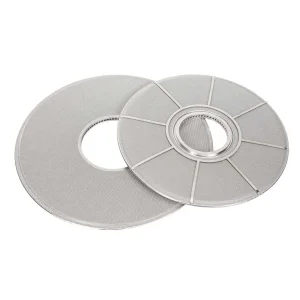
Traditional loose screen mesh packs require manual assembly and are prone to operational shifting or bypass under high delta-P conditions. Modern manufacturers are increasingly shifting toward diffusion-bonded, multi-layer sintered metal mesh. Sintering fuses the contact points of fine filtration mesh with protective support layers under high temperature and vacuum, resulting in a single rigid structural filter media with permanent pore geometry and zero wire migration.
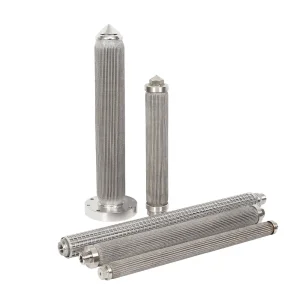
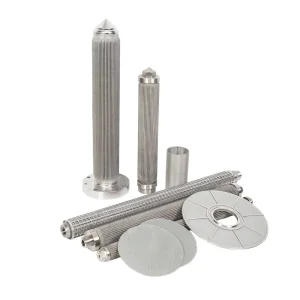
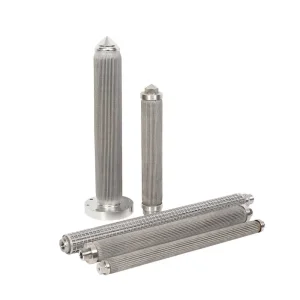
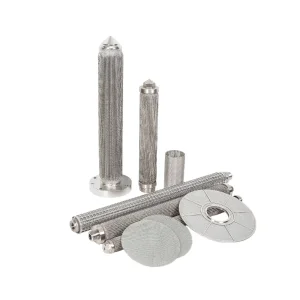
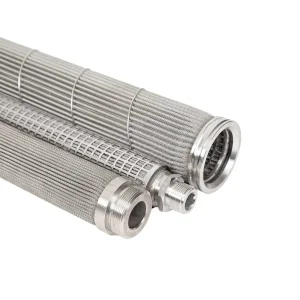
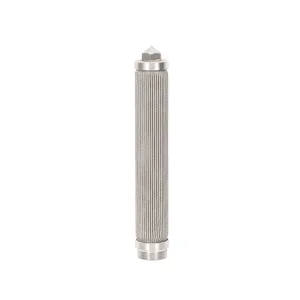
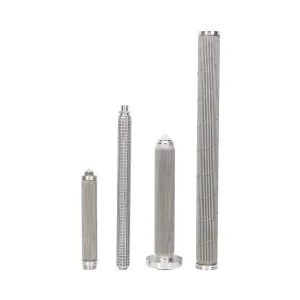
To maximize continuous on-stream lifetime without expanding outer filter housing footprints, manufacturers are utilizing high-precision computer-controlled pleating. Cylindrical pleated candle filter cartridges provide 200% to 500% more effective filtration surface area compared to flat smooth cylinders of identical dimensions. This design reduces flow velocity per unit area, lowers initial pressure drop, and extends contaminant holding capacity exponentially.
ESG initiatives and rising raw material costs have accelerated adoption of cleanable stainless mesh filter systems. Ultrasonic bath treatment, pyrolysis burn-off ovens, and TEG (Triethylene Glycol) vapor cleaning allow premium SUS 316L pleated candles and leaf discs to be regenerated up to 10–15 times without sacrificing pore structure or physical integrity.
Stainless steel mesh filters are deployed across diverse high-viscosity and high-pressure fluid environments where polymeric or paper filter media fail.
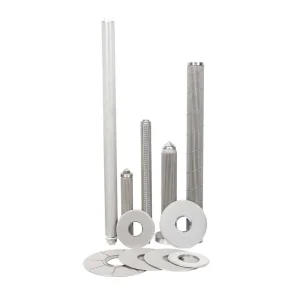
Requires leaf disc filter systems (hard disc or soft disc construction) rated from 5 μm to 20 μm. Eliminates gel particles and micro-inclusions to prevent film pinholes or optical hazing in solar panel backing and display screens.
High-pressure continuous polymer filtration (CPF) units utilize SUS 316L pleated candle filter cartridges to protect spinnerets from clogging, ensuring consistent filament tensile strength and thread uniformity.
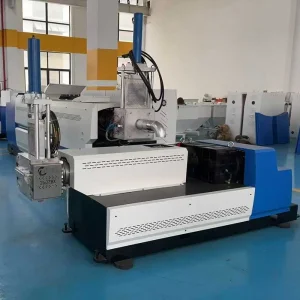
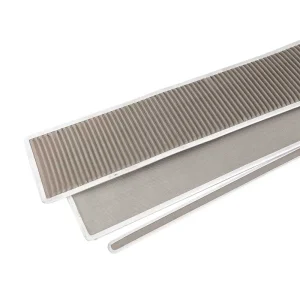
Heavy-duty extruder screen mesh belts and circular mesh packs engineered to handle abrasive contaminants in recycled PE/PP granulating systems, keeping melt pressure stable during automatic screen changes.
Duplex 2205 and Hastelloy wire mesh cartridges installed in high-temperature catalytic reaction vessels and fluid cracking units to recover expensive catalysts and clear aggressive solvent streams.
For global procurement directors and technical engineers, selecting the right screen mesh stainless manufacturer requires thorough auditing across material, mechanical, and operational dimensions.
Expert technical answers regarding stainless steel mesh selection, customization, maintenance, and engineering parameters.