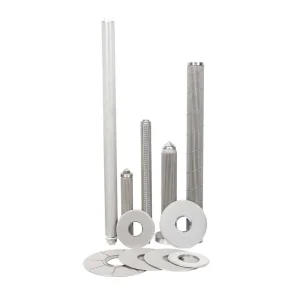
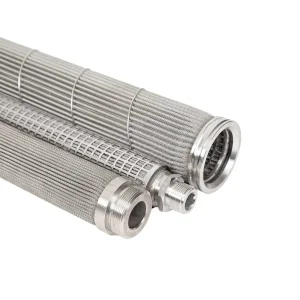
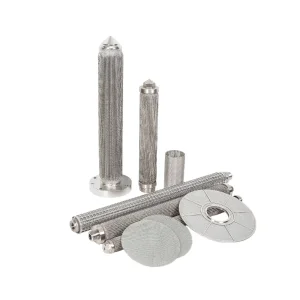
Explore our flagship engineered screen mesh filters, plastic pelletizing machines, and high-viscosity melt candle elements manufactured to exact technical standards.
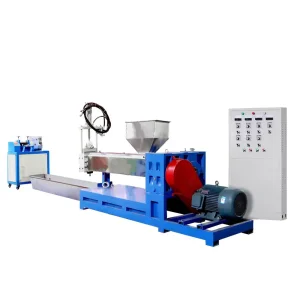
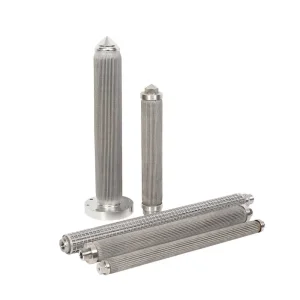
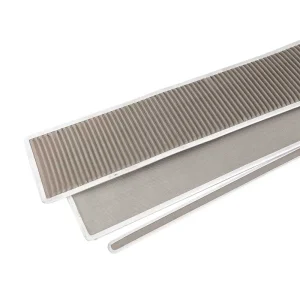
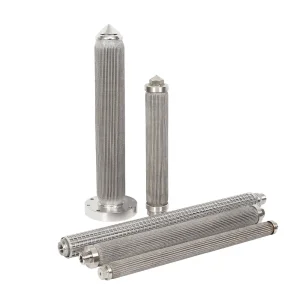
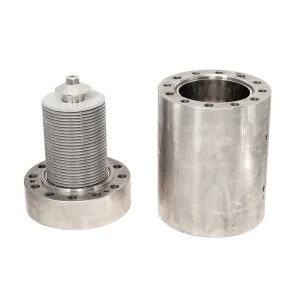
In high-throughput polymer processing, custom-shaped screen mesh filters serve as the first critical line of defense against particulate contamination, un-melted gels, and structural degradation of melt fluids.
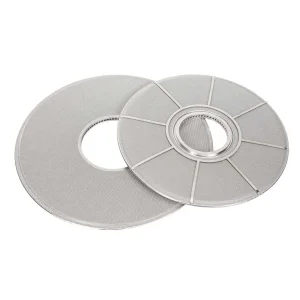
Unlike standard circular mesh discs, continuous hydraulic slide plate changers, rotary disc screen changers, and specialized extrusion dies require precision-stamped shaped mesh filters. Common structural configurations include kidney-shaped, oval, rectangular with rounded corners, multi-segment arc, and custom-profiled rimmed packs.
To withstand thermal pressures up to 350 bar without media deformation, shaped filters incorporate multi-layered wire mesh structures. Fine control mesh layers (5μm–100μm) are sandwiched between heavy-duty coarse support meshes (20–40 mesh) and spot-welded or aluminum/stainless steel rimmed to guarantee edge sealing zero-bypass integrity.
Depending on polymer melt aggressiveness and ambient chemical conditions, top-tier manufacturers utilize high-grade AISI 304, 316L, 904L stainless steels, Hastelloy C-276 for corrosive fluoropolymers, and Nickel alloys for ultra-high temperature spinning processes.
Technical Insight on Edge Rimmed Sealing: In continuous automatic screen changers, un-rimmed mesh elements often suffer from edge fraying and polymer bypass under shear strain. Pujiang HG Plastic Machinery’s proprietary aluminum and stainless steel frame encapsulation technology enforces exact dimensional tolerances (±0.05 mm), reducing melt leakage risks by over 99.4% in high-pressure compounding lines.
For procurement directors and plant chief engineers managing multi-national plastic conversion facilities, selecting a shaped screen mesh filter supplier extends far beyond unit pricing.
| Procurement Vector | Standard Market Filters | Pujiang HG Engineered Shaped Filters | Impact on Operational TCO |
|---|---|---|---|
| Melt Pressure Drop (ΔP) | High initial resistance due to irregular wire weaving and non-calendered mesh. | Optimized fluid dynamics, multi-layer gradient porosity, minimal initial ΔP. | 12-18% reduction in extruder motor energy consumption. |
| Dirt Holding Capacity | Single-plane surface filtration; quick clogging on recycled PCR polymer melts. | 3D depth filtration using sintered metal fibers and corrugated candle geometry. | Extends screen change intervals by 2.5x, minimizing line downtime. |
| Dimensional Consistency | Manual die-cut edges with variance exceeding ±0.30 mm. | CNC automated laser blanking with strict ±0.05 mm tolerance control. | Eliminates slide plate jam and premature seal wear in hydraulic changers. |
| Thermal & Chemical Stability | Standard SUS 304 wire prone to intergranular corrosion under high temps. | Vacuum annealed SUS 316L / 316 / Inconel alloys resistant to polymer degradation. | Prevents filter element rupture during thermal cleaning cycles. |
Industrial scale BOPP film extruders and synthetic fiber spinning lines run 24/7/365. A single defective filter pack leading to melt channel contamination can cause tens of thousands of dollars in lost production per hour. Procurement managers demand ISO 9001:2015 certified production processes, bubble point testing validation, and batch traceability from raw stainless wire to final packaged units.
No two extrusion lines are identical. Global buyers require bespoke filter development capable of adjusting mesh weave counts (Dutch weave, twilled Dutch weave, square mesh), overall pack thickness, border encapsulation alloys, and multi-stage micro-rating step-downs tailored to specific melt viscosity indices (MFI).
Located in Zhejiang, China, Pujiang HG Plastic Machinery Co., Ltd. combines two decades of specialized metallurgy expertise with China’s complete manufacturing supply chain.
By leveraging direct partnerships with premier stainless steel wire drawers and vacuum sintering foundries across the Yangtze River Delta, we secure top-grade SUS 304, 316L, and alloy wires with verified chemical composition and tensile stability.
Our facility houses high-speed automated CNC laser cutting systems, automatic spot welding arrays, and high-precision stamping presses capable of delivering over 500,000 shaped filter units monthly with rapid lead times.
Scale manufacturing, lean production management, and direct factory-to-buyer sales models eliminate middleman markups—delivering premium OEM/ODM filtration solutions at a fraction of European or North American manufacturing costs.
Meeting global industrial safety, environmental, and material standards ensures seamless integration into multi-national supply chains without compliance friction.
Every production batch undergoes thorough quality audits. Raw wire materials are accompanied by EN 10204 3.1 Material Test Certificates (MTC), certifying chemical purity, tensile strength, and corrosion resistance grade.
For polymer producers manufacturing food packaging films (BOPP, PET bottle flakes, medical tubing), our shaped mesh filters and candle cartridges comply with US FDA CFR 21 177.2600 and EU Regulation 1935/2004 for non-contaminating, inert food contact materials.
All filter assemblies, spot welding alloys, and rim sealing materials are 100% free of hazardous heavy metals, meeting European Union REACH and RoHS 3 chemical safety directives for green manufacturing.
We provide comprehensive engineering CAD drawing verification, sample buffer inventory programs, and expedited express air dispatch to minimize downtime during scheduled overhaul turnarounds for international clients.
As circular economy regulations intensify and polymer processing speeds accelerate, screen mesh filtration technology is evolving rapidly.
Global mandates for 30%+ recycled plastic content in packaging demand filtration media capable of capturing highly irregular contaminants (paper fibers, cross-linked gels, metal specks). High-capacity multi-layer shaped screen packs are becoming standard in PCR pelletizing systems.
Traditional woven wire screens are increasingly complemented by ultra-porous 3D sintered stainless steel fiber webs. Sintered fiber offers up to 85% void volume, resulting in lower pressure drops and vastly higher contaminant holding capacities.
To achieve zero-downtime operation, modern twin-screw extrusion lines utilize auto-belt screen changers and backflush continuous hydraulic changers requiring high-precision rimmed shaped screen packs engineered for auto-indexing.
Our shaped screen mesh filters and polymer candle elements are engineered for diverse, highly demanding industrial operational environments.
In post-industrial and post-consumer plastic granulators, polymer melts carry residual paper, wood flour, and degraded polymer specks. Multi-layer shaped mesh packs remove non-melting impurities efficiently, protecting downstream pelletizing dies and gear pumps.
BOPP film stretching processes require absolute melt homogeneity. Any particulate contaminant over 10μm causes film web breakages. Our sintered leaf disc filters and candle filter elements deliver pristine melt filtration for high-speed film lines.
Melt spinning spinnerets feature micro-holes measured in microns. SUS 304/316L pleated candle filter cartridges remove fine gels, extending spinneret pack operational lifetime and ensuring thread breaking resistance.
During resin polymerization (PET, PA66, PC), raw polymer melts exhibit extreme viscosities (1,000 to 10,000+ Pa·s) and high temperatures. Heavy-duty cylindrical candle filter elements withstand extreme differential pressure without channel collapse.
Answers to critical technical queries compiled from enterprise buyers, engineers, and plant managers.
Shaped screen mesh filters (such as kidney-shaped, oval, or multi-arc profiles) are custom-engineered to fit non-circular cavity geometries of continuous hydraulic slide plate and rotary screen changers. Unlike standard circular screens, shaped filters maximize the active filtration surface area within specific breaker plate footprints, reducing melt pressure drop (ΔP) and accommodating higher melt volumetric flow rates.
Rimming encapsulates the loose wire edges of multi-layer mesh packs within a precise metal frame. This prevents individual wire strands from fraying into the polymer stream, provides structural rigidity against differential pressure spikes up to 350 bar, and forms an airtight/melt-tight seal against screen changer slide plates, preventing polymer melt bypass leakage.
AISI 304 is widely used for standard polyolefin (PE, PP, PS) recycling and extrusion where corrosion risks are minimal. AISI 316L is preferred for chemical fibers (polyester, nylon), PET film production, and high-temperature melt filtration due to its superior molybdenum-enhanced resistance to intergranular corrosion and thermal pitting. For highly corrosive fluoropolymers or acid-releasing polymers, Hastelloy C-276 or Inconel alloys are recommended.
Yes. Sintered stainless steel candle filter elements and leaf discs are specifically designed for multiple cleaning cycles. Standard cleaning methods include TEG (triethylene glycol) boiling, vacuum pyrolitic calcination furnaces, chemical solvent flushing, and ultrasonic bath cleaning. Proper cleaning restores clean pressure drop (ΔP) to near-new conditions, dramatically reducing overall consumable replacement costs.
We employ high-speed CNC laser cutting and precision tooling dies manufactured in-house. Dimensional inspection is conducted via 3D optical coordinate measuring machines (CMM) with automated optical inspection (AOI) to guarantee every batch conforms strictly to client CAD drawings within ±0.05 mm tolerances.
Direct factory supply of high-viscosity candle elements, leaf disc filters, and customized polymer recycling equipment.