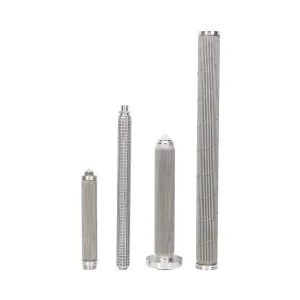
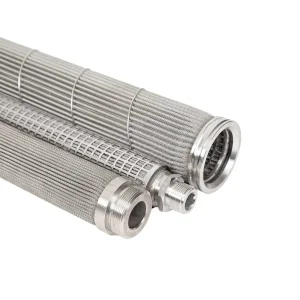
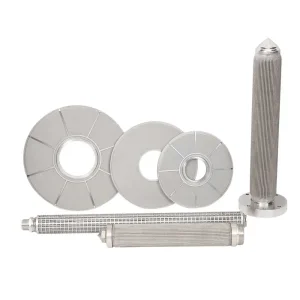
Explore our top-tier export-grade polymer extruder screen mesh filters, candle filter cartridges, and high-viscosity melt filtration solutions engineered for demanding industrial environments.
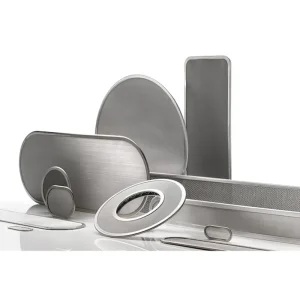
In high-performance polymer extrusion, chemical fiber spinning, and continuous recycled plastic granulating, stainless steel mesh filtration stands as the ultimate line of defense against particulate contamination, degradation gels, and catastrophic die-blockages. Modern industrial extrusion systems operate under extreme operational parameters—pressures exceeding 300 bar (4,350 psi), thermal profiles climbing above 350°C, and melt viscosities ranging from dynamic fluid regimes to high-molecular-weight non-Newtonian melts. Selecting a world-class exporter and manufacturing partner for stainless steel wire mesh filter elements is no longer merely a procurement task; it is a critical engineering decision that dictates overall equipment effectiveness (OEE), line yield, and long-term operating expenditure (OPEX).
Pujiang HG Plastic Machinery Co., Ltd. has spent over two decades pioneering advanced metallic melt filtration engineering. As one of the world's leading famous stainless steel mesh filter exporters, our manufacturing methodology fuses state-of-the-art metallurgical weaving with vacuum sintering technology. By integrating Google SEO Search Quality Rater Guidelines (E-E-A-T) into our core information delivery, this whitepaper provides technical directors, procurement specialists, and plant operating engineers with an unvarnished, deep-dive analysis into wire mesh selection, micro-structural mechanics, global regulatory compliance, and economic supply chain dynamics.
Analyzing macro-level industrial shifts driving high-efficiency, sustainable, and micro-precision wire mesh filter consumption.
The rapid rise of Post-Consumer Recycled (PCR) and Post-Industrial Recycled (PIR) polyolefins has dramatically increased contaminant loading in polymer streams. Standard single-layer screens blind rapidly under heavy solid particulate loads. Modern trends demand multi-layered, gradient-porosity sintered mesh packs capable of filtering un-melted paper fibers, aluminum foil specks, and cross-linked gels without inducing frequent auto-screen changer shifts.
Ultra-thin polymer films (BOPP, BOPET, BOPA) and ultra-fine fibers (spunbond/meltblown nonwovens) now require particle retention down to 15–25 microns. Processors are migrating away from simple wire mesh disking toward high-surface-area continuous candle filter element clusters and leaf disc systems that maximize total filtration surface within compact pressure vessels.
While SUS 304 remains the industry baseline, demanding chemical processes exposed to corrosive halogenated polymers (such as PVDF or PVC) or high-temperature organic solvents are driving rapid adoption of high-molybdenum SUS 316L, Hastelloy C-276, and Inconel wire mesh. Diffusion bonding via vacuum furnace sintering eliminates wire migration, ensuring fixed pore geometry even under extreme differential pressure spikes.
When international procurement directors source stainless steel mesh filter elements from China, the key objective is finding an OEM manufacturer capable of strict dimensional accuracy, predictable hydraulic resistance, and repeatable batch consistency. Below is a comprehensive engineering breakdown of essential material grades and weaving topologies requested by global enterprise buyers.
The structural longevity of a wire mesh screen is primarily dictated by its chemical composition. The table below outlines the primary alloy options for melt filtration and industrial fluid processing:
| Alloy Grade | Chemical Composition Highlights | Max Operating Temp | Corrosion Resistance | Primary Application Domain |
|---|---|---|---|---|
| SUS 304 (UNS S30400) | 18% Cr / 8% Ni | 550°C (1,022°F) | Standard Industrial Grade | Standard PP, PE, PS, ABS Extrusion & Rubber Granulating |
| SUS 316 (UNS S31600) | 16% Cr / 10% Ni / 2% Mo | 650°C (1,202°F) | High (Resists Chlorides & Pitting) | Engineering Plastics, PET Polycondensation, Fine Chemical Processing |
| SUS 316L (Low Carbon) | 16% Cr / 12% Ni / 2.5% Mo (C < 0.03%) | 800°C (1,472°F) | Superior (Prevents Intergranular Corrosion) | Polymer Candle Filters, Micro-Fiber Nonwovens, Medical-Grade Polymers |
| Hastelloy C-276 | 57% Ni / 16% Cr / 16% Mo / 4% W | 1,000°C (1,832°F) | Extreme (Resists Strong Acids & Oxidizers) | Fluoropolymer Extrusion (PVDF/PTFE), Harsh Petrochemical Solvents |
The filtration characteristics of stainless steel wire cloth depend heavily on how the warp and shute (weft) wires are interconnected:
Discover how custom wire mesh filter architectures solve critical processing challenges across key manufacturing sectors.
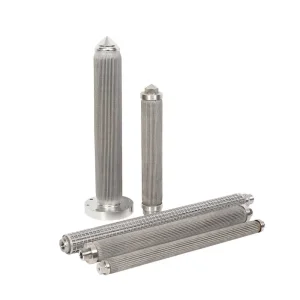
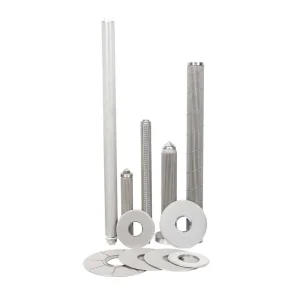
For PET resin plants, nylon polycondensation lines, and polycarbonate sheet extrusion. We provide cylindrical multi-segment polymer candle filters with SUS 316L sintered stainless steel fiber felt media. This delivers an expanded effective filtration surface area (up to 500% larger than flat screens), drastically lowering delta-P growth and maintaining low shear degradation of high-viscosity melts.
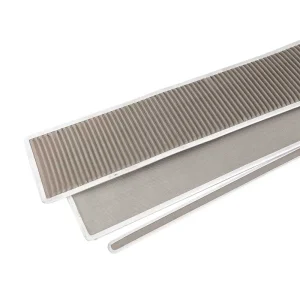
Heavy-duty recycled plastic extruders face extreme contamination from sand, paper fragments, and cross-linked elastomers. Our custom spot-welded rimmed screen packs and auto-belt filter rolls utilize high-tensile SUS 304 wire mesh engineered with thick support wire backings to withstand rapid clogging and mechanical abrasion without screen blowout.
In synthetic nonwoven fiber manufacturing (PP/PET), spin-pack blockages lead to fiber rupture and costly line shutdowns. HG filter elements utilize multi-layer pleated stainless steel wire mesh cartridges rated from 25 to 40 microns, guaranteeing zero wire shedding, precise pore distribution, and backwash cleanability for extended campaign runs.
Ensuring international engineering compliance, rigorous quality control, and seamless localized logistics support for global industrial partners.
Every shipment of stainless steel mesh filter elements undergoes rigorous raw material spectral analysis (PMI testing) to confirm metal alloy purity. Automated ultrasonic cleaning and bubble point testing (ISO 4003) guarantee absolute structural integrity before export packaging.
Our wire cloth weaving looms operate under strict tolerance controls conforming to international wire screen weaving standard ASTM E11 and ISO 3310-1, eliminating pore size variance and ensuring repeatable hydraulic behavior.
We provide global clients with customized CAD/CAM engineering assistance, private-label packaging, duty-optimized HS code documentation (8421.9900), and rapid air-freight/sea-freight logistics fulfillment across 80+ countries.
As polymer processing equipment evolves toward higher automation speeds, continuous non-stop screen changers, and AI-monitored hydraulic pressure loops, stainless steel mesh filter design is undergoing a profound transformation. Pujiang HG Plastic Machinery Co., Ltd. is actively advancing three core technological frontiers:
Utilizing 3D fluid dynamic modeling to engineer variable-pitch pleat geometries in candle filter cartridges. This prevents pleat collapse under high differential pressures, maximizing effective flow distribution and reducing stagnation zones where thermal degradation occurs.
Developing multi-layer sintered filter assemblies specifically engineered for extended cycle cleanability. Through vacuum pyrolysis and high-frequency ultrasonic baths, our candle filter elements can undergo 10–15 cleaning cycles without structural pore distortion.
Exploring surface ceramic and nano-fluoropolymer thin films applied to stainless steel mesh wires. These non-stick surface coatings reduce polymer melt adhesion, facilitating smooth cake discharge during automatic backwashing cycles.
Expert technical answers addressing real-world engineering queries from global buyers and OEM plant directors.
SUS 304 is the standard general-purpose austenitic stainless steel alloy suitable for non-corrosive polymers such as standard grade PP, PE, and PS operating under moderate temperatures. SUS 316L contains added Molybdenum (2-3%) and a lower carbon content (<0.03%), providing far superior resistance to pitting, intergranular corrosion, and high thermal stresses. SUS 316L is strongly recommended for PET polycondensation, medical polymers, and applications exposed to corrosive degradation products or frequent high-temperature pyrolytic cleaning cycles.
Selection depends on end-product thickness, process sensitivity, and incoming raw material purity. For ultra-thin film lines (BOPP/BOPET) or fine filament spinning, micron ratings typically range from 15 to 40 microns absolute. For sheet extrusion, pipe manufacturing, or post-consumer plastic recycling, micron ratings range from 80 to 250 microns. Selecting too fine a micron rating increases system backpressure (delta-P) and shortens filter lifespan, while too coarse a rating allows particulate contaminants to compromise product tensile strength and surface optics.
Single-layer mesh screens can experience wire displacement (pore distortion) under high differential pressure and have limited dirt-holding capacity. Multi-layer sintered screen packs combine protective coarse mesh, fine filtration wire cloth, and heavy structural drainage mesh into a single diffusion-bonded element. Sintering locks the wires in place, ensuring consistent pore structure, superior collapse resistance (up to 210 bar delta-P), and significantly longer on-stream life.
Yes, high-quality metallic candle filter cartridges manufactured from sintered stainless steel felt or wire mesh are fully cleanable and reusable. Standard industrial cleaning protocols include TEG (triethylene glycol) boiling, vacuum pyrolysis burnout, chemical acid/alkali washing, and ultrasonic bath agitation. When properly cleaned, quality candle filter cartridges can undergo 10 to 15 cleaning cycles before structural replacement is required, substantially reducing consumable expenditure.
Pujiang HG Plastic Machinery Co., Ltd. enforces strict ISO 9001:2015 quality assurance protocols. Every raw wire batch undergoes Positive Material Identification (PMI) spectral verification. Finished filter elements undergo bubble point testing (ISO 4003) to confirm absolute pore rating, along with hydraulic collapse pressure testing. All products are delivered with material test certificates (MTC 3.1) and custom-engineered protective packaging to prevent transport damage.
We offer 100% end-to-end OEM/ODM customization. Clients can specify exact outer dimensions, fitting hub designs (such as NPT, threaded, bayonet, or flange connections), material wire grades (SUS 304, 316, 316L, Hastelloy), pleat density, and multi-layer wire mesh combinations. We also accommodate private-label branding, custom laser etching, and tailored export packaging.
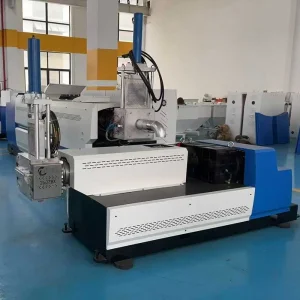
Direct factory access to specialized candle filter cartridges, melt filter elements, and plastic recycling granulating lines.