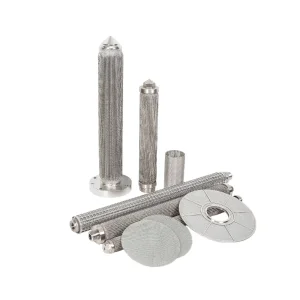
Engineered stainless steel pleated candle cartridges, extruder screens, and leaf discs designed for high-temperature, high-viscosity continuous industrial processes.
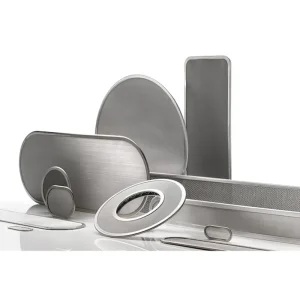
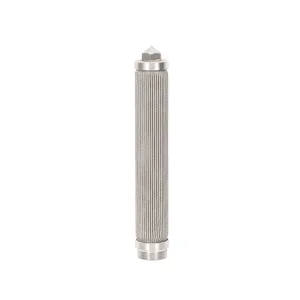
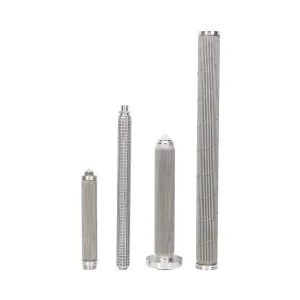
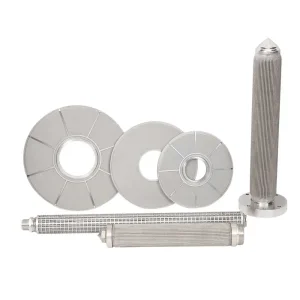
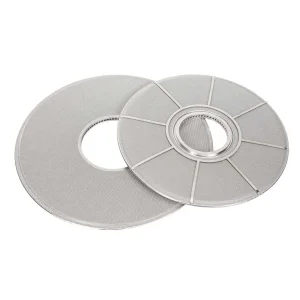
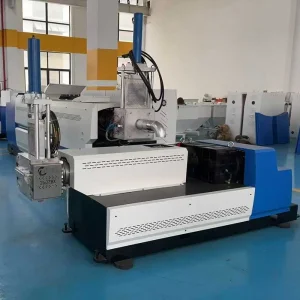
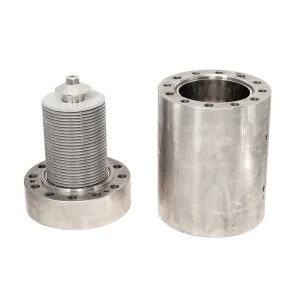
As global polymer manufacturing transitions toward micro-denier synthetic fibers, high-barrier optical films, and circular post-consumer recycled resins (PCR), the demand for high-efficiency porous metal filter elements has reached unprecedented levels.
In the chemical processing and polymer extrusion sectors, continuous filtration is essential for maintaining process stability. Global capacity expansion in Polyester (PET), Polyamide (PA6/PA66), Polypropylene (PP), and Polyethylene (PE) lines requires filter elements capable of sustaining continuous operation under thermal loads up to 350°C and pressures exceeding 200 bar.
The rise of circular plastic economies requires extrusion lines to process Post-Consumer Resin (PCR) and Post-Industrial Resin (PIR). Recycled feedstock contains high levels of non-melting contaminants, paper ash, gels, and foreign particles, driving the adoption of high-dirt-capacity pleated metal fiber felt candle elements.
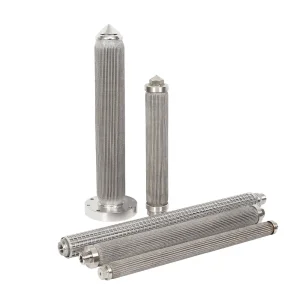
Industrial processors are upgrading from conventional smooth cylindrical candle filters to pleated configurations. By pleating multi-layer sintered stainless steel mesh or fiber felt around a heavy-duty perforated support core, the effective filtration surface area increases by 300% to 500% within the same vessel footprint.
Precision filtration of non-Newtonian polymer melts requires balancing flow velocity, shear rate, dynamic differential pressure ($\Delta P$), and chemical compatibility.
Polymer melts exhibit non-Newtonian, pseudoplastic behavior where viscosity ($\eta$) varies with shear rate ($\dot{\gamma}$). When fluid flows through a porous metal matrix, flow rate ($Q$) and pressure drop ($\Delta P$) follow Darcy’s Law for porous media modified for high-viscosity fluids:
\Delta P = \frac{\mu \cdot v \cdot L}{k} + \beta \cdot \rho \cdot v^2 \cdot L
Where $\mu$ represents dynamic melt viscosity, $v$ is superficial flux velocity ($Q/A$), $L$ is filter layer thickness, $k$ is intrinsic permeability, and $\beta$ is the inertial resistance coefficient.
Increasing effective filtration area ($A$) via pleated geometries reduces flux velocity ($v$). This yields a multi-fold drop in initial differential pressure ($\Delta P$), preventing polymer gel degradation caused by excessive shear stress.
Selecting the correct stainless steel alloy or high-nickel superalloy ensures long-term operational integrity and chemical resistance during both production and thermal cleaning cycles:
| Media Structure Type | Absolute Micron Rating (μm) | Porosity Rate (%) | Dirt Holding Capacity (DHC) | Structural Strength | Primary Industrial Use Case |
|---|---|---|---|---|---|
| Sintered Stainless Steel Fiber Felt | 1.5 μm - 60 μm | 75% - 85% | Exceptionally High (3x Mesh) | Medium-High (Supported) | PET Melt Spinning, BOPET Film, Micro-Denier Nonwovens |
| Multi-Layer Sintered Wire Mesh | 5 μm - 150 μm | 35% - 50% | Moderate / Precision Rigidity | Extreme (Self-Supporting) | High-Pressure Extrusion, Polymer Recirculation, Screen Pack Core |
| Dutch Weave Stainless Steel Mesh | 10 μm - 250 μm | 30% - 42% | Standard Surface Filter | High Mechanical Strength | Masterbatch Extrusion, PP Film, Coarse Melt Screening |
| Composite Metal Mesh & Felt Hybrid | 3 μm - 80 μm | 65% - 78% | High Capacity & Backwashable | Very High Collapse Resistance | ContinuousPCR Bottle-to-Bottle Recycling & Depolymerization |
Discover how pleated metal candle filter elements optimize continuous manufacturing across distinct polymer processing disciplines.
In high-speed hygiene and technical nonwoven lines, melt impurities block spinneret micro-holes (0.15–0.4mm), leading to filament breakage and production downtime. Custom 15μm to 25μm pleated 316L sintered fiber felt candle elements maintain stable spinning pressure and extend pack life to over 60 days of continuous operation.
Ultra-thin packaging and optical-grade biaxially-oriented films require complete retention of gels and sub-micron particulate matter. Pleated candle elements manufactured from gradient-density 3μm-5μm sintered fiber felt prevent pin-holes, surface hazing, and gauge variations during transverse direction orientation (TDO).
Reprocessing post-consumer PET bottles and post-industrial PP/PE waste introduces cross-linked polymers, paper ash, and foreign contaminants. Robust pleated candle filter cartridges designed with heavy-duty outer support cages withstand differential pressures up to 50 bar during intense contaminant loading.
Continuous synthetic fiber production lines demand uninterrupted melt flow. Multiplex candle filter housings utilizing pleated 304/316L filter elements allow on-line backwashing and chamber isolation, enabling continuous operation during element swaps.
Extruding high molecular weight polyolefins involves melt viscosities reaching thousands of Pascal-seconds. Optimized pleat pitch and uniform open area lower resistance, reducing motor load on twin-screw extruders and cutting operational energy costs.
In chemical plastic recycling (pyrolysis and monomer recovery), candle filter elements operate under high temperatures and corrosive organic solvents. Sintered Hastelloy C-276 pleated elements resist aggressive media while isolating ultra-fine carbonaceous char.
Unplanned plant shutdowns in high-capacity polymer lines cost tens of thousands of dollars per hour. Our macro-level engineering solutions focus on extending continuous filter life, reducing total cost of ownership (TCO), and streamlining off-line cleaning protocols.
Integrate dual-vessel switching valve assemblies to route polymer melt between active and standby filter chambers. When active pleated candle elements reach maximum differential pressure ($\Delta P_{max} \approx 35-50\text{ bar}$), the system smoothly diverts flow without interrupting downstream extrusion.
Unlike disposable synthetic filter cartridges, porous stainless steel pleated candle elements are reusable. Implementing standard thermal and chemical cleaning cycles restores filter permeability to over 98% of original values:
Next-generation advances in metallic media manufacturing, digital monitoring, and nano-coatings are transforming porous metal filtration performance.
Transitioning from traditional perforated support tubes to 3D-printed metal cores with optimized fluid channels. Reduces internal pressure drop by up to 18% and eliminates dead zones where polymer melt can stagnate and thermally degrade.
Embedding wireless high-temperature strain sensors within the candle support structure. Transmits real-time structural load and local flow flux data to AI predictive maintenance systems, preventing fatigue failures before they occur.
Applying atomic layer deposition (ALD) nano-ceramic coatings to stainless steel fibers. Lowers surface energy, reduces polymer adhesion, mitigates gel formation, and simplifies off-line cleaning protocols.
Every manufactured pleated candle filter cartridge undergoes multi-stage non-destructive and destructive testing to meet stringent international standards.
Validates maximum pore size integrity and detects structural media defects before shipment.
Verifies structural resistance against differential pressures up to 210 bar.
Measures filtration efficiency ratios ($\beta_x \ge 1000$) and dirt holding capacity across variable flow rates.
XRF elemental analysis ensures alloy compliance for 304, 316L, or Hastelloy grades.
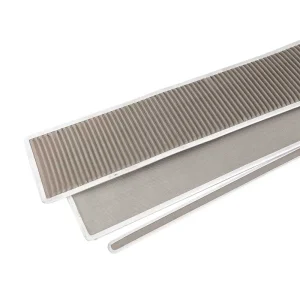
Explore our range of OEM and ODM custom metal filter cartridges, high-viscosity candles, screen mesh elements, and industrial granulating lines.
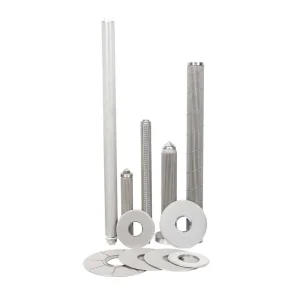
Expert answers to common engineering questions on pleated candle filter selection, flow calculations, cleaning protocols, and performance troubleshooting.