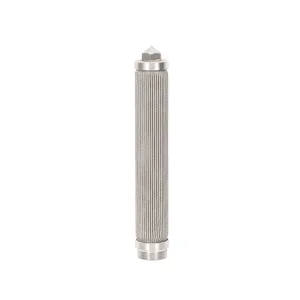
An in-depth technical analysis on optimizing melt purities, mitigating differential pressure drops ($\Delta P$), and preventing thermal degradation in high-viscosity extrusion processing.
In modern high-throughput polymer manufacturing—spanning PET resin synthesis, BOPP/BOPET optical film extrusion, spunbond nonwovens, and recycled plastic pelletization—the mechanical integrity of the final extrudate is dictated by fluid purity at the molecular and particulate scales. Polymer melt filtration is not merely a mechanical straining process; it is a complex fluid-dynamic operation governed by non-Newtonian viscoelastic melt rheology under high thermal energy and extreme pressure conditions.
When molten polymers (such as Polyethylene, Polypropylene, Polyamide PA6/PA66, or Polyester) pass through specialized filtration media, they encounter immense resistance. As an authoritative High-Quality Filter Machine Manufacturer & Exporter, our engineering solutions address the dual challenges of high-viscosity shear stress breakdown and gel deformation. Gels—cross-linked oxidized polymer structures with variable shear viscosities—tend to deform under intense pressure drops ($\Delta P$). If a filter media lacks optimized pore geometry or structural rigidity, these flexible gels are forced through the media apertures, causing downstream line breaks, film pinholes, fiber spinning thread breakages, and surface optical flaws.
To mitigate gel passage and hard particle contamination (such as degraded carbonized specs, catalyst residues, and metallic debris), multi-layer stainless steel filter media utilizing micro-porous sintered metal webs are deployed. The fluid dynamic behavior within the filtration zone follows modified Darcy’s Law calculations for non-Newtonian fluids, where volumetric flow rates ($Q$) are inversely proportional to dynamic melt viscosity ($\eta$) and media bed resistance ($K$). Maintaining a low and stable pressure differential across extended operating campaigns is paramount to preventing thermal degradation of heat-sensitive polymers, ensuring long operational cycles without requiring frequent emergency plant shutdowns.
The global transition toward Post-Consumer Recycled (PCR) plastics (rPET, rHDPE, rPP) introduces unprecedented contamination levels into extruders. Modern filter machines must process volatile melt streams laden with paper fibers, ink pigments, and mixed-polymer cross-contaminants without rapid clogging.
The exponential growth in EV lithium-ion battery separator films (wet and dry processes) and micro-thin BOPET electronic display films demands absolute filtration down to 1.5 to 3 microns. Particle pass-through must be zero to prevent battery short-circuiting or display defect spots.
Industrial plant managers are aggressive in reducing operational expenditure (OPEX). High-capacity candle filter changers and continuous double-piston hydraulic screen changers with dynamic self-cleaning backwash mechanisms are rapidly replacing manual filter packs.
When global chemical conglomerates and OEM extruder builders select a supply partner for polymer melt filters, procurement strategies extend far beyond unit purchase price. Modern procurement evaluation matrixes prioritize:
Selecting the optimal filtration topology based on melt viscosity, flow rate, residence time, and mechanical shear constraints.
| Filtration Topology | Primary Applications | Filtering Surface Area Ratio | Max Pressure ($\Delta P$) | Typical Micron Range | Cleaning / Reuse Capability |
|---|---|---|---|---|---|
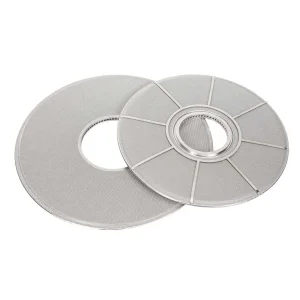
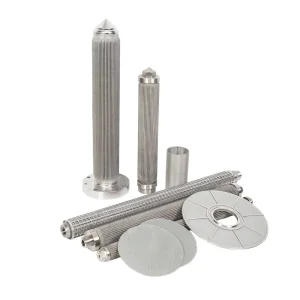
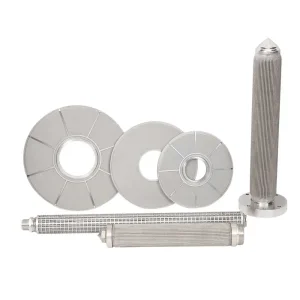
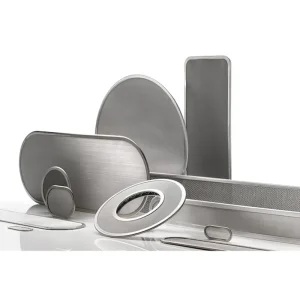
| Polymer Leaf Disc Filter | BOPP, BOPET, BOPA film lines, large PET resin polymerization plants | Extremely High (Radial disc stacking) | up to 250 - 300 bar | 3 µm – 40 µm | Excellent (5–10 Pyrolysis cycles) |
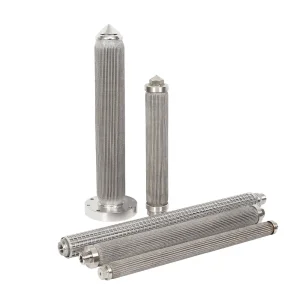
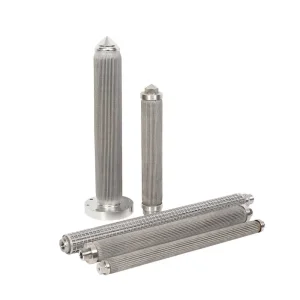
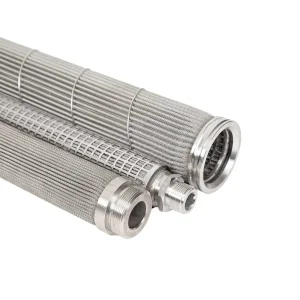
| CPF Candle Filter Element | High-viscosity melt spinning, POY/FDY chemical fibers, nonwovens | High (Pleated cylindrical geometry) | up to 210 - 250 bar | 5 µm – 100 µm | High (Ultrasonic & Chemical bath) |
| Extruder Screen Mesh Filter | Plastic recycling granulators, masterbatch compounding, sheet extrusion | Medium (Flat circle, rimmed, continuous belt) | up to 150 - 200 bar | 20 µm – 500 µm | Single-use / Disposable or limited backwash |
| Sintered Metal Powder Media | Monofilament, medical grade polymers, ultra-clean liquid monomer | Medium-Low (High tortuosity depth filtration) | up to 350 bar | 0.5 µm – 10 µm | Moderate (Requires specialized chemical wash) |
The structural backbone of any high-performance continuous polymer filter system lies in its material composition and layer design. As a specialized OEM/ODM manufacturer, our filter elements utilize a multi-layer gradient structure:
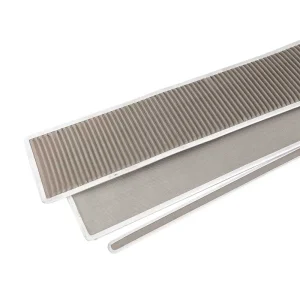
Coarse stainless steel woven wire mesh (SUS 304/316) that shields delicate micro-fibers from turbulent melt surge pressures and mechanical impacts during installation.
Non-woven random matrix of 316L stainless steel micro-fibers, diffusion-bonded at high temperatures. Provides up to 85% porosity, delivering high flow rates with minimal pressure drop.
Heavy-duty perforated stainless steel inner cylinder or drainage wire mesh capable of sustaining collapse pressures exceeding 210 bar during cold-start or heavy clogging events.
Quantifying line uptime gains, energy savings from low $\Delta P$, and reduced resin degradation costs.
An unscheduled shutdown on a 10-ton/hour BOPET extrusion line costs upwards of $15,000 to $30,000 per hour in lost throughput and thermal scrap polymer generation. Utilizing high-capacity leaf disc filters with high DHC extends campaign run times from 20 days up to 90+ days without filter changeouts.
Excessive differential pressure forces the melt pump and main extruder drive motor to draw significantly higher electrical amperage. High-porosity sintered metal fiber cartridges maintain lower baseline pressure differentials, directly reducing Kw/hr consumption per ton of processed polymer.
By enforcing rigid absolute micron retention ratings, pinholes and web breaks during orienting/stretching stages are reduced by over 80%. This maximizes saleable prime-grade product yield per raw material metric ton.
To maintain consistent excellence across all export shipments, every filter element produced in our state-of-the-art facilities undergoes stringent quality verification tests before packaging:
Exporting high-precision filter machinery requires robust worldwide supply chain logistics and direct engineering consultation. We provide:
Pioneering future technologies in smart polymer melt conditioning, surface physical modification, and automated filter life prediction.
Integrating real-time melt pressure, temperature, and viscosity sensors with machine-learning algorithms to dynamically predict precise remaining filter element life, preventing sudden over-pressurization failures.
Deploying CVD/PVD surface coatings (Titanium Nitride, Oleophobic fluorocarbon nanolayers) on stainless steel mesh to reduce polymer melt adhesion, enabling 40% faster cleaning cycles during backwashing.
Utilizing Selective Laser Melting (SLM) metal 3D printing to engineer non-uniform gradient porosity filter structures with mathematically optimized tortuosity, increasing dirt holding capacity by over 60%.
Direct engineering answers to common procurement, operational, and maintenance inquiries.
Whether you are designing a new high-throughput film extrusion line or optimizing spare part consumables across an existing global processing facility, our engineering team is ready to deliver tailored melt filtration solutions.