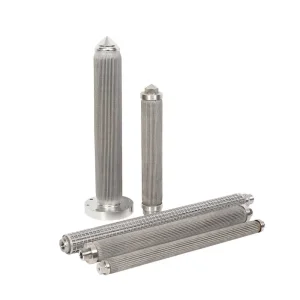
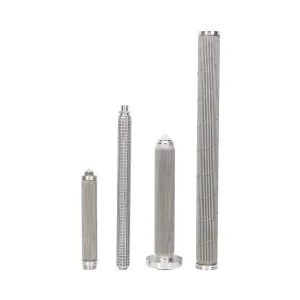
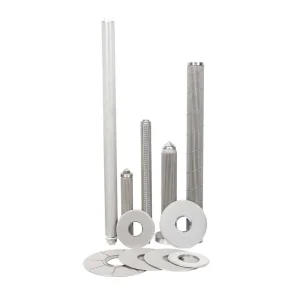
Engineered for high-viscosity polymer melt filtration, continuous extrusion lines, and recycling equipment.
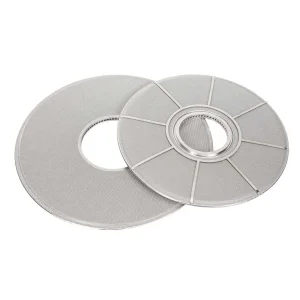
Understanding Reverse Dutch Weave (RDW) geometry, tensile load distribution, and micro-pore stability in automated continuous screen changers.
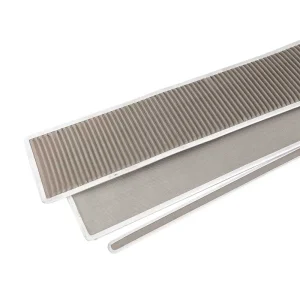
In modern polymer extrusion, maintaining continuous, uninterrupted melt flow under extreme thermal and rheological stresses is paramount. A high-quality screen filter belt serves as the backbone of automated continuous ribbon screen changers (such as auto-belt screen changers). Unlike conventional circular filter discs that require periodic line shutdowns or manual screen indexing, continuous screen filter belts advance dynamically across the melt stream, removing particulate contaminants while sustaining tight differential pressure control ($\Delta P$).
The performance of a continuous filter belt is defined by its metallurgical weaving structure. Standard square mesh weaving fails under the longitudinal pulling tension exerted by automatic screen changers. Consequently, top-tier manufacturers employ Reverse Dutch Plain Weave (RDPW) and Reverse Dutch Twill Weave (RDTW) configurations.
| Mesh Configuration | Typical Mesh Count (Warp x Weft) | Absolute Filtration Rating (μm) | Tensile Strength (N/mm) | Primary Application |
|---|---|---|---|---|
| 72 / 15 RDPW | 72 x 15 / inch | 250 - 300 μm | > 2100 N/mm | Heavy Polyolefin Recycling & Granulation |
| 132 / 14 RDPW | 132 x 14 / inch | 150 - 180 μm | > 2400 N/mm | Blown Film & Pipe Extrusion |
| 152 / 24 RDPW | 152 x 24 / inch | 90 - 110 μm | > 2600 N/mm | BOPP / BOPET Packaging Film |
| 260 / 40 RDTW | 260 x 40 / inch | 20 - 40 μm | > 3100 N/mm | Spunbond Nonwoven & Fine Fiber Spinning |
Strategic purchasing criteria for multinational polymer compounders, masterbatch producers, and high-speed film extruders.
Global buyers demand uniform coil edges (plasma cut or ultrasonic plasma welded) to prevent edge fraying, wire migration, or jam-ups inside automatic screen changers. A single loose wire can ruin thousands of meters of optical-grade film.
Procurement teams evaluate filter belts not just by linear meter unit cost, but by operational uptime. High-tensile stainless steel alloy (SUS 304/316L/317L) screen filter belts eliminate premature necking and belt snap under high pressure differentials (up to 300+ bar).
Residual drawing lubricants on wire mesh burn at extrusion temperatures (200°C - 340°C), causing melt discoloration, black spots, and gas bubble voids. Premium suppliers implement multi-stage ultrasonic solvent washing and vacuum thermal drying.
Why Tier-1 global OEMs and extruders partner with specialized Chinese wire mesh manufacturing hubs.
China has established an unassailable ecosystem in precision wire drawing, specialized alloy metallurgy, and heavy-duty industrial weaving. As a leading screen filter belt manufacturer and supplier, Chinese production hubs combine end-to-end raw material control with advanced European weaving machinery to deliver unmatched quality-to-cost ratios.
Direct sourcing of certified stainless steel wire (SUS 304L, SUS 316L, SUS 317L, Hastelloy) with strict nickel-chromium alloy ratio verification. Material test certificates (MTC according to EN 10204 3.1) accompany every master coil batch.
Heavy-duty automated shuttleless looms maintain uniform wire tension across 100-meter continuous lengths. Automated plasma edge cutting fuses warp wire ends instantly, creating a clean, burr-free edge that resists fraying under 30-ton hydraulic advance forces.
Whether you require standard 10-meter or 20-meter rolls, or custom width dimensions ranging from 50mm to 400mm with strict ±0.5mm tolerances, Chinese manufacturers provide flexible MOQ options, private labeling, and rapid air/sea export packaging.
Emerging innovations in recycled plastics processing, smart extrusion telemetry, and multi-layered composite filter belts.
The global shift toward Circular Economy mandates increased usage of Post-Consumer Recycled (PCR) resins (rPET, rHDPE, rPP). PCR melts contain high levels of organic, metallic, and paper contaminants. Next-gen screen filter belts feature asymmetrical multi-layer weave geometries that depth-filter coarse particles while preventing surface blinding.
Modern extrusion lines integrate optical melt quality sensors and differential pressure transducers connected to AI controllers. Screen filter belts must exhibit zero longitudinal stretch so that automated step-indexing motors can advance the belt by precise millimeter increments based on real-time melt contamination feedback.
To cope with corrosive degradation when processing bio-based plastics (PLA, PHA) and halogenated flame retardant compounds, suppliers are introducing surface-passivated SS316L and Hastelloy C-22 alloy belts designed to resist acid attack up to 350°C.
Real-world deployment across continuous film lines, fiber spinning plants, and industrial pelletizing plants.
Challenge: Microscopic gel impurities cause film tears during bi-axial stretching, resulting in line stops cost up to $15,000 per hour.
Solution: Implementation of 152/24 Reverse Dutch Plain Weave SUS 316L screen filter belts with ultrasonic cleaning. Results showed 99.4% reduction in pinhole gel defects and continuous 30-day extrusion runs without pressure spikes.
Challenge: Heavy paper and aluminum contamination causes rapid screen clogging and screen changer hydraulic jam.
Solution: Standardizing on 72/15 Heavy-Duty RDPW screen belts with reinforced plasma fused edges. Belt pull tension increased by 40% without deformation, ensuring seamless continuous index moves.
Challenge: Spinneret nozzle clogging due to micro-particulates in high-melt-flow PP resin.
Solution: Deployment of 260/40 Reverse Dutch Twill Weave (RDTW) filter belts rated at 25-micron absolute rating. Spinneret cleaning intervals extended from 3 days to 28 days.
Meeting global regulatory mandates for food-contact polymer packaging, medical nonwovens, and industrial safety.
Procuring industrial components internationally requires strict adherence to regional regulatory frameworks and local technical support. Professional Screen Filter Belt Suppliers back their products with robust quality assurance protocols and international certifications:
Every roll undergoes 100% video-optical mesh defect scanning, pitch measurement, and digital thickness inspection across the entire length of the roll.
Stainless steel grades (SUS 304/316L) certified under EU Regulation (EC) No 1935/2004 and US FDA 21 CFR 177.2600 for safe application in food-grade plastic packaging extrusion.
Guaranteed free of heavy metal contamination, toxic drawing oils, or SVHC substances. Delivered with full RoHS 3 and REACH compliance declarations.
In-depth engineering answers to common procurement, maintenance, and operational queries.
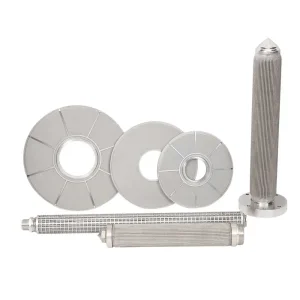
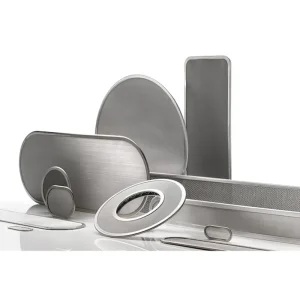
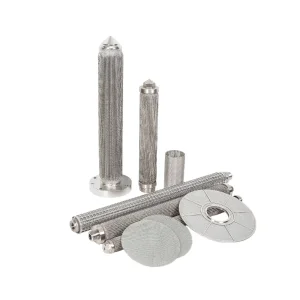
Explore our complete range of specialized candle cartridges, leaf discs, and stainless steel extruder screen meshes.