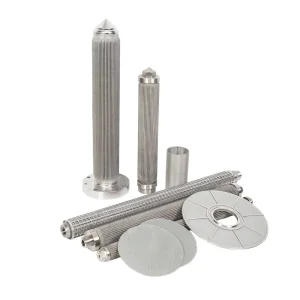
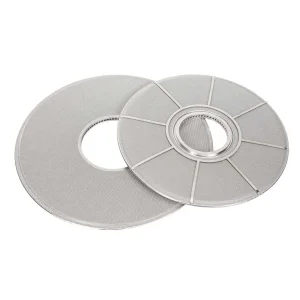
In modern high-speed polymer melt spinning and extrusion, the spin pack screen mesh serves as the definitive guardian of fluid purity, shear control, and filament continuity. As global synthetic fiber manufacturing shifts toward finer deniers (micro-denier filaments under 0.5 dtex), ultra-thin BOPET/BOPP packaging films, and high-performance Spunbond/Meltblown nonwovens, the margin for error in melt filtration has narrowed to zero. A single sub-micron gel inclusion, metal oxide flake, or degraded carbonaceous speck can trigger filament breakage ("filament snaps"), spinneret hole blockage, or web pinholes—costing enterprise manufacturing operations thousands of dollars per hour in unscheduled downtime.
Selecting a premier Spin Pack Screen Mesh Supplier & Company is no longer a routine procurement task; it is a critical engineering decision that dictates yield efficiency, thermal energy consumption, and equipment longevity. Guided by Google's Search Quality Rater Guidelines for E-E-A-T (Experience, Expertise, Authoritativeness, and Trustworthiness), this technical whitepaper provides deep domain insight into the micro-geometry, metallurgical integrity, rheological dynamics, and global supply chain frameworks powering 21st-century polymer melt filtration.
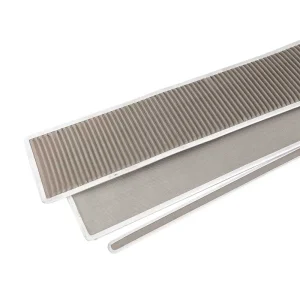
Core Information Gain Insight: Unlike standard extruder screens used in basic plastic recycling, specialized spin pack screen meshes undergo multi-layer sintering or precision ultrasonic spot-welding with defined border rim sealings (aluminum or stainless steel borders). This structural geometry prevents edge fraying under differential melt pressures exceeding 250 to 300 bar while maintaining uniform shear rates across the spinneret plate.
Traditional multi-layer woven wire mesh combinations are increasingly being augmented by porous sintered metal fiber felts (316L stainless steel). Sintered felts offer 3-dimensional depth filtration, providing up to 80% porosity compared to 30-40% in woven mesh, drastically lowering initial differential pressure (ΔP) and extending pack lifetime by 200% to 350%.
Modern spin pack screens are designed not just as passive sieves, but as active rheological shear-modulating components. By cascading precise mesh counts (e.g., 60/100/325/100/40 mesh packs), the screen pack breaks down polymer melt gels through controlled shear stress before the melt reaches the spinneret capillaries.
Automated spot welding and high-precision laser trimming have eliminated loose wire ends ("whiskers"). Soft aluminum, copper, or annealed 316L stainless steel rim borders ensure total hermetic sealing within the spin pack cavity, eliminating melt bypass leakage under extreme operating temperatures (280°C - 320°C).
Furthermore, the rapid rise of recycled Polyethylene Terephthalate (rPET) in textile filament and bottle-to-filament spinning has radically elevated filtration requirements. rPET contains heterogeneous contaminants, thermal degradation products, and variable intrinsic viscosity (IV) fractions. High-performance spin pack screen mesh suppliers must engineered multi-stage gradient filtration layers capable of trapping micro-contaminants without causing rapid filter blindage.
The global market for synthetic fiber spin pack components and polymer melt filtration screen mesh is expanding at a projected CAGR of 6.2% over the next decade. This growth is propelled by three primary industrial catalysts: expansion of technical textiles (medical, automotive, filtration media), surging demand for high-barrier flexible packaging films (BOPET/BOPP), and massive investments in sustainable plastic recycling infrastructure.
| Industrial Application Sector | Primary Polymer Types | Typical Mesh Count Range | Micron Filtration Rating | Critical Performance Requirement |
|---|---|---|---|---|
| Micro-Denier Filament Spinning | PET, PA6, PA66 | 80 / 200 / 400 / 200 / 60 | 7μm – 15μm | Zero filament breakage; ultra-low gel transmission. |
| Spunbond / Meltblown Nonwovens | PP, PET, PLA | 60 / 120 / 250 / 120 / 40 | 15μm – 40μm | Uniform pressure distribution across wide die width. |
| BOPET / BOPP Packaging Film | PET, PP | Sintered Felt + 100/325 Mesh | 5μm – 20μm | Elimination of optical pinholes and fish-eyes. |
| Recycled PET Pelletizing & Spinning | rPET | 40 / 80 / 200 / 80 / 40 (Gradients) | 25μm – 75μm | High dirt-holding capacity for solid particles. |
| Industrial High-Tenacity Cord | PA66, PET, UHMWPE | 50 / 100 / 300 / 100 / 50 | 10μm – 25μm | Extreme tensile strength & burst pressure resistance. |
Regionally, Asia-Pacific remains the world's largest consumer and manufacturing hub for spin pack mesh screen packs, representing over 65% of global capacity across China, India, Vietnam, and South Korea. Meanwhile, European and North American manufacturers focus heavily on specialized high-margin sectors such as medical-grade nonwovens, aerospace technical yarns, and high-purity chemical fiber systems requiring rigorous ISO 9001:2015 certified quality controls.
Screen mesh elements operate under extreme chemical reactivity at high temperatures. Procurement specifications demand certified AISI 304, AISI 316, or AISI 316L austenitic stainless steel. For aggressive fluoropolymer (PVDF, PTFE) or high-corrosion applications, nickel alloys such as Inconel 600 or Hastelloy C-276 are evaluated to prevent intergranular oxidation and wire embrittlement.
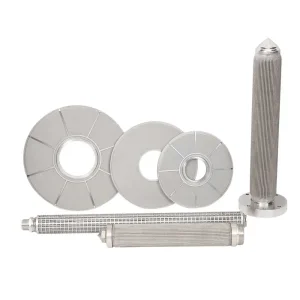
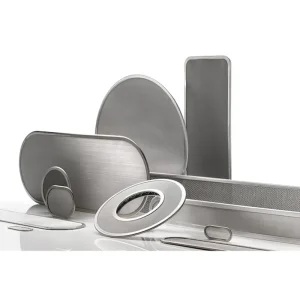
Spin packs come in diverse physical architectures: rectangular, circular, kidney-shaped, oval, and annular ring packs. Leading suppliers must possess advanced CNC laser cutting and die-stamping tooling capable of producing screen pack diameters with tight dimensional tolerances within ±0.05 mm to prevent perimeter melt bypass.
A single spin pack screen often incorporates 3 to 7 distinct wire mesh layers. The outer coarse screens (e.g., 20 to 60 mesh) provide structural support against high melt pressure, while inner fine meshes (e.g., 250 to 500 mesh or Dutch weave screens) perform absolute particulate retention. Perfect ultrasonic spot-welding placement ensures zero displacement under thermal expansion.
Spinning plants operate 24/7/365. Procurement teams require suppliers offering comprehensive OEM/ODM custom drawing capabilities, rapid prototyping turnaround (under 7 business days), and flexible safety stock warehousing agreements to mitigate supply chain disruptions.
The evolution of China's polymer filtration manufacturing sector into a high-tech Industry 4.0 ecosystem has redefined global benchmark standards for cost-efficiency, precision, and operational resilience. Leading Chinese spin pack screen mesh manufacturers—such as Pujiang HG Plastic Machinery Co., Ltd.—have integrated fully automated precision weaving, laser cutting, automated optical inspection (AOI), and cleanroom packaging into their core operations.
High-resolution camera arrays inspect 100% of woven wire meshes for aperture variance, wire defects, or microscopic oil contaminants prior to assembly. This eliminates human error and guarantees absolute pore size distribution consistency across millions of screen packs.
From fine wire drawing and annealing to multi-layer mesh sintering, stamping, and rim edging, complete internal supply chain ownership ensures stringent quality trace-ability, fast lead times, and significant cost savings passed directly to international B2B clients.
Supported by Zhejiang's world-class industrial cluster infrastructure, raw material sourcing, specialized tooling production, and multimodal international logistics (air/sea/rail) operate seamlessly—minimizing geopolitical supply risks for global synthetic fiber plants.
To optimize polymer melt filtration, process engineers must understand the fluid dynamic interactions between non-Newtonian polymer melts (such as molten PET, PP, or PA6) and the micro-geometry of stainless steel wire cloth. Molten polymers exhibit shear-thinning behavior; as shear rates increase within constrained pore openings, melt viscosity drops, enabling higher volumetric throughput but potentially increasing gel elongation and gel passage.
Structure: Over-one-under-one wire pattern with identical warp and shute wire diameters.
Characteristics: Straight-through square apertures. High percentage open area.
Application: Coarse backing screens, breaker plate support layers (20 mesh to 100 mesh).
Structure: Coarse warp wires combined with fine shute wires woven in a twill pattern.
Characteristics: Zero straight-through openings; tortuous flow path for high particulate capture.
Application: Fine polymer filtration (10μm to 40μm absolute rating) with high mechanical strength.
Structure: Multiple layers of woven wire mesh diffusion-bonded together under heat and pressure.
Characteristics: Fixed pore structure, zero wire movement under high pressure differential.
Application: Premium long-life spin pack support structures and CPF filtration discs.
Pressure Drop (ΔP) Calculation Formula in Polymer Filtration:
The differential pressure across a spin pack screen mesh is governed by Darcy's Law modified for non-Newtonian fluids: ΔP = (μ · v · L) / K, where μ is effective melt viscosity, v is face velocity, L is filter medium thickness, and K is medium permeability. Fine-tuning the screen mesh sandwich layer count balances dirt-holding capacity (L) against initial pressure drop spikes.
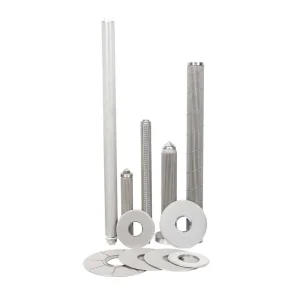
High-speed spinning lines operating at 4,000 to 6,000 m/min require exceptional melt homogeny. Spin packs utilize multi-layer annular disc screen packs combined with fine sand/sintered felt filtration media. Screen mesh rim sealing must withstand continuous temperatures up to 295°C without oxidative warping.
Wide die-width nonwoven lines (3.2m to 5.2m beam width) demand uniform hydraulic melt pressure along the entire length of the spinneret pack. Spin pack mesh packs are engineered with high open area support screens to prevent flow channeling and filament denier variance across the web.
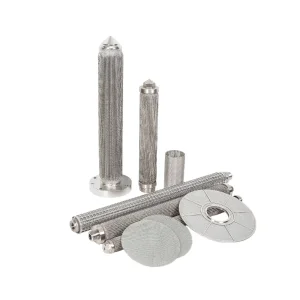
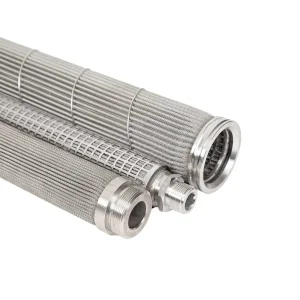
Extruding optical-grade packaging and capacitor films demands total elimination of gels larger than 10 microns. Large-diameter candle filter cartridges or continuous leaf-disc screen packs with 316L sintered felt elements are deployed in central polymer filter (CPF) housings prior to film die extrusion.
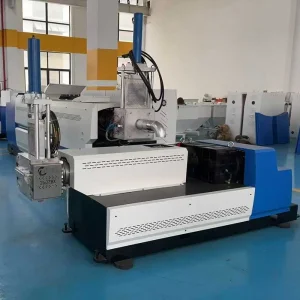
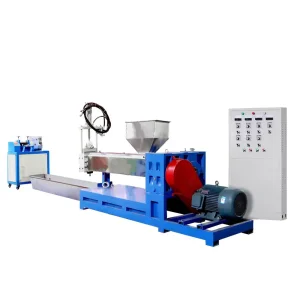
Recycling lines handling post-consumer agricultural film or rigid plastic scrap encounter severe particulate contamination (sand, paper fibers, aluminum foil). Continuous auto-belt screen changers utilizing high-tensile reverse Dutch weave mesh belts ensure uninterrupted pelletizing productivity.