Explore our top-tier export-grade polymer candle filters, screen mesh elements, leaf disc filters, and plastic pelletizing machinery engineered for extreme thermal and hydraulic environments.
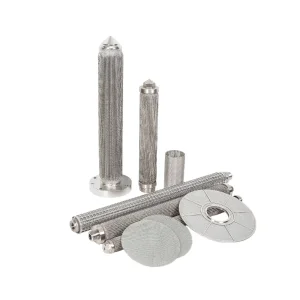
China Customized Polymer Pleated Candle Filter Cartridge Suppliers
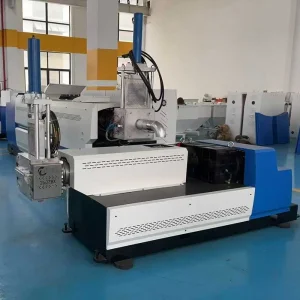
OEM China Plastic and Rubber Recycling Machine
Famous Plastic and Rubber Recycling Machine Suppliers
Famous Plastic and Rubber Recycling Machine Suppliers, Factory
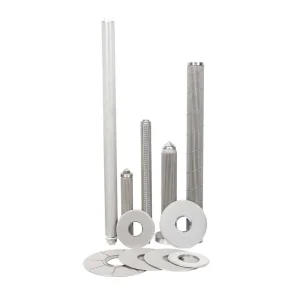
High-Quality China Polymer Candle Filter for Viscosity
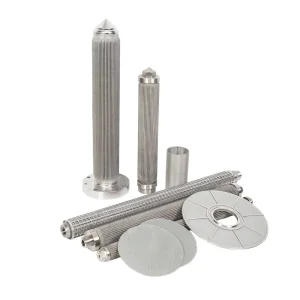
OEM China CPF Candle Filters for High Temp
Famous Polymer Candle Filter Exporters
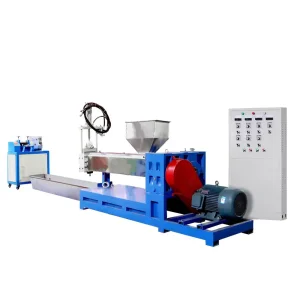
High-Quality China PP Plastic Pelletizing Machine
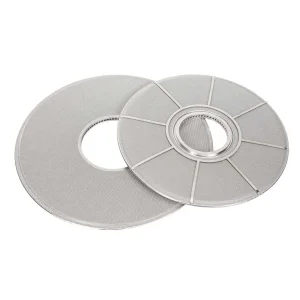
ODM High-Quality Polymer Leaf Disc Filters
In modern fluid dynamics, high-viscosity polymer processing, and continuous chemical refining, the square mesh filter stands as an indispensable precision element. As global manufacturing transitions toward zero-defect production, sustainable post-consumer plastic recycling (PCR), and ultra-fine chemical fiber spinning, the demand for high-integrity, dimensionally stable woven wire square mesh has expanded exponentially.
According to recent industrial market intelligence, the global market for stainless steel filtration media and melt screen packs exceeded USD 1.84 Billion in 2024 and is projected to expand at a compound annual growth rate (CAGR) of 6.8% through 2032. This growth is predominantly anchored by three macroscopic industrial catalysts:
Modern extrusion technologies—such as BOPP (Biaxially Oriented Polypropylene), BOPET, and meltblown non-wovens—require filtration levels down to 3 to 20 microns under extreme operating pressures (up to 300 bar) and temperatures reaching 350°C. Square mesh filters provide the structural rigidity required to prevent pore enlargement under such differential pressures.
The worldwide mandate for recycled plastics (PCR/PIR) has introduced variable contaminant loads into extruder melt streams. Exporters of square mesh filters are now called upon to supply multi-layer break-mesh screens capable of capturing paper particles, cross-linked gels, and metallic specks without causing premature pressure spikes.
The widespread adoption of continuous screen changers (both slide-plate and continuous ribbon backwash systems) requires wire mesh rolls and spot-welded packs with absolute edge uniformity, zero wire displacement, and strict anti-burr edge finishes to prevent machine jamming.
Information Gain Insight: Unlike standard Dutch weave meshes designed primarily for surface cake filtration, industrial square mesh filters feature a 1:1 wire geometry that delivers a predictable, symmetrical open area percentage. This makes square mesh the optimal choice for structural reinforcement layers, breaker plate backing, and high-flow rate liquid-solid separation where hydraulic resistance must be minimized.
To select the correct square mesh specification, engineering teams must evaluate the mathematical relationship between wire diameter ($d_w$), aperture width ($w$), mesh count ($M$), and total open area percentage ($A_o$).
The open area percentage determines the initial differential pressure drop ($\Delta P_0$) across the filter media. For a plain square woven wire cloth, the theoretical open area is computed via the equation:
A_o = \left( \frac{w}{w + d_w} \right)^2 \times 100\% = \left( 1 - M \cdot d_w \right)^2 \times 100\%
Square mesh filter exporters fabricate specialized structural geometries designed to handle varying mechanical loads:
| Weave Pattern | Structural Configuration | Mechanical Characteristics | Primary Industrial Use-Case |
|---|---|---|---|
| Plain Square Weave | 1x1 interlacing where warp and shute wires cross alternately over and under. | Maximum open area, precise square apertures, minimal flow resistance. | High-flow liquid filtration, fine powder sifting, polymer breaker plate covers. |
| Twilled Square Weave | Each warp wire passes alternately over and under two successive shute wires. | Allows thicker wire diameters for a given mesh count; higher tensile strength. | Heavy-duty extruder screen packs, high-pressure hydraulic fluid filtration. |
| Sintered Square Mesh Panels | Multi-layer plain square mesh diffusion-bonded together at $1100^\circ\text{C}$ under high vacuum. | Permanent wire-intersection locking; complete immunity to wire migration under high pressure. | Polymer melt candle filter support cores, continuous backwash screen changers. |
| Multiplex Rim-Bound Packs | Spot-welded or aluminum/stainless steel rimmed multi-layer square mesh stacks. | Gradated filtration (coarse-fine-coarse), zero edge fraying, rapid installation. | Manual and automatic slide-plate extruder screen changers. |
The operational longevity of a square mesh filter depend heavily on metallurgical grade selection:
As global enterprise buyers optimize their supply chains, Chinese square mesh filter manufacturers have evolved from low-cost suppliers to global leaders in high-precision filtration engineering. The synergy of integrated industrial clusters, advanced automated weaving technology, and rigorous QA/QC protocols provides global procurement officers with unmatched strategic advantages.
Leading Chinese factories deploy German and Japanese shuttleless looms equipped with computerized electronic warp let-off systems. This ensures uniform wire tension across web widths up to 2.5 meters, eliminating tension variation and warp distortion.
Factory quality systems incorporate high-magnification automated optical inspection (AOI) cameras that scan 100% of the mesh surface for wire breaks, oil spots, or aperture irregularities. Bubble point test apparatuses (ISO 4003) and PMI (Positive Material Identification) spectrographs guarantee alloy authenticity prior to shipment.
By leveraging fully integrated local supply chains—from raw stainless steel wire drawing to automated laser stamping and ultrasonic degreasing—Chinese exporters deliver premium filtration products at a 30% to 50% cost reduction compared to Western European alternatives, without compromising performance.
Square mesh filter elements are deployed across diverse engineering sectors. Understanding their operational environment is critical to selecting the appropriate weave structure and wire diameter.
In twin-screw compounding lines producing engineering plastics (PA66, PBT, ABS), square mesh filter screen packs are placed in front of the breaker plate. The primary layer (e.g., 40 mesh plain square) supports a finer inner mesh (e.g., 150 mesh plain square), capturing degraded polymer gels and un-melted additives while maintaining high melt throughput.
In polyester (PET) and polypropylene (PP) spunbond non-woven lines, polymer melt passes through stainless steel candle filter packs constructed with multi-layer sintered square mesh. The precise aperture uniformity prevents filament breakage at the spinneret dies, reducing line downtime.
Post-consumer plastic pelletizing machines utilize continuous backwash ribbon screen changers equipped with heavy-gauge twilled square mesh. These filters process heavily contaminated feeds containing paper fiber and aluminum flecks, withstanding continuous hydraulic backwash pressures up to 250 bar.
Refinements involving aggressive solvents, heavy hydrocarbon slurries, and elevated temperatures utilize 316L or Hastelloy square mesh filter cylinders. The rigid mesh structure resists clogging and supports thorough chemical or thermal cleaning cycles.
The industrial filtration sector is experiencing significant innovation driven by smart automation, advanced surface chemistry, and sustainable manufacturing practices:
To minimize polymer degradation and carbon build-up (coking) during long extrusion runs, square mesh filters are increasingly treated with specialized nano-coatings such as Diamond-Like Carbon (DLC) or Titanium Nitride (TiN). These low-friction coatings reduce melt adhesion, allowing longer run times between screen changes.
Next-generation continuous screen changers incorporate pressure sensors and IoT modules that monitor differential pressure ($\Delta P$) in real time. The system automatically advances the square mesh ribbon at optimal intervals, stabilizing extruder head pressure and ensuring consistent product dimensions.
Innovations in vacuum diffusion bonding allow engineers to combine coarse structural square mesh with ultra-fine wire layers into a single monolithic sheet. This configuration provides high dirt-holding capacity alongside the structural rigidity needed to withstand severe fluid surges.
When sourcing square mesh filters from overseas exporters, engineering and procurement teams should evaluate suppliers against key technical criteria to ensure long-term operational performance:
| Procurement Metric | Technical Benchmark | Evaluation Method | Operational Risk of Non-Compliance |
|---|---|---|---|
| Mesh Count & Aperture Uniformity | Tolerances within ±3% of nominal aperture width across the roll. | Optical CCD microscopy & ISO 3310-1 compliance testing. | Irregular pore sizes permit oversized contaminants to pass through, damaging downstream melt pumps and spinnerets. |
| Alloy Material Grade Integrity | 100% compliance with AISI 304, 316L, or Hastelloy specification standards. | PMI Spectrometer testing & Mill Test Certificates (MTC) to EN 10204 3.1. | Inferior recycled alloy leads to rapid pitting corrosion and premature screen collapse under thermal stress. |
| Wire Tensile Strength | Uniform high-tensile wire drawing (e.g., 650-850 N/mm² for 316L). | Mechanical tensile pull testing. | Wire breakages during high-pressure backwashing contaminate the final product stream. |
| Cleanliness & Degreasing | Zero residual weaving lubricants, carbon specks, or metallic dust. | Multi-stage ultrasonic solvent cleaning in cleanroom conditions. | Oil residues burn and carbonize during extrusion, producing dark specks in clear films or white pellets. |
Review our complete export offering of high-durability polymer candle elements, extruder screen packs, leaf disc filters, and granulating equipment solutions.
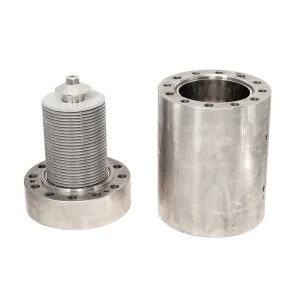
High-Quality China Polymer Candle Filters for Film
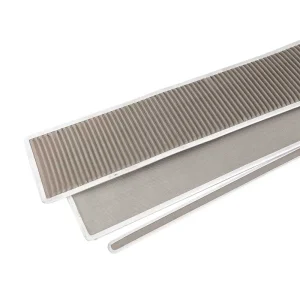
China Polymer Extruder Screen Mesh Filters
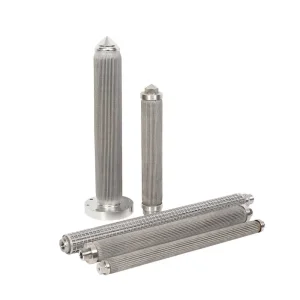
China Polymer Candle Filter Elements SUS 304
Famous Polymer Extruder Screen Mesh Filters
Famous Polymer Extruder Screen mesh filters Manufacturers, Exporter
Custom Polymer Candle Filter Elements SUS 304
Custom Polymer Candle Filter elements SUS 304 Manufacturer, Supplier
Custom Polymer Leaf Disc Filters for Film
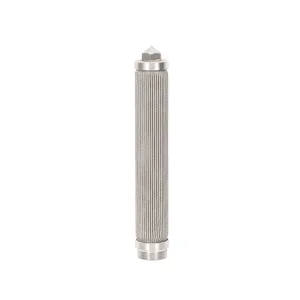
OEM Candle Filter Cartridge & Elements
Leading China Polymer Candle Filters Exporters
Find detailed, expert-verified answers regarding technical specifications, customization options, and procurement parameters for square mesh filter products.
A square mesh filter features an equal number of warp and shute wires per linear inch with identical wire diameters, producing square openings with a predictable open area percentage. In contrast, Dutch weave meshes use thicker warp wires and tightly packed thinner shute wires, creating triangular pores ideal for high-pressure surface cake filtration. Square mesh is preferred when high flow rates, low pressure drops, or precise structural support layers are required.
SS 304 is suitable for non-corrosive polymers (polyolefins like standard PP and PE) operating under standard thermal conditions. SS 316L contains 2–3% Molybdenum and lower carbon content, offering superior resistance to pitting corrosion and thermal degradation. SS 316L is strongly recommended for PET, Nylon, BOPET, acidic additive compounding, and processes involving aggressive chemical or TEG (Triethylene Glycol) cleaning cycles.
Vacuum sintering subjects multi-layer wire mesh stacks to high temperatures (approx. 1100°C) and pressure under vacuum. This process fuses the wire intersection points without filling the open apertures. Sintering prevents wire shifting or mesh migration under severe hydraulic pressures (up to 300 bar), ensures consistent pore sizes during operation, and allows repeated cleaning cycles without structural breakdown.
Leading Chinese exporters offer comprehensive OEM/ODM customization. Available options include circular discs, kidney shapes, rectangular strips, multi-layer spot-welded packs, and aluminum/stainless steel rim-bound assemblies. Custom dimensions range from small diameters (10mm) up to large continuous rolls (2500mm width).
Filter elements can be cleaned using several industrial methods depending on the polymer type: (1) Thermal Pyrolysis / Vacuum Calcination ovens decompose organic polymer matrices into ash at 450–500°C; (2) TEG (Triethylene Glycol) boiling baths dissolve polyester residues; (3) Ultrasonic Solvent Cleaning removes micro-particles from open mesh pores. After chemical/thermal treatment, high-pressure air and water backflushing restore the filter's initial flow differential.
Export products undergo rigorous quality verification: ISO 9001:2015 certification for manufacturing processes; ISO 3310-1 / ASTM E11 compliance for aperture size accuracy; ISO 4003 bubble point testing for maximum pore size determination; and PMI (Positive Material Identification) spectrographic testing to confirm alloy composition.
Using a thicker wire diameter for a given mesh count increases mechanical strength and burst pressure resistance, but reduces the open area percentage ($A_o$). A lower open area leads to a higher initial pressure drop ($\Delta P_0$) and faster clogging. Choosing the optimal wire diameter requires balancing structural strength against acceptable melt pressure drops.
Standard export orders are produced within 2 to 3 weeks following sample approval. Products are cleaned ultrasonically, vacuum-sealed in moisture-proof PE bags with desiccant, and packed in reinforced plywood crates to prevent deformation or surface oxidation during sea freight transport.
Yes. For high-viscosity recycled polymers (such as heavy-grade HDPE blow molding or PCR pelletizing), twilled square mesh or sintered mesh combinations are recommended. These designs withstand hydraulic surge forces while effectively screening out foreign contaminants.
Enterprise buyers can request technical evaluation samples by providing their mesh specification (mesh count, wire diameter, alloy grade, and disc dimensions) or by submitting engineering drawings. Sample orders are typically processed and dispatched via express courier within 3 to 5 working days.