Factory-direct technical supply for polymer melt processing, nonwoven manufacturing, and high-temperature industrial extrusion lines.
Understanding the shift toward zero-defect continuous extrusion, multi-layer sintered web technology, and thermal-gradient stability in global industrial filtration.
In modern chemical processing, plastic extrusion, and synthetic fiber spinning, the demand for high-grade filtration mesh media has evolved from basic physical straining to highly sophisticated micro-rheological gel retention. As global polymer manufacturers transition to higher throughput speeds and utilize increased proportions of post-consumer recycled (PCR) resins, conventional woven wire screens frequently suffer from rapid differential pressure ($\Delta P$) spikes, media deformation, and premature blinding.
To maintain zero-defect output across high-value lines such as biaxially oriented polypropylene (BOPP), polyester (BOPET), and meltblown nonwovens, modern engineering dictates the implementation of specialized sintered metal fiber felts and multi-layer woven mesh structures. Premium wholesale filtration mesh factories must not only deliver precise pore size distributions ranging from 3 to 200 micrometers (μm) but also ensure absolute structural integrity under continuous operating pressures exceeding 250 bar and thermal operational ceilings reaching 350°C.
Diffusion-bonded stainless steel mesh layers eliminate wire migration under extreme hydraulic stress, creating an immutable pore matrix with superior dirt-holding capacity.
High-grade SUS 316L alloy constructions allow repeated offline chemical, calcination, and ultrasonic cleaning cycles, significantly reducing total operational cost (TCO).
3D random fiber mesh topologies slow down polymer melt shear rates, catching deformable cross-linked gels that standard square wire meshes allow to pass under pressure.
Technical benchmarks, alloy compliance, and dimensional tolerances demanded by tier-1 global OEMs and processing facilities.
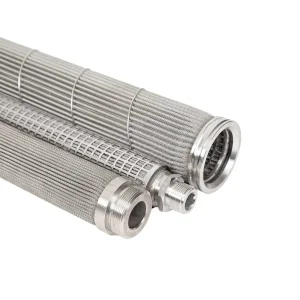
International procurement managers and plant engineers evaluating filtration mesh exporters look beyond basic pricing. Industrial buyers require verified material certificates (EN 10204 3.1), strict compliance with REACH and RoHS standards, precise bubble point testing, and exact physical dimensions to ensure zero leakage around screen changer plates or within candle filter housings.
| Filtration Media Type | Material Metallurgy | Micron Rating Range | Primary Industrial Application | Key Performance Attribute |
|---|---|---|---|---|
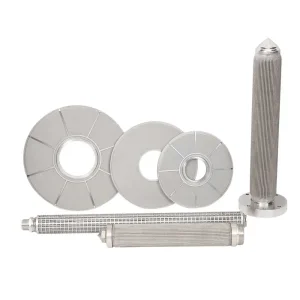
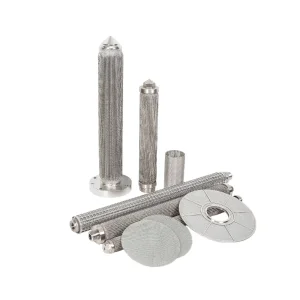
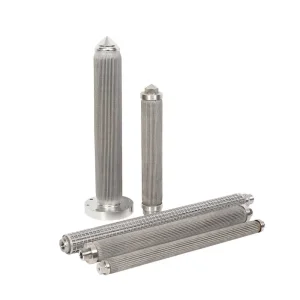
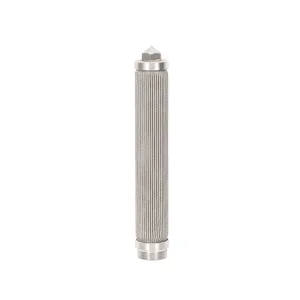
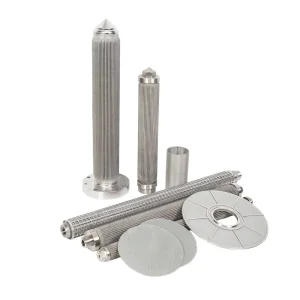
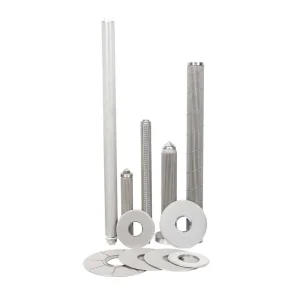
| Pleated Polymer Candle Elements | AISI 316L / Hastelloy C-276 | 3 μm – 100 μm | PET / PA Fiber Spinning & BOPET Film | Extended filtration surface area (up to 300%) with low $\Delta P$. |
| Multi-Layer Sintered Leaf Discs | SUS 304 / SUS 316L | 5 μm – 250 μm | BOPP Film, Extrusion Coating & Resins | Hardened perimeter rims preventing bypass; high structural rigidity. |
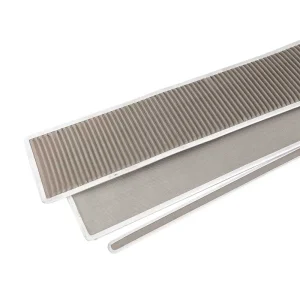
| Continuous Extruder Screen Belts | High-Tensile Galvanized / SS 304 | 40 Mesh – 400 Mesh | Auto-Screen Changers in PCR Recycling | High reverse Dutch weave density withstands continuous tensile pull. |
| Rimmed Spot Weld Disc Packs | SUS 304 / Aluminum Rims | 10 μm – 500 μm | Blown Film & Sheet Extrusion Lines | Pre-assembled multi-mesh combinations preventing operator assembly error. |
How Pujiang HG Plastic Machinery integrates automated wire-drawing, robotic laser welding, and automated vacuum sintering to guarantee delivery speed and competitive cost structures.
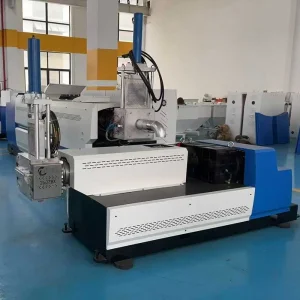
By maintaining complete control over raw stainless steel wire procurement, automated Dutch weaving looms, laser cutting cells, and protective atmosphere vacuum sintering furnaces, Chinese direct-factory exporters eliminate sub-supplier delays. This vertically integrated supply model allows Pujiang HG Plastic Machinery Co., Ltd. to maintain lead times of 7-14 days on custom OEM orders, even amid global supply bottlenecks.
Every batch of wholesale filtration mesh undergoes rigorous quality testing, including automated vision inspection for weave consistency, bubble point testing for maximum pore size verification, and hydrostatic pressure bursting tests. These standardized digital audits guarantee that global buyers receive zero-defect components compliant with strict ISO 9001:2015 frameworks.
Optimizing filtration element selection based on real-world fluid dynamics, melt viscosity, contamination load, and thermal stress.
Operating Environment: Melt temperatures between 270°C and 300°C; pressure differentials maintained below 30 bar to prevent gel shear.
Recommended Solution: Pleated SUS 316L candle filters or leaf discs with micro-fiber sintered media rated at 10 μm. Ensures continuous operational campaign lengths exceeding 60 days without filter changeovers.
Operating Environment: Heavily contaminated PP/PE melts containing paper fibers, aluminum trace, and cross-linked gels.
Recommended Solution: Continuous belt screen changers utilizing heavy reverse Dutch weave screens (RDBW) combined with multi-layer spot welded screen packs (20/60/100 mesh).
Operating Environment: Ultra-fine melt viscosity requirements where spinneret hole blockage results in immediate web defects.
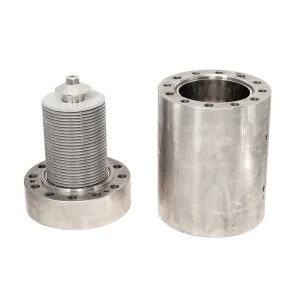
Recommended Solution: Custom cylindrical candle filter cartridges constructed with gradient porosity sintered felt, achieving 99.9% filtration rating at 15–25 μm.
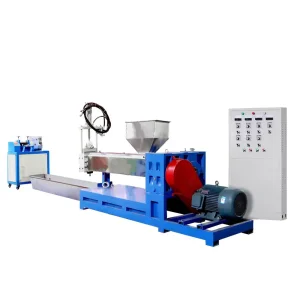
Explore our full line of SUS 304/316L candle filters, granulating machines, and custom industrial screen elements.
Addressing key procurement decisions, material selections, and technical specs for wholesale filtration mesh and filter elements.