1. Executive Summary & Global Commercial Landscape
In modern high-polymer extrusion, synthetic fiber spinning, packaging film production (BOPP, BOPET, BOPA), and post-consumer plastic recycling, melt filtration represents the single most critical quality assurance bottleneck. Stainless steel (SS) mesh filters serve as the vital mechanical defense against gelation, unmelted resins, degradation particles, cross-linked polymers, metallic debris, and foreign particulates. As polymer processing equipment operates at elevated melt temperatures (exceeding 300°C to 350°C) and extreme operational pressures (ranging from 10 MPa to 30 MPa), specifying the appropriate wholesale SS mesh filter media becomes a decisive financial and operational imperative for global plant operations.
This technical whitepaper provides B2B procurement managers, process engineers, OEM machine builders, and international polymer exporters with an exhaustive analysis of stainless steel mesh filter technology. Grounded in Google’s E-E-A-T framework (Experience, Expertise, Authoritativeness, and Trustworthiness), this document delivers high Information Gain by evaluating technical wire mesh weaving geometries, structural porosity calculations, thermal-mechanical fatigue behavior, supply chain resilience from China’s advanced Industry 4.0 manufacturing hubs, and total cost of ownership (TCO) optimization models.
Core Takeaway for Technical Procurement: Implementing multi-layer sintered stainless steel mesh filters with gradient pore distribution can extend filter pack lifespan by 40% to 75%, reduce pressure differential spikes (ΔP), minimize extrusion line downtime, and safeguard expensive spinnerets and extrusion dies from irreversible mechanical micro-scoring.
2. Metallurgical Evolution & Weave Geometry Engineering
Stainless steel wire mesh filters used in polymer melt filtration are manufactured primarily from high-grade austenitic alloys including AISI 304, 304L, 316, and 316L, alongside specialized superalloys such as Hastelloy C-276 for highly corrosive fluoropolymer (PTFE/PVDF) applications. The performance of a filter element is fundamentally determined by its structural weave pattern, wire diameter, open area percentage, and mechanical sintering treatment.
2.1 Primary Wire Mesh Weave Classifications
Select industrial wire weave patterns offer distinct advantages depending on fluid viscosity, contaminant loading, and mechanical stress profile:
Plain Weave & Twilled Weave
Characterized by a simple over-and-under pattern. Plain weave offers high open area (up to 60%) and low pressure drop, making it suitable for coarse polymer pre-filtration, extruder screen packs, and plastic recycling granulating lines from 100μm to 300μm.
Dutch Weave (Plain & Twilled)
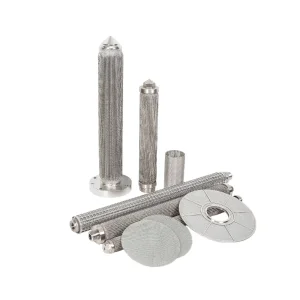
Utilizes fine shute wires tightly driven together over heavy warp wires. Twilled Dutch Weave creates zero open sight lines, providing absolute filtration ratings down to 5μm–25μm with high mechanical strength for high-pressure candle filter cartridges.
Reverse Dutch Weave (RPD / RDOW)
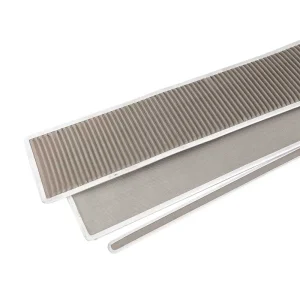
Features dense warp wires and larger shute wires. Engineered specifically for continuous auto-belt screen changers in plastic extrusion, offering high tensile strength along the longitudinal warp axis to resist mechanical fracture.
2.2 Sintered Metal Mesh vs. Woven Wire Cloth
While standard woven wire cloth provides cost-effective filtration for lower pressure applications, demanding polymer continuous polymer filtration (CPF) systems demand Sintered Multi-Layer Mesh or Sintered Metal Fiber Felt. Diffusion bonding (sintering) involves heating overlapping wire mesh layers under vacuum or protective hydrogen atmosphere at temperatures just below the melting point. This thermal process creates atomic bonds at every wire intersection point.
- No Wire Migration: Sintering locks individual wires firmly, preventing pore deformation or metal fragment shedding under intense hydraulic pressure surges.
- Gradient Pore Structure: Combining a coarse protective outer layer, a fine absolute filtration mesh core, and a heavy structural support mesh layer achieves high dirt-holding capacity (DHC) while preserving structural rigidity.
- Repeated Cleanability: Sintered SS 316L filter elements endure aggressive ultrasonic cleaning, TEG (triethylene glycol) boiling, pyrolysis furnace burn-off, and acid washing without loss of dimensional integrity.
| Filter Structure Type | Filtration Accuracy (μm) | Max Operating ΔP | Dirt Holding Capacity | Cleanability & Reusability | Primary Application Area |
|---|---|---|---|---|---|
| Single-Layer Wire Screen | 40μm - 500μm | 3.5 - 5.0 MPa | Low | Disposable / Single-Use | Basic Pelletizing, PVC Extrusion |
| Multi-Layer Spot Welded Pack | 20μm - 250μm | 8.0 - 12.0 MPa | Moderate | Limited (Manual Solvent Dip) | Film Extrusion, Sheet Extrusion |
| Sintered SS Wire Mesh | 10μm - 100μm | 15.0 - 21.0 MPa | High | High (Ultrasonic + TEG) | BOPP/BOPET Film, Candle Cartridges |
| Sintered Metal Fiber Felt | 3μm - 40μm | 21.0 - 30.0 MPa | Very High (3x Mesh) | Exceptional (Chemical/Thermal) | Petrochemical CPF, Nylon Fiber Spinning |
3. China Industry 4.0: Supply Chain Resilience & Manufacturing Capability
As global manufacturing supply chains emphasize cost efficiency, lead-time precision, and quality reliability, China has established itself as the world's leading hub for advanced wire weaving and stainless steel filter fabrication. Companies like Pujiang HG Plastic Machinery Co., Ltd. represent the pinnacle of China’s Industry 4.0 transformation, blending over 20 years of specialized domain experience with automated precision engineering.
The competitive advantages of sourcing wholesale SS mesh filters directly from accredited Chinese factory exporters include:
Automated Laser Welding & Sintering
Utilizing high-precision robotic laser welding and high-vacuum computer-controlled sintering furnaces ensures seamless longitudinal seams, defect-free end cap bonding, and uniform pore structures across high-volume production batches.
Rigorous Quality Control Protocols
Every batch of SS mesh filter elements undergoes ISO-compliant Bubble Point Testing (ASTM E128) to verify absolute micron rating, combined with hydrostatic burst pressure testing, SEM surface inspection, and PMI material grade verification.
Vertical Integration & Agile Delivery
From raw wire drawing and mesh weaving to final component assembly and export packaging, full supply chain integration minimizes lead times from months to weeks, allowing global plant operators to optimize inventory buffer stocks.
4. Global Commercial Application Scenarios
Stainless steel mesh filters are deployed across diverse industrial processes where continuous fluid purity directly impacts product quality and equipment longevity:
4.1 Plastic Film Extrusion (BOPP, BOPET, BOPA, Cast Film)
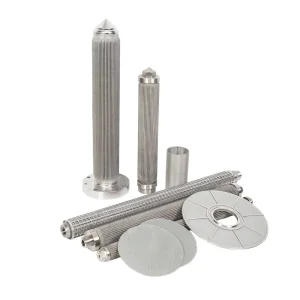
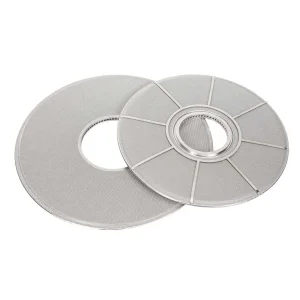
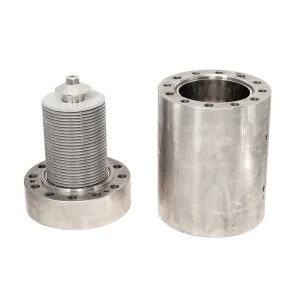
In high-speed biaxially oriented film manufacturing, optical clarity and tear resistance are paramount. A single micro-gel or carbon contaminant can cause web breakage, leading to costly line shutdowns. Leaf Disc Filters (segment discs) assembled in continuous filter housings provide an expansive active filtration area within a compact vessel footprint. Standard specifications utilize 316L sintered mesh rated from 10μm to 40μm absolute, designed to operate continuously under pressure up to 25 MPa.
4.2 Synthetic Fiber Melt Spinning (Polyester, Nylon, Polypropylene)
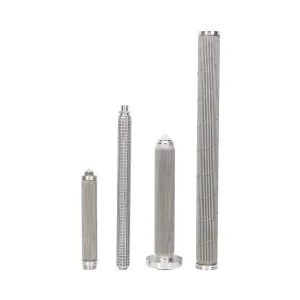
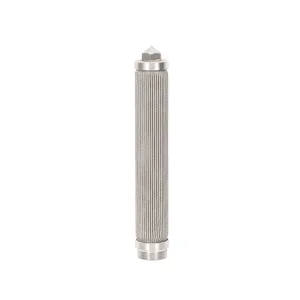
Chemical fiber spinning operations utilize Pleated Polymer Candle Filters to purify high-viscosity PET/PA6 melt before it reaches the spinneret pack. Pleating the stainless steel mesh increases effective surface area by 300% to 500% compared to smooth cylindrical elements. This reduced fluid flux velocity lowers shear stress on polymer chains while maintaining an extended stream lifetime.
4.3 Waste Plastic Recycling & Pelletizing (PCR / PIR Processing)
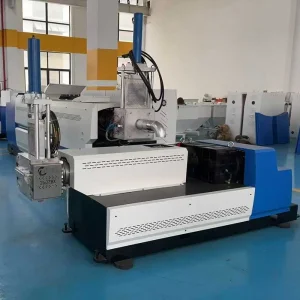
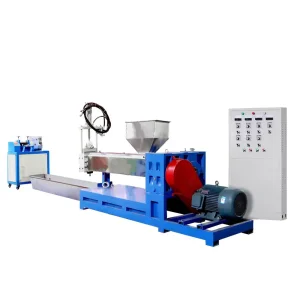
Post-consumer (PCR) and post-industrial (PIR) recycling streams present extreme contamination challenges including paper fibers, aluminum foil bits, dirt, and incompatible cross-linked polymers. Hydraulic screen changers equipped with Multi-Layer Spot Welded Screen Pack Discs or auto-belt continuous mesh screens remove heavy particulate loads while enduring aggressive pressure fluctuations.
4.4 Petrochemical Processing & High-Temperature Liquid Filtration
Beyond thermoplastics, sintered stainless steel mesh elements serve critical roles in refinery catalyst recovery, high-temperature gas cleanup, hydraulic fluid purification, and solvent recovery under extreme pH and temperature regimes where organic polymer media fail.
5. B2B Buyer’s Guide: Total Cost of Ownership (TCO) Optimization
When evaluating wholesale SS mesh filter suppliers, savvy procurement directors look beyond initial unit purchase price. The true economic impact is governed by Total Cost of Ownership (TCO), calculated through the following operational parameters:
$$\text{TCO} = C_{\text{purchase}} + C_{\text{downtime}} + C_{\text{energy}}(\Delta P) + C_{\text{scrap}} - V_{\text{recycled\_elements}}$$- Pressure Drop (ΔP) & Energy Consumption: Poorly woven mesh with irregular wire spacing causes high initial pressure drop, forcing extrusion pumps to consume excessive electric power. Optimized Dutch weave geometries lower initial ΔP, saving thousands of kilowatt-hours annually.
- On-Stream Life & Changeout Frequency: Premium 316L sintered felt candle filters maintain low differential pressure for significantly longer durations, reducing scheduled maintenance shut-downs and labor expenses.
- Regeneration & Cleaning Efficiency: Sintered stainless steel filter cartridges engineered with robust end-caps tolerate 10 to 15 thermal/chemical cleaning cycles (TEG hydrolysis, ultrasonic bath, calcination furnace), drastically reducing replacement cartridge expenditure per metric ton of polymer produced.