Engineered from premium grade SUS 304 and 316L stainless steel, designed for continuous operation under extreme thermal and mechanical pressure.
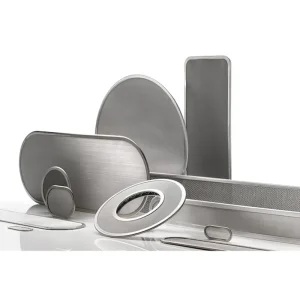
Custom multilayer wire mesh discs designed for high-density polyethylene and polypropylene recycling lines across Victoria.
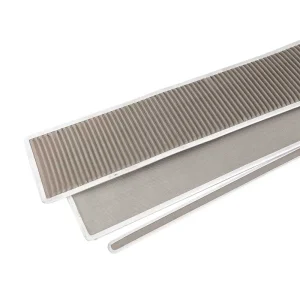
Heavy-duty spot-welded screen packs engineered to prevent particle bypass in blown film and sheet extrusion systems.
Fine micron rated Dutch weave filter discs engineered for high-viscosity resin purifications and masterbatch lines.
Factory-direct high performance extruder screen belts and circular packs customized for automatic screen changers.
Analyzing the operational demands of Victoria’s key manufacturing corridors—from Dandenong South and Campbellfield to Laverton North and Altona.
Greater Melbourne represents Australia's dense hub for polymer converting, film extrusion, and rigid plastic packaging. Manufacturing zones in Campbellfield and Broadmeadows rely heavily on precision screen mesh filters to eliminate gel specs, un-melted resins, and foreign contaminants in high-speed blow molding lines.
Driven by the Recycling Victoria infrastructure initiatives and Australian Packaging Covenant Organisation (APCO) mandates, local processors in Dandenong South are scaling post-consumer recycled (PCR) melt processing. Highly contaminated plastic waste feeds require specialized multi-layer sintered wire mesh to maintain extruder output without premature blinding.
Industrial procurement managers across Altona’s chemical processing and Sunshine West's industrial filtration plants require full material traceability. Stainless steel wire mesh must strictly align with Australian Standard AS 3678, ISO 9001 quality frameworks, and FDA 21 CFR 177.2600 standards for food-contact compliance.
Melbourne Industry Insight: Operating a continuous extrusion process in Victoria’s competitive manufacturing market requires minimal differential pressure (ΔP) spikes across the filter pack. Unscheduled downtime caused by screen collapse or wire displacement can cost processing facilities upwards of AUD $15,000 per hour in lost throughput and resin scrap.
Understanding wire diameter ratios, aperture pore geometries, and alloy selections for high-temperature and high-viscosity applications.
SUS 304 vs. SUS 316L: While SUS 304 offers excellent structural rigidity and cost-efficiency for standard olefin extrusion (PE/PP), SUS 316L provides crucial molybdenum additions (2-3%) that dramatically improve resistance to pitting and crevice corrosion under fluoropolymer (PVDF, PTFE) processing and high-moisture recycled feedstocks.
Plain, Dutch, and Reverse Dutch Weave: Plain weave wire mesh provides maximum open area for straightforward screening. Reverse Dutch Weave (RDW)—featuring high wire counts in the warp direction—delivers high mechanical strength tailored for continuous ribbon screen changers operating at hydraulic pressures over 250 bar.
By vacuum-sintering fine filtration mesh between coarse protective and support layers, the individual wires are metallurgically bonded at their intersection points. This eliminates wire migration, ensures consistent pore distribution, and allows multi-pass backwashing without structural deformation.
How high-performance wire mesh screen packs solve specific operational bottlenecks for local Australian manufacturing facilities.
Challenge: Excessive paper fiber, aluminum foil micro-particles, and cross-contaminated resins causing frequent screen blinding on a 150mm single-screw pelletizing line.
Solution: Implementation of custom rim-bound 5-layer spot-welded screen packs (20/60/100/60/20 mesh configuration in SUS 304). Increased production runtime per screen pack from 45 minutes to 4.5 hours, improving yield by 28%.
Challenge: Pinhole formation and wall thickness variation in high-speed HDPE bottle blowing caused by sub-micron carbonized gels.
Solution: Transitioned to Pujiang HG's precision 25-micron absolute rated sintered wire mesh filter discs. Pinhole reject rates dropped from 3.2% to under 0.04%, passing stringent local dairy packaging quality control.
Challenge: Corrosive acidic fluid media damaging standard 304 stainless steel strainers in aggressive chemical processing units.
Solution: Custom-manufactured SUS 316L pleated candle filter elements with reinforced outer mesh cages. Extended filter service life 4-fold while retaining structural integrity up to 300°C operating temperatures.
Compare metallurgical properties, weave configurations, and hydraulic capabilities to select the optimal filter medium for your process.
| Filter Media Type | Material Grade | Micron Rating Range | Max Operating Temp | Differential Pressure (ΔP) | Primary Industrial Use Case |
|---|---|---|---|---|---|
| Multilayer Spot-Welded Mesh | SUS 304 / 316 | 40 μm - 400 μm | 350 °C | Up to 200 bar | Standard PE/PP Extrusion, Masterbatch |
| Reverse Dutch Weave Belts | SUS 304 / 316L | 10 μm - 150 μm | 400 °C | Up to 300 bar | Continuous Auto Screen Changers (Ribbon) |
| Sintered Wire Mesh Discs | SUS 316L / 904L | 2 μm - 100 μm | 480 °C | Up to 250 bar | BOPP Film, Ultra-Clean Resins, Fiber Spinning |
| Rim-Bound Multilayer Discs | SUS 304 + Aluminum Rim | 25 μm - 250 μm | 300 °C | Up to 180 bar | Manual Screen Changers, Recycled Scrap |
| Pleated Sintered Metal Candle | SUS 316L / Hastelloy | 3 μm - 60 μm | 550 °C | Up to 210 bar | High Viscosity Melt Polymerization & Petrochemical |
Bridging top-tier manufacturing precision with fast logistics directly to Victoria’s industrial hubs.
By eliminating multiple intermediary trading markup layers, Melbourne manufacturing plants directly access OEM wholesale pricing. Factory-direct sourcing allows processors to maintain higher inventory reserves of critical screen packs without tying up operational working capital.
Need custom outer diameters, non-standard center hole punching, or specialized rim materials? Send us your technical CAD drawings or physical samples. Our dedicated tooling workshop produces custom tooling dies within 5 business days, delivering direct air-freight samples to Melbourne within a week.
Every shipment bound for Australian ports undergoes rigorous Quality Assurance protocols: Positive Material Identification (PMI) chemical analysis, optical microscope wire spacing verification, dynamic pressure tolerance testing, and full ISO 9001 compliance documentation.
Expert answers to common engineering, procurement, and maintenance questions regarding polymer extruder screen packs.
Mesh Count refers to the number of openings per linear inch of the wire cloth (e.g., 100 mesh has 100 openings per inch). Micron Rating indicates the actual pore opening size in micrometers (μm) that determines particle retention efficiency. Because wire diameter varies, two screens with the same mesh count can have vastly different micron ratings. Our engineering team provides exact pore size charts based on precise wire gauge measurements.
Single-layer screen discs can easily flex or burst under high differential pressure (ΔP). Multilayer spot-welded packs combine a fine central filtering mesh (e.g., 100 mesh) sandwiched between rigid, coarse support meshes (e.g., 20 mesh). This provides structural reinforcement, prevents mesh distortion, and protects fine wires from mechanical shear caused by polymer flow.
SUS 304 is the standard economical choice for polyolefin processing (LDPE, HDPE, PP) under non-corrosive conditions. SUS 316L contains 2-3% Molybdenum, providing superior resistance to chemical attack, organic solvents, and halogenated polymers (such as PVC or fluoropolymers), making it essential for chemical processing facilities around Melbourne’s industrial bays.
PCR feedstocks contain heterogeneous contaminants like paper fibers, mineral fillers, cross-linked gels, and elastomer particles. When using standard plain weave mesh, soft contaminants warp through pores or cap the surface. Upgrading to Sintered Wire Mesh or Reverse Dutch Weave increases dirt-holding capacity and allows higher differential pressure before requiring a screen change.
While basic single-layer mesh discs are typically treated as consumables due to cost-efficiency, heavy-duty Multilayer Sintered Wire Mesh and Pleated Candle Filter Elements can be cleaned and reused multiple times. Recommended cleaning methods include controlled thermal pyrolysis (burn-off ovens), ultrasonic solvent baths, and fluidised bed cleaning.
Standard stock screen mesh configurations ship within 48 hours. Custom engineered orders (special dimensions, rim-bound discs, or sintered packs) take 5-7 business days for production. Express air freight to Melbourne Airport (Tullamarine) takes 3-5 days, while ocean freight direct to the Port of Melbourne typically takes 14-18 days.
Explore our full line of candle filters, pleated elements, extruder mesh packs, and plastic recycling equipment.
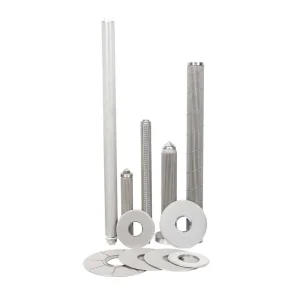
High pressure rated cylindrical filter element engineered for PET, Nylon, and high-viscosity resin melt purification.
Precision circular wire mesh screens in plain and Dutch weave styles, custom cut to fit all major extruder breaker plates.
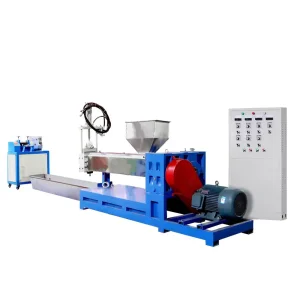
Turnkey plastic recycling systems integrated with hydraulic continuous screen changers for seamless pellet production.
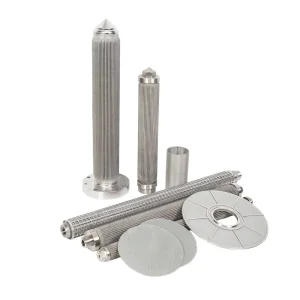
Continuous Polymer Filtration (CPF) candle elements engineered to minimize melt residence time and prevent resin degradation.
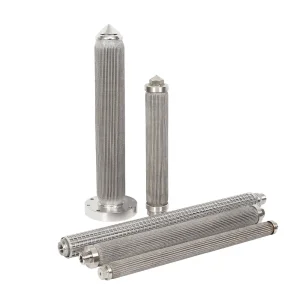
Stainless steel sintered fiber candle elements providing high dirt-holding capacity for aggressive polymer processing.
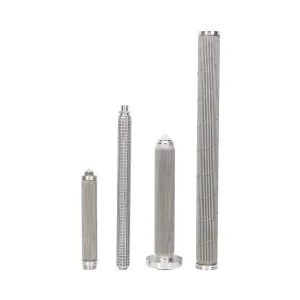
Factory-direct SUS 304 wire mesh filter cartridges for large-volume industrial melt straining and resin synthesis.
Robust filter candles engineered with inner core support tubes to resist differential burst pressure up to 210 bar.
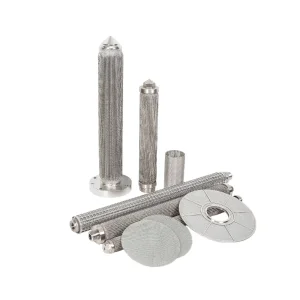
Pleated mesh structure maximizing effective filtration surface area by up to 300% compared to smooth cylindrical elements.