Engineered specifically for high-temperature polymer processing, automotive resin extrusion, and high-barrier packaging film lines in Japan.
An In-Depth Technical Analysis of Screen Mesh Filter Sourcing, Metallurgy, and High-Temperature Polymer Processing Standards in Aichi Prefecture.
As the capital of Aichi Prefecture and the undisputed heart of Japan’s Chubu Industrial Region, Nagoya stands as a global hub for advanced automotive manufacturing, aerospace engineering, precision machine tools, and high-performance synthetic resin compounding. Within this ultra-demanding industrial ecosystem, the stability, purity, and thermal endurance of polymer melt filtration systems directly dictate production efficiency, product yield, and zero-defect compliance.
This technical whitepaper explores the critical role of wholesale screen mesh filter suppliers and specialized manufacturing partners servicing Nagoya. Written from the perspective of metallurgical engineering and polymer fluid dynamics, this document outlines how tailored stainless steel (SUS304/316L) mesh filters, sintered wire cloth cartridges, and continuous screen changers overcome micro-contamination, shear degradation, and high pressure drop ($\Delta P$) challenges during high-viscosity extrusion.
Core Information Gain Insight: Unlike generic wire mesh distributors, specialized screen mesh filter factories supplying Nagoya must meet rigorous Japanese Industrial Standards (JIS B 8356 / JIS G 4305). Polymer melt filtration is not merely physical straining; it involves complex shear-rate stabilization, gel breakdown mechanics, and dynamic pressure drop control under extreme thermal conditions.
Nagoya and its surrounding industrial clusters (Toyota City, Kariya, Yokkaichi, and Komaki) generate a vast share of Japan’s total manufacturing output. The regional demand for industrial screen mesh filters stems from four foundational pillars:
With global automotive OEM giants headquartered in the Greater Nagoya area, Tier-1 and Tier-2 component suppliers are pushing the boundaries of lightweight plastics. Polypropylene (PP), Polyamide (PA66/PA6), Polycarbonate (PC), and Polyphenylene Sulfide (PPS) reinforced with glass fibers or carbon fibers are processed around the clock. Filtering abrasive glass fibers and carbon agglomerates while maintaining structural screen mesh integrity requires multi-layer sintered SUS316L wire cloth capable of surviving intense shear stress.
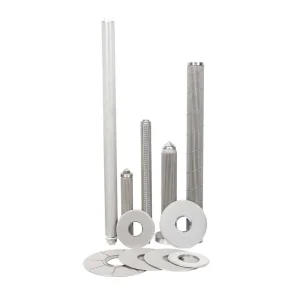
The Chubu region is a key manufacturing zone for lithium-ion battery separator films (PE/PP micro-porous membranes) and optical-grade BOPET films. Minute micro-gels or particulate inclusions as small as 10 microns can trigger membrane puncture or battery thermal runaway. Consequently, Nagoya film manufacturers mandate ultra-clean 5-micron to 20-micron pleated candle filters and leaf discs fabricated in Class 10,000 cleanrooms.
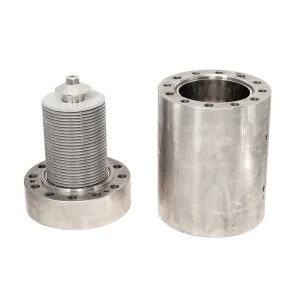
In compliance with Japan’s Plastic Resource Circulation Act, Nagoya recycling facilities process heavy streams of post-consumer and post-industrial plastic waste. Filtering heavily contaminated rPET, rHDPE, and rPP melt requires automatic continuous belt screen changers equipped with reverse dutch weave wire mesh belts that ensure continuous filtration without disrupting line pressure.
When Nagoya plant managers evaluate wholesale screen mesh filter companies, the selection hinges on precise metallurgical composition, weave pattern integrity, and thermal stability. Below is a comprehensive breakdown of standard industrial specifications supplied to the Japanese market:
| Material Grade | Weave Type | Micron Rating (μm) | Operating Temp (°C) | Primary Nagoya Application |
|---|---|---|---|---|
| SUS 304 (AISI 304) | Plain Weave / Twill Weave | 75 – 300 μm | Up to 300°C | Standard PP/PE Granulation, Masterbatch Extrusion |
| SUS 316L (Low Carbon) | Dutch Plain / Dutch Twill | 20 – 75 μm | Up to 400°C | Corrosive Polymers, Engineering Plastics (PA66, PET) |
| Multi-Layer Sintered Wire Mesh | 5-Layer Diffusion Bonded | 5 – 50 μm | Up to 500°C | High-Pressure Polymer Melt Pumps, BOPET Film Lines |
| Sintered Stainless Steel Felt | Non-Woven Random Fiber | 3 – 30 μm | Up to 450°C | Synthetic Chemical Fiber Spinning, Ultra-Fine Filtration |
| Reverse Dutch Weave (RDW) | High-Density Warp Belts | 40 – 120 μm | Up to 350°C | Continuous Auto-Belt Screen Changers for Recycling |
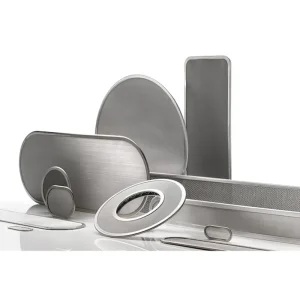
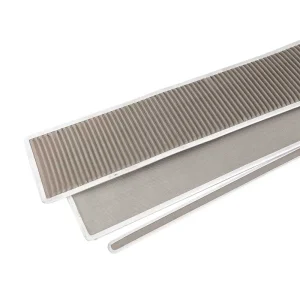
In extrusion systems, as contaminants accumulate on the upstream surface of a filter disc, differential pressure increases. A sudden pressure spike can cause structural wire displacement (mesh migration) or pack breakdown, allowing unfiltered gels and metal particles into the die head. To counteract this, leading factories engineered multi-layer spot-welded packs combining a fine filtration mesh layer with coarse breaker plate support meshes (e.g., 20 mesh / 60 mesh / 100 mesh / 20 mesh).
Supplying screen mesh filters to Japanese manufacturers operating in Aichi Prefecture demands uncompromising quality control, full material traceability, and strict adherence to international and Japanese domestic standards:
Factory OEM/ODM Support for Nagoya Operations: We provide localized CAD drawing validation, custom spot-welding frame configurations, rim material customization (aluminum, stainless steel, copper rims), and express inventory warehousing for high-frequency extrusion lines in Chubu.
Our engineering team delivers custom micron ratings, specialized alloy weaves, and rapid OEM sample prototyping for plastic extruders across Japan.
Send Inquiry NowAs Nagoya's manufacturing sector pivots toward smart factories and decarbonization, the industrial filtration landscape is rapidly evolving along three technological trajectories:
Modern extrusion lines in Aichi are integrating digital differential pressure sensors connected to IoT gateways. Real-time data predictive algorithms monitor $\Delta P$ accumulation curves, automatically triggering continuous belt movement or backwash cycles before melt degradation occurs.
With the rise of bio-based plastics such as PLA (Polylactic Acid) and PHA (Polyhydroxyalkanoates), filter elements must withstand unique organic acid outgassing at elevated temperatures. Next-generation mesh solutions utilize Hastelloy C-276 and Inconel 600 alloys to eliminate corrosive pitting and prolong element lifespan.
The push for thinner optical films and sub-micron semiconductor packaging materials requires ultra-fine filtration media. Multi-layer web sintering that combines stainless steel fibers with metallic powder coatings provides gel retention rates exceeding 99.9% at minimal pressure drop.
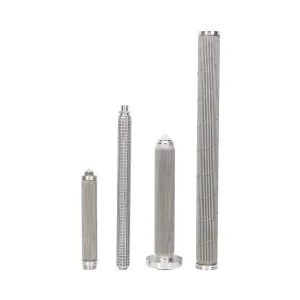
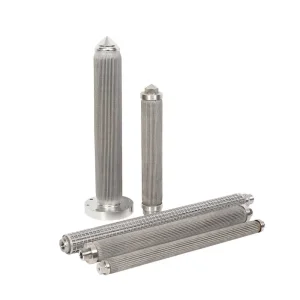
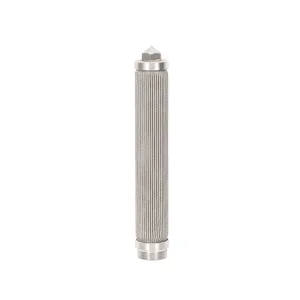
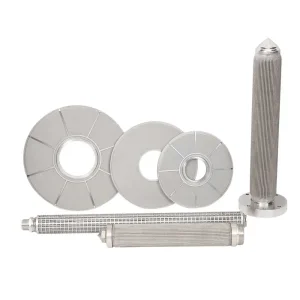
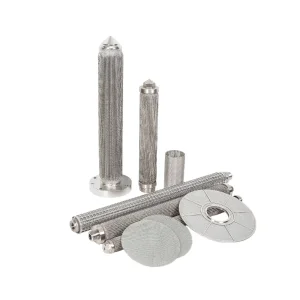
Explore our complete wholesale line of candle cartridges, wire mesh packs, and leaf disc filter elements tailored for Nagoya companies.
Direct answers to critical engineering, logistics, and compliance questions asked by plant managers in Japan.
Optimize your polymer extrusion yield, minimize line downtime, and receive direct factory pricing for your operations in Nagoya and across Japan.
Send Inquiry Now