Explore China's top-tier filtration elements engineered for high temperature, extreme melt viscosity, and severe mechanical stress.
Unpacking the structural transition toward high-density polypropylene and stainless-steel hybrid melt cartridges in advanced industrial manufacturing.
In modern polymer processing—ranging from high-speed spunbond nonwovens to ultra-thin BOPP packaging films—the role of the PP (Polypropylene) Filter Cartridge has expanded from simple particulate straining to complex rheological conditioning. Global buyers searching for "China PP Filter Cartridge Suppliers & Companies" are no longer seeking basic commodity vendors; they require high-precision engineering partners capable of guaranteeing zero gel pass-through and minimal differential pressure build-up (ΔP).
As recycled plastics (rPET, rPP) become integrated into primary extrusion lines to meet global sustainability mandates, contaminant profiles have become drastically unpredictable. Chinese OEMs have responded by developing multi-stage continuous candle filters and pleated micro-porous cartridges designed to trap micro-gel deformables without triggering premature clog rates.
Traditional procurement decisions were dominated by unit price per filter cartridge. Today, enterprise buyers evaluate Total Cost of Ownership (TCO), which factors in frequency of filter changeouts, melt pump power consumption, downtime labor, and thermal degradation risks during line stoppages.
Chinese manufacturers who lead the export market have invested heavily in automatic ultrasonic welding, cleanroom assembly lines, and inline bubble-point testing. This ensures that every shipped batch of PP filter cartridges provides reproducible pore size distribution and verified absolute micron ratings from 0.5μm up to 200μm.
Understanding the material synthesis, pleating configurations, and stainless-steel reinforced cores that define industrial durability.
High-grade PP filter cartridges utilize graded-density micro-denier polypropylene fibers created via continuous melt-blown attenuation. Unlike chemically bound depth media, thermally matrixed fibers eliminate binder migration into high-purity chemical or polymer fluids.
The inner core features ultra-dense sub-micron fibers for final particle capture, while the outer layers provide progressive pre-filtration to capture gross particulates, preventing surface skin-caking.
For applications demanding high flow rates with minimal pressure differential, pleated PP cartridges increase effective filtration surface area by up to 300% compared to standard depth cylindrical filters.
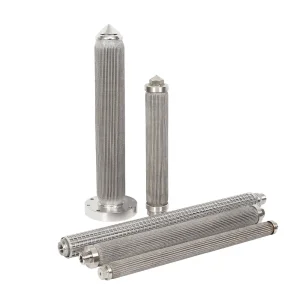
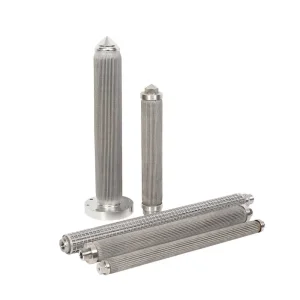
Utilizing optimized pleat geometries with rigid outer cages and internal support spools, these cartridges withstand hydraulic pressure surges without pleat collapse or media pinching.
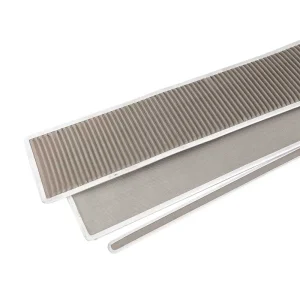
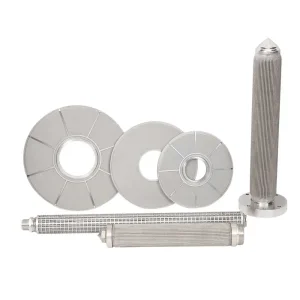
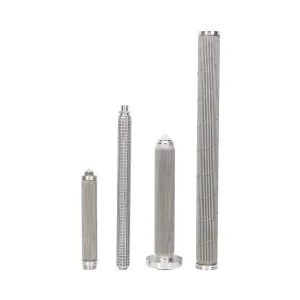
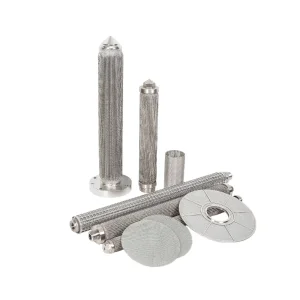
When handling high-viscosity polymer melts (e.g., PET, PA66, PP melt spinning at 280°C+ and pressures over 200 bar), polymer candle filters combine stainless steel mesh layers (woven wire mesh, sintered fiber felt) over perforated internal structural tubes.
These elements undergo vacuum sintering, enabling repeated cleaning via pyrolytic burn-off or ultrasonic solvent baths without structural degradation.
In high-viscosity polymer extrusion, maintaining a stable differential pressure across the filter cartridge pack is paramount. A sudden spike in ΔP indicates rapid shear-thinning failure or gel saturation. Leading Chinese PP filter manufacturers design elements with collapse ratings exceeding 210 bar (3,045 PSI), ensuring process safety under extreme operational surges.
Why leading global chemical, fiber, and plastic processing conglomerates partner with Chinese specialized manufacturing clusters.
China's industrial filtration hubs (notably in Zhejiang and Jiangsu provinces) offer unmatched vertical integration. From local polypropylene resin refining to high-precision wire drawing and automated mesh weaving, every production phase occurs within a 50-kilometer radius.
This geographic concentration minimizes lead times for custom tooling, allows rapid prototype turnaround (under 7 days), and insulates international buyers against raw material supply shocks.
Modern Chinese filter cartridge suppliers operate ISO Class 7 and Class 8 certified cleanrooms equipped with automated robotics for spin-welding end caps, laser-marking batch numbers, and continuous integrity testing.
Stringent Quality Assurance protocols—including multi-pass particle counting, bubble point verification according to ASTM F316-03, and thermogravimetric resin analysis—guarantee compliance with global food contact (FDA 21 CFR) and chemical safety (EU REACH) mandates.
A practical evaluation framework for engineering leads, procurement officers, and plant managers.
Always demand ISO 16889 multi-pass test certificates rather than nominal micron claims. A true absolute-rated PP cartridge must demonstrate a Beta ratio (βx) ≥ 5000 (99.98% efficiency) at the specified micron size.
Ensure virgin polypropylene resin (free of recycled fillers or silicone oils) is utilized. For aggressive chemical processing or high-temperature solvents, verify seal elastomer options (Viton, EPDM, PTFE envelope gaskets).
Confirm the supplier’s ability to engineer non-standard length configurations (10", 20", 30", 40", 60"), adapter codes (Code 3, Code 7, Code 8 / 222/226 O-rings), and custom core reinforcement sleeves.
From high-speed nonwoven machinery to plastic recycling lines—how customized PP filter cartridges perform under real-world stress.
In polypropylene nonwoven production, even minor carbon specks or polymer gels can cause spinneret hole clogging, filament breaks, and costly line downtime. High-temperature candle filter elements placed before the spin pack filter out shear-degraded gel clusters, ensuring continuous filament uniformity for medical and hygienic fabric lines.
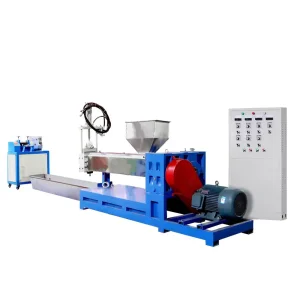
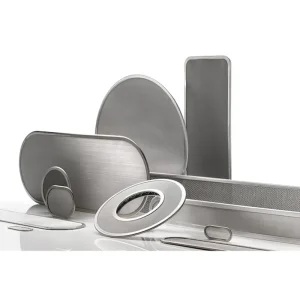
Recycling post-consumer PP/PE waste involves severe contamination from paper fibers, aluminium specks, and un-melted crosslinked polymers. Heavy-duty extruder screen mesh filters and continuous belt screen changers filter high-dirt loads while maintaining constant extrusion pressure, yielding high-purity recycled pellets.
Viscous nylon (PA66) and polyester (PET) melt streams require precise thermal distribution during filtration. Stainless-steel pleated candle elements with sintered felt media provide low velocity drop across the pack, preventing polymer thermal cracking and color degradation.
Pleated micro-porous PP cartridges with 0.1μm - 0.45μm pore ratings are deployed as pre-filters in reverse osmosis (RO) systems and ultrapure water loops for semiconductor manufacturing, protecting sensitive downstream membranes from particle fouling.
Evaluate structural performance across primary filtration media types to determine optimal line compatibility.
| Filter Element Type | Primary Material Construction | Filtration Efficiency (μm) | Max Operating Temp (°C) | Differential Pressure (ΔP Collapse) | Primary Application Scenario |
|---|---|---|---|---|---|
| Melt-Blown PP Depth Cartridge | 100% Virgin Thermally-Bonded PP | 0.5 μm – 100 μm (Absolute/Nominal) | 80 °C | 3.5 bar @ 21°C | Water treatment, chemical pre-filtration, beverage clarification |
| Pleated Micro-porous PP Cartridge | Polypropylene Media & Support Cages | 0.1 μm – 50 μm (Absolute β=5000) | 85 °C | 4.2 bar @ 25°C | High-flow ultra-pure liquid processing, RO protection |
| SUS304/316L Pleated Candle Filter | Sintered Stainless Steel Mesh / Felt | 3 μm – 200 μm (Absolute) | 300 °C – 350 °C | 210 bar (High Delta-P collapse rating) | Polymer melt extrusion, chemical fiber spinning, BOPP film lines |
| Extruder Screen Mesh Filter Discs | Multi-layer Woven Stainless Steel Wire Mesh | 10 μm – 500 μm | 400 °C | 150 bar – 250 bar | Plastic pelletizing machines, recycling screen changers |
Review additional verified export products available directly from certified China factory facilities.
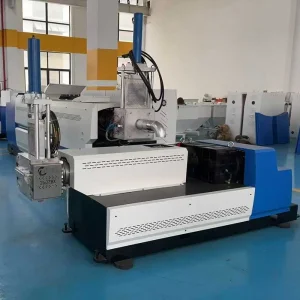
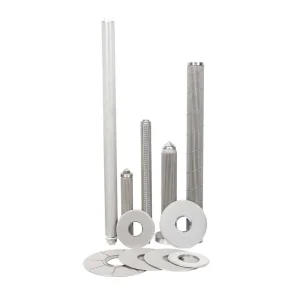
Expert answers to common engineering questions regarding PP filter cartridges, polymer candle elements, and Chinese supplier verification.
A nominal rating indicates an approximate pore size retention (typically 60% to 80% efficiency). An absolute micron rating guarantees that 99.98% (β=5000) of particles larger than the designated micron size are captured under standardized ISO 16889 testing conditions. For critical polymer melt or pharmaceutical processes, absolute-rated cartridges are strongly recommended to avoid contaminant bypass.
Stainless steel candle filters utilize a heavy-walled, perforated internal support tube (SUS304 or SUS316L) capable of resisting differential pressures up to 210 bar (3,000+ PSI). Multi-layer sintered wire mesh or stainless steel fiber felt is vacuum-brazed around the core, ensuring structural integrity even when polymer viscosities exceed 500 Pa·s at 300°C.
Yes. Unlike disposable plastic PP depth filters, metallic polymer candle filters can undergo repeated regeneration cycles. Cleaning methods include TEG (triethylene glycol) solvent boiling, vacuum pyrolysis burnout ovens, ultrasonic chemical baths, and high-pressure backwashing. Proper cleaning restores up to 95% of original clean differential pressure (ΔP).
Top Chinese suppliers offer extensive OEM/ODM customization: cartridge length (5" to 70"), diameter, end-cap adapter configurations (Code 0, 3, 7, 8, DOE, NPT threads), internal core thickness, micron rating customization (0.1μm - 500μm), surface coating (PTFE, silicone-free), and private-label packaging.
Standard production lead time for standard PP cartridges is 7–12 business days, while custom metallic candle filter elements take 15–20 days. Shipments are packaged in sea-worthy reinforced export cartons or fumigated wooden crates. Full export documentation—including Certificates of Origin (Form E, CO), Mill Test Certificates (MTC 3.1), and ISO audit logs—is provided with every shipment.
We recommend requesting ISO 9001 quality certificates, bubble-point test reports, third-party audit reports (SGS, TÜV), and ordering pre-production sample batches for laboratory destructive testing. Leading suppliers also provide live video factory tours demonstrating cleanroom environments and automated spin-welding machinery.