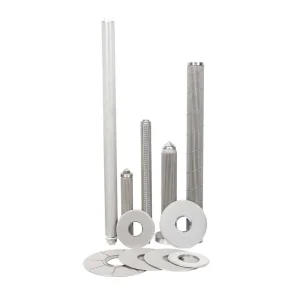
Direct factory-engineered polymer filter media optimized for high melt pressure, ultra-fine micron rating, and extended operational lifespan.
Polypropylene (PP) woven structures—encompassing Flexible Intermediate Bulk Containers (FIBC / Jumbo Bags), woven sacks, cement packaging, agricultural raffia, and geotextiles—represent one of the largest market segments within the global polyolefins domain. With global production of PP exceeding 80 million metric tons annually, post-industrial and post-consumer PP woven waste accounts for millions of tons of reclaimable plastic material.
However, mechanically recycling PP woven materials poses exceptional rheological and physical challenges. Woven polypropylene features a high surface-area-to-mass ratio, high initial Melt Flow Index (MFI) variability (ranging from 2.5 to 12 g/10min), embedded inorganic contaminants (calcium carbonate filler loading up to 25%), and frequent contamination from moisture, residual fertilizers, sand, and ink printing. Consequently, sourcing high-efficiency recycling equipment from a specialized China PP Woven Recycling Machine Supplier has become a strategic priority for global circular economy operators.
Modern Chinese manufacturing standards for plastic reclamation machinery have evolved from basic single-screw extruders to integrated, automated, multi-stage reprocessing lines. The technical architecture of a high-performance PP woven bag recycling machine line comprises six distinct unit operations engineered to maintain molecular weight and eliminate contamination.
Single-shaft or double-shaft rotor shredders process high-tenacity FIBC webbing and woven bags without strand wrapping. Water injection during crushing absorbs friction heat, preventing premature PP thermal degradation while initiating surface soil removal.
High-speed centrifugal friction washers operating at 1200+ RPM strip embedded paper labels, dirt, and chemical residue. Sink-float separation tanks leverage density differentials (PP density ~0.91 g/cm³) to separate heavy contaminants (dirt, PET, PVC) from floating PP flakes.
Directly replacing energy-intensive offline drying, the integrated cutter-compactor pre-heats, dries, and densifies low-bulk-density PP raffia flakes using rotational frictional energy, feeding homogenized semi-molten material straight into the main extruder screw.
A primary 30-34 L/D ratio extruder performs plasticization and initial degassing, followed by a secondary 10-12 L/D extruder. This double-stage arrangement prevents polymer degradation by distributing shear stress and facilitating dual vacuum degassing zones.
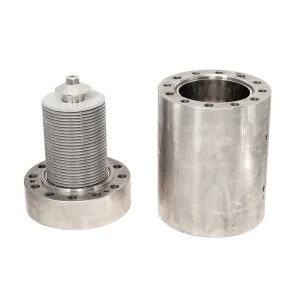
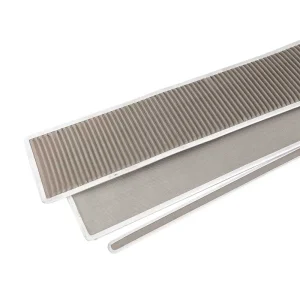
Positioned between primary and secondary extruders, hydraulic dual-piston or plate-type screen changers equipped with woven wire mesh or sintered stainless steel filter elements remove microscopic un-melted gels, aluminum foil fragments, and mineral ash.
Precision die-face cutting combined with closed-loop water temperature control produces uniform, cylindrical PP granules free from air voids, ready for direct re-introduction into raffia tape extrusion lines.
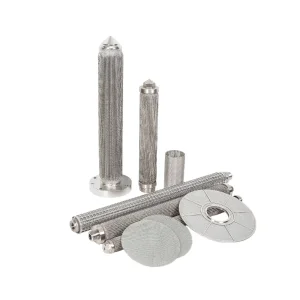
In high-capacity PP recycling lines, the continuous melt filter is the definitive quality gatekeeper. Inadequate filtration leads to spinneret clogging during raffia re-extrusion, film blowouts, and severe tensile strength reduction in recycled PP bags. Below is an engineering matrix outlining filter media selections:
| Filter Element Type | Material Grade | Micron Rating Range | Contaminant Holding Capacity | Primary Application Scenario |
|---|---|---|---|---|
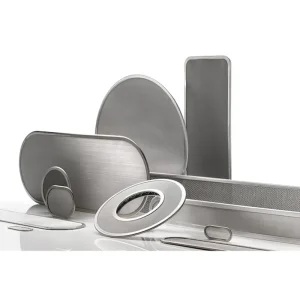
| Stainless Steel Wire Mesh Discs | AISI 304 / 316L | 74μm - 250μm (60-200 Mesh) | Moderate | Standard post-industrial PP raffia & edge trim recycling. |
| Multi-Layer Sintered Wire Mesh | AISI 316L Sintered | 20μm - 100μm | High | High-pressure hydraulic screen changers with backwash units. |
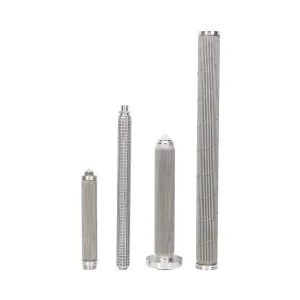
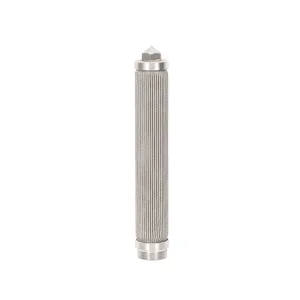
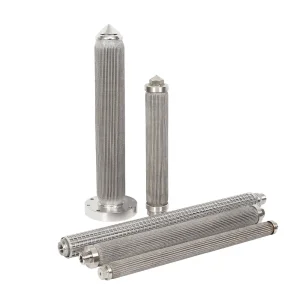
| Pleated Polymer Candle Cartridges | 316L Metal Fiber Felt | 5μm - 60μm | Very High (3x vs plain mesh) | Ultra-clean PP pelletizing for chemical fiber & thin-wall molding. |
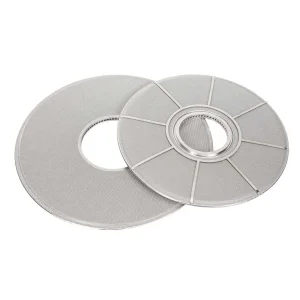
| High-Surface Leaf Disc Filters | 316L Sintered Mesh/Felt | 10μm - 40μm | Maximum Surface Area | BOPP film lines & continuous large-scale FIBC reclamation. |
The international market for polypropylene woven recycling machinery is experiencing a paradigm shift driven by stringent global regulations, corporate ESG targets, and technical breakthroughs in China's manufacturing ecosystem:
The EU Packaging and Packaging Waste Regulation (PPWR) and similar mandates across North America enforce minimum Post-Consumer Recycled (PCR) content thresholds (up to 30% by 2030) for industrial packaging. This forces recyclers to upgrade to twin-stage degassing lines capable of achieving near-virgin purity levels.
Soaring industrial electricity costs have prompted a transition from offline drying systems to integrated cutter-compactor recycling lines. Modern Chinese PP woven recycling machinery achieves energy consumption rates below 0.35 kWh/kg of processed granules.
Advanced recycling projects now integrate vacuum degasification columns paired with chemical wash additives to strip printing ink and volatile organic compounds (VOCs) from agricultural PP bags, unlocking high-value end markets.
Operating environments vary significantly across key manufacturing hubs worldwide. A top-tier China PP Woven Recycling Machine Supplier tailors machine configurations based on regional feedstock characteristics:
Feedstock profile: High silica sand, soil contamination from agricultural fertilizer & cement transportation.
Machine customization: Triple-stage heavy friction washing lines paired with continuous dual-piston backwash screen changers using 80-120 mesh SUS304 wire filter screens to handle high solid loading without downtime.
Feedstock profile: Industrial FIBC big bags with heavy PE inner liners and printed webbing straps.
Machine customization: Automated shredder-compactor extruders equipped with dual-zone high-vacuum degassing and 40-micron pleated candle filters for producing high-tensile melt granules compliant with strict packaging standards.
Feedstock profile: Post-industrial woven bag trim and defect rolls from local bag manufacturing mills.
Machine customization: Compact single-stage cutter-compactor recycling systems operating under direct closed-loop water-ring pelletizing for immediate re-feed into extruder hoppers.
The upcoming decade will witness unprecedented integration of Smart Factory concepts, Industry 4.0 automation, and molecular modification techniques into PP woven recycling lines:
Integration of melt pressure differential sensors with machine-learning algorithms that automatically trigger screen switching and backwash purging cycles precisely when contaminant cake resistance reaches theoretical maximums, reducing melt loss by 40%.
Direct metering of organic peroxides and multi-functional chain extenders during secondary extrusion to rebuild thermal-degraded PP polymer chains, restoring the original Melt Flow Index (MFI) for high-tenacity yarn drawing.
Deployment of 316L sintered metal fiber felt candle elements operating under ultra-high structural pressure limits, allowing recycled PP to enter delicate non-woven spunbond (Meltblown/Spunbond) manufacturing applications.
As an established specialist with over 20 years of dedicated manufacturing expertise, Pujiang HG Plastic Machinery Co., Ltd. bridges the gap between machinery manufacturing and precision polymer filtration elements. Our modern facility in Zhejiang, China, provides integrated OEM and ODM manufacturing services spanning stainless steel extruder mesh, leaf disc filters, pleated candle cartridges, and high-output plastic recycling machinery.
All SUS304 and SUS316L filter media undergo bubble point testing, pressure differential burst analysis, and spectrographic material verification to guarantee zero fiber migration under high pressure.
We engineer custom filter element geometries, hub configurations, and micron ratings tailored to fit standard European, Asian, and American screen changer housings seamlessly.
Exporting to over 80 countries, we deliver technical consulting, replacement filter media supply, and complete recycling system installation oversight worldwide.
Addressing core search queries and technical considerations for plant managers, purchasing directors, and recycling plant operators.
Explore our ISO-certified filter elements engineered specifically for polymer melt filtration and heavy-duty plastic recycling extruders.