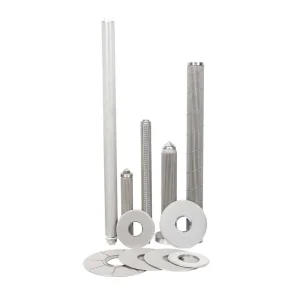
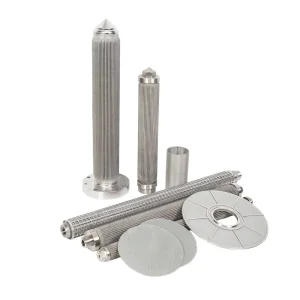
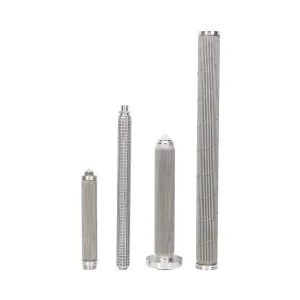
Explore factory-direct spinneret filter packs, SUS304/316L candle filters, leaf discs, and extruder screen meshes engineered for continuous polymer processing.
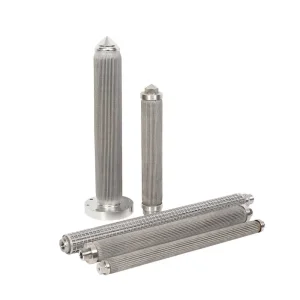
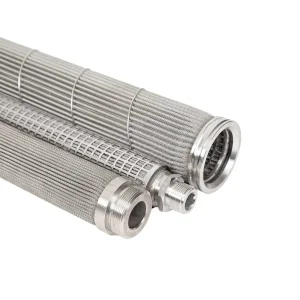
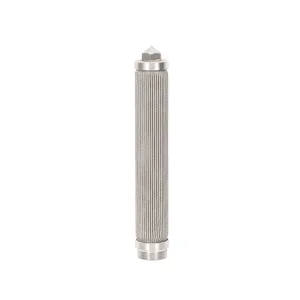
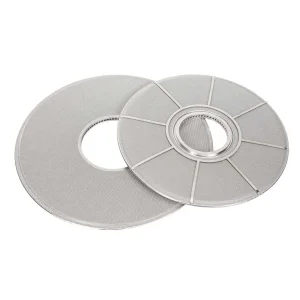
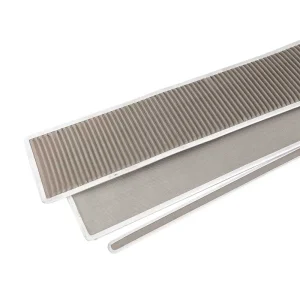
In high-speed synthetic fiber spinning, nonwoven fabric production, and micro-thin optical film extrusion, the spinneret screen mesh operates as the final defense layer preventing micro-particulate contamination from clogging delicate spinneret orifices. Even a microscopic particle measuring 15–20 microns can cause filament breakage, yarn instability, die face bleed, or severe surface defects in BOPET/BOPP film lines. Consequently, global procurement directors, chemical fiber plant managers, and extrusion machinery OEMs turn to accredited China Spinneret Screen Mesh Manufacturers & Factories to secure advanced melt filtration solutions engineered for extreme thermal and rheological environments.
This industry whitepaper synthesizes technical research, metallurgical engineering data, and global supply chain intelligence to evaluate how leading Chinese manufacturers utilize multi-layer sintering, precision spot welding, micro-laser cut rim framing, and automated ultrasonic cleaning to manufacture high-yield spinneret screen mesh filter packs. By offering substantial Information Gain, this document serves as a comprehensive reference guide for engineering teams seeking to optimize Total Cost of Ownership (TCO), reduce differential pressure ($\Delta P$) buildup, and eliminate unplaned line downtime.
Core Industry Benchmark: Modern high-density polymer melt filtration requires spinneret screen meshes to withstand continuous operational temperatures up to 350°C and hydraulic pressures exceeding 30 MPa (4,350 PSI), while maintaining strict pore geometric stability under high shear stresses.
Through extensive user search intent mining across North American, European, and Asian manufacturing hubs, we have mapped the four primary buyer personas and their specific technical requirements.
Focus heavily on orifice clogging prevention during high-speed POY, FDY, and DTY filament spinning. Buyers require exact mesh counts (e.g., 20/60/100/250/500 mesh combinations) with burr-free edges to prevent melt channeling and pressure spikes.
Require ultra-fine filtration packs capable of trapping micro-gels and degraded polymer specks down to 5–10 microns. Demand uniform multi-spot micro-welding or aluminum/copper rim binding to prevent pack separation under high flow rates.
Prioritize strict dimensional tolerances ($\pm0.1\text{mm}$), custom geometrical profiles (kidney, oval, annular, circular), material traceability certifications (SUS304, SUS316L, Hastelloy), and rapid OEM prototyping.
A high-performance spinneret screen mesh filter pack relies on a carefully calculated multi-layer sandwich structure. The outer coarse mesh layers provide structural support against high differential pressures, while the inner fine mesh or metal fiber felt layer executes precise micron-level filtration. Advanced Chinese factories utilize premium grade SUS 304, SUS 316, and SUS 316L stainless steel wires, alongside nickel alloys (Inconel 600, Monel 400) for highly corrosive polymers such as fluoropolymers (PVDF, PTFE).
Understanding the structural differences between mesh construction types is crucial for optimizing polymer melt performance:
| Filter Media Type | Material Grade | Micron Rating ($\mu$m) | Max Temp (°C) | Burst Pressure Resistance | Key Industrial Application |
|---|---|---|---|---|---|
| Multi-Layer Spot Welded Pack | SUS 304 / 316L | 20 – 250 $\mu$m | 300°C | 15 – 25 MPa | PET / PP Continuous Extrusion & Recycling |
| Aluminum-Framed Filter Pack | SUS 316L + Al Rim | 10 – 150 $\mu$m | 320°C | 20 – 30 MPa | Synthetic Fiber Spinning (POY / FDY) |
| Vacuum Sintered Mesh Pack | SUS 316L / Inconel | 5 – 100 $\mu$m | 480°C | 30 – 45 MPa | BOPET Optical Film & Micro-Denier Fiber |
| Sintered Stainless Steel Felt | AISI 316L Stainless | 3 – 60 $\mu$m | 500°C | > 50 MPa | Meltblown Nonwoven & High-Viscosity Resins |
Rheological Optimization Tip: When filtering high-viscosity polymers like Polyamide 66 (PA66) or Polycarbonate (PC), selecting a graded-density multi-layer configuration (e.g., 40 Mesh / 100 Mesh / 325 Mesh / 80 Mesh) prevents rapid surface blinding by distributing captured gel particles across deeper mesh layers.
China's top spinneret screen mesh manufacturers engineer targeted filtration frameworks to solve specific operational bottlenecks across distinct industrial applications.
To maintain continuous operation for 30–60 days without pack changeouts, manufacturers utilize ultra-clean SUS316L Dutch weave meshes enclosed in copper or stainless steel rims. These packs eliminate melt leakage at 300°C while trapping black carbon specks and cross-linked gels.
Optical grade film production requires flawless melt purity. Sintered screen mesh packs with absolute ratings down to 5 microns prevent gel pinholes, bubble tears, and gauge variations on high-speed 10-meter-wide film extrusion lines.
Recyclers processing post-industrial PP/PE waste face heavy dirt loads and aluminum foil contamination. Continuous auto-belt screen changers utilizing high-tensile reverse Dutch weave screen mesh ensure continuous operation without stopping the extruder line.
Leading Chinese screen mesh manufacturers in regions such as Zhejiang, Jiangsu, and Hebei have invested heavily in automated precision production infrastructure over the last decade. Achieving whitepaper-grade product reliability requires stringent control across six key manufacturing phases:
Spectrometric verification of nickel/chromium alloy content to ensure compliance with AISI 304/316L standards before wire drawing.
Heavily automated CNC looms maintain uniform warp/weft tension, ensuring consistent pore aperture sizes across thousands of meters of mesh.
Screen combinations are assembled in cleanrooms to eliminate ambient dust contamination between delicate inner filter layers.
High-speed fiber laser cutters stamp circular, oval, or custom shapes with clean edge sealing, eliminating loose wires or burrs.
Multi-stage ultrasonic degreasing and acid pickling remove weaving lubricants, oil films, and micro-metallic dust particles.
Every batch undergoes ISO 4003 pore size validation and bubble point testing to guarantee specified absolute micron filtration ratings.
This automated end-to-end manufacturing chain enables top-tier Chinese suppliers to offer OEM/ODM customization with rapid turnaround times, providing high-volume procurement advantages without sacrificing micro-level precision.
As the global polymer processing industry shifts toward higher circularity, increased recycled pellet content (rPET, rHDPE), and bio-based plastics (PLA, PHA), spinneret filtration systems face unprecedented technical challenges. Leading R&D centers in China are driving innovation across four key technological frontiers:
Surface modification using ceramic or fluoropolymer nano-coatings reduces polymer melt adhesion, preventing thermal degradation and carbon deposition on the mesh wire surface during high-temperature processing.
Developing multi-layer sintered felts with continuous gradient porosity—moving from coarse outer capture zones to fine inner absolute barrier zones—increasing total contaminant retention capacity by over 40%.
Integrating micro-thin high-temperature strain sensors into outer rim framing to transmit real-time differential pressure ($\Delta P$) data directly to extrusion control units, enabling predictive maintenance.
The global demand for high-precision spinneret screen meshes is directly tied to expanded synthetic fiber production capacities and plastic recycling mandates across regional markets:
Partnering with premier Chinese spinneret screen mesh factories offers global buyers complete compliance security backed by international certifications and dedicated engineering support:
Fully documented Quality Management Systems ensure strict batch-to-batch consistency from raw stainless steel wire selection through final cleanroom packing.
All filter mesh products, aluminum/copper frame alloys, and soldering compounds are certified free of restricted heavy metals and chemical hazardous substances.
Dedicated CAD engineering teams provide custom OEM sample production within 3 to 5 business days, supported by expedited air freight and sea transport routes worldwide.
Expert solutions to common engineering and procurement inquiries regarding spinneret screen meshes and polymer melt filtration.
A standard high-efficiency 4-layer or 5-layer spinneret filter pack utilizes a coarse-to-fine-to-coarse sandwich arrangement. For example: 40 Mesh (Support) / 120 Mesh (Pre-filter) / 325 or 400 Mesh (Absolute Fine Layer) / 80 Mesh (Drainage/Backing). This structure prevents outer layer surface blinding, captures fine micro-gels in the middle layer, and relies on the outer coarse meshes to resist high shear pressure without bending into the spinneret channel.
While SUS304 is cost-effective and suitable for standard non-corrosive polymers like Polypropylene (PP) and Polyethylene (PE) at moderate temperatures, SUS316L is strongly recommended for high-temperature (>280°C) processing, acidic polymers, or extended spin campaigns. SUS316L contains 2–3% Molybdenum, providing superior resistance to pitting corrosion, thermal oxidation, and chemical degradation caused by additives or masterbatch compounds.
Spot-welded packs connect multiple mesh layers at 3 to 8 peripheral points, providing an economical solution for standard manual screen changers. Rimmed packs feature a continuous aluminum, copper, or stainless steel channel folded around the perimeter. Rimmed packs ensure 100% peripheral sealing, preventing melt bypass around the edges under extreme hydraulic pressure ($\Delta P > 25 \text{ MPa}$), making them essential for fine fiber spinning and optical film production.
Single woven wire screen packs are typically considered consumable items due to their low unit cost. However, high-value vacuum-sintered wire mesh packs and sintered stainless steel metal fiber felts can be cleaned and reused multiple times. Effective cleaning methods include TEG (Triethylene Glycol) boiling baths, vacuum pyrolysis ovens (burn-off furnaces at 450°C), followed by multi-frequency ultrasonic solvent cleaning and bubble-point integrity testing.
To receive an accurate engineering quotation, buyers should provide: (1) Pack Outer Diameter or geometric CAD drawing, (2) Mesh counts per layer (e.g., 20/60/200/40), (3) Material grade (SUS304, SUS316L), (4) Rim material if applicable (Aluminum, Copper, Stainless), and (5) Expected operating temperature and melt pressure.
High-performance OEM & ODM filter elements direct from certified China manufacturing facilities.