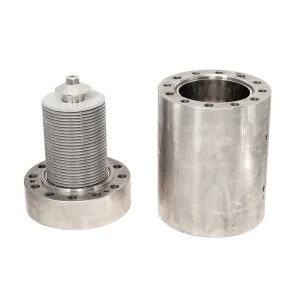
High-performance stainless steel screen mesh, candle filter elements, and polymer filtration hardware engineered for extreme chemical and thermal processing environments.
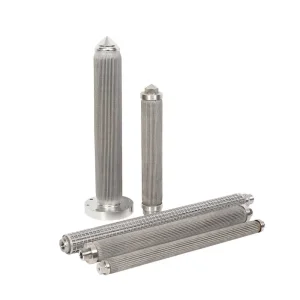
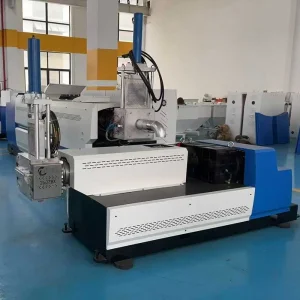
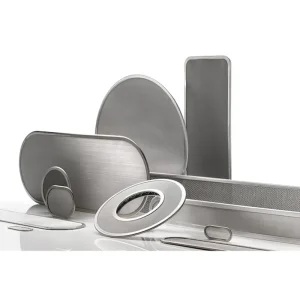
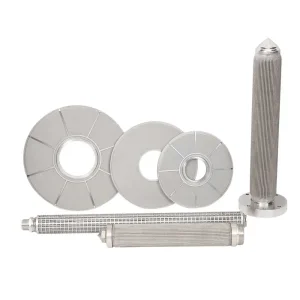
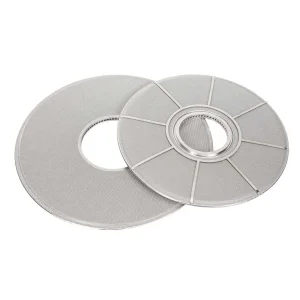
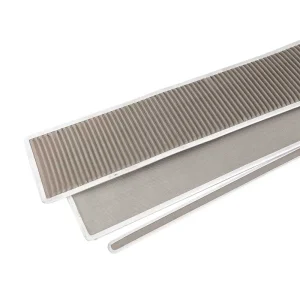
In high-temperature, high-pressure, and corrosive polymer processing environments, stainless steel wire mesh serves as the critical defense mechanism ensuring melt purity, preventing spinneret clogging, and maintaining unbroken production continuity. As global chemical manufacturing shifts toward ultra-fine synthetic fibers, high-density polyethylene (HDPE) recycling, and multi-layer BOPET/BOPP packaging films, the global demand for high-grade austenitic stainless steel filter elements has reached unprecedented levels.
China has consolidated its position as the premier international manufacturing hub and exporter of precision wire mesh products. Centered around major industrial innovation clusters in Hebei (Anping) and Zhejiang (Pujiang / Jinhua), Chinese manufacturers have transitioned from producing low-tier woven fencing wire to leading the world in micro-micron stainless steel wire drawing, vacuum-sintered multi-layer mesh laminates, and continuous polymer screen changers.
Modern polymer extrusion lines operating at pressures up to 30 MPa (4,350 PSI) and temperatures exceeding 340°C require wire mesh structures engineered with microscopic accuracy. Chinese factories now utilize ultra-fine CNC wire drawing technology capable of producing wire diameters as thin as 0.018 mm (18 microns) with tensile strengths surpassing 1,100 N/mm², providing global OEMs with an unbeatable balance of cost-efficiency and performance.
Choosing the correct alloy grade prevents premature intergranular corrosion, thermal fatigue, and mechanical deformation under intense hydraulic loading.
| Alloy Grade | Chemical Profile | Max Temp (°C) | Tensile Strength | Corrosion Resistance | Primary Industrial Application |
|---|---|---|---|---|---|
| SUS 304 (UNS S30400) | 18% Cr / 8% Ni | 650°C | 520 - 720 MPa | Standard | General plastic extrusion, PP/PE recycling screens, agricultural mesh |
| SUS 316 (UNS S31600) | 16% Cr / 10% Ni / 2% Mo | 800°C | 550 - 750 MPa | High (Acid Resistant) | PET melt filtration, chemical fiber spinning, food contact packaging |
| SUS 316L (UNS S31603) | Low Carbon (<0.03%) + Mo | 850°C | 580 - 780 MPa | Superior Intergranular | Vacuum sintered leaf discs, candle filters, pharmaceutical purity lines |
| SUS 904L (UNS N08904) | 20% Cr / 25% Ni / 4.5% Mo / Cu | 950°C | 600 - 820 MPa | Extreme Chloride/Acid | Fluoropolymer (PTFE/PVDF) extrusion, harsh petrochemical reactors |
| Hastelloy C-276 | 57% Ni / 16% Cr / 16% Mo / W | 1100°C | 690 - 880 MPa | Ultra High Alloy | High-viscosity acidic resin synthesis, aerospace extreme filtration |
During long operational cycles at temperatures between 450°C and 750°C, standard 304 or 316 stainless steels suffer from chromium carbide precipitation along grain boundaries. This depletes the passive chromium oxide protective layer, leading to catastrophic intergranular cracking under high melt pressures. By utilizing SUS 316L with carbon content restricted below 0.03%, Chinese precision manufacturers eliminate sensitization, extending the operational life of pleated candle filter elements by up to 300%.
Understanding the physics of fluid dynamics, flow resistance, and particulate retention across distinct weaving patterns.
Each warp wire crosses alternately over and under each weft wire. Features identical square openings. Ideal for basic screening, support mesh, and coarse particulate separation from 50μm to 2000μm.
Combines twill weaving with heavy warp wires and dense, fine weft wires driven tightly together. Creates a tortuous flow path allowing absolute filtration ratings down to 1μm to 5μm while bearing immense pressure differentials.
Features fine warp wires packed densely alongside thick weft support wires. Exceptional longitudinal tensile strength makes RPD the gold standard for continuous auto-belt screen changers in plastic recycling.
How integrated industrial clusters in China streamline raw wire rod sourcing, ultra-fine weaving, vacuum sintering, and global delivery.
High-speed diamond die drawing machines reduce stainless rod down to micro-diameter tolerances (±0.001mm).
Computer-controlled rapier looms maintain consistent mesh count tension across massive roll widths (up to 3.0 meters).
Multi-layer mesh sheets are diffusion-bonded under high vacuum (10⁻⁴ Torr) to fuse wire contact points permanently.
Automated corrugated pleating expands filtration area by 300%–500%; TIG / Plasma seam welding secures end caps.
100% Bubble Point testing (ISO 4003) and automated optical inspection verify pore uniformness before export.
Tailored wire mesh solutions designed for diverse manufacturing verticals across North America, Europe, and Asia-Pacific.
In post-consumer resin (PCR) pelletizing lines, heavily contaminated PP/PE melt clogs standard screen packs within minutes. Our continuous reverse Dutch weave mesh belts enable non-stop screen indexing under 250 bar pressure.
Ultra-thin packaging films require zero gel bypass. Custom sintered 316L leaf disc filter packs remove micro-gels down to 3 microns, preventing expensive film tears during high-speed biaxial stretching.
Spunbond nonwoven fabric facilities rely on high-capacity pleated polymer candle filter cartridges. Corrugated SS mesh structures optimize surface area, reducing pressure drop ($\Delta P$) by over 35%.
As polymer processing evolves toward bio-based plastics (PLA, PHA) and chemical recycling, wire mesh technology is undergoing rapid transformation:
Explore our full range of factory-direct filter solutions engineered for severe industrial duty.
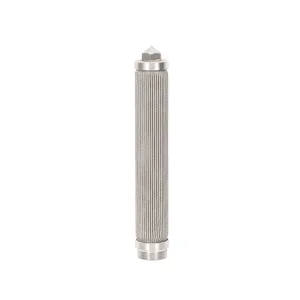
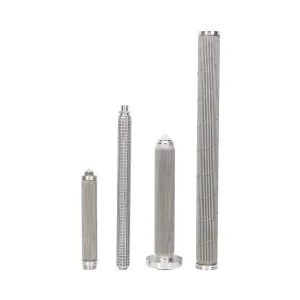
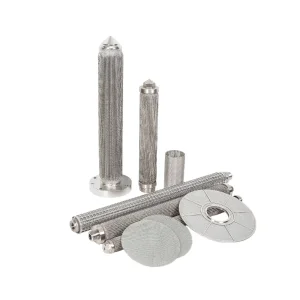
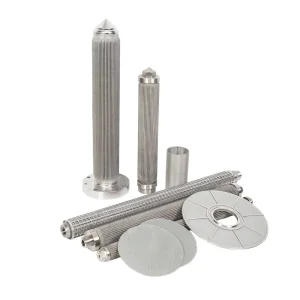
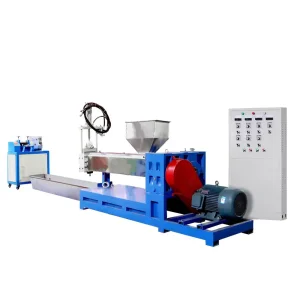
To satisfy international buyer standard operating procedures (SOPs), elite Chinese exporters maintain full traceability from raw alloy wire coils to finished filter elements:
Expert answers addressing common technical queries regarding stainless wire mesh sourcing, mesh calculations, and custom OEM ordering from China.