Directly manufactured engineered filtration solutions for high-viscosity polymer processing, continuous screen changers, and blown film extrusion lines.
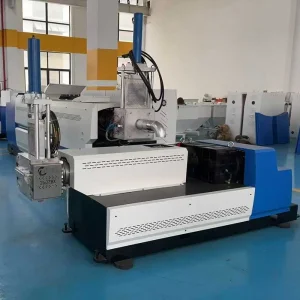
Understanding the mechanics, materials science, and pressure dynamics of continuous screen mesh filter belts engineered for non-stop automated melt filtration systems.
Why structural wire arrangements determine continuous ribbon strength, friction resistance, and gel particle retention during high-viscosity extrusion.
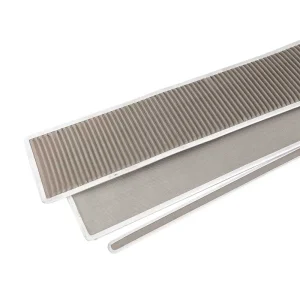
In contrast to standard woven wire mesh where warp and shute wires possess similar diameters, Reverse Dutch Plain Weave features a dense arrangement of heavy, high-tensile warp wires in the longitudinal direction paired with fine shute (weft) wires woven tightly across them.
RDTW incorporates a two-over, two-under twill pattern using heavy warp wires and closely driven shute wires. This creates a tortuous, multi-layered filtration path that excels at trapping soft deformable gel contaminants and micro-carbon specks.
The lateral edges of continuous mesh filter belts are vulnerable to fraying under high hydraulic clamping pressures. Our continuous belts feature proprietary plasma-welded or ultrasonic-sealed smooth edge treatments.
| Mesh Pattern & Count | Standard Belt Width (mm) | Micron Rating (µm) | Alloy Grade | Tensile Strength (N/mm²) | Primary Application Industry |
|---|---|---|---|---|---|
| RDW 72 / 15 | 60mm - 250mm | 250 - 300 µm | AISI 304 / 316L | > 1,450 N/mm² | Post-Consumer Scrap Recycling (PE/PP) |
| RDW 132 / 14 | 80mm - 200mm | 150 - 180 µm | AISI 304L / 316L | > 1,520 N/mm² | Heavy Contaminant Granulation & Pelletizing |
| RDW 152 / 24 | 100mm - 300mm | 100 - 120 µm | AISI 316L / 904L | > 1,600 N/mm² | Cast Film Extrusion & Masterbatch Compounding |
| RDW 260 / 40 | 120mm - 280mm | 40 - 55 µm | AISI 316L High Nickel | > 1,680 N/mm² | BOPP / BOPET Packaging Film Extrusion |
| RDTW 325 / 2300 | 120mm - 220mm | 10 - 20 µm | AISI 316L / Hastelloy C-276 | > 1,800 N/mm² | Optical Grade Film & Spunbond Nonwovens |
Evaluating total cost of ownership (TCO), material selection economics, and global delivery guarantees for industrial continuous filter belts.
Replacing substandard filter belts with high-tensile China-manufactured RDW ribbons reduces belt breakage incidents by up to 98%, cutting unplanned downtime costs that typically exceed $5,000 per hour on large film lines.
As mandatory post-consumer recycled (PCR) content mandates take effect worldwide, melt contamination levels are rising. Premium filter belts handle elevated paper, wood, and aluminum foil dirt loads seamlessly.
We exclusively process certified high-grade wire rods (SUS 304, 304L, 316, 316L, 904L). Every master coil undergoes PMI (Positive Material Identification) testing to guarantee zero intergranular corrosion during processing.
Standard belt widths (e.g., 60mm, 120mm, 180mm, 240mm) in lengths of 10m, 20m, and 50m rolls are maintained in ready-stock inventories, ensuring dispatch within 48 hours to industrial hubs worldwide.
Real-world operational breakthroughs achieved across demanding resin processing facilities globally.
Client Challenge: A European recycling plant processing heavily contaminated post-agricultural LDPE film suffered frequent filter mesh blinding and high melt pressure spikes using conventional screen discs.
HG Solution: Deployed HG RDW 72/15 heavy-series wire mesh filter belts (AISI 304L) with automated pressure-indexed belt advance.
Result: Continuous non-stop extrusion achieved for 45 consecutive days without shutdown, increasing net monthly resin yield by 18.4%.
Client Challenge: A major East Asian electronics packaging manufacturer experienced pinhole defects in 12-micron BOPET film caused by micro-gel passage through low-density mesh screens.
HG Solution: Implemented customized RDTW 250/2000 multi-layer sintered structural mesh belts with plasma-annealed smooth edges.
Result: Optical pinhole defect rate dropped to near-zero (<0.001 per 1,000 m²), enabling the client to enter premium display-grade film supply chains.
Client Challenge: A hygiene nonwoven fabrics producer faced spinneret hole clogging due to particulate shedding from unsealed wire filter edges.
HG Solution: Supplied 120mm ultrasonic-sealed RDW 152/24 continuous filter ribbons with strict wire diameter tolerance control.
Result: Extended spinneret pack lifespan by 240%, drastically cutting thermal cleaning cycles and labor overhead.
Rigorous physical testing and international certification standardizing every roll of wire mesh filter belt leaving our factory.
Full raw material traceability from certified stainless steel wire drawing plants to final roll inspection logs. Every coil is stamped with a unique metallurgical batch ID.
Our stainless steel filter ribbons contain zero heavy metal contaminants or restricted substances, ensuring total compliance for food-contact polymer packaging applications.
Batch testing utilizing automated bubble-point test rigs verifies maximum pore size consistency ($\mu m$) and flow uniformity across the entire belt width.
Rigid destructive and non-destructive longitudinal pull tests ensure warp wire systems maintain zero structural elongation even under extreme differential pressure spikes.
Pioneering smart sensing mesh technologies, nano-friction coatings, and circular economy optimization for 2025 and beyond.
Future continuous screen changer belts will incorporate ultra-thin ceramic and physical vapor deposition (PVD) surface coatings. These nano-layers lower melt drag coefficients by 35%, drastically reducing the power required by hydraulic advance mechanisms while preventing carbonized polymer buildup on the screen surface.
In tandem with Industry 4.0 smart factory standards, our R&D team is developing smart acoustic-emission and delta-P algorithm integration. This enables continuous auto-screen changers to dynamically adjust belt feed speed based on real-time melt contamination density, optimizing mesh consumption by up to 22%.
To accommodate aggressive bio-based plastics (PLA, PHA) and chemically harsh halogenated flame-retardant compounding, HG is expanding its weaving infrastructure to process advanced nickel-chromium super-alloys including Hastelloy C-276, Inconel 625, and Monel 400.
Expert responses to critical engineering, procurement, and operational questions regarding continuous wire mesh filter belts.
Standard woven wire mesh uses identical wire diameters for both warp (lengthwise) and shute (crosswise) directions, resulting in square openings. In contrast, Reverse Dutch Weave (RDW) utilizes thick, high-tensile warp wires positioned closely together in the longitudinal direction, intermeshed with finer shute wires. This provides extreme tensile strength along the belt length—essential for withstanding the continuous pulling force of automatic screen changers—while maintaining precise, micro-rated flow channels.
Traditional screen changers require stopping polymer flow or shifting slide plates, creating sharp differential pressure drops ($\Delta P$) that cause gauge variation, bubble instability, and web tears in blown film lines. Continuous auto-belt screen changers gradually move the filter belt across the breaker plate in tiny increments based on pressure sensors. Because clean mesh enters the channel continuously at a rate matching contaminant accumulation, head pressure remains virtually constant, guaranteeing uniform film gauge.
SUS 304: Standard choice for general polyolefin recycling (PE, PP, PS) under non-corrosive conditions.
SUS 316L: Recommended for engineering plastics, PET/BOPET, nylon (PA), or processes with trace moisture and mild acid formation due to added Molybdenum.
SUS 904L / Hastelloy: Required for fluoropolymers (PVDF, PTFE), halogenated flame retardants, or highly acidic degradative plastic waste streams.
Unfinished or mechanically slit wire mesh belts feature raw, frayed wire ends along their margins. Under extreme melt pressures, these loose wires can detach into the polymer flow, destroying downstream melt pumps or spinning nozzles. Furthermore, frayed edges break the water-cooled polymer plug seals in auto-belt screen changers, causing dangerous melt leaks. Our plasma-fused and ultrasonic-sealed edges create a smooth, monolithic border that guarantees leak-free operation and zero wire shedding.
Yes. While standard widths (e.g., 60mm, 97mm, 120mm, 150mm, 180mm, 210mm) and standard roll lengths (10m, 20m, 50m) are kept in stock, our advanced CNC looms allow us to custom-weave continuous filter belts in any width from 40mm up to 1,200mm, with custom roll lengths tailored to your auto-screen changer reel dimensions.
Selecting micron rating involves balancing melt cleanliness requirements against screen consumption rate. For rough pelletizing of post-consumer agricultural films, 150–250 micron (72/15 or 132/14 mesh) is typical. For blown film grade recycled resin, 70–100 micron (152/24 mesh) is standard. For high-speed nonwovens or thin packaging films, 15–40 micron (260/40 or RDTW series) is specified. Our technical team offers complimentary melt sample analysis to recommend the optimal mesh structure.
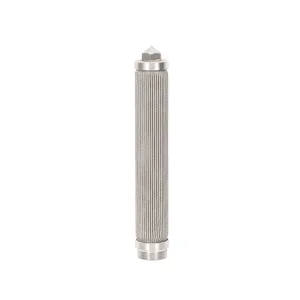
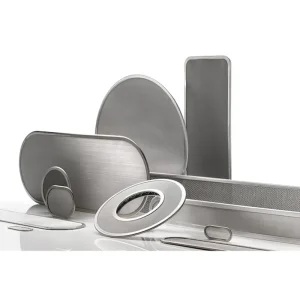
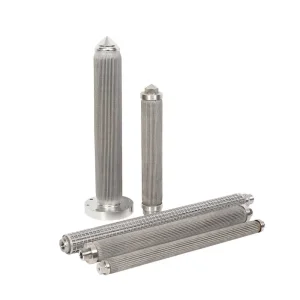
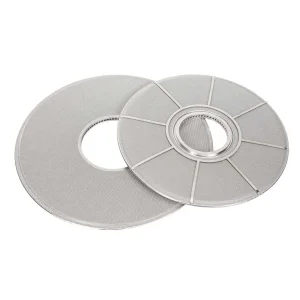
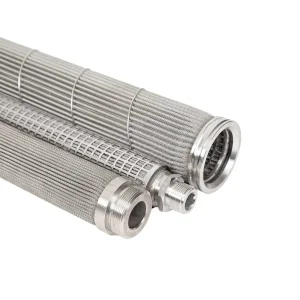
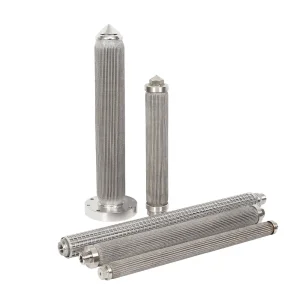
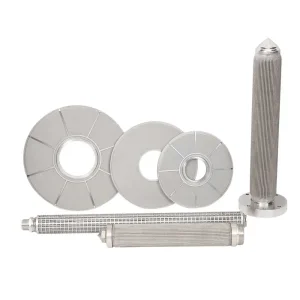
From continuous wire mesh belts to leaf discs and candle filter cartridges, explore our OEM factory direct products.