Custom Plastic Recycling Machine | China Suppliers & Factory for Granulating Plastic Waste into Uniform Granules Suppliers, Companies

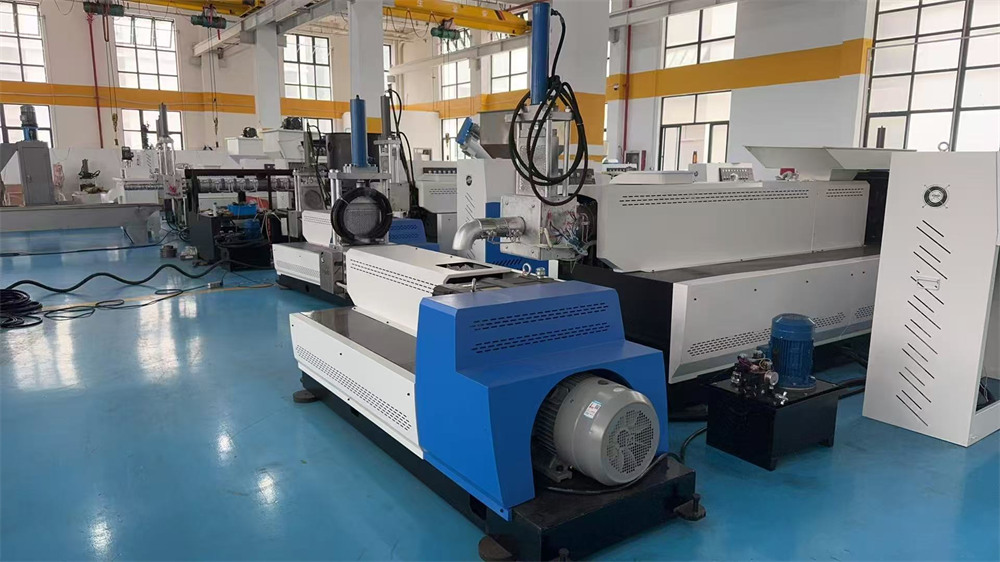
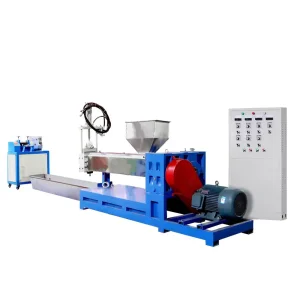
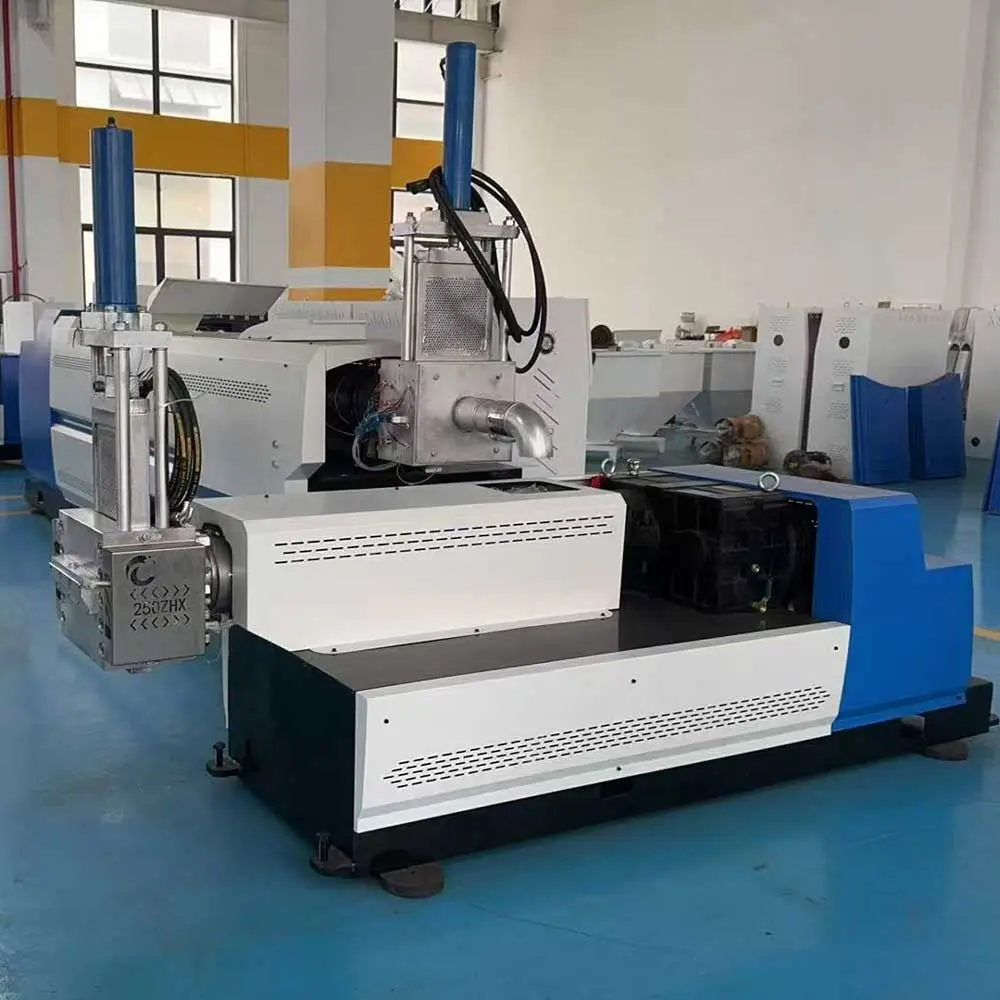
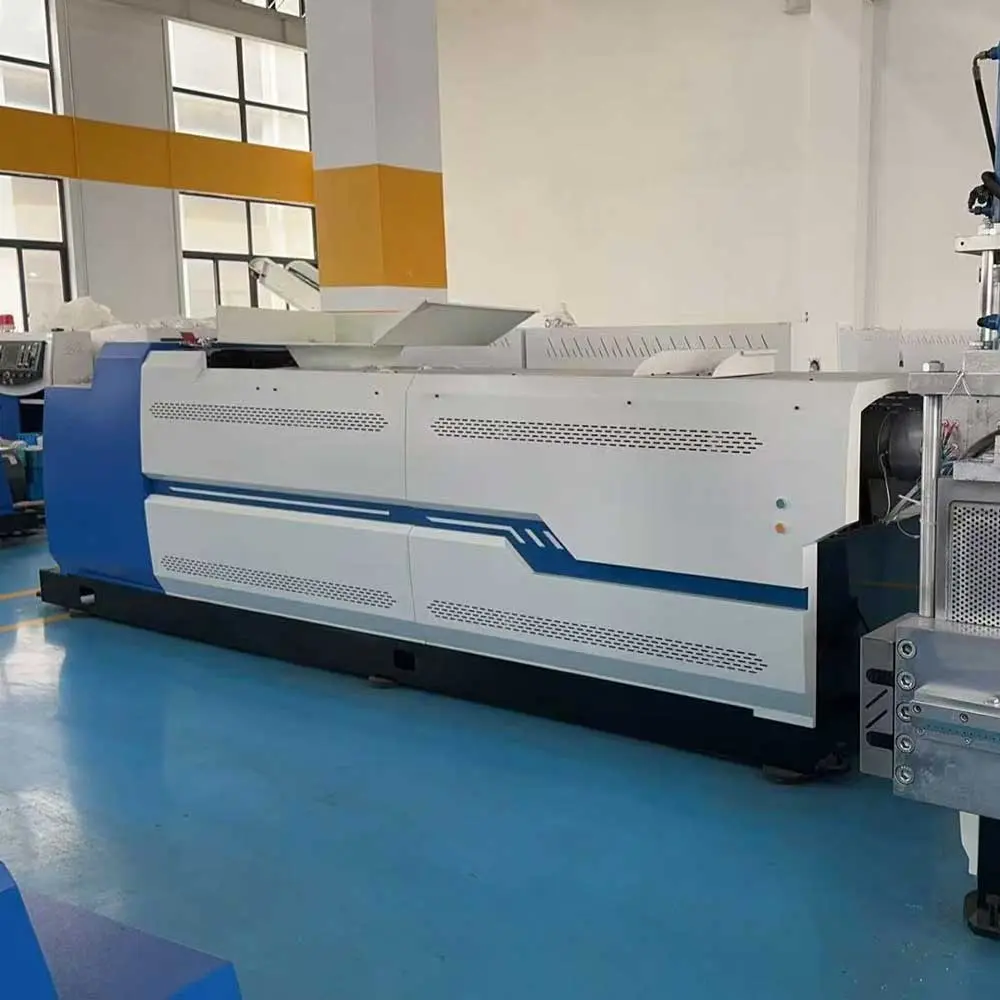
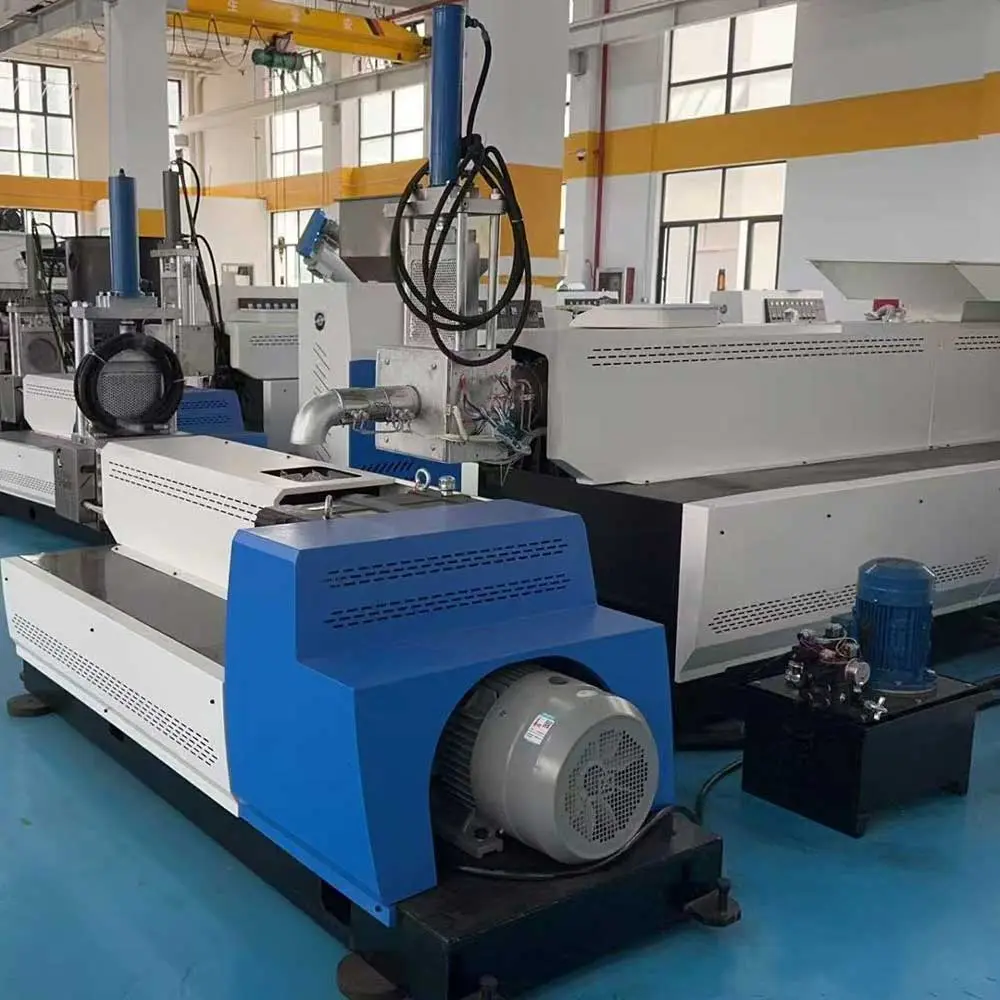
The plastic recycling machine, also known as the plastic granulating machine, is an essential piece of equipment utilized for processing various types of plastic raw materials, including new polymer materials, recycled plastics, film materials, and scraps. This machinery operates through a series of advanced processes such as high-temperature heating, melting, extrusion, filtration, cooling, and cutting, ultimately transforming these inputs into uniform granules. These granules, referred to as plastic particles or recycled granule materials, are crucial for sustainable manufacturing practices. As a leading supplier in China, our factories provide high-quality plastic recycling machines designed to meet the diverse needs of the industry, ensuring efficient production and environmentally friendly solutions

Product Description

Specification

Recycling capacity

80-300 kg/hour

Extruder 1 size

140-150mm

Extruder 2 size

100-120mm

Motor kw

75kw+22kw each

Frequency inverter

Fuji Japan

Extruder heating system

Electricity heating system

Power voltage

380V 50hz

Cooling system

Water cooling method

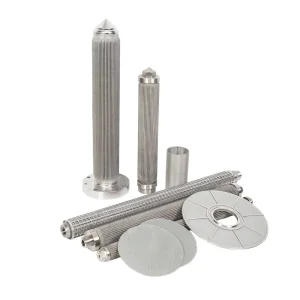
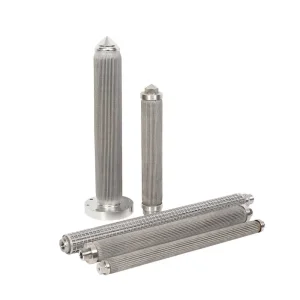
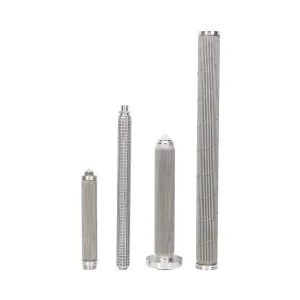
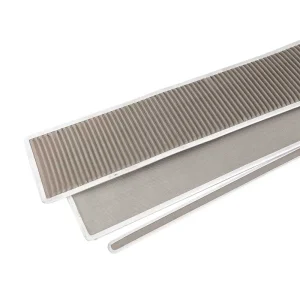
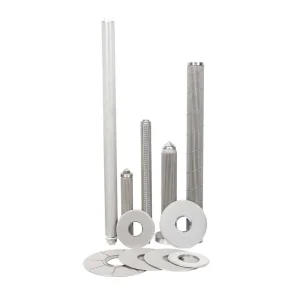
Polymer filter

Screen mesh filter with hydraulic pump*2

Plastic Recycling Machine / Granule Making Machine

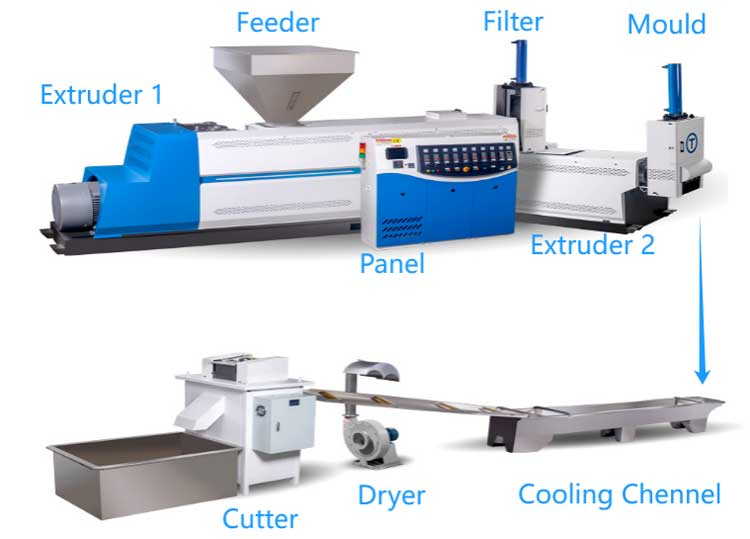
As a complete set of plastic recycling machine, it mainly consists of the following major equipment and systems:
1
Recycling plastic raw material feeding system:
Full stainless steel hopper: It is used for storing plastic raw materials to be processed (fragments, powders, films, etc.).
Forced feeder (optional): For light and fluffy materials (such as films and fibers), it ensures stable and easier feed into the main extruder inlet, preventing bridging and idling.
2
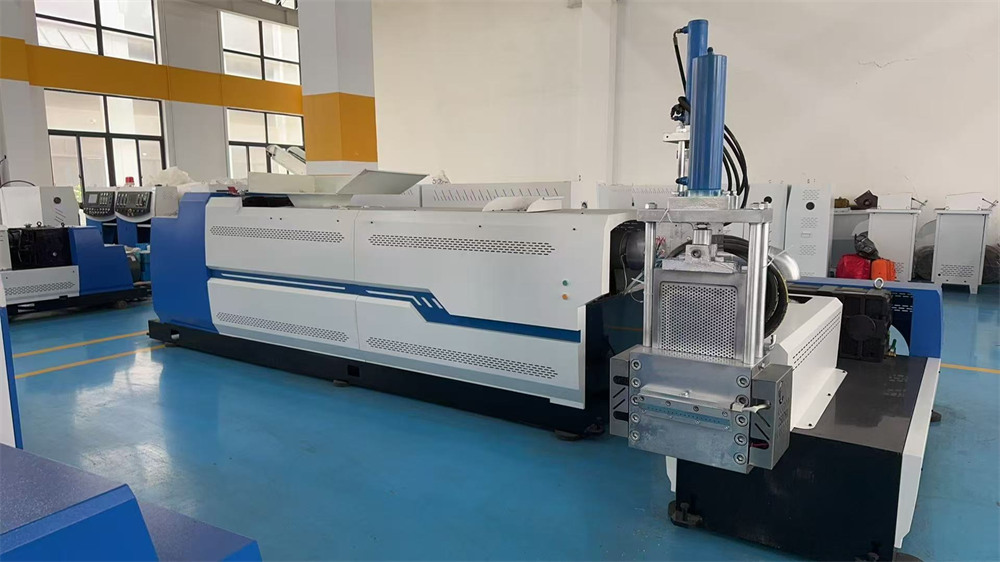
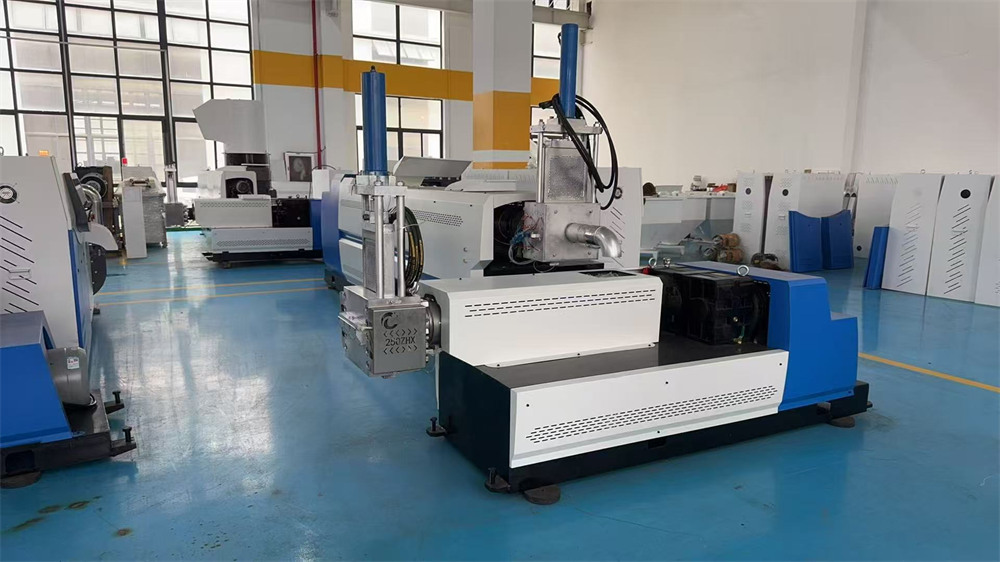
Extrusion system (2 steps extruders):
Barrel: A sturdy metal cylinder with a heating ring and a cooling fan inside for precise temperature control.
Screw: according to different function is divided into several sections (feeding area, compress the molten area, homogenizing measurement area), its design (such as length to diameter ratio, the spiral groove depth) directly decide the performance of the machine and the application of the material.
3
Heating and cooling device:
The electric heating ring heats the barrel, and the fan or water cooling system is responsible for cooling, jointly ensuring that the plastic melts at the optimal temperature.
4
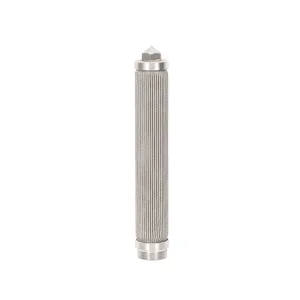
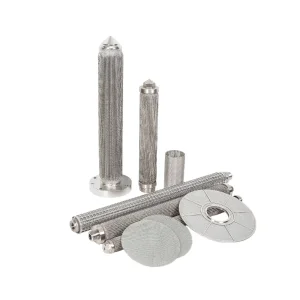
Filter screen changer:
It is used to filter impurities in the melt to ensure the purity of the particles. Hydraulic automatic control and online filter screen replacement are available without the need to stop the machine.
5
Discharge die head:
A plate-shaped device with a specific number of small holes, from which molten plastic is extruded to form strips.
6
Water-cooled strip granulation:
The extruded plastic strips are cooled in a stainless steel water tank and then cut into granules by a pelletizer.
7
Pelletizer:
Equipped with high-speed rotating blades, it cuts the cooled plastic strips or the melt directly extruded from the die head into pellets of the required length.
8
Electric control cabinet:
integrated PLC, temperature controller, inverter, etc., used for precise control of the whole production line temperature, screw speed, feeding speed, cutting parameters such as particle velocity, realizing automation production.

Frequently Asked Questions (FAQ)

Q1 What is the production capacity of this plastic recycling machine?
The recycling capacity ranges from 80 to 300 kg per hour, depending on the raw material type and process requirements.
Q2 How does the machine handle light and fluffy plastic materials?
For light materials such as films and fibers, an optional forced feeder is equipped to ensure consistent and stable feeding into the extruder inlet, preventing material bridging and idling.
Q3 Can the filter screen be replaced without stopping production?
Yes, the machine is equipped with a hydraulic screen changer with two hydraulic pumps, allowing for online filter screen replacement without stopping the entire machine.
Q4 What are the specifications of the dual-stage extruders?
The system uses a 2-step extruder design: Extruder 1 has a size of 140-150mm, and Extruder 2 has a size of 100-120mm, driven by 75kw + 22kw motors and Japanese Fuji frequency inverters.
Q5 What cooling method is utilized in the granulation process?
The system utilizes a water cooling method with a stainless steel water tank to cool the extruded plastic strips prior to pelletizing.
Q6 How does the electrical control system automate operations?
The centralized electric control cabinet integrates PLC systems, temperature controllers, and inverters to precisely regulate production temperatures, screw speed, feeding rate, and cutting parameters.

Related Products