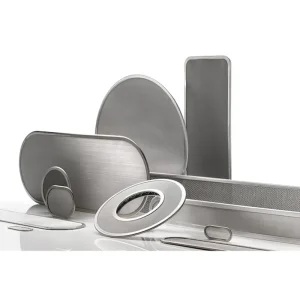
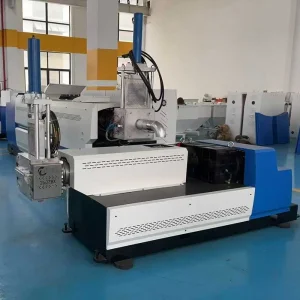
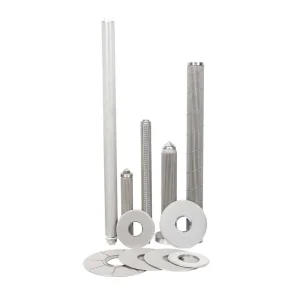
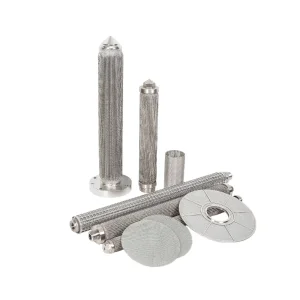
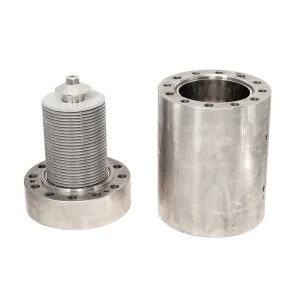
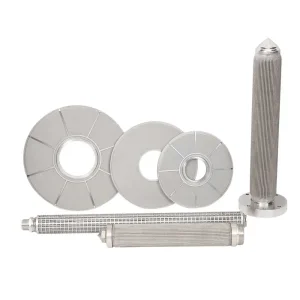
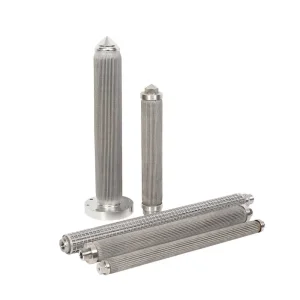
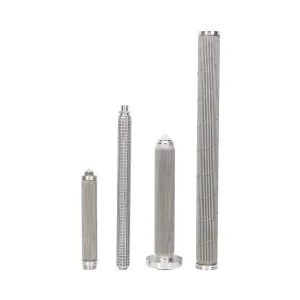
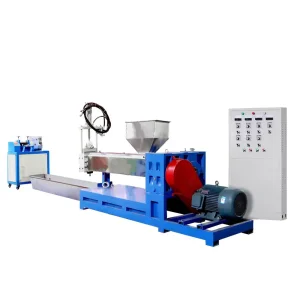
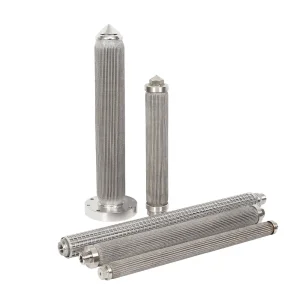
High-durability stainless steel mesh elements, candle filter cartridges, and continuous screen changers designed for harsh industrial extrusion environments.
In the era of modern polymer chemistry and high-throughput extrusion processing, custom plastic mesh filters are no longer mere consumable strainers; they represent critical thermal-fluid engineering components that dictate product purity, melt homogeneity, and production uptime. As global polymer processing moves toward higher ratios of Post-Consumer Recycled (PCR) resins, bio-based plastics, and sub-micron synthetic fiber filaments, the structural integrity and micro-pore architecture of polymer filtration systems have become paramount.
The convergence of circular economy initiatives, ultra-thin film stretching technology, and zero-downtime continuous manufacturing is reshaping the filtration equipment market worldwide.
Mandates for post-consumer recycled plastics (rPET, rHDPE, rPP) introduce irregular gel formations, cross-linked polymers, paper fibers, and metallic micro-contaminants into extruders. Advanced multi-layer mesh packs with deep dirt-holding capacity are essential to prevent screen blinding and screen breaker plate blowouts.
The rapid rise of lithium-ion battery separator films (wet and dry processes) and optical-grade BOPET packaging films demands filtration down to 3–5 microns absolute. Filter suppliers must engineer leaf disc screens with zero particle migration and micro-smooth alloy surface finishes.
Operational expenditures associated with disposable single-layer mesh screens have accelerated the adoption of vacuum pyrolyzed, ultrasonic cleanable, metal fiber felt candle filter elements that deliver over 20-30 cleaning cycles with minimal loss of filtration precision.
Selecting the correct metallurgical composition and weave structure determines filter longevity, pressure differential stability ($\Delta P$), and non-reactivity with corrosive melt additives or fluoropolymer compounds.
| Alloy Grade | Operational Temperature | Corrosion & Acid Resistance | Tensile Yield (MPa) | Primary Industrial Application |
|---|---|---|---|---|
| SUS 304 / 304L | Up to 300°C | Standard Polyolefin / PVC Processing | 205 | Standard Extruder Screens, PP/PE Recycling Granulation |
| SUS 316 / 316L | Up to 400°C | High Acid (PET, PA66, Organic Solvents) | 290 | BOPET Film, Nylon Spinning, Polymer Candle Filters |
| SUS 904L / 310S | Up to 600°C | Extreme Acid & Halogenated Resins | 220 | Corrosive Fluoropolymer Extrusion (PVDF, PTFE) |
| Hastelloy C-276 | Up to 750°C | Ultra-Corrosive Petrochemical Slurries | 355 | High-Temperature Synthetic Resin Monomer Synthesis |
Dutch weave meshes combine coarse warp wires with tight, fine shute wires to create a dense, tortuous path. Ideal for continuous belt screen changers where high mechanical strength against polymer shear forces is required.
Formed by sintering spherical stainless steel powder at high temperatures, creating a uniform 3D porous matrix with precise pore-size distribution. Perfect for depth-filtration of ultra-low viscosity monomers.
Composed of microscopic metal fibers randomly laid and vacuum sintered. Provides up to 85% porosity, delivering high flow rates with extremely low pressure drops across high-viscosity melt channels.
How advanced Chinese manufacturing hubs combine vertical raw material integration, automated CNC mesh weaving, and strict ISO quality standards to serve global enterprise buyers.
From precision stainless steel wire drawing down to 0.02mm to automated heavy-duty weaving looms and vacuum sintering furnaces, Chinese direct manufacturers eliminate intermediary margins, ensuring rapid prototype turnaround within 48 to 72 hours.
Equipped with multi-axis automated laser seam welding, dynamic balancing systems, and high-precision CNC punch presses, enabling exact dimensional match with major OEM filter housings like Nordson, Maag, Kreyenborg, and Gneuss.
Every batch of custom polymer filter elements undergoes rigorous ISO 4003 bubble point pressure testing, ISO 2942 structural integrity verification, and optical microscopic mesh pore size distribution validation before export dispatch.
Custom engineered plastic mesh filters deployed across critical polymer manufacturing and fluid handling industries.
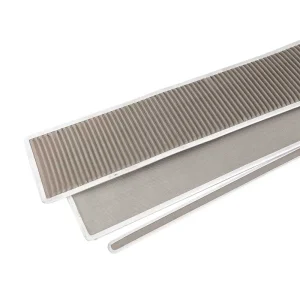
Extruding heavily contaminated agricultural films or post-consumer plastic waste requires continuous ribbon mesh screens or hydraulic dual-bolt screen changers. Stainless wire mesh packs efficiently trap wood fibers, sand, and aluminum flakes without collapsing under shear stress.
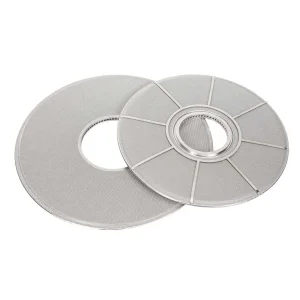
High-speed film lines demand ultra-large filtration surface areas. Segmented hard metal leaf disc filters (60 to 120 mesh rim assemblies) provide uniform flow distribution, preventing gel pinholes and film web breaks during high-ratio transverse stretching.
Nonwoven fabric production lines utilize pleated stainless steel candle filter elements. The high surface area configuration traps sub-micron degradation products, protecting spinneret dies from clogging and extending continuous spinning cycles to several months.
Explore our full line of export-certified high-viscosity candle elements, leaf discs, and pelletizing screen mesh systems.
Expert answers to critical procurement and engineering queries regarding plastic mesh filter specification, cleaning protocols, and performance optimization.
Selection depends primarily on melt viscosity, operating differential pressure, and target contaminant particle sizes. Woven wire mesh offers cost-effective surface filtration down to 20 microns for standard polyolefins. Sintered metal fiber felt features high porosity (up to 85%), lower initial differential pressure ($\Delta P$), and deep dirt-holding capacity, making it ideal for high-viscosity PET/PA melts and extended operational cycles. Sintered metal powder offers rigid 3D micro-pore structures required for high-pressure monomer depth filtration below 5 microns.
PCR resins contain cross-linked gel fractions, organic degradation residues, and microscopic inorganic fillers. Standard single-layer wire meshes quickly become blinded on the surface. To resolve this, engineers utilize continuous ribbon screen changers or multi-layer graded mesh packs (e.g., 20/60/100/40/20 mesh arrangement) where outer coarse layers trap larger debris while inner fine layers capture gels, distributing dirt load across depth rather than a single plane.
Stainless steel candle filters (SUS 316L) are designed for multi-cycle reuse. Cleaning processes typically involve: 1) TEG (Triethylene Glycol) Boiling or Vacuum Pyrolysis Ovens to thermally decompose residual polymers at 450°C; 2) Ultrasonic Bath Cleansing with mild alkaline solutions to dislodge carbonized particulates; and 3) High-Pressure Water Jetting followed by ISO 4003 bubble point integrity testing to verify pore recovery prior to re-installation.
To ensure exact dimensional fit and hydrodynamic compliance, buyers should specify: 1) Polymer type & Melt Flow Index (MFI); 2) Maximum operating temperature and line pressure (Bar); 3) Outer diameter (OD), inner diameter (ID), and overall thickness/height; 4) Absolute micron rating required ($\mu m$); 5) Alloy material grade (SUS 304, 316L, 904L, or Nickel alloys); and 6) Machine housing brand or CAD drawing cross-reference.
The Bubble Point Pressure Test (per ISO 4003) measures the gas pressure required to force an air bubble through a liquid-saturated porous element. It establishes the largest pore size (maximum pore aperture) of the filter element, guaranteeing that no oversize pinhole flaws exist that could allow oversized contaminants to pass through into sensitive downstream gear pumps or spinneret dies.