Direct-from-factory high-efficiency filtration media engineered with SUS 304/316L wire mesh and multi-layered sintered structures for critical polymer melt operations.
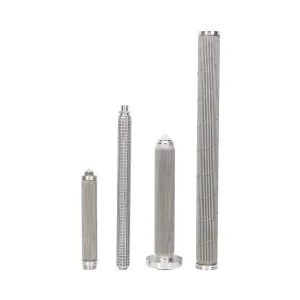
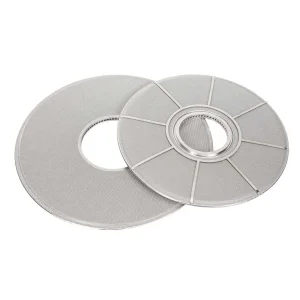
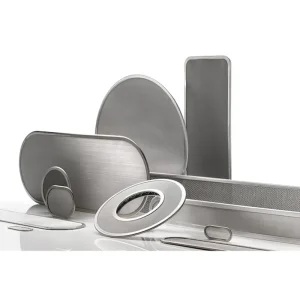
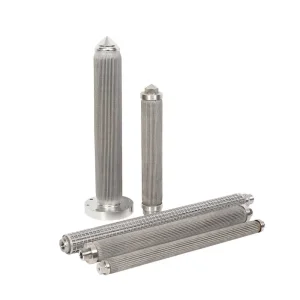
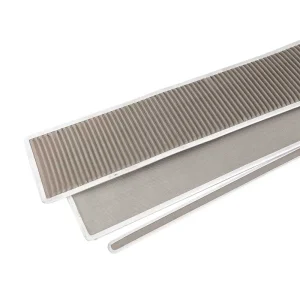
In modern high-viscosity polymer processing, continuous extrusion, and synthetic fiber manufacturing, the reliability of the filtration system directly dictates product quality, plant operational efficiency, and overall profitability. As a global leading Famous Cartridge Filter Factory & Company, our mission is to eliminate micro-contaminants, gel particles, and cross-linked degraded polymers from high-temperature polymer melts before they reach spinnerets, film dies, or pelletizing equipment.
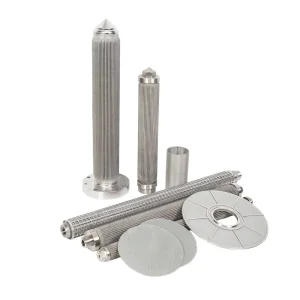
Industrial cartridge filters—specifically stainless steel polymer candle filter elements, multi-layered leaf disc filters, and precision-woven extruder screen mesh filters—operate under extreme physical and chemical pressures. Operating conditions routinely exceed temperatures of 300°C to 350°C and differential pressures ($\Delta P$) up to 250 bar (25 MPa). Under these harsh parameters, standard filtration media suffer from media deformation, channel bypass, pore blinding, and premature thermal stress failure.
This technical whitepaper outlines the structural evolution of cartridge filter manufacturing, dissects global enterprise procurement intents, explores China Industry 4.0 supply chain resilience, and provides an actionable blueprint for selecting optimal candle filter elements crafted from SUS 304, SUS 316L, and advanced nickel alloy matrices.
Key technology vectors transforming high-viscosity melt filtration across global chemical, petrochemical, and circular plastic industries.
Traditional woven wire mesh is rapidly giving way to 3D non-woven sintered stainless steel fiber felts (SUS 316L). Sintered felts deliver high porosity (up to 80%), lower initial differential pressure ($\Delta P$), and up to 3x longer on-stream life due to depth filtration mechanisms.
The worldwide shift toward PCR (Post-Consumer Recycled) plastics and bottle-to-bottle rPET recycling introduces unpredictable contaminant loads. Automated continuous candle filter systems are now essential to filter out wood, aluminum traces, and silicone without stopping production lines.
Modern ultra-high line speeds in BOPET film and spunbond nonwoven lines require structural candle core designs that prevent melt shearing and thermal degradation. Precision-engineered internal support cores ensure uniform velocity distribution across the entire media length.
When B2B procurement managers, plant engineering heads, and technical buyers evaluate a Famous Cartridge Filter Factory & Company, their decision criteria extend far beyond unit purchase price. To maximize operational lifetime and lower Total Cost of Ownership (TCO), professional procurement frameworks analyze four critical technical pillars:
| Procurement Metric | Standard Commercial Filter | HG Polymer Industrial-Grade Candle Filter | Direct Value Impact on Factory Operations |
|---|---|---|---|
| Filter Media Type | Single layer plain square wire mesh | Multi-layer sintered felt or sintered wire mesh matrix | 300% higher dirt holding capacity, significantly extended cycle duration. |
| Collapse Pressure ($\Delta P$) | 50 - 100 bar | 150 - 210+ bar structural resilience | Prevents catastrophic filter media rupture under pressure surges during high viscosity melt runs. |
| Filtration Rating ($\mu m$) | Nominal 25 - 150 $\mu m$ | Absolute 3 - 60 $\mu m$ (glass bead tested) | Guarantees complete retention of micro-gels, protecting expensive spinning packs and extrusion dies. |
| Regenerability / Cleaning | Limited (1-2 TEG/pyrolysis cycles) | Up to 10 - 15 ultrasound / TEG burn cycles | Reduces long-term annual filter consumable expenditure by over 45%. |
How advanced automated sintering technology, raw material vertical integration, and strict ISO QA protocols empower global OEMs and end-users.
Our state-of-the-art vacuum diffusion bonding furnaces fuse multi-layered wire mesh and metallic felts at atomic levels without melting open pore geometries. This guarantees exact micron rating preservation and maximum mechanical shear resistance.
Every production batch of candle filter elements and leaf discs undergoes 100% Bubble Point Pressure Testing (ISO 4003), Permeability Testing (ISO 4022), and Ultrasonic Cleanliness Checks prior to export packaging.
We engineer custom cylindrical candle sizes, octagonal or round leaf disc geometries, and screen mesh packs adapted to equipment from global machinery builders (including Barmag, Neumag, Reiter, KraussMaffei, Starlinger, and Davis-Standard).
Polymer filtration elements must be tailored to the specific chemical properties, rheology, temperature gradients, and contaminant profiles of individual processing lines. Below are key real-world application domains where our SUS 304/316L candle filters excel:
In polyester and nylon staple fiber or filament production, spinneret hole blockages lead to yarn breakage and costly line stops. Sintered metal fiber candle filter elements installed in Continuous Polymer Filtration (CPF) units maintain consistent low $\Delta P$, effectively capturing sub-micron cross-linked gels while preserving polymer viscosity.
Biaxially oriented film lines require flawless melt purity to prevent pinholes, optical defects, and web tears during high-ratio longitudinal and transverse stretching. High-surface-area leaf disc filters and candle filter bundles isolate abrasive catalysts and degraded polymer fragments, ensuring crystal-clear optical film clarity.
Meltblown fabric production for medical-grade filtration media relies on micro-nozzles measuring 0.1 to 0.3 mm in diameter. Heavy-duty candle filter cartridges constructed from 316L stainless steel provide absolute particle retention at high flow rates, protecting spinnerets from damage and ensuring uniform fabric basis weight.
In recycling lines granulating contaminated PE, PP, or PS waste, extruder screen mesh filter discs and continuous belt filters handle heavy particulate loads. Our reinforced multi-mesh rim-sealed screen packs resist severe backpressure while maintaining high throughput in hydraulic screen changers.
Browse our high-performance candle cartridges, extruder screens, and plastic granulation systems designed for heavy industrial duty cycles.
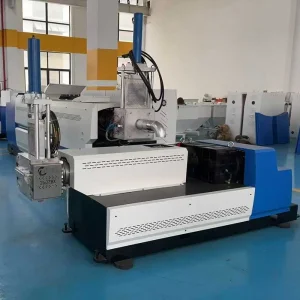
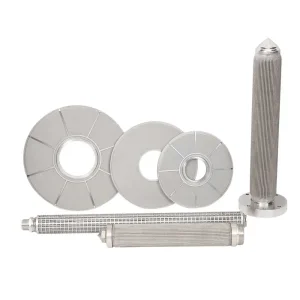
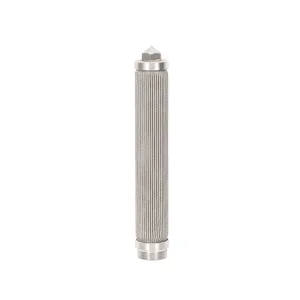
Expert technical answers addressing engineering, material selection, cleaning procedures, and operational queries for polymer plant managers.
While both alloys provide excellent high-temperature strength, SUS 316L contains 2-3% Molybdenum (Mo) and has lower carbon content than SUS 304. This grants SUS 316L far superior resistance to pitting corrosion, acidic polymers, and chemical degradation—especially when handling aggressive monomers, high-temperature polyester melts, or corrosive TEG (Triethylene Glycol) cleaning fluids. For standard non-corrosive polyolefins (PP/PE), SUS 304 offers a highly cost-effective filtration solution.
Woven wire mesh provides surface filtration with uniform square apertures in a single plane. In contrast, sintered metal fiber felt is a 3D non-woven depth matrix composed of fine stainless steel micro-fibers diffusion-bonded at high temperatures. Sintered fiber felts achieve high porosity (70-80%), allowing significantly higher dirt holding capacity, lower initial differential pressure ($\Delta P$), and longer continuous operational cycles before cleaning is required.
Polymer candle filter elements are designed to be cleaned and reused up to 10-15 times depending on operating conditions. Standard industrial regeneration follows a multi-stage process: (1) TEG (Triethylene Glycol) boiling or Pyrolysis Vacuum Furnace treatment at 450°C - 500°C to burn off residual polymer; (2) High-frequency ultrasonic bath washing using specialized alkaline or acid detergents; (3) High-pressure water/steam jet flushing; (4) Drying and ISO Bubble Point Verification to confirm pore integrity and cleanliness before re-installation.
Selection depends on downstream hardware protection requirements and final product specifications. For fine denier chemical fibers or meltblown nonwovens, micron ratings typically range between 5 $\mu m$ and 15 $\mu m$. For BOPP/BOPET film lines, 10 $\mu m$ to 25 $\mu m$ sintered felts are standard. For recycled plastic granulators (rPET/PE/PP), screen meshes ranging from 40 $\mu m$ to 150 $\mu m$ are recommended to optimize throughput while capturing coarse contaminants.