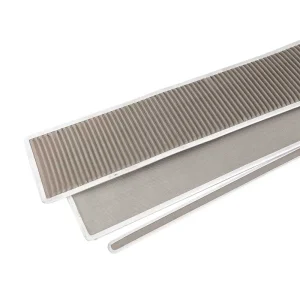
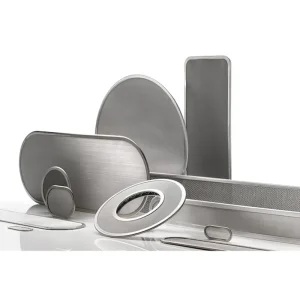
Explore our primary export series of high-viscosity polymer candle filter elements, stainless steel screen meshes, and precision recycling components built to ISO 9001 standard.
The global polymer manufacturing and synthetic fiber sector is undergoing a profound structural transition driven by stringent carbon neutrality mandates, rising virgin resin costs, and circular economy legislation such as the European Union’s Packaging and Packaging Waste Regulation (PPWR) and the Corporate Sustainability Due Diligence Directive (CSDDD). Within this macroeconomic framework, the role of a specialized Famous Filament Recycling Machine Exporter & Company transitions from a mere hardware vendor to an essential strategic technical partner.
Filament recycling—encompassing 3D printing monofilament recovery (PLA, PETG, ABS, PEEK), industrial synthetic yarn reprocessing (PA6, PA66, PET, PP), and post-industrial film scrap pelletizing—demands equipment capable of handling severe rheological variance and complex thermal histories. Unlike virgin polymer synthesis, recycled polymer melts carry heterogeneous particulate contaminants, degraded cross-linked gels, metal oxides, and volatile degradation byproducts. Consequently, modern extrusion recycling lines must integrate ultra-precise, high-pressure melt filtration technologies to yield high-tenacity, defect-free filaments suitable for high-speed automated spooling or industrial additive manufacturing.
Tier-1 global manufacturers are under immense pressure to lower Scope 3 carbon emissions. Utilizing closed-loop filament recycling machinery equipped with advanced SUS 304/316 candle filters cuts energy usage by up to 65% compared to virgin resin synthesis, directly fulfilling ESG targets.
Recycled polymers suffer from intrinsic viscosity (IV) drop during thermal remelting. Modern recycling machinery utilizes low-shear screw profiles combined with continuous melt filter elements to prevent further chain scission while removing micro-impurities.
In fine-denier fiber spinning and 3D printer filament extrusion (e.g., ±0.02mm diameter tolerance), even a 10-micron particle causes filament snapping or nozzle clogging. Continuous candle filtration acts as the ultimate quality gatekeeper.
Pujiang HG Plastic Machinery Co., Ltd. has developed high-viscosity polymer processing technologies designed to withstand internal extrusion pressures exceeding 30 MPa and processing temperatures up to 350°C. The efficiency of a filament recycling system hinges on the hydraulic configuration of its melt filter assembly.
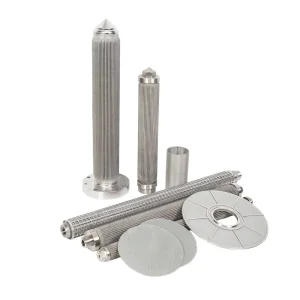
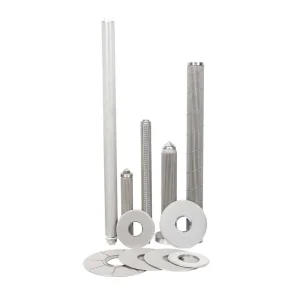
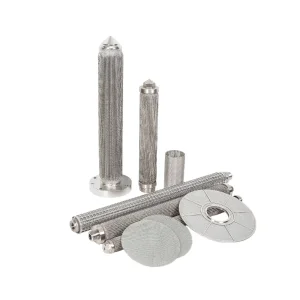
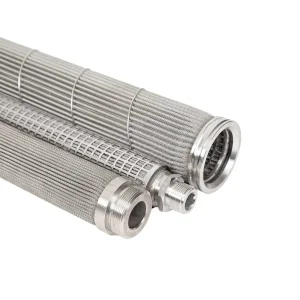
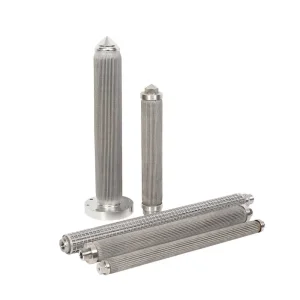
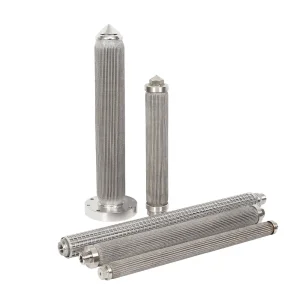
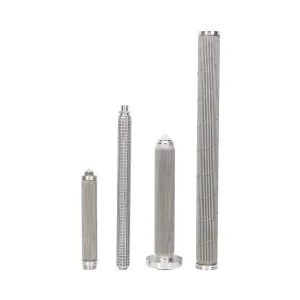
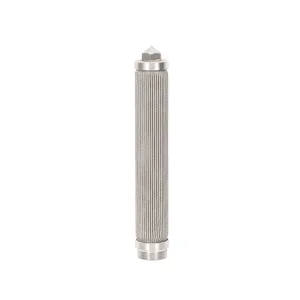
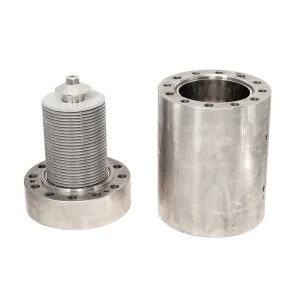
Polymer candle filter elements (CPF) are engineered cylindrical structures designed to maximize active filtration surface area within compact pressure vessels. By utilizing pleated multi-layer sintered stainless steel wire cloth or non-woven metal fiber felt, our candle filters deliver up to 500% more surface area compared to standard flat mesh screens of equivalent footprint.
| Filtration Media Type | Material Grade | Micron Rating Scope | Primary Industrial Application | Structural Benefit |
|---|---|---|---|---|
| Pleated Metal Fiber Felt | SUS 316L Stainless Steel | 3 μm – 40 μm | BOPET / BOPP Film & Fine-Denier Filament | High dirt-holding capacity, low initial $\Delta P$ |
| Multi-Layer Sintered Mesh | SUS 304 / SUS 316 | 10 μm – 150 μm | PET / PA6 Granulation & Monofilament Recycling | Exceptional mechanical strength, re-cleanable |
| Square-Weave Wire Cloth | SUS 304 Stainless Steel | 40 μm – 500 μm | PE/PP Heavy Duty Recycling & Pelletizing | Cost-effective, excellent mechanical rigidity |
| Leaf Disc Filter Elements | SUS 316L / Hastelloy | 5 μm – 60 μm | Continuous High-Viscosity Polymer Extrusion | Minimal dead zones, uniform melt residence time |
In high-viscosity applications (e.g., PET scrap recycling with intrinsic viscosity IV = 0.70-0.85 dL/g), flow distribution within the filter housing is critical. Dead zones promote thermal degradation, resulting in black spots (carbonized gel) in the final product. Our proprietary CFD-modeled flow distributors guarantee uniform fluid residence times across all candle elements, eliminating stagnant melt zones and preventing thermal breakdown.
For multinational enterprise buyers, procurement decisions extend beyond initial capital expenditure (CAPEX). Evaluating a Filament Recycling Machine Exporter requires a holistic analysis of Operational Expenditure (OPEX), continuous maintenance cycles, and component reusability.
High-permeability candle filters lower pressure drop ($\Delta P$) across the filter chamber. Decreasing $\Delta P$ by 5 MPa reduces extruder drive motor power consumption by up to 12%, delivering substantial annual electricity savings on 24/7 continuous lines.
Our SUS 316L candle elements withstand repeated off-line cleaning procedures—including vacuum calcination, TEG (triethylene glycol) boiling, and ultrasonic solvent baths—retaining over 95% of original permeability across 20+ cleaning cycles.
Equipped with dual-bolt hydraulic screen changers or continuous duplex CPF systems, filter element cleaning occurs without shutting down the main extrusion line—maximizing overall equipment effectiveness (OEE).
Transforming raw industrial plastic waste into high-precision, commercial-grade 3D printer filament or synthetic fiber requires a fully harmonized production chain. Pujiang HG Plastic Machinery provides integrated solutions engineered to streamline every stage of polymer reclamation:
Post-industrial scrap filaments, failed 3D prints, or purging blocks undergo heavy-duty single-shaft shredding followed by high-speed friction washing. Surface oils, dust, and non-polymeric debris are systematically extracted prior to drying.
The dried polymer is fed into a co-rotating twin-screw extruder featuring multi-stage vacuum degassing ports. Moisture, residual solvents, and low-molecular-weight volatiles are extracted under high vacuum (<10 mbar) to prevent hydrolysis and bubble formation during filament extrusion.
Before entering the spinning pump or filament die, the polymer melt flows through our custom-designed CPF system. Micro-gels, degraded additives, and metallic trace particles down to 5 microns are captured across high-durability SUS 304/316 pleated filter cartridges.
Extruded monofilament passes through dual-axis laser measurement systems that dynamically feedback to melt pump speed controls, maintaining dimensional accuracy within ±0.02mm before precision automatic tension spooling.
As an internationally recognized exporter, Pujiang HG Plastic Machinery maintains stringent compliance protocols to ensure seamless integration into European, North American, and Asian production environments.
All pressure vessels and polymer candle housings comply with CE Pressure Equipment Directive (PED 2014/68/EU), ASME Section VIII, and ISO 9001:2015 quality management standards.
Every batch of SUS 304 and SUS 316 stainless steel wire mesh and filter elements is delivered with full Material Test Certificates (MTC EN 10204 3.1) verifying chemical composition and corrosion resistance.
We provide rapid-dispatch spare parts logistics, emergency engineering consultation, and remote diagnostic support across 80+ countries to ensure uninterrupted production uptime.
The future of polymer recycling lies in real-time predictive analytics and dynamic melt quality monitoring. Future iterations of our extrusion systems incorporate smart pressure differential sensors and AI-assisted thermal algorithms that predict filter blinding before backpressure reaches critical thresholds.
Simultaneously, surface-modification technologies—such as plasma-enhanced physical vapor deposition (PVD) coatings on SUS 316 filter meshes—are reducing interfacial friction between high-viscosity polymer melts and stainless steel surfaces, yielding up to 15% lower pressure drops and extending element operational lifespans significantly.
A: Standard SUS 304 stainless steel provides excellent mechanical strength and thermal resistance for non-corrosive commodity polymers such as virgin PP, PE, and standard PS. However, for high-temperature recycling of PET, PA, PLA, or polymers that may release corrosive degradation products (e.g., trace organic acids or fluoropolymers), SUS 316L is strongly recommended due to its molybdenum content, offering superior pitting and intergranular corrosion resistance.
A: For 1.75mm and 2.85mm premium 3D printer filament recycling, we recommend a multi-stage filtration approach finishing with a 20 μm to 40 μm pleated candle filter or screen mesh. Filtering below 20 μm ensures zero clogging in standard 0.4mm 3D printer nozzles while maintaining manageable pressure drops ($\Delta P$) inside the extruder.
A: When using professional cleaning methods (such as vacuum calcination pyrolytic furnaces, TEG hydrolysis, followed by ultrasonic bath flushing), high-quality SUS 316L sintered fiber filter candles can typically undergo 15 to 20+ cleaning cycles before structural bubble point testing indicates media degradation.
A: Excessive pressure drop ($\Delta P$) is caused by particulate accumulation, cross-linked gel blinding, or operating at melt temperatures below optimal rheological flow thresholds. Mitigate this by upgrading to pleated high-surface-area candle elements, increasing melt temperature slightly (if thermally permissible), or switching to continuous duplex filter systems.
A: While extrusion lines achieve highest tensile strength with mono-material streams (e.g., pure PET or pure PA6), our integrated recycling systems can process co-extruded scraps when equipped with compatibilizers, vacuum degassing extruders, and multi-layered screen mesh continuous changers.
Browse additional OEM/ODM melt filtration components, extruder screen meshes, and CPF candle filters from our China export manufacturing facility.