Direct Factory Supply for Polymer Melt Extrusion, Spunbond Nonwovens & High-Temperature Applications
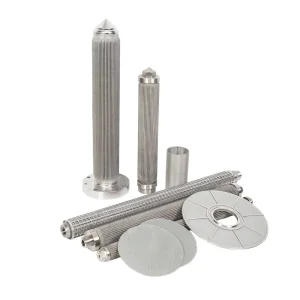
Navigating the Paradigm Shift in High-Viscosity Polymer Filtration Engineering
In modern industrial manufacturing, high-precision polymer filtration is the critical control point separating high-grade product yields from catastrophic extrusion line downtime. As global demand accelerates for biaxially oriented films (BOPP, BOPET, BOPA), technical nonwovens (Spunbond, Meltblown), and high-purity synthetic fibers, the role of famous filter screen factories has evolved from basic component suppliers to critical technology partners. Modern extrusion and polymer synthesis lines operate under extreme thermal conditions (up to 350°C) and high hydraulic pressures (exceeding 30 MPa or 300 bar). In these continuous-flow environments, microscopic contaminants—such as cross-linked gels, carbonized degradation products, metal oxides, and un-melted raw catalyst residue—can compromise output quality, cause fiber breakages, or tear ultra-thin films.
Key Engineering Insight: Polymer melt viscosity exhibits non-Newtonian, shear-thinning rheological behavior. Filter screen architectures must provide maximum effective surface area while maintaining minimal differential pressure ($\Delta P$) growth rate to eliminate polymer thermal degradation during dwell times.
The global commercial landscape for industrial filter screens is experiencing unprecedented growth driven by two primary macroeconomic forces: strict quality demands for high-barrier packaging films and the rapid transition toward circular plastic economies. Recycled Post-Consumer Resins (PCR) and Post-Industrial Resins (PIR) introduce significantly higher contamination loads compared to virgin polymers. Consequently, elite filter screen factories have innovated advanced multi-layer mesh packs, pleated candle filter cartridges, and continuous leaf disc assemblies capable of handling aggressive contaminant surges without causing pressure spikes.
| Filtration Media Type | Standard Material Grade | Micron Rating ($\mu m$) | Dirt Holding Capacity ($g/m^2$) | Primary Application Profile |
|---|---|---|---|---|
| Multi-Layer Sintered Wire Mesh | SUS 304 / 316L / Hastelloy C-276 | 2 – 200 | 120 – 180 | Plastic Extrusion, Recycled Pelletizing, Blow Molding |
| Metal Fiber Sintered Felt | 316L Stainless Steel Fiber | 3 – 60 | 350 – 600 | High-Purity BOPET Film, Spunbond Fiber, Synthetic Yarn |
| Pleated Candle Filter Cartridge (CPF) | SUS 316L Core & Mesh | 5 – 100 | 400 – 850 | Continuous Polymerization, Polyester (PET) & Nylon (PA) |
| Extended Area Leaf Disc Filters | SUS 316L Vacuum Sintered | 10 – 40 | 250 – 500 | Flat Die Film Lines, Optical Grade Polycarbonate Sheet |
Precision Metallurgy, Vacuum Sintering, and Geometric Weaving Precision
What differentiates world-class filter screen factories from standard wire mesh suppliers lies in metallurgical control, thermal treatment precision, and cleanroom assembly infrastructure. Premium filter element manufacturing relies on high-grade austenitic stainless steels, predominantly SUS 304 and SUS 316L. For highly corrosive chemical processing or extreme temperature continuous operations, specialized alloys such as Hastelloy C-276, Inconel 625, and Monel 400 are deployed.
Utilizing high-precision automated rapier looms to achieve exact pore geometry, uniform wire spacing, and zero physical defects in Plain Dutch Weave (PDW), Twilled Dutch Weave (TDW), and Reverse Dutch Weave (RDW) patterns.
Subjecting multi-layered wire mesh stacks to high-vacuum thermal sintering (exceeding 1100°C). Diffusion bonding fuses wire contact points without altering pore sizes, guaranteeing mechanical rigidity under 210 bar differential pressures.
Post-fabrication, filter components undergo multi-stage aqueous ultrasonic solvent degreasing and micro-particle removal. Inspected under Class 10,000 cleanroom environments to ensure zero residual lubricants or metallic dust.
The mechanics of filtration within continuous polymer melt systems involve complex depth-filtration dynamics. Stainless steel fiber felt, manufactured by needle-punching and sintering micro-fine stainless steel wires (down to 2 microns in diameter), creates a 3D labyrinth structure. This structure offers a porosity rating up to 85%, significantly outperforming traditional woven mesh which typically caps out at 35-45% open area. As a result, the dirt-holding capacity of sintered fiber felt candle elements is 3 to 5 times greater than standard mesh, dramatically extending stream life and lowering unit operation costs.
Unmatched Industrial Clustering, Scalability, and Global Cost-Performance Optimization
China's industrial ecosystem for filter screen manufacturing—centered in specialized clusters within Zhejiang and Jiangsu provinces—represents a formidable advantage in global polymer machinery supply chains. This concentration of raw material stainless steel wire drawers, precision weaving mills, vacuum sintering heat-treatment centers, and CNC laser cutting facilities enables unmatched production speed and economies of scale.
Leading Chinese filter factories have successfully closed the quality gap with legacy European manufacturers through heavy reinvestment in high-end automation. Modern facilities feature laser wire-cutting systems, robotic longitudinal seam welding, automated plasma end-cap joinery, and computerized bubble point test rigs (complying with ISO 4003). By integrating complete supply chain steps under one roof—from wire drawing to final helium leak testing—China filter screen suppliers offer superior delivery timelines (often reducing lead times from 12 weeks down to 2 weeks) alongside exceptional cost efficiency.
Tailored Filtration Engineering Across Key Processing Environments
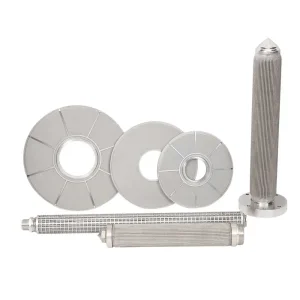
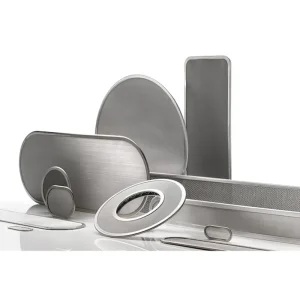
In biaxially oriented polypropylene (BOPP) and polyester (BOPET) film manufacturing, machines run continuously at web speeds exceeding 500 meters per minute. A single pinhole rupture caused by a 15-micron gel particle can tear the entire film web, resulting in thousands of dollars in lost production per hour. Famous filter screen factories design Extended Area Leaf Disc Filters (available in 12-inch and 7-inch outer diameters) for continuous slide-plate screen changers. The multi-layer sintered disc construction uses a outer coarse protection layer, an ultra-fine 5-micron fiber felt capture layer, and a rigid coarse drainage mesh layer to maintain smooth melt rheology under extreme pressures.
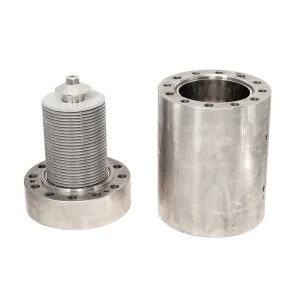
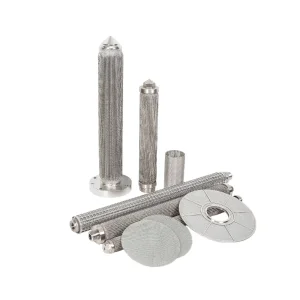
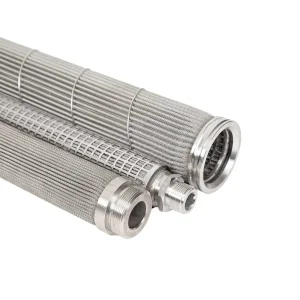
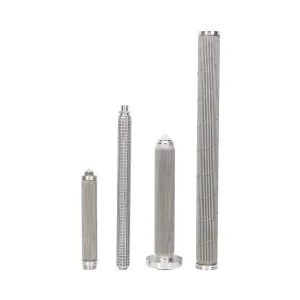
In polypropylene spunbond nonwoven lines, polymer melt is forced through thousands of micro-denier spinneret holes measuring between 0.15 mm and 0.6 mm in diameter. Unfiltered particulate contaminants rapidly clog spinneret capillaries, leading to "filament blowout" and uneven fabric surface weight distribution. Specialized SUS 304/316L Candle Filter Cartridges featuring pleated mesh cores are used inside Continuous Polymer Filters (CPF). The pleated structure increases active filtration surface area by up to 300% compared to smooth cylindrical designs, ensuring long operational cycles between off-line cleaning procedures.
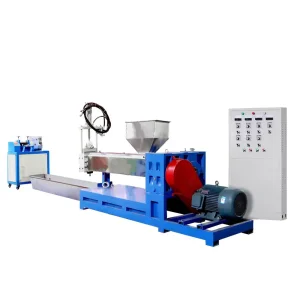
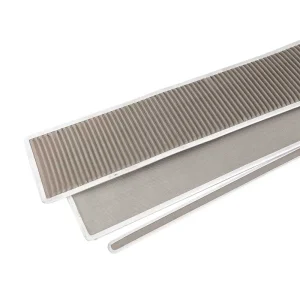
Recycling high-density polyethylene (HDPE), polypropylene (PP), and PET flakes presents extreme contamination challenges, including paper fibers, aluminum foil bits, sand, and degraded polymers. Standard single-layer extruder screens clog within minutes. Here, factories supply Continuous Belt Screen Filters and heavy-duty Multi-Layer Spot-Welded Screen Packs. Reinforced rim construction prevents screen blow-by under sudden pressure spikes, while specialized frame alloys withstand abrasion from silica particles present in recycled wash lines.
Nanofibers, Smart Sensor Integration, and Sustainable Filter Re-usability
The industrial filtration sector is undergoing rapid technological evolution. Advanced manufacturing techniques and smart plant ecosystems are reshaping how filter screen factories design next-generation filter elements.
Development of sub-micron metallic fibers engineered via electro-drawing. Provides absolute filtration down to 0.5 microns while maintaining high porosity and low initial pressure drop.
Embedding RFID chips and micro-pressure sensors directly into filter candle flanges to feed real-time structural health and clogging data to central PLC extrusion controls.
Eco-friendly solventless cleaning systems using Triethylene Glycol (TEG) vapor and controlled vacuum pyrolysis to extend filter element reuse cycles up to 20+ times without structural metal fatigue.
Specialized nano-passivated ceramic and fluoropolymer surface treatments that prevent sticky biopolymers (such as PLA, PHA, and PBAT) from adhering to metal wire surfaces during processing.
Rigorous International Standards Guaranteeing Operational Safety and Integrity
To comply with stringent international processing safety regulations, leading filter screen manufacturers maintain comprehensive quality assurance protocols. Every batch of wire mesh and assembled filter candles must undergo standardized physical testing before dispatch.
Verifies absolute pore size and structural integrity by measuring the pressure at which the first air bubble emerges from a submerged filter element. Ensures zero manufacturing defects or wire gaps.
Subjecting sample filter cartridges to extreme differential pressures (exceeding 210 bar) to prove structural resistance against hydraulic collapse during unexpected line cold-starts.
Products strictly adhere to CE Mark standards, REACH chemical safety protocols, RoHS heavy-metal restrictions, and FDA/EU food contact regulations for medical and packaging applications.
Expert Guidance on Filter Selection, Maintenance, and Performance Optimization
SUS 304 provides excellent structural strength and basic corrosion resistance for standard polyolefins (PP, PE, PS) operating under non-corrosive melt environments. However, for polymers processed at higher temperatures (above 280°C), polymers releasing acidic byproducts (such as PVC or fluoropolymers), or applications requiring chemical cleaning with harsh solvents/salts, SUS 316L is mandatory. SUS 316L contains 2-3% Molybdenum, drastically improving resistance to pitting corrosion and intergranular degradation during continuous operation and TEG cleaning cycles.
Woven wire mesh consists of systematically interlaced wires forming a 2D geometric grid. It offers precise pore sizes and easy surface cleaning but has limited dirt holding capacity. Metal fiber felt consists of non-woven 3D micro-metal fibers sintered together under high vacuum. Fiber felt provides a porous 3D depth filtration matrix with up to 85% open area, offering 3 to 5 times the contaminant holding capacity of woven mesh, lower initial differential pressure ($\Delta P$), and longer continuous processing lifespans.
Standard cleaning protocols involve a multi-step thermal and chemical process: First, perform Vacuum Pyrolysis (Calcination) at 450°C–480°C to thermally decompose residual polymers into dry carbon ash. Second, subject elements to a Triethylene Glycol (TEG) boiling bath at 280°C to dissolve degraded organic compounds. Third, conduct Aqueous Ultrasonic Cleaning using mild nitric or citric acid solutions to flush out inorganic particles. Finally, conduct a high-pressure reverse air/water flush and perform a Bubble Point Test (ISO 4003) to confirm 100% pore recovery.
Screen pack blowout occurs when differential pressure ($\Delta P$) exceeds the mechanical yield strength of the wire mesh stack, causing the fine filtration layer to rupture or displace. This is usually caused by inadequate coarse backing mesh support, improper spot-welding alignment, or selecting wire wire diameters too thin for peak operational pressures. Famous filter screen factories prevent blowout by designing multi-layer spot-welded packs with heavy Dutch weave backing meshes and rigid stainless steel outer spot-welded rims.
Extremely fine micron ratings create higher shear stress as viscous polymer chains squeeze through small pore channels. Excessive shear rate can degrade sensitive polymer molecular chains, lowering intrinsic viscosity (IV) and reducing mechanical properties of final films or fibers. Top factories perform rheological calculations to balance micron rating against total available surface area (e.g., pleating), ensuring local melt velocity through pores remains within optimal shear thresholds (<100 $s^{-1}$).
When requesting custom OEM manufacturing, supply: (1) Target polymer type and operating viscosity/temperature, (2) Nominal or absolute micron rating requirement, (3) Key physical dimensions including outer diameter (OD), inner diameter (ID), total length, and flange connection design (e.g., NPT thread, tie-rod seal, 222/226 bayonet), (4) Maximum operational differential pressure threshold, and (5) Expected cleaning method (to select optimal alloy grades).
Direct Factory Supply for Polymer Melt Extrusion, Spunbond Nonwovens & High-Temperature Applications