Direct Factory Supply for Chemical Fiber Extrusion, BOPP Film Lines, and High-Temperature Industrial Filtration
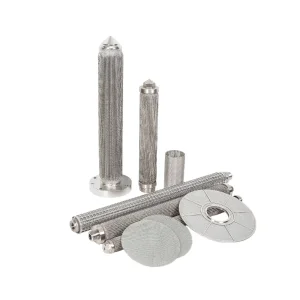
In modern petrochemistry, synthetic fiber manufacturing, and continuous plastic film extrusion, continuous filtration is not merely a purification step—it is a core determinant of continuous operational efficiency, tensile strength, optical clarity, and zero-defect output. Polymer melts under processing conditions exhibit extreme non-Newtonian rheological behavior, characterized by high temperatures (frequently ranging from 220°C to over 360°C), elevated operating pressures (up to 210 bar / 3000 psi), and ultra-high dynamic viscosities ranging from 100 to over 10,000 Pa·s.
Industrial procurement teams, process engineers, and plant operations directors searching for "Famous Filtration Cartridge Factories & Exporters" are typically seeking far more than simple commodity specifications. User intent mining reveals an underlying technical demand for high-gain information: understanding how element geometry (pleated vs. cylindrical), metallurgical composition (SUS 304, SUS 316L, Hastelloy), and sintered media structures prevent catastrophic shear stress, minimize differential pressure (ΔP) spikes, avoid gel breakdown, and maximize dirty-holding capacity before clean-in-place (CIP) or furnace burn-off cycles are required.
Over the past two decades, China’s industrial manufacturing infrastructure has evolved from low-cost assembly to world-leading precision engineering, particularly within specialized equipment sectors like polymer filtration and recycling machinery. Leading manufacturing hubs in Zhejiang, such as Pujiang County, have unified upstream stainless steel metallurgy, CNC micro-machining, precision vacuum sintering furnaces, and advanced ultrasonic testing under concentrated industrial clusters.
Direct procurement of high-grade SUS 304/316L wire cloth and sintered fiber felts drastically reduces manufacturing lead times while guaranteeing strict chemical alloy compliance.
High-vacuum diffusion bonding eliminates organic binders, creating monolithic metal structures that tolerate extreme temperature cycling without media degradation.
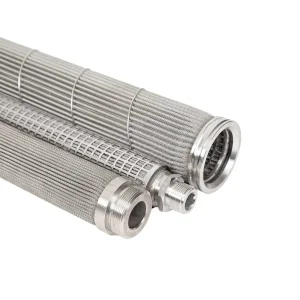
Engineers can rapidly customize end-cap connections (tie-rod, threaded, NPT, bayonet, hexagonal), pleat depths, outer support cages, and internal core reinforcements based on custom CAD drawings.
By eliminating middleman distributor margins, Tier-1 Chinese exporters provide global polymer refiners and machinery OEMs with up to 40% total cost of ownership (TCO) savings without sacrificing dimensional tolerances or micro-rating integrity.
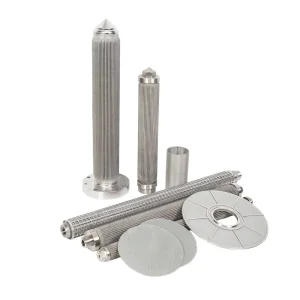
Selecting the correct filtration geometry requires matching process fluid parameters with structural media capabilities. The table below outlines standard performance thresholds engineered across primary filtration formats:
| Filter Element Type | Filter Media Type | Micron Rating (μm) | Operating Temp | Max ΔP Rating | Primary Industrial Application |
|---|---|---|---|---|---|
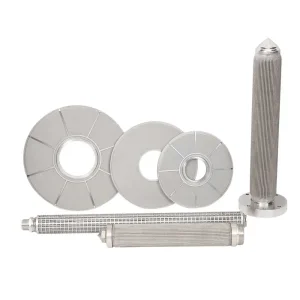
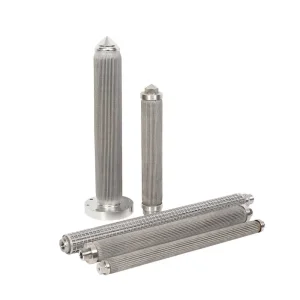
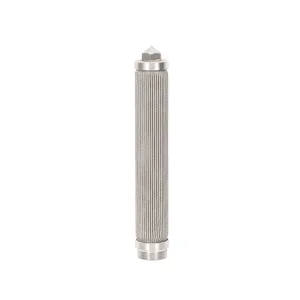
| Pleated Candle Filter | 316L Sintered Fiber Felt / Wire Mesh | 3 - 60 μm | Up to 380°C | 210 bar | PET/Nylon Spinning, BOPP Film Lines |
| Cylindrical Candle Filter | Multi-Layer SUS 304 Woven Wire Cloth | 10 - 200 μm | Up to 340°C | 150 bar | Polymer Melt Resins, Masterbatch Extrusion |
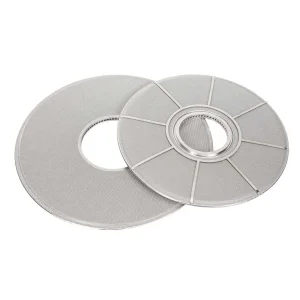
| Leaf Disc Filter (Win Series) | Sintered Metal Mesh Composite | 5 - 100 μm | Up to 350°C | 175 bar | BOPET, Flat Die Sheet Extrusion, CPP Film |
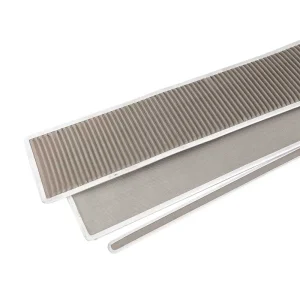
| Extruder Screen Mesh | Multi-Layer Plain/Twill Dutch Weave | 20 - 500 μm | Up to 300°C | 80 bar | Plastic Recycling, Granulation Lines |
Industrial filtration requirements vary significantly across manufacturing sectors. Below are localized application scenarios where specialized filtration cartridges and equipment deliver measurable productivity gains:
In PET, PA6, PA66, and PP melt spinning operations, microscopic non-melted gel particles or degraded carbon deposits can cause filament breakage at the spinneret. Sintered metal felt candle filter cartridges—featuring continuous gradient porosity—capture deformable gels under intense flow stream pressure, extending spinneret pack life and reducing costly plant downtime.
High-speed film stretching machinery demands ultra-clean polymer melts. Any particulate impurity greater than 10 microns can trigger web breaks or optical haze defects in transparent packaging films. High-surface-area leaf disc filters (often used in continuous polymer filtration systems) provide uniform radial melt distribution with minimal dead zones, preventing thermal degradation of heat-sensitive polymers.
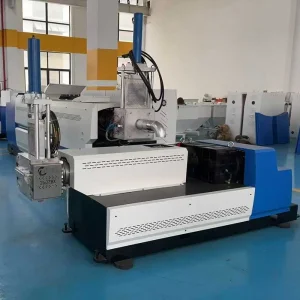
With strict global ESG mandates, plastic recycling granulating machines require robust continuous melt screen changers. Specialized multi-layer extruder screen mesh filters handle heavily contaminated recycled feedstocks (PP film, PE bottle flakes, agricultural films), capturing aluminum specks, paper fibers, and degraded polyolefins during high-torque twin-screw extrusion.
Navigating cross-border supply chains requires assurance regarding metallurgical integrity, quality control, and regulatory compliance. Tier-1 exporters like Pujiang HG Plastic Machinery establish robust quality management frameworks aligned with international standards:
Every batch of raw wire mesh undergoes PMI (Positive Material Identification) via XRF spectrometers to verify exact Cr-Ni-Mo elemental ratios before production.
100% of manufactured candle filter elements undergo ISO 4003 bubble point testing to guarantee maximum pore size distribution and zero structural bypass seams.
All stainless steel elements are passivated and degreased, meeting FDA 21 CFR 177.2600 standards for food-grade packaging film lines.
Localized support includes rapid dispatch of replacement elements, emergency technical CAD consulting within 24 hours, and custom packaging designed to prevent ocean freight corrosion or vibration damage during transit.
Explore Extended Technical Specifications for Polymer Screen Mesh, Candle Filters, and Recycling Equipment