Explore high-performance filter elements engineered for continuous melt filtration, high pressure stability, and extreme viscosity applications.
In high-viscosity polymer extrusion, synthetic fiber spinning, and continuous film production, the purity of the melt stream directly determines final product structural integrity, optical clarity, and tensile strength. Leading filtration screens manufacturers & companies operate at the intersection of advanced metallurgy, precision weaving, and fluid dynamic engineering. A microscopic defect or uncontrolled pressure drop (ΔP) in a filtration pack can lead to catastrophic spinneret blockage, film web rupture, or premature equipment wear.
This comprehensive industry whitepaper provides global procurement heads, process engineers, and plant operations managers with an authoritative benchmark guide. It explores the technical parameters governing wire mesh selection, multi-layer sintered disc performance, and candle filter cartridge longevity—while dissecting the structural supply chain advantages delivered by specialized Chinese manufacturing hubs like Pujiang HG Plastic Machinery Co., Ltd.
Unlike rigid inorganic particles, cross-linked polymer gels and degraded resin specks deform under high shear stress. Premium melt filtration screens utilize gradient-density sintered metal fiber felts and specialized Dutch weave wire cloth to capture viscoelastic gels without triggering severe pressure spikes across continuous continuous polymer filtration (CPF) systems.
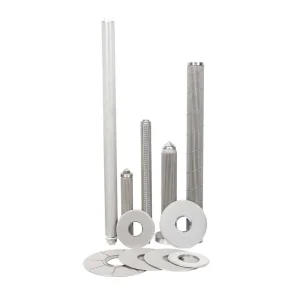
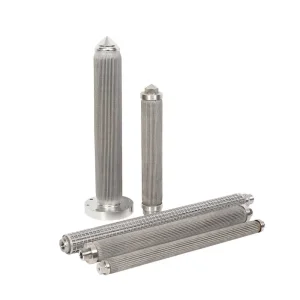
Production downtime in BOPET film lines or nonwoven spunbond plants costs thousands of dollars per hour. Industrial-grade candle filters and leaf discs manufactured from high-grade SUS 316L allow multiple pyrolysis, TEG (Triethylene Glycol) boiling, or ultrasonic cleaning cycles, delivering an extended operational lifespan of up to 5 to 7 operational years.
Selecting the correct filtration screen medium requires balancing corrosion resistance, mechanical strength under thermal stress (up to 350°C), pore geometry, and dirt holding capacity (DHC). Sourcing managers must evaluate raw material heat numbers and alloy certification to guarantee performance integrity under continuous shear.
| Material Grade | Composition Key Highlights | Operating Temp Range | Corrosion & Acid Resistance | Primary Industrial Application |
|---|---|---|---|---|
| AISI 304 (SUS 304) | 18% Cr / 8% Ni | Up to 300°C | Standard industrial rating | Standard polyolefin recycling (PP/PE), masterbatch compounding. |
| AISI 316L (SUS 316L) | 16-18% Cr / 10-14% Ni / 2-3% Mo (Low Carbon) | Up to 400°C | Superior pitting & organic acid resistance | BOPET film, PET spinning, high-viscosity polyamide, medical nonwovens. |
| Hastelloy C-276 | 57% Ni / 16% Cr / 16% Mo / 4% W | Up to 550°C | Extreme acidic & halogenated gas resistance | Fluoropolymer (PVDF/PTFE) extrusion, corrosive chemical processing. |
| Inconel 601 / 625 | High Nickel-Chromium Matrix | Up to 650°C | Exceptional thermal oxidation resistance | Ultra-high molecular weight polyethylene (UHMWPE), specialty alloys. |
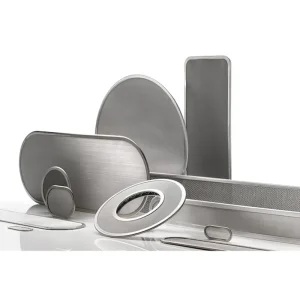
Plain weave, twill weave, and Dutch twill weave stainless wire mesh provide exact pore uniformity for standard extruder screen changers, spot weld packs, and rimmed screen discs.
Diffusion-bonded multi-layer stainless steel mesh combines structural rigidity with precise filtration cut-offs, preventing wire migration under high pressure differentials.
Non-woven 3D fiber matrices offer up to 80% porosity, delivering 2x to 3x higher dirt holding capacity and lower initial ΔP compared to woven wire mesh.
Global plastic extrusion OEM manufacturers and petrochemical enterprises increasingly source filtration components from top-tier Chinese factories. Over the last two decades, suppliers such as Pujiang HG Plastic Machinery Co., Ltd. have upgraded from basic wire weaving to state-of-the-art automated vacuum sintering, laser cutting, and robotic plasma welding centers.
China’s mature industrial clusters in Zhejiang and Jiangsu integrate high-purity stainless wire drawing, micro-weaving, vacuum sintering, and CNC machining within tight geographic radiuses. This end-to-end integration reduces lead times for custom candle filters and leaf discs from months to days, while maintaining strict cost control.
Leading Chinese export factories operate under ISO 9001:2015 quality management systems. Every batch of filtration media undergoes strict verification before export dispatch:
Filtration screens must be tailored to specific polymer dynamics, thermal histories, and contamination levels. Below are the primary industrial operating environments where specialized filtration elements are deployed:
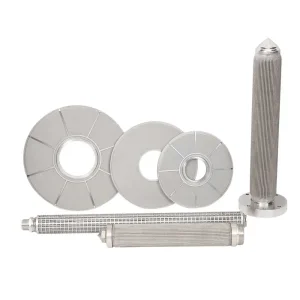
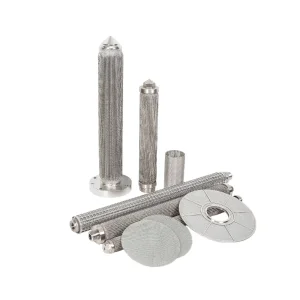
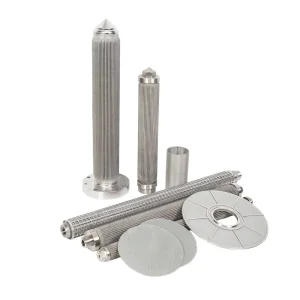
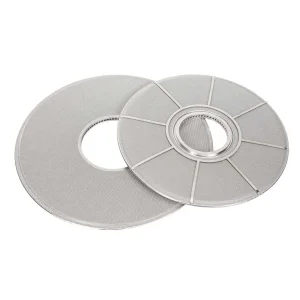
Biaxially Oriented Polyethylene Terephthalate (BOPET) and Polypropylene (BOPP) lines require ultra-clean polymer melt to eliminate pinholes and tear lines during high-speed stretching. Polymer Leaf Disc Filters (hard disk or soft disk design) provide high surface area within compact CPF housings.
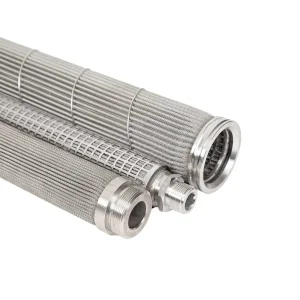
Spunbond nonwoven machinery demands continuous filtration of high-MFI polypropylene melt. Pleated Polymer Candle Filters maximize filtration area, reducing shear stress on fragile polymer chains and extending continuous run-time up to 60-90 continuous days.
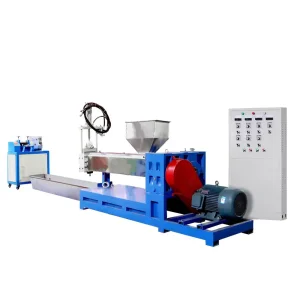
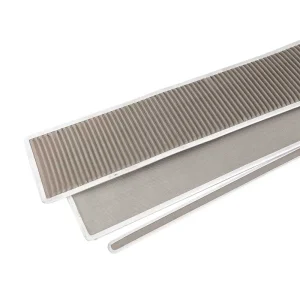
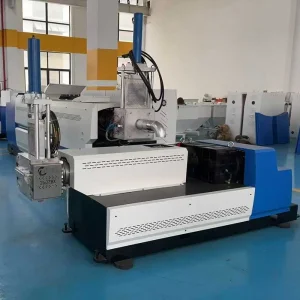
Recycling heavily contaminated PP, PE, or PET flakes requires heavy-duty continuous auto-backwash screen changers and multi-layer Extruder Screen Mesh Belts. These screens handle high paper, foil, and wood ash contamination loads without line shutdown.
For multinational enterprise buyers, product compliance and quick technical response are non-negotiable. Leading filtration screen suppliers maintain comprehensive certification packages and dedicated engineering teams to support custom retrofit projects.
Exported stainless steel filtration media comply with major international environmental and safety standards:
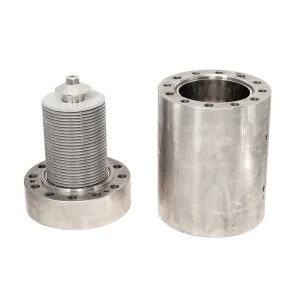
Custom filter housings and non-standard candle filter sizes often require rapid turnarounds to prevent factory downtime:
Driven by global sustainability mandates and the transition toward bio-based plastics (PLA, PBAT) alongside chemical recycling (pyrolysis oil purification), the filtration screens industry is undergoing rapid technological evolution:
Sub-micron pore structures engineered specifically for medical-grade bio-polymers and ultra-thin capacitor films, achieving 1μm absolute rating with minimal flow restriction.
Integration of real-time differential pressure (ΔP) sensor arrays and AI analytics to predict filter cake buildup and optimize continuous backwash timing automatically.
Surface-treated stainless media that resist polymer adhesion, allowing 98%+ flow rate recovery after thermal calcination and ultrasonic chemical baths.
Technical guidance from our engineering team to assist in product selection, maintenance, and specification verification.
Browse our complete lineup of leaf disc filters, replacement cartridges, wire mesh filters, and complete plastic recycling machinery lines.