1 / 3
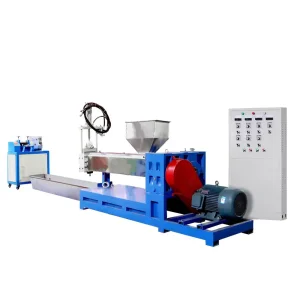
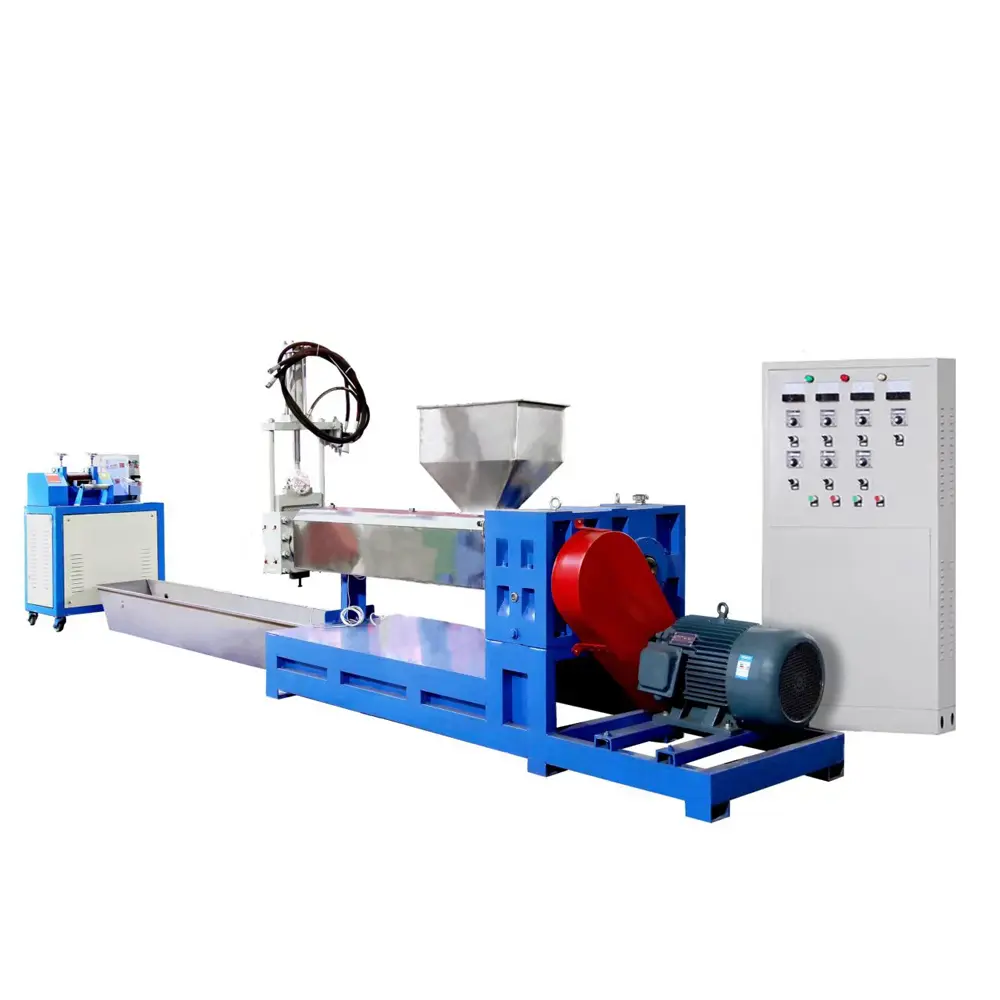
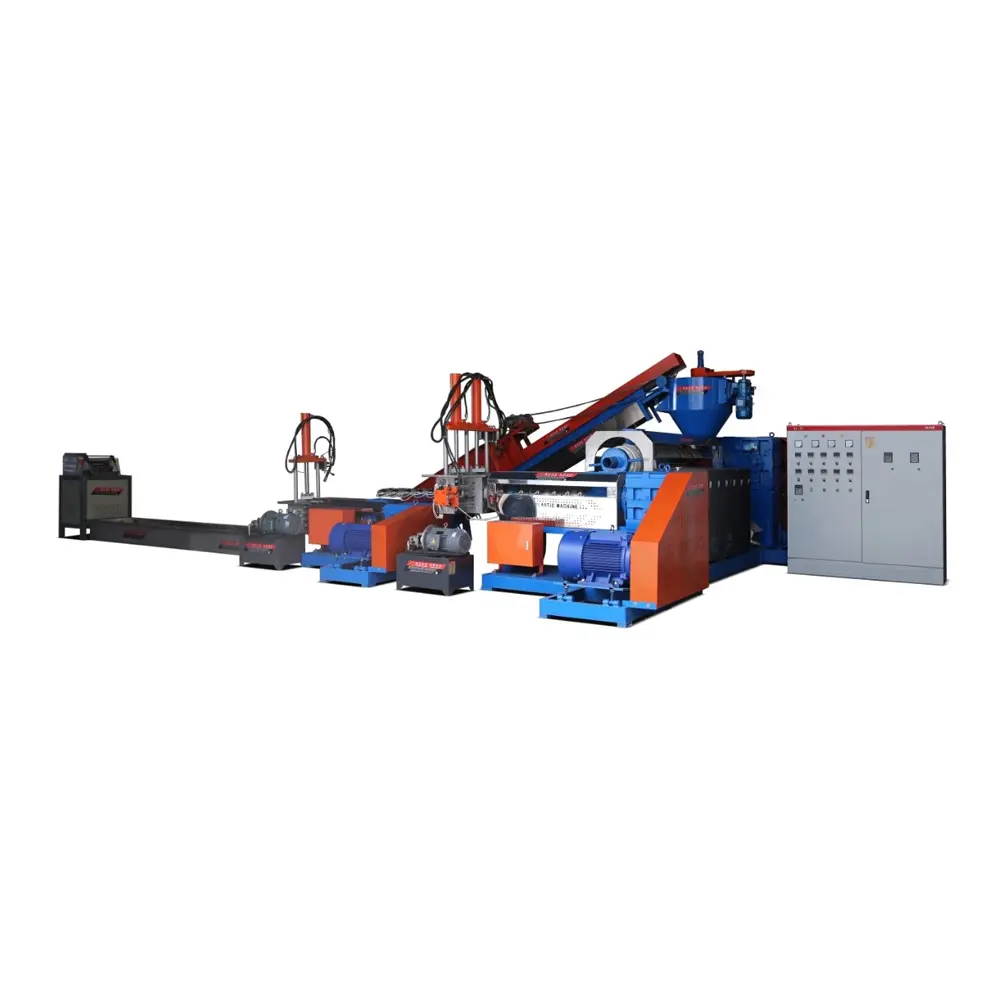
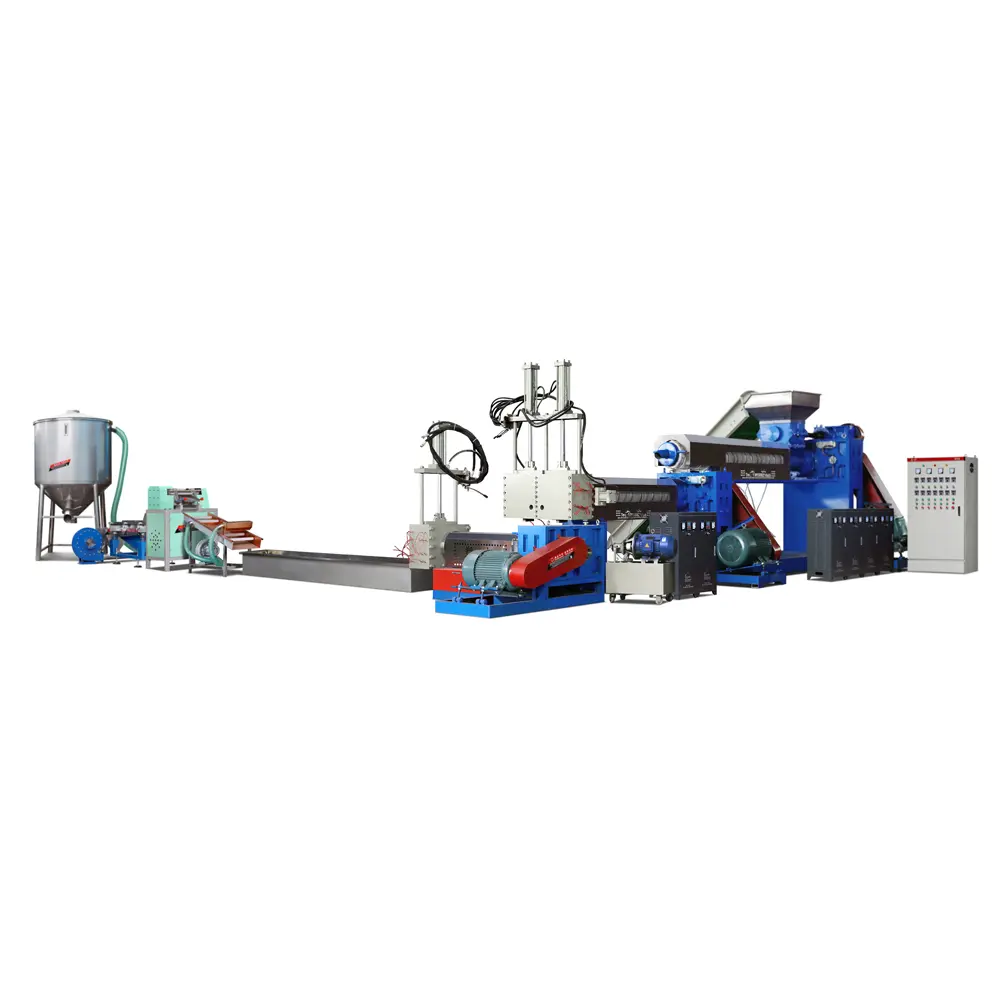
The plastic waste is fed into an extruder, where it is melted and formed into a continuous strand.
The melted PP is cooled, often using cold water or air cooling systems to solidify the strands.
The cooled strands are chopped into small pellets using a pelletizing die or cutter.
Any excess moisture is removed from the pellets to prepare them for further use or sale.
| Model | Diameter (mm) | Length (mm) | Power (kw) | Temp Control | Output (T/24H) |
| 100 | 100 | 2800 | 30 | 6 | 4 ton |
| 110 | 110 | 3200 | 37 | 6 | 5 ton |
| 120 | 120 | 3200 | 45 | 6 | 6 ton |
| 130 | 130 | 3200 | 55 | 7 | 7–8 ton |
| 140 | 140 | 3800 | 75 | 7 | 8–9 ton |
| 150 | 150 | 4200 | 90 | 7 | 10–11 ton |