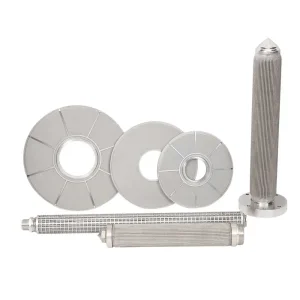
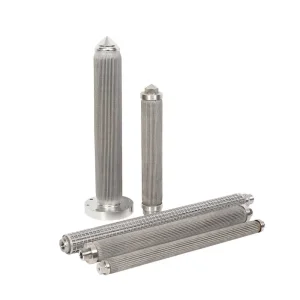
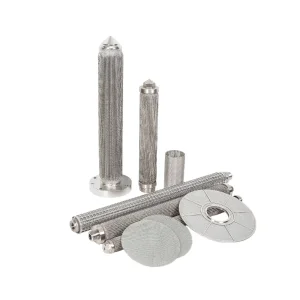
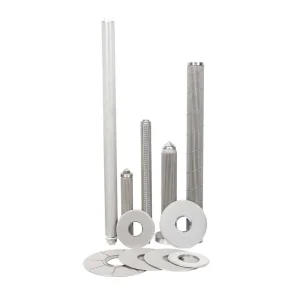
Explore our factory-direct leaf disc filters, polymer candle elements, and recycling filtration hardware engineered for high-viscosity operational stability.
Understanding the cost dynamics of high-performance polymer leaf disc filters requires a deep evaluation of metallurgy, micro-sintering precision, operational differential pressure, and long-term cleanability.
Leaf filter unit procurement price represents less than 15% of total operational cost over a 5-year cycle. Advanced China exporters utilize automated laser-welding and high-vacuum sintering to increase backwash cycle survival rate, dropping real TCO by up to 38% compared to non-sintered wire mesh alternatives.
Industrial polymer melt systems operates under extreme stress, frequently exceeding differential pressures ($\Delta P$) of 200 to 250 bar at continuous process temperatures up to 340°C. Structural integrity of the inner drainage hub directly governs downstream yield quality.
Modern BOPP, BOPET, and BOPA film lines demand precise rating tolerances (3μm to 40μm absolute). Multi-layered sintered metal fiber media capture soft gels and hard carbonized particles without causing melt shear degradation or pressure spikes.
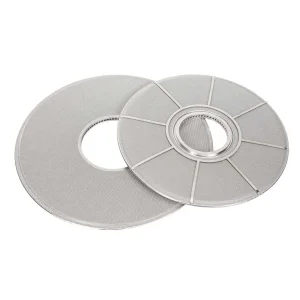
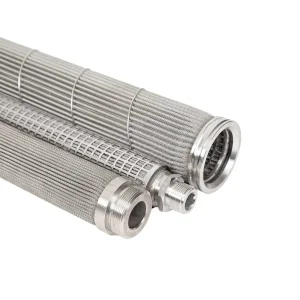
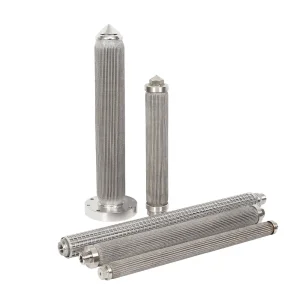
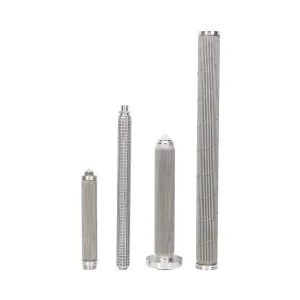
While candle filter cartridges offer exceptional surface area for vertical housing setups, leaf disc filters (specifically flat "hard rim" and "soft pack" geometry) deliver superior hydrodynamic flow distribution in continuous polymer filtration equipment. Leaf disc filters maximize filter surface area within a compact horizontal vessel, ensuring uniform residence time across all flow paths and preventing localized thermal degradation of delicate polymers like PET, PA66, and PEEK.
Shift in multinational procurement strategies toward specialized Chinese manufacturing hubs for high-viscosity melt filtration hardware.
Global film converters and fiber spinners face escalating energy costs and tight margins. Sourcing leaf filter discs from certified tier-1 factories in China provides a 40% to 60% procurement cost reduction without compromising metallurgy or micron absolute ratings.
Leading Chinese exporters have integrated full spectrum quality control systems—including PMI (Positive Material Identification) spectrum testing, bubble point integrity verification (ASTM E128), and zero-defect hub tolerance machining to satisfy EU/FDA regulatory standards.
OEM customization is critical for retrofit projects. Factories capable of delivering custom hub geometry (recessed, flat, sector, or step-hub designs) within short 2-week lead times gain a crucial competitive advantage in minimizing plant downtime during planned turnarounds.
A granular analysis of manufacturing cost drivers, material choices, and unit pricing variables across factory manufacturing processes.
| Cost Component | Primary Material / Technical Spec | Impact on Unit Cost | Performance & Longevity Effect |
|---|---|---|---|
| Filter Media Type | Stainless Steel Sintered Fiber Felt (316L) vs. Woven Wire Mesh | High (30% - 40% of Total) | Sintered felt offers 2-3x dirt holding capacity and lower initial $\Delta P$, reducing operational energy consumption. |
| Hub Geometry & Machining | CNC Machined 316L Stainless Steel Hubs (Hard Rim / Recessed) | Medium (20% - 25%) | Precision-machined hubs prevent fluid bypass and maintain structural alignment under intense hydraulic pressure spikes. |
| Vacuum Sintering Process | High-Temperature Vacuum Furnace Sintering (1000°C+) | Medium (15% - 20%) | Fuses wire intersections permanently, preventing media migration and fiber shedding under repetitive backwashing. |
| Welding & Assembly Tech | Automated Micro-Plasma or TIG Edge Welding | Low-Medium (10% - 15%) | Guarantees 100% leak-proof perimeter sealing without introducing thermal stress distortion or brittle micro-cracks. |
| Quality Assurance & Testing | Bubble Point Integrity (ISO 4003) & Spectrometry | Low (5% - 8%) | Ensures absolute pore size compliance and verifies material grade, eliminating catastrophic melt line failures. |
Purchasing directly from established China factories eliminates 25-45% trader markups. Furthermore, direct engineering communication ensures exact drawing verification, minimizing expensive dimensional discrepancies during installation in continuous screen changers or duplex filter systems.
High-precision filtration starts with rigorous alloy selection and multi-layer structural assembly.
Low-carbon AISI 316L provides exceptional resistance to intergranular corrosion caused by thermal degradation byproducts in PET, PA, and PBT polymer melts. Crucial for maintaining structural integrity through repeated pyrolysis cleaning cycles.
Constructed by randomly laying microscopic stainless steel fibers (1μm - 40μm in diameter) followed by high-vacuum sintering. Yields an open 3D porous structure with up to 80% porosity, maximizing dirt capacity while keeping initial pressure drop minimal.
Leaf discs feature symmetrical multi-layer construction: protective outer mesh layer, control filtration layer, sub-layer cushion, and a heavy inner drainage mesh. This configuration guarantees uniform radial flow distribution without collapsing core channels.
Ensuring seamless international integration through rigorous testing protocols, custom packaging, and field technical support.
All factory leaf filters comply strictly with ISO 9001:2015 standards. Material melt suitability is validated according to FDA 21 CFR 177.2600 for food packaging film extrusion applications (BOPP / PET food containers).
Top China exporters provide detailed cleaning workflows—including Solvent Extraction, TEG (Triethylene Glycol) Boiling, Vacuum Pyrolysis Furnaces, and Ultrasonic Bathing—allowing filters to be reused up to 15-20 times safely.
Leaf filter discs are ultra-sonically cleaned, vacuum-sealed in cleanroom environments (Class 10,000), and packed into custom wooden crates with rust-inhibiting VCI film to ensure pristine condition upon arrival at customer manufacturing plants globally.
Key technological transformations driving the next decade of industrial polymer melt filtration systems.
Integration of differential pressure sensors with machine learning algorithms to predict exact leaf filter clog points, optimizing backwash timing and preventing un-scheduled extruder line shutdowns.
As global sustainability regulations demand higher recycled content (rPET / rPP), leaf filters are evolving to handle higher impurity burdens from post-consumer waste using gradient density multi-stage sintered media.
3D metal printing (SLM technology) is opening new possibilities for internal hub fluid channel geometry, eliminating dead zones, lowering shear stress, and reducing resin changeover time by up to 50%.
Expert technical answers regarding leaf filter costs, material selection, reusability, and procurement strategies.
Factory-direct unit pricing generally ranges between $35 and $180 per disc depending on diameter (e.g., 7-inch vs 12-inch), hub design (hard rim vs soft pack), micron absolute rating, and media type (sintered wire mesh vs metal fiber felt). High-volume OEM production orders significantly lower per-unit shipping and tooling costs.
Sintered metal fiber felt offers up to 3 times greater dirt-holding capacity and higher porosity (up to 80%) compared to plain woven mesh. While initial procurement cost for sintered felt is 20-30% higher, it yields much longer continuous operation cycles, fewer filter changeovers, and lower overall total operational cost (TCO).
When cleaned using proper industrial procedures such as TEG boiling, vacuum pyrolysis furnaces, and ultrasonic baths, high-quality 316L stainless steel leaf filter discs can typically be reused 15 to 20 times. Each batch should undergo a bubble point integrity test prior to re-installation to verify pore structure.
To manufacture custom leaf filters, factories require: Outer Diameter (OD), Inner Hub Diameter (ID), Hub Height/Thickness, Target Micron Rating (e.g., 5μm absolute), Polymer Type (PET, PP, PA66), Working Temperature, Operating Pressure/$\Delta P$ limits, and preferred Stainless Steel Alloy (SUS 304 or 316L).
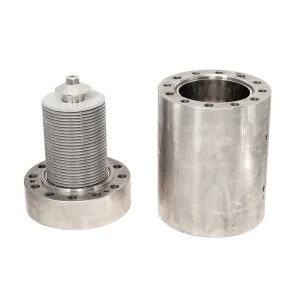
Leaf discs are stacked tightly on a central collecting shaft inside the filter vessel. If the hub mating surfaces deviate by even 0.05mm, thermal expansion under 300°C melt temperatures can cause polymer bypass around the gaskets, leading to unfiltered melt contaminating the final extrusion line.
Explore our full line of candle filters, leaf discs, and recycling equipment engineered for top-tier industrial performance.