Explore our benchmark-setting plastic granulating machinery, precision continuous screen changers, and high-viscosity candle filter systems designed for zero-down-time polymer extrusion lines.
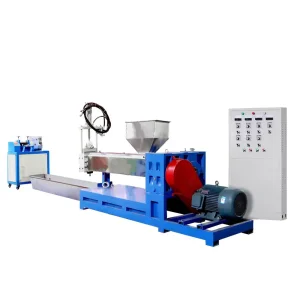
In the era of circular economies, mandatory post-consumer recycled (PCR) content mandates, and stringent ESG compliance, the global plastic processing sector is undergoing a paradigm shift. Modern manufacturing lines require more than rudimentary shredding and pelletizing; they demand high-precision polymer melt homogenization, thermal degradation prevention, and continuous microscopic impurity extraction.
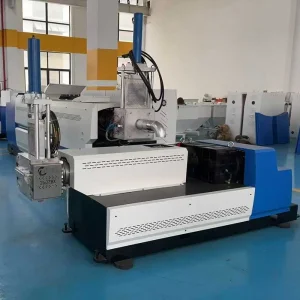
As a world-leading Famous Plastic Granulator Machine Factory & Company, Pujiang HG Plastic Machinery Co., Ltd. integrates state-of-the-art twin-screw extrusion geometry with advanced stainless steel melt filtration systems (such as high-viscosity SUS 304/316 candle filter elements and precision leaf discs). This technical whitepaper analyzes the key engineering drivers, operational efficiencies, and procurement strategies defining the global polymer recycling market today.
The international market for plastic granulating machinery and pelletizing systems is projected to exceed $3.8 Billion by 2030, driven by European Union PPWR regulations, US state-level recycled content laws, and Asian manufacturing modernization. Plastic granulator machines serve as the pivotal nexus converting low-density, contaminated post-industrial film rolls, agricultural films, rigid polyolefin scrap, and synthetic fibers into high-density, uniform resin pellets ready for re-injection molding or blown film extrusion.
Single-stage extruders excel in clean post-industrial regrind (PP, PE, ABS, PS). However, for heavily printed, moisture-laden, or contaminated post-consumer plastic scrap, double-stage (mother-baby) cascade granulators are mandatory to allow dual multi-vent degassing and primary/secondary melt screen filtration.
Selection of die-face cutting systems directly dictates pellet geometry and bulk density. Water-ring cutting is cost-effective for polyolefins (PE/PP); strand pelletizing handles high-viscosity engineering thermoplastics (PA66, PET, PC); underwater pelletizing provides spherical precision for high-throughput polyolefin plants.
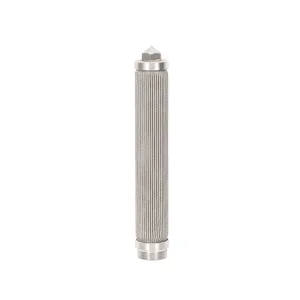
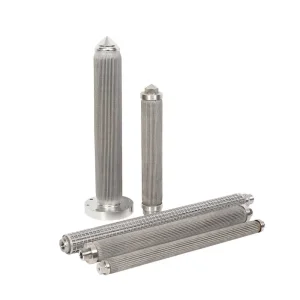
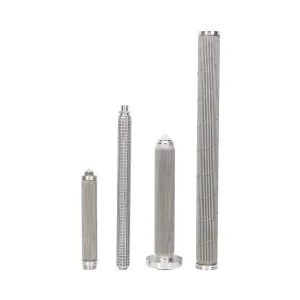
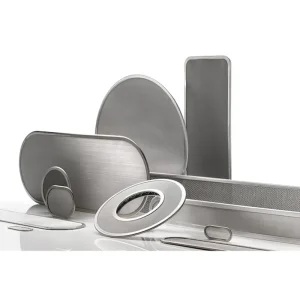
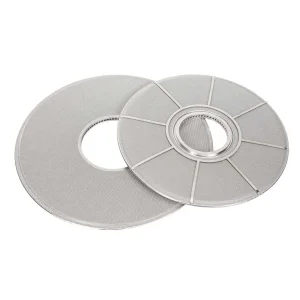
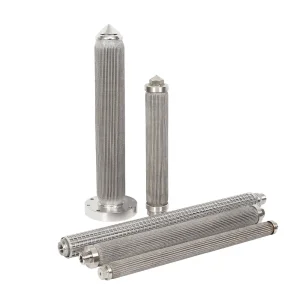
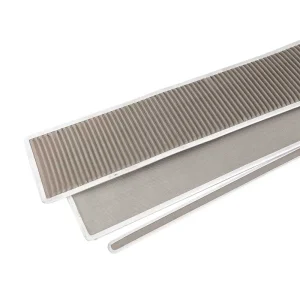
A granulator is only as good as its filtration capability. Without SUS 304/316 fine mesh screens, candle filter cartridges, or leaf disc assemblies, un-melted gels, aluminum foil particles, and fiber contaminants ruin final product tensile strength and cause frequent nozzle clogging.
China’s polymer machinery manufacturing sector has evolved from low-cost assembly to high-precision engineering mastery. Factories situated in Zhejiang and Jiangsu industrial corridors offer unmatched supply-chain density, advanced metallurgy, and rapid customization cycles.
From barrel nitriding (38CrMoAlA steel with bimetallic alloy linings) to CNC precision wire cutting of stainless steel filter screens, Chinese factories control every production step, eliminating component delays and reducing total machine lead times by up to 50% compared to European counterparts.
Global recycling operators achieve significantly faster Return on Investment (ROI) by pairing Chinese heavy-duty granulators and continuous melt filters with Western electronic automation (Siemens PLC, Schneider electrics, ABB drives).
Whether an enterprise requires a specific L/D ratio (such as 36:1 or 40:1), customized vacuum degas ports, hydraulic non-stop screen changers, or custom micron-rated candle filter elements, China OEM factories provide tailored engineering drawings without prohibitive prototype fees.
| Performance Parameter | Standard Recycled Granulator | Pujiang HG Advanced Granulating System | Industrial Value Delivered |
|---|---|---|---|
| Screw & Barrel Material | Standard Nitrided Steel (38CrMoAlA) | Bimetallic Tungsten Carbide Coating + Nitrided 38CrMoAlA | 3x Longer Wear Life against Abrasive Fillers (CaCO3, Glass Fiber) |
| Melt Filtration Accuracy | Single-Layer 80-100 Mesh Screen | SUS 304/316 Multi-Layer Sintered Wire Mesh / Candle Filters (25-300μm) | Eliminates micro-gel defect spikes; increases film clarity |
| Degassing System | Single Atmospheric Vent | Dual High-Vacuum (-0.095 MPa) Degassing Chambers | Zero moisture porosity in recycled granules; higher pellet density |
| Energy Consumption Index | 0.35 - 0.42 kWh / kg | 0.24 - 0.29 kWh / kg (Infrared Heating + Inverter Controls) | Direct reduction of operational overhead and carbon footprint |
Different thermoplastic materials exhibit drastically different rheological and thermal properties during re-granulation. Below are localized technical scenarios where our granulator machines and polymer filter elements deliver operational excellence:
Challenge: Ultra-thin film waste has high static charge and low bulk density, making feeder bridging and thermal oxidation major risks.
Solution: Integrated compacting-granulating units coupled with multi-layer SUS 316 leaf disc filters ensure continuous melt flow, zero thermal degradation, and crystal-clear pellets ready for re-introduction into high-speed film lines.
Challenge: Heavy contamination with paper labels, dirt, residual liquids, and mixed polymer fractions.
Solution: A double-stage cascade granulator equipped with continuous hydraulic dual-piston screen changers and heavy-duty wire mesh filters. Dirt and paper residues are continuously filtered without stopping the production line.
Challenge: Ultra-high viscosity melt requires high operating pressures (up to 250 Bar) and sub-micron gel removal.
Solution: High-pressure polymer candle filter elements combined with single-screw vacuum-assisted extruders, maintaining precise melt temperature control to prevent polymer chain scission.
Purchasing industrial granulating machinery represents a significant long-term capital investment. Global procurement teams must evaluate manufacturers beyond initial price quotes. Consider this 5-point engineering evaluation checklist:
Verify that the reducer gearbox utilizes high-torque, helical gear designs with forced oil-cooling systems (e.g., ZLYJ series). Inadequate torque causes screw stalling and motor burnouts under heavy plastic melt loads.
Calculate total filtration area ($cm^2$). Larger effective surface area provided by polymer candle filters or leaf discs reduces melt pressure drops ($\Delta P$), extends screen change intervals, and lowers operator labor costs.
Insist on cast-aluminum or ceramic heating bands paired with PID temperature controllers. Precise thermal control ($\pm 1^\circ C$) prevents polymer burning and color discoloration during extrusion.
Ensure stainless steel filter elements utilize verified SUS 304 / SUS 316 / SUS 316L wire grades to guarantee resistance against organic acids and high melt temperatures up to 350°C.
Partner with manufacturers offering modular replacement components (standard screw segments, off-the-shelf screen mesh discs, and universal candle filter dimensions) for frictionless global logistics.
Find detailed engineering answers regarding plastic granulating equipment selection, melt continuous filtration options, and plant optimization.
Single-screw granulators rely primarily on mechanical friction and simple conveying, making them ideal for straightforward reprocessing of clean, single-source polymers (e.g., LDPE film, PP regrind). Twin-screw granulators (co-rotating) offer superior distributive and dispersive mixing, efficient compounding of additives/fillers (such as CaCO3 or glass fiber), and intense multi-stage vacuum degassing. Twin-screw systems excel when handling complex plastic alloys or heavily contaminated scrap.
During recycled plastic melt extrusion, microscopic cross-linked gels, carbonized degradation spots, and sub-micron inorganic particles escape standard wire screens. Integrated SUS 304/316 candle filter cartridges and leaf disc elements provide ultra-high filtration surface areas and depth filtration down to 25 microns. This ensures that the produced plastic granules perform identically to virgin resin in downstream molding or film blowing.
The L/D ratio dictates polymer residence time and melting efficiency. An L/D of 20:1 to 28:1 is sufficient for clean, dry polyolefin regrind. However, if your feedstock contains high moisture levels, requires volatile organic compound (VOC) removal, or needs heavy filler dispersion, an L/D ratio of 32:1 to 44:1 with multi-vent vacuum degassing zones is recommended.
Yes! High-grade SUS 304/316 stainless steel candle filters and leaf discs engineered by Pujiang HG are designed for long-term reuse. They can undergo pyrolytic burn-off ovens, ultrasonic bath cleaning, or chemical solvent backwashing to burn off residual polymer matrix without damaging the sintered mesh microstructure, significantly dropping consumables cost.
We offer total OEM/ODM customization: tailored screw profile design, variable L/D ratios, custom hydraulic screen changer housings, bespoke filtration micron ratings (25μm to 300μm), specialized motor voltage compliance (UL/CE standards), and custom private-label branding for global industrial distributors.
Browse our remaining high-demand polymer mesh filters, pelletizing lines, and replacement filter elements crafted for continuous industrial operation.