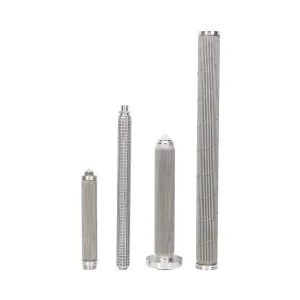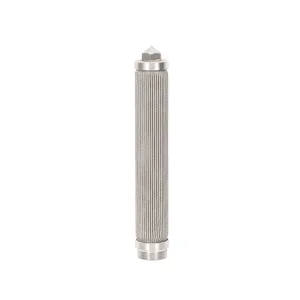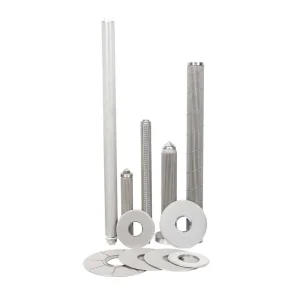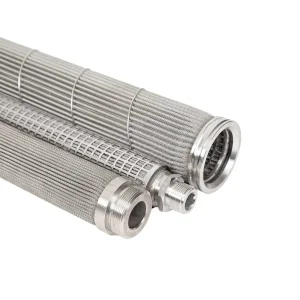
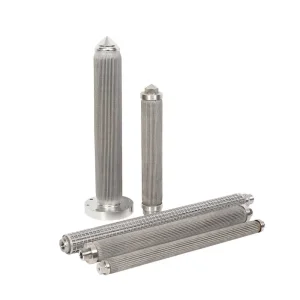
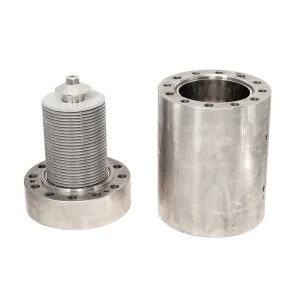
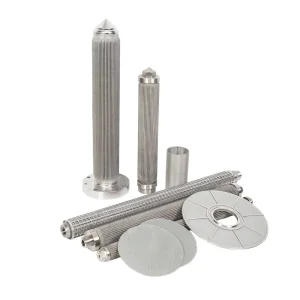
In high-throughput polymer processing, the melt filtration stage serves as the central guardian of product purity, mechanical integrity, and operational efficiency. As global plastic manufacturing shifts toward micro-layer co-extrusion films, ultrafine synthetic fibers, and high-ratio Post-Consumer Recycled (PCR) resins, selecting elite plastic melt filter factories & companies has evolved from a routine component replacement exercise into a critical capital investment decision.
Polymer melts (such as PET, PP, PE, PA, and PC) display non-Newtonian, viscoelastic fluid characteristics operating under intense process conditions: temperatures exceeding 300°C and dynamic pressures climbing past 300 bar. Under these extreme stress state environments, micro-scale particulate contaminants—including un-melted gel clusters, degraded carbonaceous specks, metallic shear flakes, and inorganic additives—introduce microscopic weak spots into the fluid matrix. Without ultra-precise filtration, these impurities lead to film pinholes, fiber filament breakage, extrusion die clogging, and catastrophic production line downtime.
Industrial polymer melt filter systems employ three primary physical mechanisms to isolate particulates from high-viscosity fluid channels:
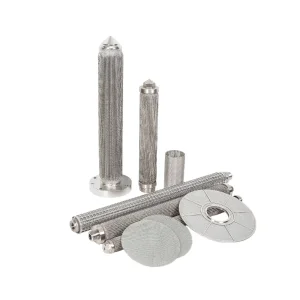
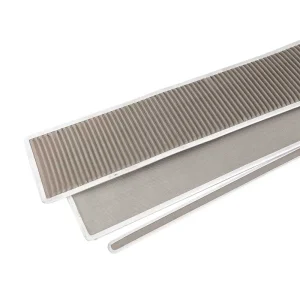
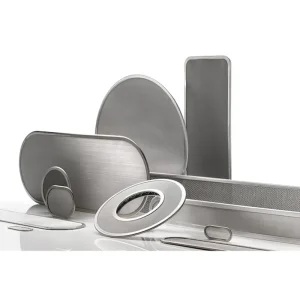
Procurement directors and chief plant engineers evaluating plastic melt filter suppliers must evaluate structural media parameters against specialized operational metrics. Choosing between standard woven wire screens, multi-layer sintered meshes, pleated candle filter elements, and leaf disc filter packs dictates annual maintenance budgets and production uptime.
| Filter Media Type | Micron Rating Range (μm) | Pressure Resistance (ΔP) | Effective Surface Area | Primary Application Profile |
|---|---|---|---|---|
| Pleated Stainless Steel Candle Elements | 3 μm – 100 μm | Up to 250 Bar | Extremely High (300% vs Cylindrical) | BOPET/BOPP Film, Spunbond Nonwovens, Polyester Polycondensation |
| Sintered Metal Fiber Felt | 5 μm – 60 μm | Up to 210 Bar | High (Depth Filtration Matrix) | High-Viscosity Polymer Resins, Optical Grade Polycarbonate |
| Multi-Layer Sintered Wire Mesh | 10 μm – 200 μm | Up to 300 Bar | Moderate / Rigid Geometry | Continuous Screen Changers, High-Pressure Extrusion Lines |
| Standard Extruder Mesh Discs | 20 μm – 500 μm | 50 – 150 Bar | Standard Flat Surface Area | Masterbatch Compounding, Standard Recycled PE/PP Pelletizing |
Leading global buyers prioritize factories capable of delivering custom metallurgic formulations, precise void fraction engineering, and full metallurgical traceability (including SUS304, SUS316L, and Hastelloy C-276 alloys).
Utilizing high-purity vacuum annealing and low-carbon 316L stainless steel prevents intergranular corrosion under hot polymer melt environments.
Computer-controlled pleating yields uniform pleat spacing and zero blind spots, maximizing flow distribution and usable filtration surface area.
Reinforced central inner cores prevent structural collapse or pleat deformation during pressure spikes up to 300 bar or thermal backflushing cycles.
China has established itself as the global manufacturing epicenter for precision polymer filtration equipment. Specialized industrial regions—notably the Zhejiang industrial manufacturing corridor (including Pujiang)—integrate specialized stainless steel wire drawing, high-vacuum sintering, automated CNC machining, and rigorous cleanroom assembly within highly compact geographical footprints.
This localized supply chain cluster provides unmatched competitive advantages for international OEMs, plant integrators, and filtration distributors:
Top-tier plastic melt filter factories build confidence through comprehensive international certification, stringent quality control systems, and robust technical support services tailored to overseas clients.
Every batch of candle filters and leaf discs undergoes bubble point testing, pressure drop validation, and dimensional inspection to guarantee full compliance with EU safety and quality directives.
End-to-end export packaging featuring moisture-proof vacuum wrapping, rust-inhibiting wooden crates, and DDP/DAP shipping arrangements directly to European, North American, and Southeast Asian manufacturing hubs.
All stainless steel elements and gasket seals are tested for hazardous substance restriction, ensuring full compliance for food-contact polymer packaging and pharmaceutical-grade plastic processing.
The global transition toward a circular plastics economy has driven dramatic technical changes in polymer melt filtration systems. Processing Post-Consumer Recycled (PCR) and Post-Industrial Recycled (PIR) materials introduces high levels of solid impurities, paper fibers, aluminum foil micro-particles, and cross-contaminated resins into the melt stream.
Precision polymer melt filters are deployed across diverse plastic extrusion and fiber spinning configurations. The specific operational demands of each application shape filter material selection and component geometry:
Biaxially Oriented Films require ultra-fine filtration (5 μm – 15 μm) using high-surface-area leaf discs or pleated candle filter vessels to eliminate micro-gels that cause film tears during high-speed transverse stretching.
Polypropylene melt spinning lines rely on multi-stage candle filter cartridges to protect fine spinneret holes (diameter 0.15mm – 0.3mm) from clogging, ensuring uniform fiber denier and fabric strength.
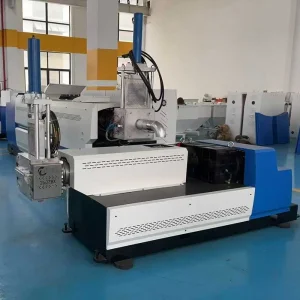
Heavy-duty continuous screen mesh filters process crushed post-consumer PET bottle flakes, handling heavy contamination loads while delivering food-grade melt purity for new preform production.